
Overwintering Oleanders in a Greenhouse
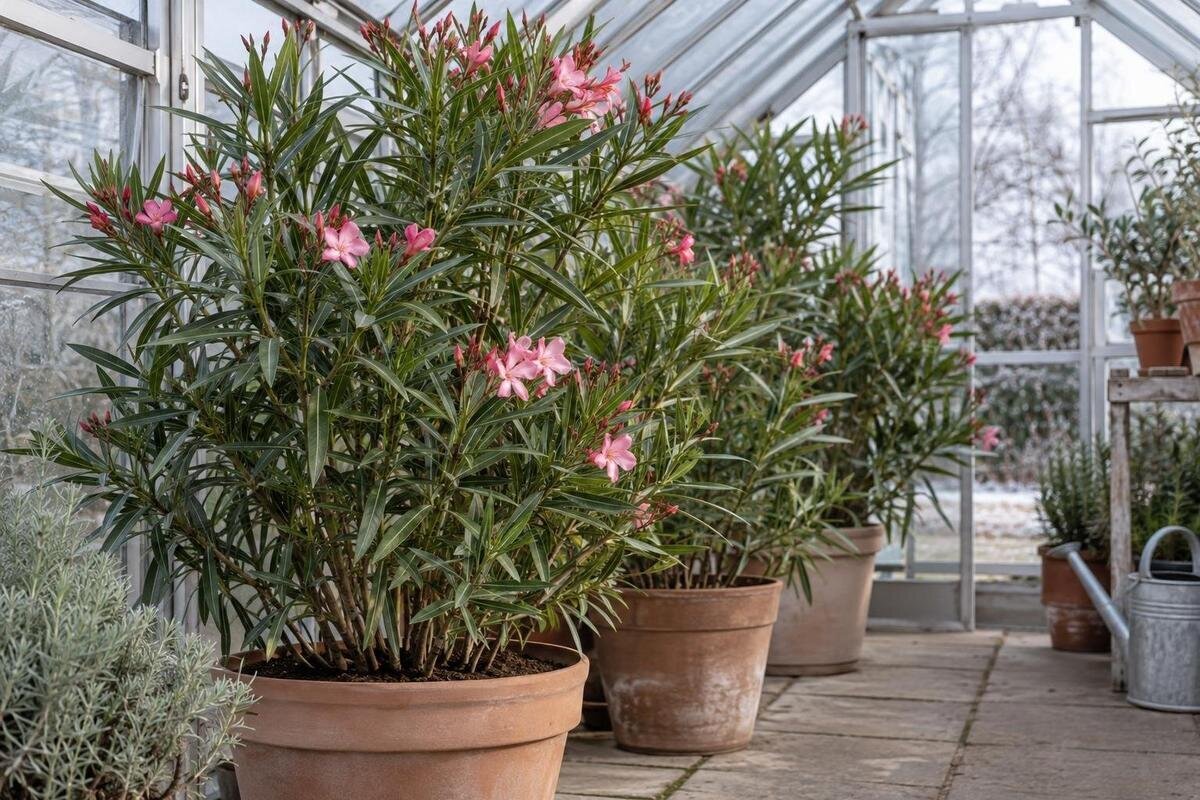
Oleander winter care
An oleander (Nerium oleander) is an evergreen, sun-loving shrub, not a plant that needs a warm, humid greenhouse through winter. In a frost-prone garden, a greenhouse may provide a bright, cool refuge for a container-grown specimen; in a mild location, shelter may be unnecessary. The challenge is that an unheated structure can still become very cold at night and hot in winter sun. Base care on the temperature at the plant, keep the air moving and reduce watering as growth slows. Every part is poisonous, so moving, pruning and pest checks need careful handling.

When an oleander needs winter shelter
Oleanders are evergreen Mediterranean shrubs that grow best with abundant light and warmth while actively growing. In winter, aim to protect a pot-grown plant from sustained cold and frost rather than keep it flowering or force new shoots in a heated, dim space. In a mild, sheltered, frost-free garden, an established oleander may be better left outdoors; a pot is more exposed at the roots and can be moved, but indoor shelter is not automatically an improvement. Australian winter conditions vary between local gardens, so use your usual overnight lows, exposure and recent plant health rather than a countrywide calendar.
An unheated greenhouse buffers wind but does not guarantee frost protection. On cold nights, its temperature can fall close to the outside temperature, while clear winter sun can make it hot in the afternoon. Put a min–max thermometer near the foliage and pot, not high under the roof, and note readings over several nights and sunny days. If readings approach freezing, move the pot to a genuinely protected bright place or ask a local nursery about your cultivar and location. If a wall-adjacent layout suits the site, compare the Wall Greenhouse range and check how the proposed position is affected by winter shade. A position beside a wall still needs temperature monitoring.
Bright light and a cool winter temperature
Keep the plant in the brightest practical position. Oleander tolerates strong sun and benefits from high light; a dim shed or a shaded corner behind benches can encourage leaf drop or weak, stretched growth. Greenhouse glazing and winter shade from buildings or trees reduce available light, so observe the position through the day and remove avoidable obstructions. Do not put an oleander in a dark corner simply because it is being rested. Keep it cool but bright, and let the slowdown in winter growth occur naturally rather than treating it as a problem to fix with warmth.
For a container oleander, about 5–10°C is a useful cool, frost-free planning range, not a universal safe minimum or a guarantee for every variety and exposure. The duration of cold, acclimatisation, wind and root conditions all matter. Use measured overnight lows and local advice if the plant faces frost, rather than relying on one reading. When comparing the Limited Edition Aluminium Greenhouse options, consider the glazing and opening positions alongside the light available at your site. Check where the shrub would stand in relation to nearby structures and benches, rather than judging brightness from the greenhouse’s appearance alone.
Space for the shrub, pot and access
Measure from the pot base to the highest branch and estimate the widest part of the crown before choosing a winter position. Allow room to pass the plant without scraping foliage against glazing, and enough space to see the undersides of leaves, reach the pot and turn it if needed. Account for the door opening, benches, shelving and equipment: a greenhouse’s listed floor area is not the same as clear floor area. Do not prune a healthy oleander severely just to fit a cramped corner. An inaccessible position makes watering and pest checks harder when regular observation matters.
Check the selected model’s internal height and doorway measurements against the whole plant, including the container and any trolley used to move it. The T-Model Orangery Greenhouse listing covers models from 16.52 to 30 m², but that area range is only a shortlist aid; it does not confirm usable height, door clearance or where a bench would sit. Compare the plan and specifications for the exact configuration, and keep a route clear from the entrance to the winter position. If the plant is too large to move safely, ask a nursery or garden professional to help plan its location rather than forcing branches through a narrow opening.
Moving the plant before cold weather arrives
Do not wait for a forecast frost to start moving a large pot. Check it for pests, loose branches and drainage, then choose a dry, mild part of the day to relocate it before temperatures fall. A container can be heavy and branches may snap if the plant is tilted; clear the route, use a suitable plant trolley and ask for help rather than lifting beyond your capacity. Keep the pot upright and avoid dragging it across the greenhouse floor. If the oleander has been in full outdoor sun, adjust it to the new light gradually while keeping it bright.
Plan the move all the way to the plant’s final position, including any turns inside the greenhouse. When comparing the Pyramid Greenhouse models, check the entrance and internal layout against the route your pot will take; floor area alone does not show whether you can manoeuvre a bulky shrub into place. Clear tools and smaller pots before bringing it inside, so you do not have to stop while holding or steadying the plant. Set the container on a stable base where drainage water can escape. Avoid moving it from a warm room straight into a cold structure; plan the change around actual temperatures at both locations.

Winter watering for container-grown oleanders
During cool, slow growth, a potted oleander uses less water than it does in active warm weather, but the root ball should not be left bone dry for long periods. Check the upper few centimetres of mix with a finger and consider the pot’s weight; water when that layer has begun to dry, not simply because a weekly date has arrived. Apply enough to moisten the mix through, then let excess drain freely and empty any saucer. If the mix is still damp or the pot feels heavy, wait and check again. The interval changes with temperature, pot size, mix and foliage.
Water at the base and avoid leaving the pot standing in runoff. In cool conditions, repeatedly wet potting mix can cause problems for roots, so do not compensate for slow growth with extra water. Routine feeding is usually unnecessary while growth is slow; fertiliser cannot make up for low light and may encourage tender growth before conditions support it. Resume according to the product label when new growth is underway. If storage is part of your layout, the Limited Edition Aluminium Greenhouses with Storage page lists models from 5.52 to 28.08 m²; check the exact plan leaves a clear place for the pot, watering access and a path for drainage.
Ventilation and winter temperature swings
Air movement matters even when the greenhouse is cool. On a mild or sunny day, open available vents or the door enough to release trapped heat and reduce condensation; check the thermometer rather than assuming winter means no overheating. A closed greenhouse can heat quickly under clear skies, and damp, still air is more troublesome around crowded foliage. Leave space between leaves and neighbouring plants, remove fallen leaves from the pot surface and avoid keeping the plant in a stagnant corner. Adjust openings as the weather changes, and do not leave the structure wide open overnight when frost is forecast.
Check how vents work before selecting a structure: can you reach and operate them, and are the openings in useful positions for your planned layout? When comparing the Prestige Greenhouse options, confirm which openings are supplied with the selected size. Consider whether the oleander’s crown, nearby benches or stored equipment would obstruct access to them. You need to be able to adjust ventilation without moving a heavy pot each time the weather changes. If plants are packed together, increase spacing or reduce the number overwintered there. Extra watering is not a substitute for addressing crowded foliage and stagnant air.
Pests to look for on oleander
Protected foliage can hide pests, so inspect the oleander at least weekly, especially the undersides of leaves, tender shoots, leaf joints and flower clusters. Oleander aphids are usually bright yellow and gather on new growth; they can leave sticky honeydew, followed by black sooty mould. Scale insects look like small fixed bumps on stems or leaves, while mealybugs appear as white, cottony patches in sheltered joints. Fine pale stippling and webbing can point to spider mites, particularly when greenhouse air is warm and dry. If you are unsure, use a hand lens and check both sides of leaves before treating discolouration as a nutrient problem.
Isolate an affected pot from other plants where possible and check nearby foliage. For a small outbreak, remove pests by wiping or rinsing the affected parts, then inspect again; wear gloves because handling oleander can expose you to sap. Do not spray automatically: identify the pest first, and use only a product labelled for that plant and pest in a greenhouse, following its directions, or ask a local horticulturist. For a larger collection, the Spacious Greenhouse listings span 47 to 70 m². Use the layout to plan an accessible holding position for affected plants, rather than assuming a larger structure provides separation. Keep affected leaves contained and dispose of them appropriately.
Safe pruning and clean-up around oleander
Every part of oleander is poisonous if eaten, and its milky sap can irritate skin and eyes. Keep children and pets away while working, wear long sleeves and gloves, and use eye protection if pruning could flick sap. Avoid touching your face, food, drink or phone with contaminated gloves; wash your hands and clean tools and surfaces afterwards. Do not handle cut stems bare-handed simply because they look dry. If the plant is neither damaged nor blocking access, routine winter pruning is unnecessary.
Remove dead, broken or genuinely obstructive growth selectively. Plan any size reduction for a suitable time, taking the flowering cycle into account, rather than making a heavy cut just to fit the plant into a greenhouse. Contain clippings and follow local council advice for green-waste disposal; never burn oleander or use it as fuel, as smoke can be dangerous. When comparing the Aluminium Greenhouses listing, which covers models from 3.77 to 28.08 m², check that the exact layout leaves room to reach the shrub and carry prunings out. Keep cuttings and contaminated tools away from edibles, children and animals.

Gradual return to outdoor conditions
Do not use a fixed date for moving an overwintered oleander back outside. Wait until local conditions no longer bring damaging cold for your plant, then choose a mild spell and expose it gradually to outdoor light and wind over several days to a couple of weeks. Start with a sheltered, bright position and increase exposure before returning it to its usual sunny spot. The plant will be moving from conditions moderated by greenhouse glazing and shelter into direct sun, wind and outdoor overnight temperatures. Sudden full sun may scorch foliage, while a cold snap can undo a careful move, so keep checking the forecast and the actual site.
Inspect for aphids, scale and other pests before placing the pot among outdoor plants, and clear fallen leaves or spent flowers rather than carrying debris with it. Check that drainage holes are clear and the mix has not stayed saturated through winter. Resume watering and feeding in response to active growth and drying conditions, not an automatic spring schedule. In a frost-free garden, a potted or established oleander may not need to return to a greenhouse at all; choose a position that gives it bright conditions and lets you reach it safely for future pest checks. Continue to keep the plant and its waste away from pets and children.
Planning a manageable winter routine
Before settling on a winter position, consider how you will look after the oleander throughout the season. Easy access matters when you need to read the thermometer, inspect a leaf or check the potting mix on a cold day. Keep a simple record of overnight lows, sunny-day temperatures and watering, noting whether the mix was dry or still damp when checked. Read these observations together: a watering routine that suited a mild spell may no longer suit colder conditions. This gives you a practical basis for adjusting care without treating every dropped leaf or pause in growth as a reason to water or feed.
Plan for the other uses of the greenhouse as well. If you grow herbs or edible crops, give the oleander a separate work area where possible, so its sap, cuttings and contaminated tools do not mix with food-garden tasks. Leave somewhere to put contained prunings while you finish cleaning up, without blocking the entrance or access to other plants. If winter readings suggest you may need a heater, have a qualified professional confirm its suitability and arrange any installation rather than improvising electrical or fire equipment. Decide how you will respond to cold weather before it arrives, including where the plant could go if the greenhouse becomes too cold.
Frequently asked questions
Does an oleander need a heated greenhouse in winter?
Not necessarily. Oleanders need a bright, cool place with protection from damaging frost, rather than tropical warmth. Whether heating is needed depends on the temperatures inside your greenhouse. A cool range around 5–10°C can help with planning, but it is not a guaranteed safe limit for every plant. Measure actual temperatures and get local advice if your site is prone to frost.
Will an unheated greenhouse keep an oleander frost-free?
Not reliably. On a cold night, the temperature inside can fall close to the outdoor temperature, while winter sun can make the greenhouse hot during the day. Use a min–max thermometer near the plant and pot, and have a brighter, more protected place available if readings approach freezing.
How often should I water a greenhouse oleander in winter?
There is no dependable fixed interval. Check the upper few centimetres of potting mix and the weight of the pot; water when the mix has begun to dry, then let excess drain away. Adjust for the greenhouse temperature, pot size and plant growth, and do not leave the pot standing in water.
Which pests should I look for on an overwintering oleander?
Check for bright yellow oleander aphids on new shoots and flower buds, sticky honeydew, scale insects, cottony mealybugs and fine stippling or webbing from spider mites. Inspect leaf undersides and stem joints regularly. Isolate an affected plant where possible and identify the pest before choosing a treatment.
Is it safe to prune and handle oleander?
Every part is poisonous if eaten, and the sap can irritate skin and eyes. Wear gloves and long sleeves, keep children and pets away, and never burn prunings. Follow local council advice for disposal. If a person may have eaten any part, contact emergency or poison-information professionals promptly; for an animal, contact a veterinarian.
Successful overwintering is less about keeping an oleander warm than giving it bright, cool conditions with protection from damaging frost, sensible watering and enough airflow to manage winter sun. Check the plant and greenhouse together, including temperature readings, pests and access. In mild locations, leaving a healthy specimen outdoors may be the simpler option. Wherever it spends winter, handle its poisonous foliage and prunings carefully and keep them away from children and pets.
