
Planning Greenhouse Disinfection After a Serious Disease Outbreak
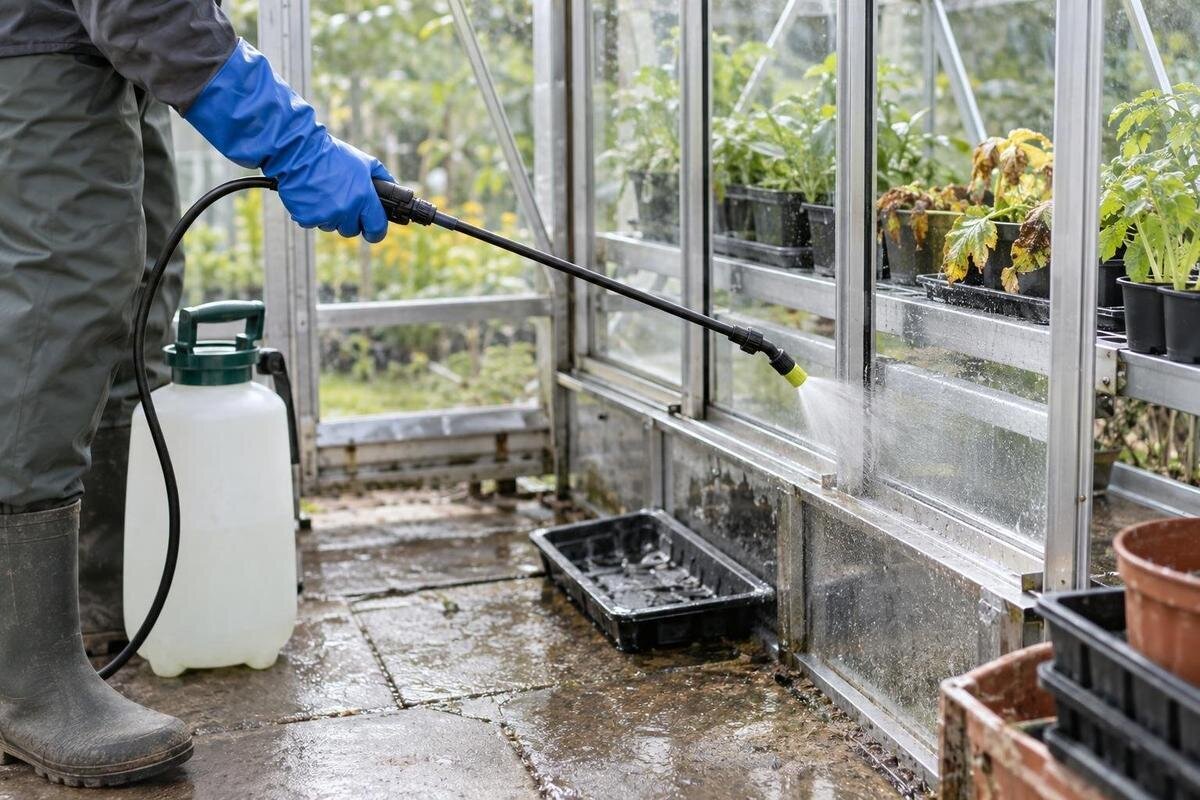
Greenhouse disease recovery
After a serious plant disease outbreak, greenhouse disinfection is a planned recovery process, not simply a more intensive wash. The right response depends on the pathogen, where it may persist, which materials are affected and what can be treated safely. Start with diagnosis and containment, then use horticultural guidance for that disease and care instructions for the greenhouse. This guide outlines the decisions to make; it does not prescribe a universal chemical recipe.

01
Confirm the disease before selecting a treatment
Symptoms alone rarely identify a cause precisely enough to choose a disinfection method. Fungal, bacterial, viral and non-infectious problems can look similar, and more than one issue may be present. Photograph affected plants and note the species or cultivar, when symptoms began, where they appeared, and whether they are spreading. Record the source and arrival date of the plants, recent changes to watering or feeding, and which benches or areas are involved. Ask a plant diagnostic service how to collect and submit a sample; don’t move suspect plants or soil to another site until you have handling instructions.
Ask for advice that addresses the identified pathogen and host, likely reservoirs, routes of spread, and the clean-up sequence for your situation. Find out whether nearby crops, soil or water may also need attention, and whether the advice distinguishes treatment of plants from treatment of surfaces and equipment. For a significant event, contact the relevant state or territory agriculture department or plant-health service, particularly if an adviser or official notice raises reporting or movement controls. Confirm what should remain isolated while a diagnosis is pending. General greenhouse washing advice or a product aimed at a different target is not a substitute for this information.
Limit movement while advice is pending
Pause propagation and the movement of seedlings, pots, growing media and plant waste out of the affected area until you know how they should be handled. Mark the area and limit casual access. Keep tools and equipment used there separate from those used on healthy plants, but don’t assume a separate pair of gloves or a sign is enough to control spread. Avoid carrying trays, debris or water into clean growing areas. If the greenhouse has adjoining bays, ask whether the disease guidance calls for a particular boundary or workflow; don’t change ventilation or irrigation arrangements on guesswork.
Where the advice permits work to continue, move from clean areas towards affected ones and leave suspect plants until last. Keep a record of anything that crosses a boundary and what cleaning step is required afterwards. Contain debris and equipment rather than leaving them loose near a doorway, and avoid directing untreated runoff towards beds or neighbouring areas. Make sure household members, staff or volunteers know what not to handle and who to tell if something has been moved accidentally. Follow any specific isolation or hold directions given by the relevant adviser or authority.
02
Map affected areas and possible reservoirs
Make a simple plan of the greenhouse and mark affected crops, benches, shelves, propagation trays, pots, ties, labels, tools, floors and entry points. Include nearby beds, paths, waste-handling areas and places where pots or supplies are stored. Note whether items are smooth, porous, cracked, fabric-covered, removable or difficult to access. Record water tanks, hoses, filters and irrigation lines if they may have contacted affected plants or growing media. These details help an adviser judge where the pathogen could persist; the frame is not automatically the main reservoir, and a clean-looking pane does not confirm that other surfaces are free of contamination.
Trace how plants, people, tools and water moved before symptoms appeared and afterwards. Include incoming stock and movement between greenhouse bays, so the clean-up boundary reflects possible routes rather than appearance alone. Record the greenhouse maker, model and configuration from paperwork or labels, along with previous repairs. Keep this identification record beside the plan so an adviser or supplier can distinguish the installed structure from any replacement being considered. For example, if you enquire about Limited Edition Aluminium Greenhouses, identify it as a replacement option rather than as your current model. Use separate notes for existing components and proposed purchases, including which areas remain inaccessible and which parts need identification. This gives the supplier a clear account of the enquiry without suggesting that a catalogue name establishes compatibility or resolves the disease problem.
Separate plant waste and growing media from reusable items
Remove affected plants, roots, fallen leaves and crop debris only in the way advised for the diagnosis. Dry handling may scatter contaminated material, while wet handling may carry it elsewhere, so don’t improvise a sweeping or hosing method. Contain waste before moving it and avoid dragging bags or trays through clean growing areas. Ask a plant-health adviser or relevant waste authority how affected plants, soil, potting mix, grow bags, water and packaging should be managed. The appropriate route can depend on the disease and local instructions.
Don’t assume a compost heap, green-waste bin, household rubbish or burial will make affected material safe. Keep reusable pots, clips, stakes and trays separate from single-use or porous items until their cleaning options are clear. Record where items came from and whether each is awaiting advice, approved for cleaning or designated for disposal. Keep that list separate from a shopping list: needing new trays or pots does not in itself establish a need for a new greenhouse. If replacement is also being considered, use the inventory to explain what you intend to retain. An enquiry about the T-Model Orangery Greenhouse can then distinguish the proposed structure from the equipment that still needs treatment or disposal. Leave unresolved items on the recovery list rather than treating a purchase decision as the end of waste management.

03
Remove residues before disinfection
Disinfection usually follows the removal of soil, sap and other organic residues, which can shield a pathogen or interfere with a treatment. The removal method still needs to suit the disease and surface. Avoid dry brushing or high-pressure washing if it could spread contaminated material, and don’t send untreated debris or runoff into beds or other growing areas. Before work begins, ask for a safe sequence for the greenhouse and keep equipment used in affected areas separate from equipment used in clean ones.
Use a cleaning agent and application method that suit the surface, and remove detergent residues first if the recommended protocol calls for it. Pay attention to places where material can collect, such as tray undersides and joints, without assuming that every part needs to be dismantled. Mark places you cannot reach and describe what prevents access; do not record them as cleaned simply because nearby surfaces have been treated. Don’t take glazing or frame components apart unless the manufacturer’s instructions and a competent installer support the work. Where access problems lead you to compare replacement options such as the Pyramid Greenhouse, ask how routine cleaning access is addressed in the exact model’s documentation. Explain which areas of the current structure are difficult to reach, so the enquiry focuses on a practical maintenance need rather than appearance alone.
Match the method to the pathogen and each material
Ask a horticultural adviser to confirm a product or method for the diagnosed pathogen and the intended surface. A treatment suitable for a tool or bench may not be effective or appropriate for crops, soil, water systems, glazing or frame materials. Glass, plastics, seals, timber, concrete and coated surfaces should not be treated as interchangeable. Check the product label and the greenhouse manufacturer’s care instructions. If you don’t know what a surface or coating is, pause and ask rather than identifying it by appearance.
Before starting, confirm the labelled preparation, coverage and contact conditions, as well as whether rinsing, particular handling of waste or a waiting period is required. Write these against the relevant surfaces on your plan rather than assuming one set of directions covers the whole greenhouse. Don’t make a stronger mixture or apply a product to crops unless its directions and advice permit that use. Follow label directions for protective equipment, ventilation, storage and first aid, and never mix cleaners or disinfectants. Material compatibility also belongs in any replacement comparison. When considering Limited Edition Aluminium Greenhouses with Storage, request care information for the exact product and compare it with the cleaning requirements already identified. Keep any unanswered compatibility questions visible in your notes; a model name alone does not tell you which treatments its components can tolerate.
04
Address tools and shared equipment separately
Pruners, knives, labels, trays, wheelbarrows, hose ends and gloves can move sap, soil or plant fragments between plants. List the items that contacted affected material, then ask whether each can be cleaned, disinfected, reused or should be discarded under the disease-specific plan. Treat tools separately from benches: a surface treatment does not automatically deal with a blade or the inside of a hose. Keep treated equipment in a clean, clearly marked place so it is not mixed back with items awaiting attention.
Check tool-maker instructions as well as the disinfectant label. A method suited to a hard bench may damage a tool, and an external treatment may not reach inside irrigation components. Separate the equipment list into items you can address under the agreed protocol and items needing specialist assessment. Record what remains unresolved rather than returning everything to use together. Don’t dismantle powered equipment or alter plumbing on the basis of a general protocol; ask a qualified technician to assess systems where needed. A new structure does not remove these equipment decisions. If you are comparing the Bloomcabin Prestige Greenhouse as a replacement, identify which tools and systems you intend to retain and which still await assessment. That distinction keeps the purchase enquiry focused on the structure while the recovery plan continues to account for shared equipment.
Record the treatment and confirm when growing can resume
Keep a recovery log showing the diagnosis and adviser, affected zones, waste decisions, cleaning method, product used and the label conditions followed. Note the date, surfaces covered, items left untreated, and any rinsing or waiting instructions. Mark inaccessible areas or steps still in progress rather than recording the whole greenhouse as complete. This is an operational record, not laboratory proof that a pathogen has been eliminated. If further cleaning, testing or another check is recommended, record what result or condition the adviser says is needed before work resumes.
Before bringing plants, growing mix or tools back, confirm that the relevant label directions and advice have been followed, including any rinsing, drying, ventilation or waiting requirements. Treat clean trays and containers as separate items, and make sure the source of new stock or water has been considered if it was part of the investigation. Give each outstanding task a clear status in the log, including who will seek advice and what must happen before that item returns to use. Keep purchasing milestones separate from these recovery conditions. If replacement is under discussion and you are considering the Spacious Greenhouse, record that enquiry alongside, rather than in place of, the unfinished clean-up work. Delivery or assembly of a replacement would not, by itself, resolve questions about retained equipment, growing media or other possible sources identified during the investigation.

05
Assess repair or replacement after the clean-up scope is clear
A disease outbreak does not automatically mean the greenhouse must be discarded. The decision depends on where the pathogen may persist, whether affected areas can be reached and treated, the condition of reusable materials and the advice for that disease. Ask the manufacturer about the exact model and part identifiers before replacing a pane, seal, bench component or fitting. Don’t substitute a vaguely similar part or modify frame components. Have glazing, structural repairs and work requiring specialist access assessed by a competent installer rather than attempting unsafe glass handling.
If only particular items cannot be recovered, replacing those may be more proportionate than replacing the entire structure, but confirm that the surrounding surfaces and joints are covered by the hygiene plan. Photograph labels and damaged parts from a safe position, and gather purchase records and manuals before requesting part identification or installer review. Describe whether the enquiry concerns a damaged component, an inaccessible area or a decision to replace the whole structure; these are different questions. For a whole-structure comparison, the Aluminium Greenhouses range provides a starting point for discussing a replacement, not for identifying compatible spare parts. Ask the supplier to keep any parts quotation distinct from a new-greenhouse proposal. This makes it easier to compare the scope of each option without overlooking cleaning work that would still be required around retained items.
Prevent reintroduction before returning to normal growing
Once the adviser’s conditions for re-entry have been met, keep a clear workflow between incoming plants, clean supplies and waste. Inspect new stock, keep batches traceable and use a suitable cleaning method for reusable trays and containers. Don’t reuse growing media simply because the greenhouse looks tidy. Note where new plants came from and monitor them for symptoms. If signs return, stop movement and seek a fresh diagnosis rather than applying a stronger product by guesswork.
Update the written routine with who isolates suspect plants, how tools and waste are handled, where clean supplies are stored, and which manual and product label apply. Make those responsibilities clear to everyone who uses the greenhouse, including anyone who helps only occasionally. Keep the routine with the recovery log so later symptoms can be compared with the original outbreak and the work completed. If remediation proves impractical and you begin a replacement project, include these workflow needs in the enquiry. For an option such as the Wall Greenhouse, check the selected product’s documentation, dimensions, materials and site requirements rather than assuming it will suit the existing arrangement. Plan where incoming plants, reusable equipment and waste will be handled before returning to normal growing. The aim is a workable routine for the particular disease and structure, not a universal treatment recipe.
Frequently asked questions
Can I use household bleach to disinfect the greenhouse?
Don’t assume it is suitable. Effectiveness depends on the diagnosed pathogen, the surface and the labelled directions; a household product may not be labelled for that use. Confirm the method with a horticultural adviser and check the greenhouse manufacturer’s instructions. Never mix cleaning products or disinfectants.
How long should I leave the greenhouse empty?
There is no universal waiting period. Follow the product label for contact, drying and re-entry directions, and ask whether the diagnosed disease requires a separate hold or other check before plants return. A visibly dry surface alone does not confirm that it is safe to resume growing.
Does every serious outbreak mean I need to replace the greenhouse?
No. The decision depends on where the pathogen may persist, whether affected areas can be reached and treated, the condition of materials and the advice for that disease. Some items may need replacing while the structure can be kept; get an installer’s advice before considering structural work.
Is washing the glass and benches enough?
Not necessarily. Cleaning removes visible soil and plant residues, but it is not proof that a pathogen has been controlled. The required treatment may differ for tools, trays, surfaces, growing media and irrigation components. Follow guidance for the identified disease and each material.
Can I put diseased plants and growing mix in the compost?
Don’t assume composting is suitable. The right handling route depends on the disease and local instructions. Keep affected plants, soil and growing mix contained while you ask a plant-health adviser or relevant authority how they should be managed.
Treat a serious outbreak as a controlled recovery job: identify the disease, limit movement, handle affected material safely, clean before disinfecting and use a method suited to both the pathogen and the greenhouse materials. Keep a record of areas treated and any limits or outstanding checks. Resume growing only when the relevant advice and product directions allow it. That sequence helps avoid a clean-up that misses a likely reservoir—or damages the structure without improving disease control.
