
Overwintering Olive Trees in a Greenhouse
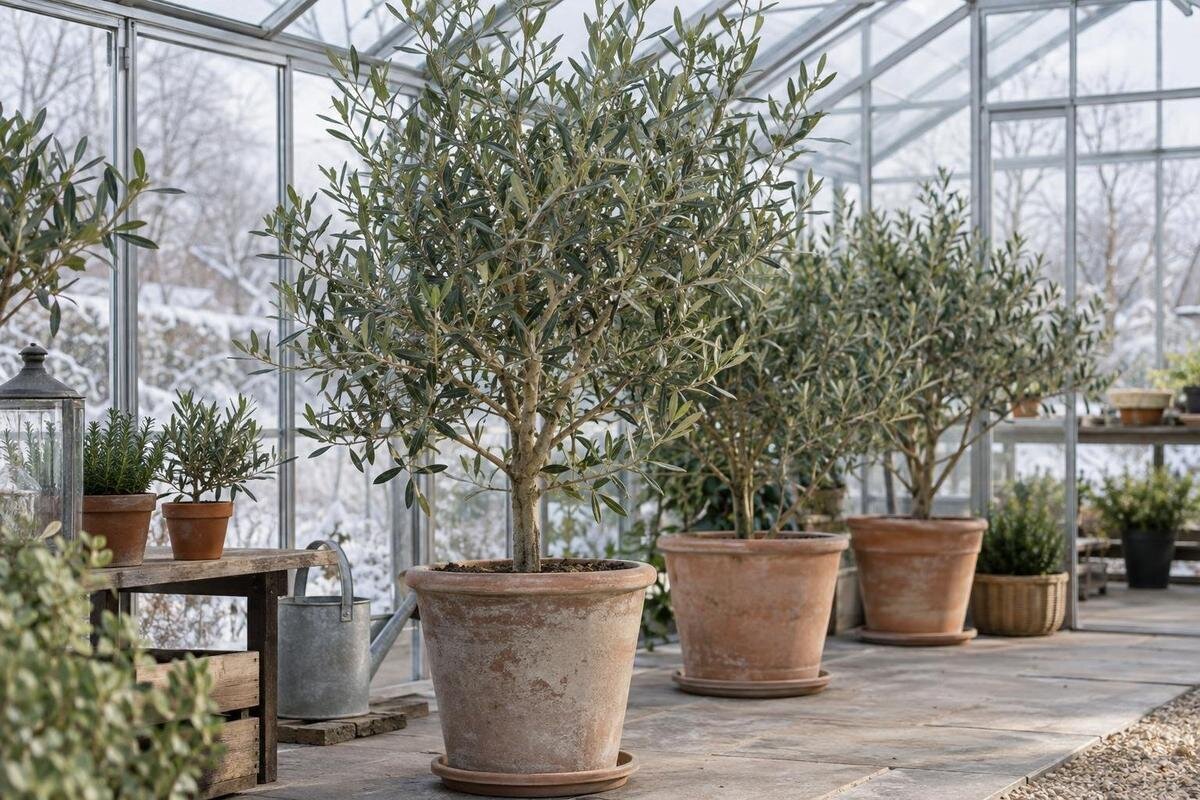
Potted olive winter care
Overwintering an olive in a greenhouse is a balance of light, root protection, watering and fresh air. A potted tree is more exposed to cold around its roots than one planted in the ground, while an unheated greenhouse can still become cold overnight and hot in bright daytime sun. Shelter from wind and persistent rain can be useful, but it does not guarantee frost-free conditions. Olive cultivars, plant age and the duration of cold all affect the response, so avoid relying on a single minimum temperature. Monitor conditions around the tree and use changing weather to guide winter care.
01
How an unheated greenhouse affects winter conditions
An unheated greenhouse can reduce exposure to wind and persistent rain, but it does not control temperature by itself. Overnight air may fall close to the outdoor temperature; in direct sun, the interior can also warm quickly if doors and vents remain shut. Those swings matter for an evergreen olive, which still needs light through winter and can be stressed by conditions that change sharply between day and night. Do not assume the tree or its pot will stay above freezing just because it is under glass or another covering. The useful question is whether this particular shelter creates a more manageable place than the alternatives.
Consider the coldest nights and brightest days at the site, as well as prevailing wind and how long the potting mix tends to stay damp. Rain shelter may help if the mix remains wet outdoors, but a dark or closed greenhouse is not automatically better. Check conditions through more than one type of weather before moving a tree permanently, and include a sheltered outdoor position in the comparison. The Classic Aluminium Greenhouses range is listed from 3.77 m² to 28.08 m²; that area is a starting point for layout, not a statement about temperature or the space around a particular pot.
Choosing a bright, sheltered greenhouse site
Walk the proposed location at different times of day during winter if possible. Note when nearby walls, fences, eaves or evergreen trees shade it, whether wind reaches the pot and whether roof run-off keeps the ground or container wet. A bright, exposed position may leave the pot vulnerable, while a sheltered corner can be too dim for an olive. Compare possible positions using the same observations rather than choosing the one that feels warmest during a single visit. Make a simple note of morning, midday and afternoon shade, along with any obstacles around the proposed greenhouse. This gives you a clearer basis for choosing where the tree will stand inside it. Also consider everyday access: you need to inspect the leaves, water the plant, protect the container and open the greenhouse without repeatedly shifting a heavy pot. Picture those tasks with the door open and other winter plants in place, not just in an empty structure.
A structure beside a wall is not necessarily sunny enough; watch the light at the time of year when it is lowest. If you are considering a wall greenhouse, the Aluminium Lean-to Greenhouse range is listed from 3.69 m² to 14.34 m². Use that area as an initial comparison, then confirm the chosen model’s dimensions, height and opening arrangements against the actual wall, winter sun and access available at your site.
02
Light needs of a potted olive
Olives are evergreen and sun-loving, so winter care still calls for a bright position. The Royal Horticultural Society’s plant profile for Olea europaea recommends full sun, a useful reference when deciding where a container tree should spend winter. Aim for direct winter light on the canopy for much of the day. A greenhouse roof may look bright while the tree itself sits in shade, particularly if it is behind taller plants, shelving or stored equipment.
Check where the light reaches the leaves at more than one time of day; a midday inspection can miss morning or afternoon shade. Look at the lower branches as well as the top of the canopy, and note whether nearby containers or shelving account for any shaded areas. Moving stored equipment may be more practical than repeatedly repositioning a heavy olive. Reassess the arrangement as the sun’s path changes, especially if the tree shares its winter space with a growing collection of plants. When comparing the Limited Edition Aluminium Greenhouses range, listed from 3.77 m² to 28.08 m², sketch the olive’s intended position alongside shelving and other containers. Use that sketch with your observations of the site: it should show where the canopy will receive light, rather than simply how many pots can fit on the floor.
Protecting the pot and root ball
A container exposes more of an olive’s root zone to cold air than the surrounding soil does for a tree planted in the ground. Cold conditions combined with persistently wet potting mix can be particularly difficult for roots, so protection and drainage both matter. Wrap the outside of the pot with suitable horticultural insulation or fleece, keeping drainage holes clear. If you use an insulating mat underneath, make sure the pot remains stable and water cannot collect beneath it. Protecting the container can buffer the root zone, but it cannot guarantee a particular minimum temperature.
Allow room to reach the pot, check its drainage and fit any temporary insulation without squeezing it against other containers. Plan that access around the wrapped container rather than the bare pot: you still need to see where excess water goes and reach the potting mix for moisture checks. Keep the arrangement simple enough to inspect without moving neighbouring plants each time. If several plants need winter shelter, include these working spaces in your layout before choosing a greenhouse size. The T-Model Orangery Greenhouse range is listed from 16.52 m² to 30 m². Compare its floor plans with the space occupied by your containers, their insulation and the paths between them. Check height separately, so a workable arrangement around the roots also leaves room for the olive’s canopy.
03
How to judge winter temperatures for an olive
Cold tolerance depends on cultivar, age, acclimatisation, plant health, exposure and how long the cold lasts. As one published reference point, the Royal Horticultural Society places Olea europaea in hardiness category H4, roughly −10°C to −5°C on its UK scale. That broad rating is not a safe minimum for every potted olive: it does not describe every cultivar or container root zone. An established tree in well-drained ground facing one brief frost is not equivalent to a young tree in a small, wet pot exposed to several cold nights.
Use a minimum–maximum thermometer near the foliage and, if practical, another close to the container; keep readings away from direct contact with glazing or an opening. Record both cold nights and sunny days, since an outdoor forecast does not tell you the temperature inside the greenhouse. Ask a nursery for written guidance for the named cultivar and whether it applies to a potted plant. The Pyramid Greenhouse range is listed from 5.53 m² to 18.9 m², but area and model name are not a cold rating; check the selected configuration and monitor its actual conditions.
Winter watering for a potted olive
Cooler conditions and reduced winter light often mean slower growth and lower water use than in warm weather, but a greenhouse can still heat up on a sunny day. Do not water by a fixed weekly schedule or keep the mix constantly damp. Check below the surface and near the root ball: water when the mix has begun to dry, before the whole container becomes dry. A surface crust can be misleading, so take account of how the pot feels and how quickly it has been drying since the last watering. Use your observations of this particular container rather than treating every plant in the greenhouse alike. If the surface looks dry but the mix beneath is still damp, distinguish those observations before deciding to water. Note the watering date and what you found at the next check; this helps you recognise changes in drying time as the weather shifts.
When watering is needed, moisten the mix evenly and allow excess water to drain freely. Empty any saucer or outer container rather than leaving the roots standing in water, and keep drainage holes unobstructed. A watering can and pot insulation are among the supplies you may want near the plant. The Limited Edition Aluminium Greenhouses with Storage range is listed from 5.52 m² to 28.08 m² and identifies built-in storage; check the selected layout so stored supplies do not obstruct access or take up the space needed around the olive.
04
Winter ventilation in a greenhouse
Sun can warm an enclosed greenhouse even in winter, while trapped moisture and crowded foliage can leave the air stagnant. On mild, sunny days, open available vents or a door enough to exchange air, especially if the temperature is rising or condensation persists. Adjust the openings as the air cools, strong wind arrives or evening approaches. There is no single ventilation schedule for every site: check readings near the tree and take account of outside conditions. Avoid blocking openings with pots or stored supplies, and do not leave the olive exposed to an avoidable cold blast.
Before choosing a greenhouse, find out what openings are available in the exact model and whether they will remain accessible once plants are inside. The Bloomcabin Prestige Greenhouse range is listed from 3.77 m² to 28.08 m². Compare the selected model’s opening positions with your proposed plant layout, including the olive’s canopy rather than only its pot. Consider where you would stand to operate each opening and whether a watering can, shelf or neighbouring plant would obstruct you. Also check whether opening the door would put the olive directly in the path of incoming cold air. These details help you plan an arrangement that lets you adjust ventilation without first rearranging the greenhouse whenever winter sunshine raises the temperature.
Space for the canopy, pot and access
Measure the olive’s total height, including the pot, and the widest part of its canopy before planning where it will stand. Leave room to water, inspect the leaves and reach the container if it needs insulation. Foliage pressed against glazing or crowded tightly between other plants is harder to monitor, and containers can block doors or ventilation openings. Allow for the space you need to work, not just the pot’s footprint. If you intend to bring several plants inside, map their positions before filling the greenhouse so the olive still receives light and is easy to reach.
For a larger collection, compare usable layout as well as total area. The Spacious Greenhouse range is listed from 47 m² to 70 m². Confirm the chosen plan and height, then mark out the intended positions of the olive and neighbouring plants. Include a clear route from the entrance to the tree, with enough room to carry watering equipment and inspect the canopy. Think through how the olive will enter and leave the greenhouse, too: compare the container and canopy measurements with the available doorway and route, not just the space where it will eventually stand. If you would need to move several other pots to reach it, revise the arrangement before bringing the collection inside. The aim is a layout you can maintain throughout winter, rather than one that only accommodates every pot on moving day.

05
Inspecting olive leaves for stress and pests
A few older leaves may yellow and fall, but widespread or sudden leaf drop is a reason to review light, recent temperatures and moisture rather than automatically adding water. Look at the whole plant and the potting mix: a root ball that remains wet for too long, one that has become very dry, or a sharp change in conditions can all affect the foliage. Note what has changed before adjusting several things at once. If leaf loss continues or stems look damaged, ask a nursery or horticultural adviser to help identify the cause.
Inspect leaf undersides, stems and the joins between leaves and shoots for scale insects, mealybugs or aphids. Check regularly, particularly after bringing the olive into a shared greenhouse, and remove fallen leaves so you can spot changes. If you find pests, identify them before treating the plant; a guessed treatment may not address the problem. When other plants are nearby, keep a suspect plant separate where practical while you seek advice, and follow the directions on any treatment you choose.
A practical winter routine for the tree
During a changeable spell, check the minimum–maximum thermometer regularly, especially after a clear night or a bright day. Once a week, inspect the foliage, drainage, insulation and access to vents, while continuing to check moisture as conditions require. Keep a short record with the date, temperature range, moisture observation and any watering or ventilation adjustment. Record what you actually observed rather than simply describing the day as cold or sunny; this makes comparisons more useful later. If the greenhouse becomes much warmer by day than you expected, adjust ventilation and record what happens. After a cold night, compare the reading with the cultivar guidance rather than guessing from the outdoor forecast. Where practical, change one aspect of care at a time and note the reason, so you can distinguish a response to watering from a change in shelter or airflow. The record need not be elaborate: its purpose is to make your next decision clearer.
As winter ends, increase the olive’s exposure to outdoor light and air gradually instead of moving it abruptly from a sheltered greenhouse to a fully exposed position. Use the local forecast and advice for the named cultivar to judge when protection can be reduced; do not rely on a fixed calendar date. Recheck the mix as brighter, warmer weather changes how quickly it dries. If cold conditions return, restore suitable shelter while keeping the tree as bright and well ventilated as circumstances allow.
Frequently asked questions
Can an unheated greenhouse keep an olive frost-free?
Not reliably. It can shelter the tree from wind and rain, but the temperature inside may fall close to the outdoor temperature overnight. Measure conditions where the pot sits and use cultivar-specific advice rather than assuming the greenhouse prevents frost.
What winter temperature is safe for a potted olive?
There is no single safe minimum for every olive. Cold tolerance varies with cultivar, age, acclimatisation, exposure and how long the cold lasts. Published hardiness ratings are useful context, but a rating for a tree in the ground is not a guarantee for its roots in a pot.
How much light does an olive need over winter?
Give it a bright, sunny position and as much direct winter light as the site allows. Check for shade at the canopy at different times of day; a bright greenhouse roof will not help if the tree sits behind a wall or taller plants.
How often should I water a potted olive in winter?
There is no reliable calendar interval. Check the potting mix below the surface and water when it has begun to dry, before the whole root ball dries out. Let excess water drain and do not leave the pot standing in a full saucer.
Should greenhouse vents stay open overnight?
Not automatically. Ventilate on mild, sunny days when the greenhouse warms or condensation persists, then adjust openings as the air cools or strong wind arrives. Use temperature readings and the forecast to guide changes rather than following a fixed schedule.
Good winter care is a matter of observation rather than assuming a greenhouse will hold a particular temperature. Keep the olive bright, protect its well-drained root ball, adjust watering to the mix and ventilate when the space warms. Compare actual readings with advice for the named cultivar, and change care as conditions change. That lets the greenhouse provide useful shelter without treating it as a guarantee against every cold night.
