
How to Prevent Greenhouse Seedlings Becoming Pot-Bound
Greenhouse growing guide
Root-bound seedlings are often the result of a mismatch between sowing date, container volume and the day a plant can actually move on. A greenhouse provides space to raise plants, but it does not create unlimited bench capacity or remove the need to pot up. Plan backwards from the intended planting window, then reserve room for every stage, including delays in the garden.

Check usable bench space 1
What root-bound seedlings look like
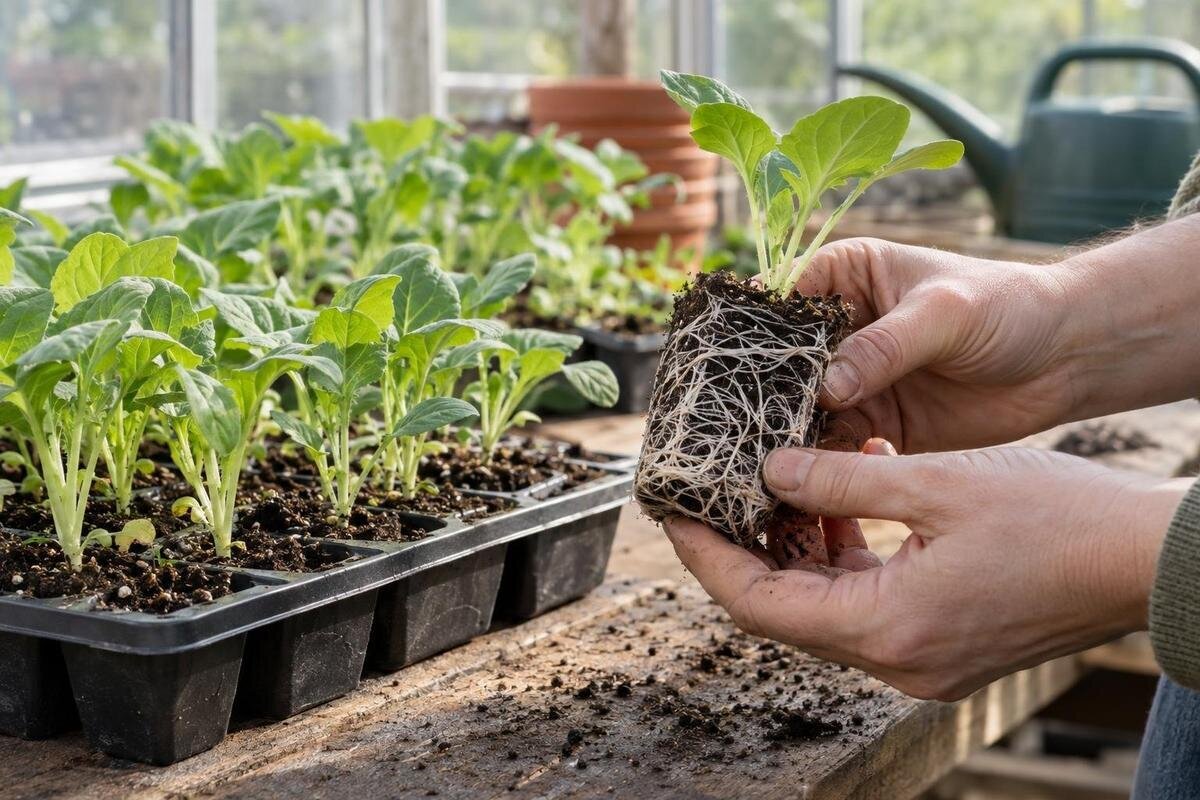
Root-bound, also called pot-bound, describes a seedling whose roots have occupied most of the growing mix in its cell or pot. Roots may run around the sides, circle at the base or form a dense web through the rootball. A few strands visible at a drainage hole are not conclusive; roots naturally reach openings, and plants vary in how quickly they fill a container. Look at the whole rootball rather than treating one visible root as a deadline.
Congestion leaves less room for roots to extend and less growing mix to hold moisture. A small, densely rooted cell may need closer attention than a larger one under the same conditions. However, a seedling that slows down is not automatically root-bound: light, moisture, temperature, pests, disease or nutrition can also affect growth. Check the wider growing conditions before responding by potting on every plant. The aim is to avoid prolonged crowding, not to eliminate every root at the edge of a container. Seedlings in the same tray may also develop at different rates.
Work backwards from the planting window
Choose the intended planting window before deciding when to sow. Base it on the crop’s requirements, the bed or container where plants will finish, and local conditions—not simply on when the greenhouse is free. Mark a target date and allow a realistic window for weather or site delays. Then work backwards through hardening off, time in the final seedling pot, earlier cell growth and germination. Each stage needs time and space; leaving hardening off out of the calendar can make plants appear ready on paper before the planting area is prepared.
Use crop- and cultivar-specific sowing guidance as a starting point, then allow for your own conditions. Australia’s climates vary, so a month-based timetable from another area may not fit your garden. Germination estimates do not guarantee a transplant-ready date: seedlings still need to develop after they emerge, and one batch may grow more slowly than the previous one. Write down the planned milestones and update them as the plants develop. If the planting window is uncertain, consider sowing in batches rather than raising every seedling at once.
Check usable bench space 2
Choose cell size for the expected holding time
Cell size sets the amount of growing mix available to roots and the number of seedlings that can sit in a tray. Smaller cells fit more plants into a given area, but have less room for root growth and moisture. They make sense when the planned time before potting on is manageable and you can keep an eye on the batch. Larger cells take more mix and bench space, but can provide more room between stages. They are not a cure for sowing too early: a delayed planting date can fill a larger cell as well.
Choose a cell size using the crop’s early growth, seed size, expected holding time and the tray’s actual footprint; follow species-specific recommendations where available. Count whole trays, not just occupied cells, and account for how many seedlings you intend to keep after thinning. Record the tray dimensions alongside the cell size so you can compare options without confusing seedling numbers with bench capacity. For each batch, identify whether the next move is into larger pots or the final planting position. That distinction helps you reserve the right space rather than assuming every tray follows the same schedule. When considering a Wall Greenhouse, listed in options from 3.69 m² to 14.34 m², use those tray measurements to sketch the benches within your chosen variant. Allow for any trays that will remain while part of a batch moves on.
Use root growth to time potting on
Use root development and the next stage of growth to decide when a seedling needs a larger container, rather than relying on the same number of days for every crop. Inspect a representative plant from each labelled batch: ease out the rootball gently and note whether roots are spreading through the mix or forming a tight coil around the outside and base. If there is still open mix and roots are not crowded, a few roots at the bottom may not require an immediate move. If the rootball is densely woven, plan the next step promptly, taking the crop’s guidance and planting conditions into account.
Watch how quickly the cell dries and whether growth is slowing, but treat these as reasons to inspect, not proof on their own. Check light, moisture and temperature before blaming container size. Have the next containers ready before lifting a whole batch; otherwise, seedlings can end up waiting in crowded cells while you make room. If comparing the Aluminium Greenhouses range, which spans 3.77 m² to 28.08 m², include a place to inspect and pot on seedlings in your layout. You need to be able to reach a representative plant and return its tray without rearranging the entire bench. This makes routine checks more practical as the nursery fills.

Check usable bench space 3
Calculate peak bench space, not just seed numbers
Calculate capacity by growing stage, not by total seed count. Work out how many seedlings you plan to keep, how they fit into trays or pots, and the area each arrangement occupies. A tray of small cells may take less space than the later set of individual pots; potting on changes the layout even if the seedling count stays the same. Include room to reach, water and move trays without disturbing neighbouring plants. Map the expected occupancy week by week, showing which batches are in cells, which are in larger pots and which are due to leave. Use the busiest week to test your plan rather than adding together every container used over the whole season. If a batch is due to leave just as another needs larger pots, also check what happens if that departure is delayed. This reveals where a modest holding allowance is needed.
Draw a simple plan using the footprint of each tray or pot group, then total the bench surfaces actually available. Leave room for access rather than assuming that all greenhouse floor area can be used for growing. The T-Model Orangery Greenhouse is listed in area options from 16.52 m² to 30 m²; that is a range of model areas, not a measure of seedling capacity. Compare the chosen variant with your layout, and verify the dimensions and clear routes relevant to your plan before deciding how many trays to raise.
Stagger sowings to spread the workload
When crops are ready for potting or planting at different times, overlapping batches can create a short-lived space shortage. Staggering sowings can spread that peak, but only when the intended planting window allows it. Set batch dates using crop-specific guidance and your records, and label each batch separately so older plants are not confused with later sowings. Avoid using one fixed gap for every crop: germination and growth differ by species and conditions, so batches can still need the same bench space at once. Give each batch a planned destination and a provisional potting-on date, not just a sowing date. Then compare those dates across crops. Two small sowings may still create a busy week if both need larger pots together, while a later sowing may fit comfortably once an earlier batch has left.
Before sowing another batch, check what is already on the benches, what will need potting on and which plants are likely to be planted out. If beds are not ready or weather may delay planting, reduce the next batch or wait until you can see space opening up. For a Pyramid Greenhouse, listed in variants from 5.53 m² to 18.9 m², sketch where the older and newer batches would sit during their overlap. Keep their labels and planned moving dates visible in your schedule. Staggering is useful only if it reduces the number of plants needing space at the same time; dividing one sowing into several dates is not enough on its own.
Check usable bench space 4
Make room for potting on and supplies
A potting-on bottleneck can leave seedlings in cramped cells even when you recognised the timing correctly. Set aside a practical work area for filling pots, arranging labels and grouping plants by batch. Have the next container sizes and suitable growing medium ready before a busy potting stage, then return finished trays to their planned growing position. Keeping the task area separate from the growing benches makes it easier to handle plants without losing track of which batches still need attention. Before starting, check that the destination space is clear as well as the work surface. Arrange labels to match the plants being moved, and keep completed groups separate from those still waiting. If you cannot finish everything at once, your root checks can help you identify which batches need attention first.
Storage also needs a place in the layout. The Limited Edition Aluminium Greenhouses with Storage listing identifies a built-in storage section, with an overall listed area range of 5.52 m² to 28.08 m². Check the exact option before allocating space for pots or supplies, as the description does not establish how much equipment the storage section will hold. Distinguish items needed for the next potting session from spare containers kept for later use. Whether storage is built in or elsewhere, keep its allocated area separate from your calculation of nursery bench space. Your growing layout still needs to accommodate the larger containers that replace the initial seed trays.
Include hardening off in the space plan
Include hardening off in the nursery schedule. Seedlings that will finish outdoors need a gradual adjustment to the conditions they will meet; the details depend on the crop and local weather. They may still occupy trays or pots during this period, so the benches do not necessarily become free as soon as plants look mature. Mark a holding area for plants being hardened off and record their intended final destination, whether that is a bed, a larger container or another protected position. In the space plan, count a batch as having left only when it no longer needs its nursery position, rather than when hardening off begins.
Plan a route for reaching and moving batches without shifting every other tray. When considering a Bloomcabin Prestige Greenhouse, listed in variants from 3.77 m² to 28.08 m², mark the position of batches being hardened off on the plan for your chosen size. Check relevant internal dimensions rather than relying on the overall area alone. Show how those trays will move between their holding position and the exit while younger seedlings remain in place. Keep this temporary use distinct from permanent growing space, so a convenient place to put a tray for a few minutes does not become an unplanned long-term holding area.

Check usable bench space 5
Match seedling numbers to planting capacity
Before sowing, decide how many plants the beds or containers can take, then add only a modest allowance for losses or selection, guided by your past results and crop advice. Keep the intended planting number separate from the number of seeds sown in your notes. If more seeds germinate than you need, decide which seedlings will be kept and where they will go before committing larger pots to all of them. Include plants intended for sharing in the space plan until they actually leave; an intended recipient is not the same as a confirmed collection date. Raising far more plants than you can use ties up larger cells and bench space that the planned crop will need. The aim is not to keep every seedling indefinitely, but to raise a manageable number with somewhere to grow.
Allow for delays as well as the ideal planting date: an unprepared bed, unsuitable weather or a slow batch can extend the time plants occupy pots. Set aside holding space for the number you are genuinely willing to keep, and review the next sowing rather than repeatedly postponing planting without changing the nursery plan. The Spacious Greenhouse is listed in options from 47 m² to 70 m². When comparing these larger footprints, first allocate space to plants with confirmed destinations, then consider the allowance for delayed batches. A larger nursery does not change how many seedlings your beds or containers need, so keep planting capacity as the basis of the sowing plan.
Use records to refine next season’s plan
Keep a propagation record that shows when the plan stopped matching reality. For each labelled batch, note sowing and emergence dates, the cell or pot stage, when roots began filling the container, each potting-on date and when plants were ready for hardening off and planting. Record how many seedlings you kept and the greatest amount of bench space used at one time. A brief note about unusually hot, cool or cloudy conditions can help explain why a batch moved faster or slower without turning one season into a universal timetable.
At the end of the planting window, compare the actual schedule with your plan. Were seedlings crowded before the next pots were available? Did batches peak together, or was bench space left unused? Use the answers to adjust sowing dates, cell size, batch numbers or layout—not automatically to buy larger pots. If comparing the Limited Edition Aluminium Greenhouses range, listed in variants from 3.77 m² to 28.08 m², use your recorded peak tray and pot requirements to assess the selected option. Distinguish a shortage caused by an unusually delayed batch from one that recurs throughout the season. That helps you decide whether the plan needs different timing, fewer plants or more usable growing space.
Frequently asked questions
What does a root-bound seedling look like?
Roots form a dense network around the sides or base of the rootball, with little open growing mix left. Check more than one plant if growth varies across a batch. A few exposed roots or a slow-growing top are not conclusive on their own; compare the rootball with the crop’s guidance and growing conditions.
Do roots coming through drainage holes mean it is time to pot up?
Not necessarily. Roots naturally reach openings, so a strand at a drainage hole is a prompt to inspect rather than a deadline. Look for roots filling and circling the rootball, and consider how soon the seedling needs to move to its next container or planting position.
How often should I check seedling roots?
There is no single interval that suits every crop or growing condition. Check batches regularly, and more closely as their expected potting-on date approaches. Inspect a representative seedling from a labelled batch rather than disturbing every plant; adjust your checks if growth is faster or slower than expected.
Will a much larger pot prevent seedlings becoming root-bound?
A larger container can provide more room, but it does not fix sowing too early or an extended delay before planting. Choose the next container for the crop’s stage and likely holding time, then allow enough bench space for it. A bigger pot is not automatically the best use of limited nursery space.
What should I do if the planting date is delayed?
Review the next sowing first, so you do not add more plants to a crowded nursery. If a seedling is filling its current container but is not ready to plant, use crop-specific guidance to decide whether to move it into a suitable larger pot. Update the schedule and make room for the extra time it may need.
Preventing root-bound growth is mostly a matter of matching the sowing plan to the time and space available. Work back from planting, choose cells for the expected holding period, and make room for larger pots before roots become crowded. When weather or garden readiness changes the schedule, adjust the next batch and use your records to improve the plan. Seedlings then move through the greenhouse in manageable stages rather than competing for space at the last minute.
