
Rain Shelter or Greenhouse: Which Growing Space Do You Need?
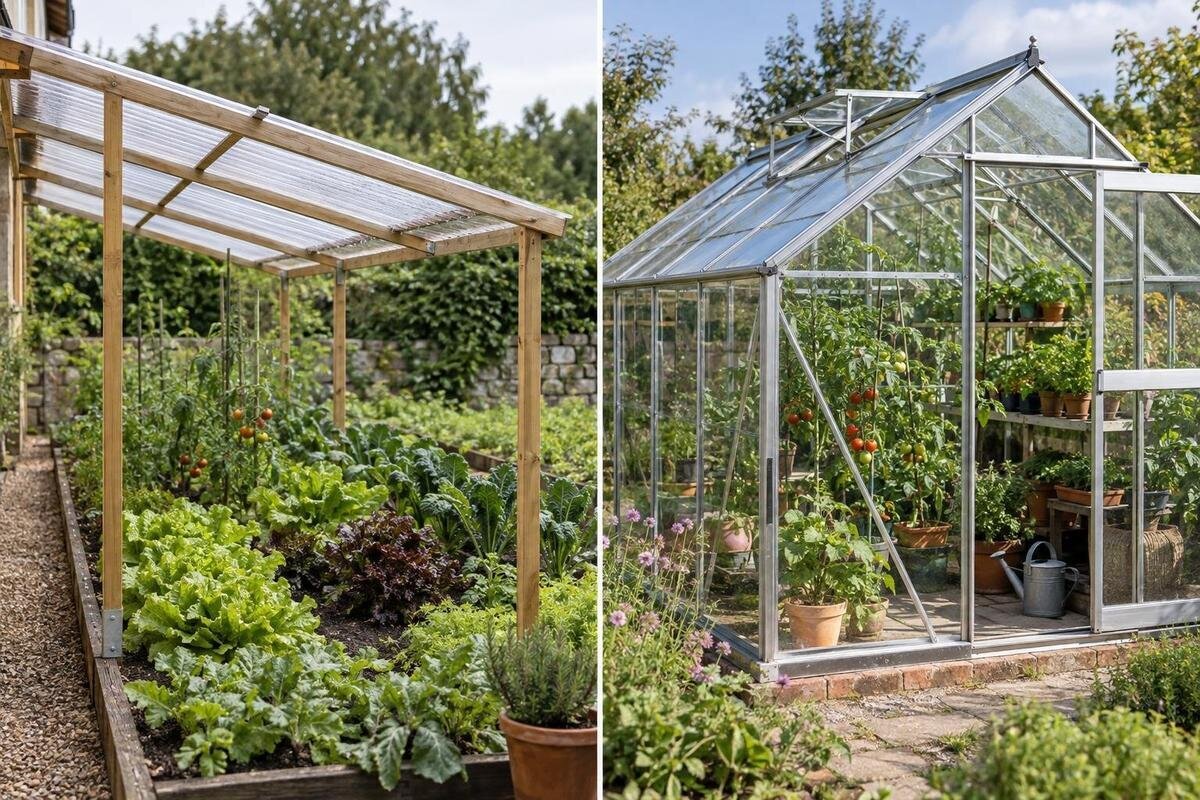
Growing space guide
Choosing between a rain shelter and a greenhouse comes down to whether your crops need a roof or a more enclosed growing environment. A simple shelter keeps direct rainfall off the area beneath it while leaving plants largely exposed to the garden’s air and temperature. A greenhouse can alter how rain, wind and warmth reach crops, but its effect depends on the structure, openings, glazing, site and management. Neither choice guarantees a longer season or ideal conditions. Begin with the growing problem you need to solve, then compare the space and care each option requires. The right answer may vary between beds in the same garden.

Buying considerations 1
Rain cover and enclosure create different growing conditions
A rain shelter, as the term is used here, is an overhead cover with open or largely open sides. It interrupts direct rainfall over the crops beneath it, but the growing area remains exposed to outdoor air movement and much of the surrounding weather. A greenhouse has a roof and sides around the growing space. It also keeps direct rain off covered plants, while the enclosure changes how air moves and heat accumulates or escapes. A greenhouse is not automatically sealed or climate-controlled; its effect depends on openings, cladding, position and day-to-day management. Labels can vary, so check drawings for actual side coverage.
The useful distinction is the growing condition, not the appearance of the structure. If heavy rain is the main problem and the crop should continue to experience open-air conditions, an open-sided shelter may be enough. If you want a more sheltered zone that can be ventilated and managed for a different environment, a greenhouse is the closer match. Neither structure guarantees a particular harvest or extends the season by itself. The crop, local weather and chosen configuration determine what happens. Some designs add partial side screens, making the plans more informative than the product label alone.
What a rain shelter can and cannot protect against
A roof can keep direct rain from landing on the covered section of a bed, bench or row. That can help when repeated rain disrupts picking, affects a crop’s harvest quality or makes the work area difficult to use. Its value is crop- and site-specific: many plants benefit from rainfall, so covering them changes their water supply rather than simply improving it. A shelter only covers the area reached by its roof, and wind can drive rain through open sides. Water can also splash from nearby ground onto low foliage. Roof coverage, height and exposure affect the result, so do not assume all shelters provide the same protection.
Open or mostly open sides mean the shelter will not hold warm air around plants in the way an enclosed space may. It also will not block every gust or keep out insects, dust and wind-driven rain. It will not regulate humidity or keep temperatures within a set range. You also need to manage irrigation because the roof intercepts some rainfall, and consider where roof runoff goes so it does not undermine beds or paths. Check whether the design includes drainage arrangements rather than assuming it does. A rain shelter is a targeted response to rainfall, not a general substitute for an enclosed growing space.
Buying considerations 2
When an open-sided shelter suits the crop plan
Choose a rain shelter when the main requirement is to reduce direct wetting of a defined crop area while leaving plants exposed to much of the garden’s airflow and temperature. That may suit a seasonal crop or a particular bed where rain interferes with harvesting or soil management. It is less compelling when the crop’s key need is warmth, protection from wind or separation from outdoor conditions. Make the decision for the crop’s whole cycle, not just a single wet week, and remember that rainfall excluded by a roof may need to be replaced through irrigation.
Size the shelter around mature plants, trellises, containers and the route you use to tend or harvest them; a roof that covers only the central row may not solve wind-driven wetting at the edges. If your crop plan instead calls for an enclosed space, the Classic aluminium greenhouse range lists areas from 3.77 m² to 28.08 m². Use that as a scale reference, not proof of suitability. Confirm exact dimensions and usable space, then decide whether enclosure offers a benefit that an open shelter cannot. The listed area should not be treated as bed area.
What an enclosed greenhouse adds—and what it cannot guarantee
A greenhouse creates a boundary between the crop and some outdoor conditions. Its roof and sides keep direct rain off covered plants and, when doors or other openings are closed, can reduce exposure to wind. Sunlight can warm the interior; that warmth may help in cool periods but may also build to levels that stress plants in hot conditions. A greenhouse does not hold a stable temperature simply because it is enclosed. An unheated structure still follows the weather, with internal conditions shifting as sunshine, outside temperature, glazing and ventilation change.
Ventilation is part of growing with a greenhouse, not an optional afterthought. Opening doors or vents, where fitted, allows air to exchange with the outside; the right arrangement depends on the structure and climate. Moist air can condense on cooler surfaces, so an enclosed space is not automatically dry or disease-free. Nor should you assume it excludes pests: openings and gaps matter. When considering the Limited Edition aluminium greenhouse range, check the selected configuration for glazing, ventilation openings and door positions. The model name alone does not establish those details or indicate that heating, cooling or pest control is included.

Buying considerations 3
Seasonal growing still depends on weather and management
A greenhouse can make shoulder-season growing more practical by buffering crops from direct rain and some outdoor exposure, but its season is not a fixed promise. Unheated space may differ little from the weather outside during cold, overcast periods, while sunny conditions can make it too hot in warmer weather. A plan that relies on heat through cooler months needs the right construction and, if required, separate equipment; a standard greenhouse should not be presumed frost-free. Summer use also depends on ventilation and any light or shade management appropriate to the crop and site.
Plan around the crops you want to grow, when you intend to start or finish them, and the time you can spend managing the space. For a footprint comparison, the T-Model Orangery Greenhouse range lists areas from 16.52 m² to 30 m². Those figures help compare listed sizes, not how long a growing season might be. Review the chosen drawings and specifications for openings and glazing, then compare them with the conditions your crop plan requires. Climate varies between locations, so a growing calendar that works in one garden may not suit another.
Plan for everyday access, watering and storage
Daily work is easier to judge on paper than after a structure is in place. Mark the route for carrying seedlings, watering, pruning and harvesting; include room for a door to open and for you to reach each bed without stepping across plants. A rain shelter’s open sides may make access straightforward, but posts and roof edges still shape movement. Inside a greenhouse, walls and doors define the usable route, so a generous listed area can still leave less planting space than the total suggests. Include room for a hose, trays or other items you regularly carry.
Separate the area you need for crops from space you might use for tools or supplies. If a product is labelled as having built-in storage, check the selected drawings to see how it is arranged and how much growing area remains. The Limited Edition greenhouse with built-in storage range lists areas from 5.52 m² to 28.08 m². The name identifies the range, but its area figures do not show storage capacity or internal layout. Decide whether storage inside the growing space would help your routine or whether keeping equipment elsewhere would leave a more workable crop layout.
Buying considerations 4
Measure usable growing space, not just total area
Before choosing a size, draw the footprint from the dimensions shown in the plans and lay out beds, staging or containers at their intended widths. Leave a practical passage to reach crops on both sides, turn with a watering can or harvest crate, and move plants and supplies in or out. Check how the door opening affects that route. With a rain shelter, access may be from the sides; in a greenhouse, the entrance and internal paths are central to the layout. The listed square metres do not tell you whether those details will work.
Use product area ranges as a shortlist filter rather than a substitute for a scaled drawing. The Pyramid Greenhouse range lists areas from 5.53 m² to 18.9 m²; compare the listed options with the area available and the bed layout you want. Confirm the exact dimensions of your chosen configuration and the space needed around it for access and care. Allow for mature plants that may overhang paths, too. If the structure only fits by sacrificing every working aisle, reconsider its size or the number of crops.
Assess the site before settling on a structure
Observe the garden through the day and across the growing season. Note where buildings and trees cast shade, where hot afternoon sun reaches, how water moves after rain and which routes need to stay open. These details matter to both choices: a rain shelter changes how rainfall reaches the beds, while a greenhouse also changes how heat and air behave. A convenient location for watering may still provide conditions that do not suit the crop. An exposed spot may need a different structural assessment from a more sheltered one, so do not choose a position based on a single sunny afternoon.
If an enclosed structure is being considered near a building or boundary, check its actual footprint, access, opening clearances and interface with the site. A wall greenhouse range is listed from 3.69 m² to 14.34 m²; consult the drawings for the particular size rather than assuming a wall format will fit a restricted space. For a permanent structure, have fixing, drainage and site-specific exposure assessed by an appropriately qualified local professional. Also check any relevant local approval requirements with the responsible authority.

Buying considerations 5
Compare the selected configuration, not just its name
Once the growing purpose and site are clear, compare the drawings and specifications for each configuration. Check overall width and length, height, door position, ventilation openings, glazing type, base or fixing requirements, and what is included in the selected option. Ask how those details affect light, access and ventilation; do not infer them from a photograph or model name. Two greenhouses with the same listed area can have different proportions and openings, and one range may include several sizes or configurations. A useful comparison matches the options being considered, rather than relying on headline areas alone.
For example, the Prestige greenhouse with metal base is listed with areas from 3.77 m² to 28.08 m². Treat the name and area range as identification and scale information; they do not establish whether the base suits a particular site or show every detail of a chosen setup. Compare the drawing and specification for the exact model and options, then confirm structural or installation questions with a qualified professional. Assess a rain shelter from its own plans too: an open-sided cover needs a different check of rain coverage from an enclosed building.
Match the final choice to your growing requirements
Choose a rain shelter if direct rainfall is the specific issue, open-air conditions suit the crops, and you can manage the changed water supply and remaining exposure. Choose a greenhouse if your growing plan benefits from a more enclosed space and you are prepared to manage ventilation, heat and the selected configuration’s limits. If both aims matter, identify which crops need a roof and which need more enclosure; one structure does not have to serve every bed. This keeps the choice tied to growing requirements rather than appearance, assumed performance or the largest available size.
Write down what weather exposure you want to reduce, which conditions should remain open to the garden, and how much room is available for the structure and access. Then compare the drawings against those requirements. For a larger listed scale, the Spacious Greenhouse range lists areas from 47 to 70 m²; that is a size reference, not a recommendation for a particular crop or property. The right option is the arrangement that meets the growing brief and leaves enough room to tend it.
Frequently asked questions
Will a rain shelter keep crops completely dry?
No. It intercepts rain falling directly onto the area beneath its roof, but wind can carry rain through open sides and water can splash from nearby surfaces. The result depends on the shelter’s coverage, height and exposure. It also does not provide a steady temperature or humidity.
Can a rain shelter replace a greenhouse?
Only if rain protection is the main thing your crops need. An open-sided shelter leaves plants exposed to much of the garden’s air and weather. If your plan depends on a more enclosed space, or on managing ventilation and heat, compare greenhouse options instead.
Will a greenhouse keep plants warm in winter?
Not necessarily. An unheated greenhouse still responds to outside conditions, and its temperature can vary with sunlight, glazing, ventilation and the site. Do not assume it will be frost-free or maintain a particular temperature. Check the selected configuration against the conditions your crops need.
Is a greenhouse always better for an Australian summer?
No. A sunny, enclosed space can become hot, while conditions vary between locations and sites. Ventilation and any suitable shade management matter. An open-sided shelter leaves crops more exposed to outdoor air, but it does not protect them from all wind or weather. Compare the needs of your crops with the conditions you can manage.
What should I compare before choosing a size?
Compare the structure’s exact dimensions with your beds, mature plants, paths and access needs. Listed area is not the same as usable planting area. Check the drawings for doors, openings and the selected configuration, and allow room around the structure for access and care.
A rain shelter is a focused choice when direct rainfall is the main issue and crops can remain exposed to outdoor conditions. A greenhouse makes sense when a more enclosed space supports the growing plan and you can manage its heat and ventilation. Base the decision on crop needs, site conditions and usable space—not on the assumption that one structure will suit every season.
