
Restoring an Older Aluminium Greenhouse: What Can Be Kept?
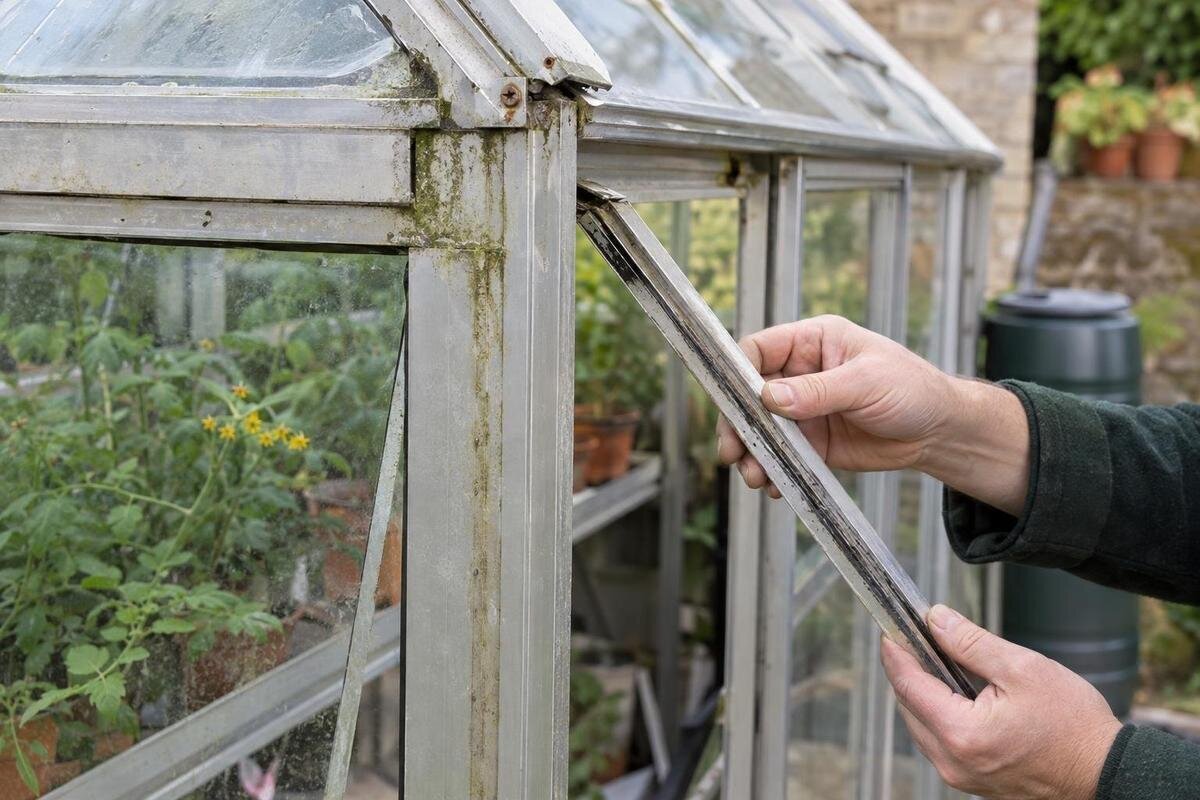
GREENHOUSE RESTORATION
An older aluminium greenhouse can look tired while most of its frame remains serviceable, or appear sound while a few important connections are failing. Age alone cannot tell you whether restoration makes sense. What matters is the combined condition of the frame, base, glazing and operating parts, together with the availability of exact replacements and reliable instructions. Before buying panels or fittings, identify the model and document the defects. A careful audit separates cosmetic wear from alignment or safety concerns, helps set a realistic repair scope and gives a manufacturer or qualified installer useful evidence for a second opinion.

Identify the greenhouse before ordering parts
Before shopping for parts, establish exactly which greenhouse you have. Look for the manufacturer, model or series, version, serial or order number, and any label fixed to the frame. Find the assembly manual, parts list, drawings, invoice or correspondence with the original supplier. Record the installation date only if it is known; an approximate age provides context, but it is not a part number. If a previous owner supplied the structure, ask whether they kept paperwork or remember where it was purchased. Similar-looking profiles or an identical footprint do not prove that two greenhouses share fittings. Copy every label exactly, including letters and punctuation, and photograph it without scraping or removing it.
Make a written and photographic record while the greenhouse is assembled. Note its outside length and width, roof and door arrangement, panel type if known, earlier repairs, and the number and position of missing or damaged items. Take whole-structure views from each side, then close-ups of frame joints, the base, glazing retainers and problem areas. Pair each close-up with a wider photo so a supplier can locate it, and keep the original images rather than relying on memory. Mark issues on a simple sketch or numbered photo list, and note whether they have changed since you first noticed them. Do not remove a panel or undo a connection to find a mark; the aim is to record the greenhouse, not create a new fault.
Assess the aluminium frame without loading it
Inspect the frame from ground level, following the same route around the greenhouse so no side is missed. Look at the base rails, corners, uprights, roof members, ridge, door opening and joints. Note bent or crushed profiles, separated joints, missing connection pieces, noticeable gaps, shifting sections or changes in alignment. Surface marks or discolouration alone do not prove that a member has failed; a neat finish cannot confirm that hidden connections are sound. Photograph each location and note whether the symptom appears elsewhere. Identify locations consistently, using descriptions such as “right-hand roof corner, viewed from the door” alongside photo numbers.
Look for patterns rather than diagnosing from one mark. A single damaged corner calls for a different investigation from repeated misalignment along the roof and walls, particularly if doors no longer meet their frames or glazing has moved. Those observations do not identify the cause, and they are not a basis for straightening, drilling, splicing or reinforcing aluminium profiles. Do not climb on the structure, lean on it to test rigidity or disturb a section carrying glass. Note whether an issue seems stable or is changing, without deliberately loading the frame. If it appears to have shifted, a joint is separating or a member is visibly deformed, keep people clear of the affected area and ask the manufacturer or a qualified greenhouse installer to assess it before repairs.
Include the base and support in the audit
Check how the greenhouse meets the ground or supporting base before treating the frame as an isolated repair. From outside, note whether base rails look even, whether there are visible gaps or movement at support points, and whether water or washed soil collects nearby. Look for clues such as recurring door binding, uneven gaps at several corners or a base that appears to have shifted. These signs can have more than one cause; they do not show whether the foundation, anchoring or frame is responsible. Record any visible change in nearby paving, edging or ground that coincides with the issue, but do not lift the structure, adjust anchors or dig around supports.
Record the support surface, visible fixings, previous repairs and when changes became noticeable. A new panel or latch will not correct an underlying alignment problem, and a level-looking base may not suit a different greenhouse. Ask the installer whether the base and fixings can remain and what needs checking before replacement. The Prestige Greenhouse with Metal Base provides one replacement option to compare. Its name identifies a metal base, but does not establish compatibility with your existing supports or resolve the foundation requirements for your site.
Record glazing damage and confirm replacements
Inventory the glazing by location and type. Record whether each panel is glass or plastic, if you can identify it from records or a safe visual check, then note cracked, missing, loose, heavily clouded or otherwise damaged panels. Include retainers, glazing bars and seals that appear displaced, but do not pry at them to see how they work. If accessible panel dimensions can be noted safely, record them as reference only: length and width do not establish thickness, edge treatment, fixing method or compatibility. Similar-looking sheets and panes can belong to different systems, so note any marking or manual reference that might identify them. Also note whether damage is isolated to one bay or appears in several areas; that affects the scale of the repair.
If glass is broken or loose, especially overhead, stop handling that area and arrange assessment by a qualified glazier or greenhouse installer. Do not remove, cut or refit glazing to investigate. Use the maker’s manual and part details to identify a suitable replacement and check the surrounding frame and retainers. For widespread damage, compare the full glazing repair with replacement of the greenhouse. The Classic aluminium greenhouse range offers one comparison, not a source of confirmed compatible panels. Establish whether the old frame can accept replacement glazing before spending money on it.

Check doors, vents and operating hardware
Check parts that open and close only where the greenhouse is stable and movement can be tested without force. Note how the door runs or swings, whether it binds, drops, rattles or fails to latch, and whether vents or roof windows remain in their intended position. Inspect visible tracks, hinges, handles, catches and opener components for missing pieces, wear or deformation. Record the point where movement becomes difficult and whether the issue affects one opening or several. A stiff door can result from hardware, frame alignment or both, so describe the symptom rather than ordering a roller or hinge on that assumption. Do not test an opening beneath loose glazing or a visibly shifted frame.
Use the manual to identify the part, model, side and opening arrangement before requesting a replacement. Include a photo of the whole opening and a close-up; measurements support identification but do not replace model details. Do not force a jammed fitting or substitute a similar-looking component. If a wall-attached greenhouse cannot be repaired practically, consider the Aluminium Lean-to Greenhouse range as a replacement option. Assess its requirements separately: the listing does not establish compatibility with the existing wall, base or hardware.
List small fittings and confirm spare-part availability
Include small fittings in the audit: glazing clips or retainers, screws and bolts, end caps, seals, washers, door guides and brackets shown in a parts list. Record what is missing, cracked, distorted or visibly different from its neighbours. Keep each part family separate in your notes; a fastener’s apparent diameter or a seal’s length cannot establish its thread, material, profile or compatibility. Do not tighten every loose screw or swap hardware during the inspection, because an incorrect fixing or unapproved change can make the original fault harder to trace. Note anything that appears to have been repaired or replaced before, as it may not match the original parts schedule.
Find the part number in the manual or diagram, then ask the manufacturer or original supplier about availability and compatible substitutes. Provide the model, version, part location and condition, with a close-up; distinguish missing items from broken ones. Without an exact reference, ask what else is needed for identification. If compatible spares cannot be found, include Limited Edition Aluminium Greenhouses in your replacement comparison rather than assuming their fittings suit the old frame. Keep written confirmation of compatibility and availability with the installer’s quote.
Compare the complete repair scope
Turn the observations into a component-by-component decision sheet. For each item, record its condition, the evidence for that judgement, the exact repair needed and whether it depends on another unresolved fault. Mark it as retain, replace with a confirmed part, professional assessment or unresolved rather than calling it reusable because it is still present. This distinction separates a small, defined repair from a project that may expand once work starts. Add a photograph number and part identifier beside each entry, and list tasks that cannot be priced until an inspection is complete. The record helps a supplier and installer assess the same scope instead of quoting against different assumptions.
Compare the complete job: parts, glazing work, labour, access and alignment repairs. Request separate estimates for diagnosis, repair and replacement where practical, with inclusions and exclusions. There is no universal cost threshold for abandoning restoration; condition, parts availability and intended use all matter. If storage is important, include the Limited Edition Aluminium Greenhouse with Built-In Storage in your comparison, checking its dimensions and arrangement against what you need to retain. For each estimate, establish whether dismantling, delivery and assembly are included so the totals cover equivalent work.
Check whether the old layout still suits your needs
Consider what you need the greenhouse to do now, not only how much of the old one can be rescued. Record the usable growing area, internal routes, door clearance, access from the garden, location and any storage or working space you actually use. Check whether the present layout still suits those needs before spending on repairs. A sound frame can be a poor choice if the site or purpose has changed; equally, a few confirmed replacements may be a sensible route when the footprint and layout still work. This is a use decision, not a judgement based on age or appearance alone. Note which requirements are essential and which are preferences, so optional changes do not distort the repair comparison.
Use those requirements to compare replacements by their overall dimensions, not just advertised floor area. The T-Model Orangery Greenhouse range, listed from 16.52 to 30 m², provides a size range to investigate. Floor area alone does not show whether a model fits the garden, leaves enough access or suits the existing foundation. Review the specification and installation documentation for the exact size you are considering, and discuss site constraints with an installer. Record that model and size so subsequent estimates refer to the same option.

Do not assume parts will fit another model
Keep old greenhouse components within their original system unless the manufacturer confirms otherwise. Two profiles may look alike yet differ in cross-section, connection points, glazing retention, opening direction or dimensions; mixing them can create gaps or prevent correct assembly. The same caution applies to panels, bars and hardware kept for a possible repair. Store the part number and the location it came from with anything retained. If compatibility cannot be verified, describe it as an unidentified spare, not a confirmed replacement. Do not rely on online photos or tape-measure dimensions alone to identify a profile.
Buying a new greenhouse does not make the old one a reliable source of spares. Assess a different design as a complete product, rather than planning a conversion using altered members or combined sections without approved instructions and qualified review. For example, the Pyramid Greenhouse is a separate model family, not evidence of component interchangeability. Check its dimensions, base requirements, access and glazing specifications independently, keeping the replacement assessment separate from the inventory of salvaged parts.
Get a professional assessment where condition is uncertain
Arrange a professional review before committing to repairs if frame members are bent or separated, the greenhouse has shifted, several panes are broken or loose, doors and glazing no longer align, or the cause of a change is unclear. Ask the manufacturer for the manual, part identifiers and any approved repair procedure; ask an appropriately qualified installer or glazier to assess the relevant frame and glazing. A useful enquiry includes model evidence, photos, symptom locations, a parts list and the work you hope to retain. Ask what can safely remain, what needs replacement and whether the base or alignment also requires attention. If glass is unstable, keep away from that area rather than trying to make it safe yourself. Get parts limitations stated before approving paid work.
Use the assessment to choose a defined repair, staged work or complete replacement. If you need substantially more space, the Spacious Greenhouse and Orangery range spans 47–70 m². Compare the exact model’s footprint, access and base requirements with an installer rather than treating that range as proof of suitability. Targeted restoration may preserve a useful structure when compatible parts are available and the remaining assembly is sound. Where critical parts or support remain uncertain, defer cosmetic work. Keep professional recommendations distinct from assumptions in your initial visual audit.
Frequently asked questions
Does age alone tell me whether an aluminium greenhouse is worth restoring?
No. Age can help you locate manuals or past orders, but it does not show the condition of the joints, glazing, support or operating hardware. Base the decision on the whole assembled structure, the exact faults, compatible parts and a professional review where alignment or safety is uncertain.
Are panel measurements enough to order replacement glazing?
No. Length and width are useful references, but the material, thickness, edge treatment, shape, retention method and model-specific system may also matter. Use manufacturer documentation and exact identifiers. For broken or overhead glass, do not remove it to take measurements; arrange assessment by a qualified glazier or greenhouse installer.
Can I reuse fittings from another aluminium greenhouse?
Only if the manufacturer or supplier confirms that the exact parts are compatible with your model and version. Similar appearance or dimensions alone are not enough. Keep salvaged pieces identified by model and location, and do not alter profiles or fixings to force a fit.
What information should I send when asking about spare parts?
Send the maker and model, version or serial information, and a manual reference or part number if available. Include a whole-view photo and close-ups showing the item’s position and condition. State whether it is missing, damaged or previously replaced. Use measurements as supporting details, not the only basis for identification.
When should I stop considering repair and compare full replacement?
Compare replacement when several critical areas need work, the frame or base has shifted, suitable replacement glazing cannot be identified, or compatible parts cannot be confirmed. Ask a qualified installer to assess the structure first. Then compare complete repair and replacement scopes against the greenhouse’s current use and site, rather than relying on a fixed cost percentage.
The strongest case for restoring an older aluminium greenhouse is a frame and base that an installer considers suitable, glazing and hardware that can be matched, and a repair list that still serves your needs. If those points remain uncertain, focus on identification and assessment before buying parts. Keep the paperwork, photos and supplier responses together so each decision is based on the actual model and its condition. That gives you a clear basis for choosing a limited repair or a complete replacement without treating age or salvage value as proof either way.
