
Growing Alpine Plants in a Greenhouse
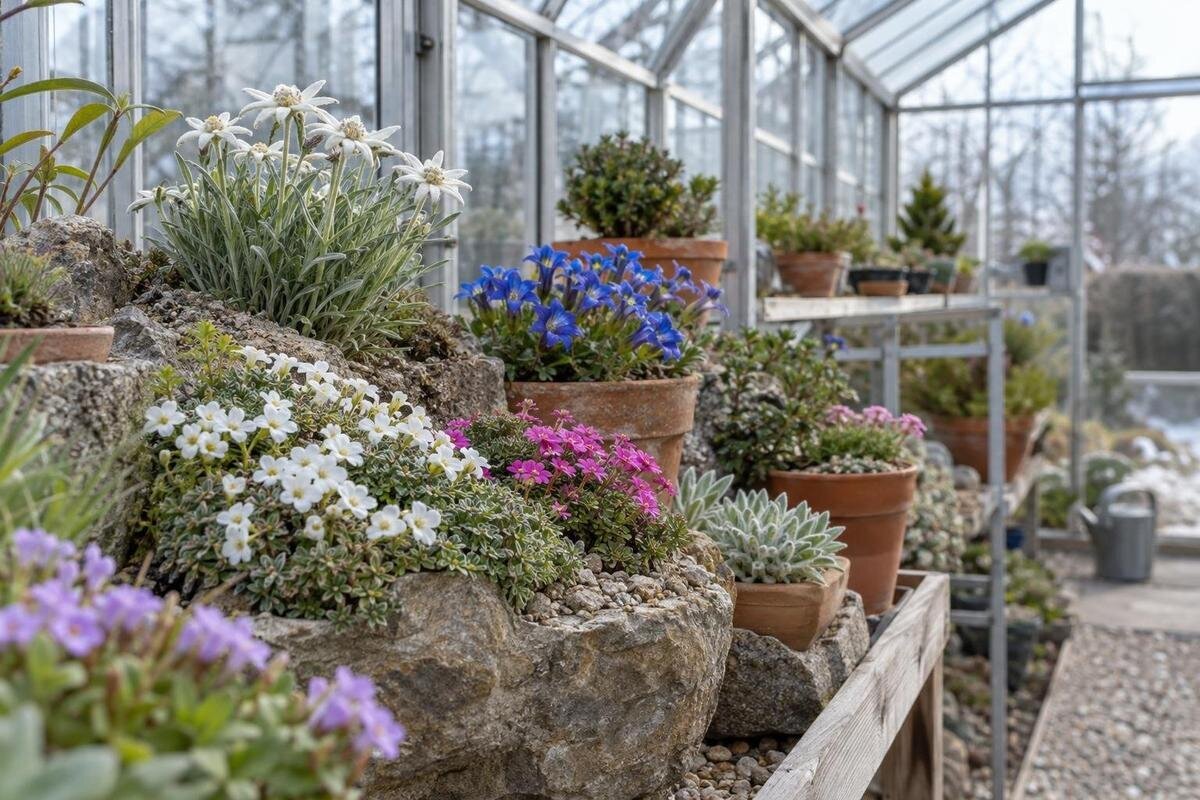
Alpine plants under glass
A greenhouse can be a useful rain shelter for alpine plants, but it should not be managed like a warm house for summer crops. Many alpines need strong light, fresh air and a root zone that drains promptly; a closed structure can turn a bright day into damaging heat. Success depends on matching each plant to its habitat and using the greenhouse to manage rain, ventilation and pot conditions—not simply to make everything warmer.

Choosing a greenhouse 1
Why use a greenhouse for alpine plants?
An alpine plant is defined by its mountain habitat, not by one set of growing instructions. Plants from exposed scree, alpine grassland, snowmelt channels and cliff ledges can experience very different patterns of light, temperature and moisture. A greenhouse gives you more control over growing conditions: it can keep prolonged rain off a collection, let you direct watering and make small plants easier to inspect. It does not recreate altitude, and a closed structure can become far warmer than the outdoor air. For many growers, the aim is a bright, airy shelter, not a warm house for pushing growth. Think of the growing space as a range of microclimates rather than one uniform bench.
Rain exclusion can suit species whose crowns or roots struggle when cold growing media stay wet, but a roof does not automatically make the space dry. Condensation, splash and wind-driven rain may still reach pots, and humidity can linger if vents stay shut. The cover also makes you responsible for watering during dry spells. When comparing floor area, the Limited Edition Aluminium Greenhouses are listed from 3.77 m² to 28.08 m²; use those figures to estimate room for benches, an aisle and working access, then check the exact configuration for ventilation, height and rain exposure. Area alone says nothing about the climate the greenhouse will create. A crowded display also makes it harder to separate groups with different watering needs.
Group plants by their natural habitat
Before arranging benches, write down the habitat and care notes for each species, or at least the best available cultivar information. A useful first split is between open, rocky sites that dry quickly; meadow or snowmelt habitats that remain more evenly moist; and plants naturally growing in partial shade. These are planning groups, not rigid rules, and some taxa sit between them. Keep tags with scientific names: labels such as ‘alpine’ or ‘rock plant’ are too broad to guide watering and winter care. When provenance is known, use it to refine placement, but do not assume a plant will experience identical conditions in your greenhouse. Note its expected summer heat tolerance as well as its winter cold requirement. If a new plant arrives without a trustworthy name, keep it aside until its identity is clearer.
Use named plants to test those assumptions. Leontopodium alpinum (edelweiss) is a cool-climate example usually placed in full sun with sharp drainage; it should not be given the hot, stagnant conditions used to push warmth-loving crops. Gentiana acaulis is also a cool-growing perennial, but is commonly grown in sun or light shade with more even moisture in free-draining soil. Their light and watering needs are not identical, even though both are called alpines. Check each plant’s published winter minimum, summer heat tolerance and dormancy needs rather than inventing one ‘alpine temperature’. The T-Model Orangery Greenhouse is listed in area options from 16.52 m² to 30 m²; compare this with the room you need for separate groups and paths.
Choosing a greenhouse 2
Balance strong light with heat control
Many alpines need generous light to stay compact and flower well, but the right exposure depends on the species and on how quickly the greenhouse heats. Check the intended position at different times of day and note shade from trees, fences and nearby buildings; repeat the check as the sun’s angle changes through the year. A wall can block light for part of the day or reflect heat back towards pots, so do not judge a site from one midday visit. If comparing a Wall Greenhouse option, listed from 3.69 m² to 14.34 m², assess the wall and surrounding space as carefully as the floor area, and confirm the chosen configuration’s usable height and ventilation. Also check seasonal shadows: a bright summer position may be shaded in winter.
Glazing can admit strong solar radiation while limiting the breeze that cools plants outdoors. Put a max–min thermometer near plant-canopy height, in shade rather than direct sun, and, in a larger house, compare readings in the sunniest and most enclosed spots. Record those values alongside visible changes instead of estimating from outside. Vent early as temperatures climb; do not wait for leaves to wilt. Use temporary shading only when readings and plant response justify it, since too much shade can leave sun-loving cushions or rosettes weak and less floriferous. Reassess shading when the weather changes rather than leaving a dark covering in place all season.
Build ventilation into the greenhouse plan
Ventilation is central to a cool greenhouse: it releases built-up heat and helps foliage and pot surfaces dry after watering. Openings low and high, or openings on opposing sides, can encourage air exchange, but performance depends on their size, position, wind and nearby obstructions. Keep a clear route between openings; dense benches or stored items can create still pockets around tightly grouped pots. The greenhouse should be ventable on bright winter days as well as in summer, because clear skies can raise indoor temperatures even when outside air feels cool. Air movement is not a reason to let every pot dry out; check moisture separately. If a still pocket persists, a circulation fan can move air locally, but it cannot replace fresh-air exchange through vents.
When comparing options in the Aluminium Greenhouses range, listed from 3.77 m² to 28.08 m², look up ventilation on the exact size and configuration: the number and position of vents, how they open and whether openings on more than one side are available. The range’s area figures do not establish those details. Consider how you will reach controls and open doors on hot days, too. If a boundary, fence or wall could block airflow, discuss the site and available ventilation options with the supplier before choosing. Where a powered system or structural change is planned, have a qualified professional confirm what is suitable.

Choosing a greenhouse 3
Use rain protection without making the collection too dry
Overhead cover helps only if the collection still gets the moisture each plant requires. Rain may enter through an open door or vent, and wind-driven showers can wet benches; dripping condensation can also keep foliage or crowns damp. After rain, inspect sheltered and exposed positions rather than assuming every pot stayed dry. Place plants that need dependable rain protection in the driest locations, but keep moisture-loving species where you can water consistently. That separation lets the roof reduce prolonged wetting without turning the whole greenhouse into a dry zone. In winter, note whether covered pots remain wet for days or dry too quickly. If a section stays wet after rain, move the pots or adjust the layout instead of assuming the cover has made them safe.
Check the greenhouse after several weather conditions, including a windy shower, before relying on it as a rain shelter. The Pyramid Greenhouse range is listed from 5.53 m² to 18.9 m²; those area options do not tell you how rain enters at your particular site or where the chosen configuration’s ventilation openings sit. Confirm the layout, then watch for run-off, splash and condensation in use. Avoid placing vulnerable pots beneath regular drips, and leave enough separation for air to circulate around foliage. A sheltered display still needs observation after storms and watering, because protection is useful only when the plants’ actual moisture needs are met.
Choose pots and growing media for drainage
Drainage begins with both the pot and the growing medium. Use containers with clear drainage holes, and select a mix to suit the plant’s habitat and soil preference. A scree or cushion species may need a more mineral, fast-draining blend, while a meadow gentian may need a mix that holds usable moisture without remaining saturated. There is no reliable all-alpine recipe: pH, nutrient levels and moisture needs vary among species. Avoid packing a small pot with dense garden soil, and do not add grit indiscriminately if a plant needs more water retention. Check pH preferences too, especially for species adapted to limestone or acidic soils; drainage alone does not make two mixes interchangeable. Keep a note of the mix used so you can compare results at repotting.
Check pots after watering to make sure outlets are clear and containers are not standing in collected water. Trays catch drips, but empty them when plants should not sit wet; raising a pot slightly may help if a hole is blocked by a flat surface. The Prestige Greenhouse with Metal Base listing identifies a metal base and area options from 3.77 m² to 28.08 m². Confirm the exact floor or base arrangement with the supplier and plan how trays will drain; the base description alone does not establish a suitable growing surface or prevent waterlogging. Test drainage at the actual bench or floor position before moving a whole group onto it.
Choosing a greenhouse 4
Water each group to suit its needs
Once rain is excluded, you decide when water reaches the roots. Check moisture in each group’s pots rather than watering the entire collection on a calendar; the surface can look dry while the root zone remains damp, particularly in a large or shaded pot. Lift a representative pot, feel the mix below the surface and compare it with that species’ stated preference. Water when that group needs it, then recheck during warm, windy periods when small containers may dry faster. Do not assume a cool greenhouse means evaporation has stopped or that every pot needs water at the same time. Compare edge and centre pots, because exposure can vary across a bench.
Group pots with similar needs close enough to water consistently, but leave space around rosettes and cushions for air to pass. Water the medium directly where possible, using a gentle flow that does not dislodge roots or wash fine particles from the pot. For plants whose crowns trap moisture, avoid leaving water pooled in the centre; that is not a reason to keep every alpine dry. In winter, dormant plants may use less water, while evergreen species and smaller pots can still dry out under cover. Let species-level guidance, the season and actual pot moisture determine any change.
Plan benches, paths and storage
Arrange benches so species groups are easy to reach, inspect and water, with a clear working aisle and room to move trays without knocking small pots. Keep the brightest positions for plants that need direct light, and avoid placing taller shelves where they shade low cushions. A raised bench can make drainage and inspection easier, but check that it does not bring plants into a hotter layer near the roof. The Limited Edition Aluminium Greenhouses with Storage range is listed from 5.52 m² to 28.08 m²; confirm the built-in storage arrangement and calculate the clear growing area left after benches and paths.
Keep a small potting and tool area separate from crowded plant benches so bags, labels and watering gear do not block vents or working access. Store growing media dry and covered in suitable containers, and keep new arrivals apart while you check their identity and condition. Label every pot with its botanical name, source and arrival date; add a separate note for preferred light, moisture and seasonal care. Records matter when several species look alike, because a misplaced name can lead to the wrong watering or winter routine. Arrange plants by shared needs, then make small changes without rearranging the whole greenhouse. A photograph of a flowering plant beside its label can also help with later identification.

Choosing a greenhouse 5
Manage seasonal temperatures and dormancy
Plan for seasons, not just the day of purchase. A greenhouse may buffer wind and rain, but it does not guarantee frost-free winter conditions, and it can heat rapidly in bright weather. Check the cold tolerance and dormancy of each plant; a species hardy in open ground may behave differently in a small pot exposed to cold air around it. Conversely, warmth held in the structure may interrupt cool conditions a plant needs. The Spacious Greenhouse is listed from 47 to 70 m²; a larger footprint may make grouping easier, but it does not guarantee separate temperatures or a cool microclimate.
During cooler months, keep checking the inside temperature on sunny days and ventilate when required; do not close every opening simply because outside air is cold. In summer, plan for heat spells: have a practical way to open vents and apply temporary shade before the collection shows stress. Avoid one seasonal setting for every species. If a plant requires a specific winter minimum, summer ceiling or cold period, follow its named-species guidance and monitor conditions at pot level. Check more than one position, since a thermometer beside a vent may not reflect the air around pots on a still bench. A useful record combines outside weather, greenhouse readings, venting and plant response over time.
Read plant responses and adjust conditions
Inspect leaves, crowns, roots and growing mix regularly. Pale or scorched foliage, soft crowns, persistent wilting, poor flowering or stretched growth can each have several causes; read them alongside temperature and moisture records before changing care. Look beneath leaves and around pot rims for common greenhouse pests such as aphids or slugs, and remove dead material that can hide problems. Keep tools and benches clean between repotting jobs, especially after dealing with unwell plants. A greenhouse makes a collection easier to inspect, but close spacing can let a problem spread unnoticed if pots are crowded. If several plants show symptoms, compare their shared position and conditions before treating each as a separate case.
Make adjustments one at a time. If a plant is struggling, compare its label and reliable species-level notes with the light, heat, airflow and pot moisture where it sits; then move it or alter shade or watering in a measured way. Keep a seasonal record of flowering, temperatures, venting and rain exposure so the next change is based on evidence rather than guesswork. Test a new position with one pot before moving a whole group. Over time, the collection shows which parts of the greenhouse stay cool, bright and well drained.
Frequently asked questions
Can I keep alpine plants in a greenhouse all year?
Some can, but it depends on the species and local conditions. Many alpine perennials are hardy outdoors in suitable settings; a greenhouse may help keep prolonged rain off them, but it can overheat on sunny days. Check both winter hardiness and summer heat tolerance for each plant, and ventilate according to measured conditions.
Do all alpine plants need full sun?
No. Leontopodium alpinum, or edelweiss, is a useful full-sun example, while some alpine plants tolerate or prefer light shade. Use species-specific growing notes, then compare them with the light through your greenhouse glazing and the heat at bench level. A bright greenhouse can still be too hot for a cool-climate plant.
Should an alpine greenhouse be kept dry?
No. A roof can reduce prolonged rain, but water needs differ: dry-site cushions and moisture-loving meadow plants should not be treated alike. Keep roots draining freely, water when each species needs it, and check for wind-driven rain or condensation that keeps crowns wet. Rain exclusion gives you more control over watering; it does not remove the need to water.
What growing mix should I use for alpine plants?
There is no single mix for all alpines. Choose a free-draining medium that suits the species’ habitat and soil preferences. Some rocky-site plants need a more mineral blend, while others need more moisture retention. Match the container’s drainage to the plant, keep holes clear and avoid leaving pots in standing water unless the species’ care guidance calls for it.
Do alpine plants need heating in a greenhouse?
Do not assume they do. Many are cool-growing plants, and extra warmth can work against their seasonal needs; others have specific minimum-temperature requirements. Check guidance for the exact species or cultivar, then use a thermometer to see what the greenhouse actually does. A greenhouse is not automatically frost-free or cool.
For many alpine plants, a greenhouse is more useful as a rain shelter than as a source of warmth. Its value depends on combining that protection with suitable light, ample ventilation, free drainage and watering tailored to each species. Choose plants whose requirements you can establish, give each group a suitable position and track temperature and moisture through the seasons. The aim is to manage the differences within your collection, rather than give every plant the same warm, sheltered conditions.
