
Should You Move Your Greenhouse When Moving House?
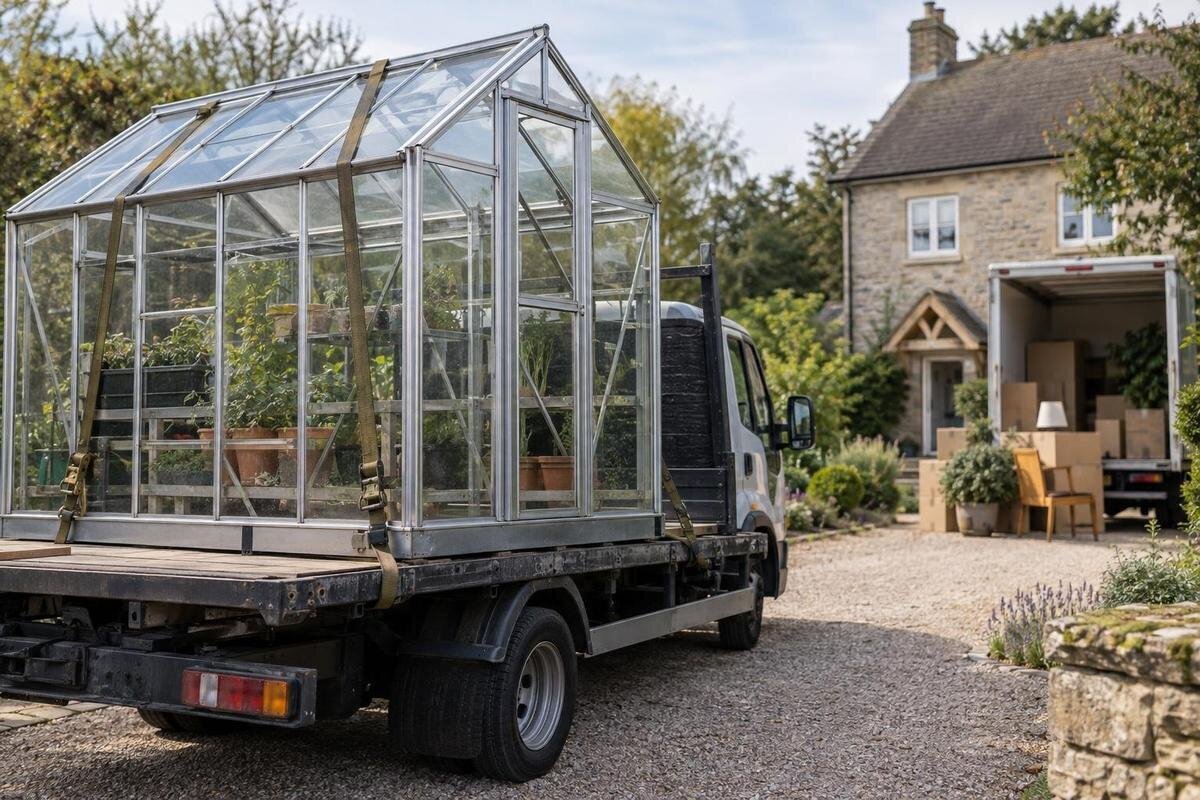
Moving house with a greenhouse
Moving house does not automatically mean your greenhouse should come with you. The decision depends on more than whether the frame can be taken apart: you need clear agreement about what stays, a realistic view of the structure’s condition, an assessment of dismantling and reassembly risk, a suitable site at the new address and a like-for-like cost comparison. Taking it may preserve a useful setup, but transport and rebuilding can cost more than its practical value. Leaving it by agreement or choosing a different greenhouse can be the more sensible outcome.

Is the greenhouse worth taking?
Think of this as a choice between three outcomes: relocate the existing structure, leave it by agreement, or start again with a different setup. The greenhouse’s original purchase price is not the value of moving it now. What matters is what remains serviceable, how much work is needed to dismantle and rebuild it, and whether it will serve the new garden. Include the time needed to coordinate the work and any period when you cannot use it. A greenhouse that has been part of your routine may be worth preserving, but weigh that preference against removal, transport, repair and setup costs. Compare the options before booking a removalist, while each is still possible.
Compare the existing greenhouse with what you need in the garden you are moving to, not only the one you are leaving. A smaller block, restricted access or a different growing plan may make the old structure less useful; a larger space does not automatically make its current footprint right. For a sense of replacement scale, the Spacious Greenhouse listing spans 47 to 70 m². Use that range to identify whether an exact configuration is worth comparing with your existing setup. The comparison should reflect the functions you need and the space available. If the existing structure needs alterations to work at the new address, include those in the decision too.
Agree whether it stays before booking removal
Before planning removal, establish who can decide whether the greenhouse stays. Do not assume it is automatically included in the sale or automatically yours to remove; the arrangement needs to be clear. Review the sale documents and ask your real estate agent or conveyancer to clarify any uncertainty. Agree with the buyer in writing before booking work, identifying the greenhouse rather than relying on a general statement about garden items. If the buyer wants it left, record that; if they expect it removed, establish the required timing. A late misunderstanding can affect access as well as the moving schedule.
Be specific about whether the frame, base, benches, shelving, irrigation equipment and loose tools stay; who arranges and pays for removal; when access is available; and what happens to leftover material or garden damage. Clarify whether the buyer expects a clear area or is happy for a base to remain, rather than guessing. These details can change the work that needs pricing and the time allowed at the property. If the wording or agreement is unclear, pause and ask your conveyancer before anything is dismantled. Keeping the greenhouse in the handover plan avoids leaving these questions until moving day.
Assess condition and parts availability
An intact-looking greenhouse is not necessarily a low-risk move. Note visible signs such as bent members, corrosion, loose connections, cracked or missing panels, worn seals, doors or vents that no longer close properly, water entry and patches from earlier repairs. A written record and clear photographs can help a specialist see what needs closer attention, but they do not prove that the structure can be rebuilt. Do not rely on age alone, or assume it is reusable because it has remained standing. If you cannot tell whether a defect is cosmetic or important to dismantling, ask a greenhouse installer or the original supplier to assess it.
Collect identifying details for that assessment: maker and model if known, purchase records, drawings or instructions, repair history and alterations made since installation. Ask whether parts needed for reassembly can still be sourced and whether the existing condition changes the likely scope. For a replacement comparison, the Limited Edition Aluminium Greenhouses range is listed from 3.77 to 28.08 m². Select a size and configuration to compare with the usable area and fittings you have now. Keep repairs to the existing greenhouse visible in that comparison: an estimate that assumes every component can be reused may give a different picture from one that allows for the work identified during assessment.
Dismantling and reassembly risks
Dismantling is a separate source of uncertainty, not a minor add-on to a truck booking. Greenhouses can combine frame parts, glazing or other panels, seals and connectors, and the risk of breakage or loss depends on the design, condition and past alterations. A general removalist quote may cover transport without covering specialist dismantling or reassembly, so ask exactly which tasks the provider includes. If the original instructions are missing, parts have been modified or you cannot identify the model, ask someone familiar with greenhouse structures to assess it before relying on a move plan.
Ask for a reasoned view of feasibility rather than a simple yes or no: is this particular structure suitable for dismantling, what might need replacing, and can it be reassembled at the destination? Find out how unexpected damage or missing components would be handled, who supplies replacement parts and how extra work would be priced. Request the exclusions and responsibility for damage in the provider’s written terms. If the assessment is uncertain, compare a cautious move estimate with the cost of leaving or replacing it. An assembly guide or product photograph alone does not establish that dismantling will be straightforward.

Compare the full cost of moving and replacing
Compare a complete relocation scope, not a headline removal figure with the price of a new greenhouse. Depending on the plan, cost items may include inspection, dismantling, protective packing, transport, temporary storage, reassembly, repairs or replacement parts, travel and preparation at the destination. Ask which items are included, provisional or excluded, and what triggers a revised quote if damage or missing components become apparent. If unusable material needs to be removed, clarify who handles it. When separate providers cover different stages, check that their schedules align and responsibility for each handover is clear; a gap between dismantling and reassembly may create extra handling or storage.
Build the replacement estimate around the same outcome: a chosen model and size, assembly, delivery, destination preparation, and any removal or disposal work. The Aluminium Classic Greenhouse listing gives a range from 3.77 to 28.08 m²; compare an exact size and specification rather than treating a broad range as equivalent to your existing greenhouse. Include practical value too: usable area, existing fittings, time without the structure and the effort of coordinating separate work. A relocation quote that excludes reassembly is not comparable with a complete replacement quote. A leave-behind option only works if the buyer agrees and the handover plan is clear.
Verify the new garden before committing
Measure the destination before deciding that the old footprint or base will work. Check the usable area, space around it for access and doors, and any constraints from walls, fences, trees, paths, sheds or services. Consider the surface, slope, drainage and exposure as part of a site assessment, not as a reason to assume a particular foundation will suit. If support requirements are unclear, ask a qualified installer or relevant professional for advice. A technically possible spot may still block a path, a future work area or everyday access, so look at how the greenhouse fits with the rest of the garden.
Check the everyday route as well as the plot: can you reach it with tools and growing supplies without obstructing another part of the garden? If a wall-adjacent format is one option, the Wall Greenhouse range is listed from 3.69 to 14.34 m². Use the exact model information to confirm dimensions and siting needs; the name and area range alone cannot confirm that a particular wall or position is suitable. Ask a qualified person to assess the wall or site if requirements are uncertain, and resolve access questions before a removalist or installer is booked.
Match footprint and layout to what you grow
Greenhouse area is only a starting point. The usable layout depends on exact dimensions and the position of doors, paths, beds, benches and storage. List what you want to do there—raising seedlings, growing produce, sheltering plants or keeping equipment—then compare the clear floor space and access each task needs. An existing arrangement may be familiar but leave too little room at the new house; a replacement may fit better even if its advertised area looks similar. The reverse matters too: account for fittings and working space before deciding that a smaller footprint will suit.
Ask for drawings or exact dimensions of any replacement configuration and check them against a sketch of the destination; do not assume shelves or accessories will transfer. The T-Model Orangery Greenhouse range runs from 16.52 to 30 m². Compare the chosen configuration with the layout you need, rather than judging it by total area alone. Show where you would put beds, benches and containers on your sketch, along with the routes between them. This lets you compare how the existing greenhouse and a replacement would accommodate the same growing tasks, particularly where access for people or equipment matters.
Choose between taking it, leaving it or replacing it
Moving it makes most sense when the sale arrangement is clear, its condition is acceptable, a competent provider considers reassembly feasible, the new site suits it, and the full quote compares favourably with the alternatives. Leaving it can make sense if the buyer wants it and removal is costly or risky; agree precisely what stays and who deals with any remaining base or material. Replacing it becomes more compelling when the structure is damaged, parts availability is uncertain, its size no longer suits the new garden, or your growing needs have changed. None is automatically the cheapest or easiest option without comparable information.
Do not let the original purchase price or a fixed moving date make the choice for you. If the new site calls for a different configuration, compare a specified alternative rather than assuming the old one is your only workable option. The Pyramid Greenhouse range is listed from 5.53 to 18.9 m². Choose an exact size for the comparison and identify which of your requirements it would meet better than the existing greenhouse. A replacement needs to justify its complete installation cost through the use you expect from it. If neither moving nor replacing offers enough practical value, continuing without a greenhouse is also a valid choice.

Coordinate the move with your growing plans
Dates and garden plans can change, so tie the greenhouse decision to the moving schedule rather than treating it as a separate job. Confirm when the old property is accessible, when the destination is expected to be ready, and how that aligns with the removalist, specialist dismantling work and any garden or building work. Ask what happens if reassembly is delayed or storage is required; additional handling and storage may affect both cost and condition. Keep dependencies in writing and do not assume the greenhouse will be usable on arrival until the people responsible confirm the sequence.
Plan for the contents separately from the building. List plants, seed trays, tools and movable fittings; decide what travels with you and what temporary growing or storage arrangements are needed. If propagation, overwintering or another seasonal task relies on the greenhouse, note what may be interrupted and how you will manage that gap. If you need storage as part of a replacement, the Limited Edition Aluminium Greenhouses with Storage range is listed from 5.52 to 28.08 m². Check the exact layout and what the product includes before counting it as equivalent to your current setup.
Record the decision and outstanding questions
Make the final call against five written answers: Is the sale arrangement clear? Has condition been assessed? Has a competent provider priced dismantling and reassembly, including exclusions? Has the destination been checked for dimensions, access and site requirements? Are moving, leaving and replacement being compared on the same scope? If any answer is unknown, treat the decision as open rather than filling the gap with optimism. This simple test exposes unresolved work while there is still time to ask questions, rather than after a booking or handover date removes flexibility.
Set a limit for cost and disruption that reflects your priorities, then record how your preferred option meets it. For a replacement benchmark, the Bloomcabin Prestige Greenhouse with Metal Base listing shows sizes from 3.77 to 28.08 m². Note the chosen specification and site requirements beside the assessed relocation quote so that you can see what each option includes. Record any exclusions that could change your choice, rather than treating them as settled costs. If moving is the better option, confirm responsibilities and timing in writing. If it is not, record the agreed handover arrangements or the replacement you have chosen, so the greenhouse decision is clear before moving day.
Frequently asked questions
How do I know whether an old greenhouse is worth moving?
Consider moving it if its condition supports another installation, a qualified provider can assess dismantling and reassembly, the new site fits, and an itemised quote compares well with leaving or replacing it. Age or sentimental value alone cannot settle the decision.
Can I take the greenhouse when I sell my house?
Do not assume either way. Check the sale documents with your conveyancer, clarify the arrangement with the buyer and record what stays or goes in writing before booking removal work. If the wording is unclear, get advice before anything is dismantled.
Will a removalist dismantle and reassemble a greenhouse?
Ask the individual provider. A transport quote does not necessarily include specialist dismantling or reassembly. Confirm the work covered, any exclusions, how unexpected damage would be handled and whether replacement parts are included or priced separately.
Which costs should I compare?
Compare the full relocation scope—including assessment, dismantling, handling, transport, storage, repairs, reassembly and destination preparation—with a replacement estimate covering the chosen model, delivery, assembly and site work. Make sure both quotes include the same stages.
What should I do with the plants while the greenhouse is moved?
Plan for plants and equipment separately from the structure. Note any growing tasks that depend on the greenhouse, decide what will travel with you and arrange temporary growing or storage space if needed. Do not assume the greenhouse will be usable as soon as it arrives.
Take the greenhouse when the sale arrangement, its condition, the dismantling assessment, the destination and the full cost all line up. If any of those depends on a guess, pause long enough to get the missing answer. You may decide to leave a structure the next owner wants, replace one that no longer fits, or move only the plants and equipment. The useful outcome is a greenhouse that works at the new address, not simply the old one arriving there.
