
Managing Tomato Soil Fatigue in a Greenhouse
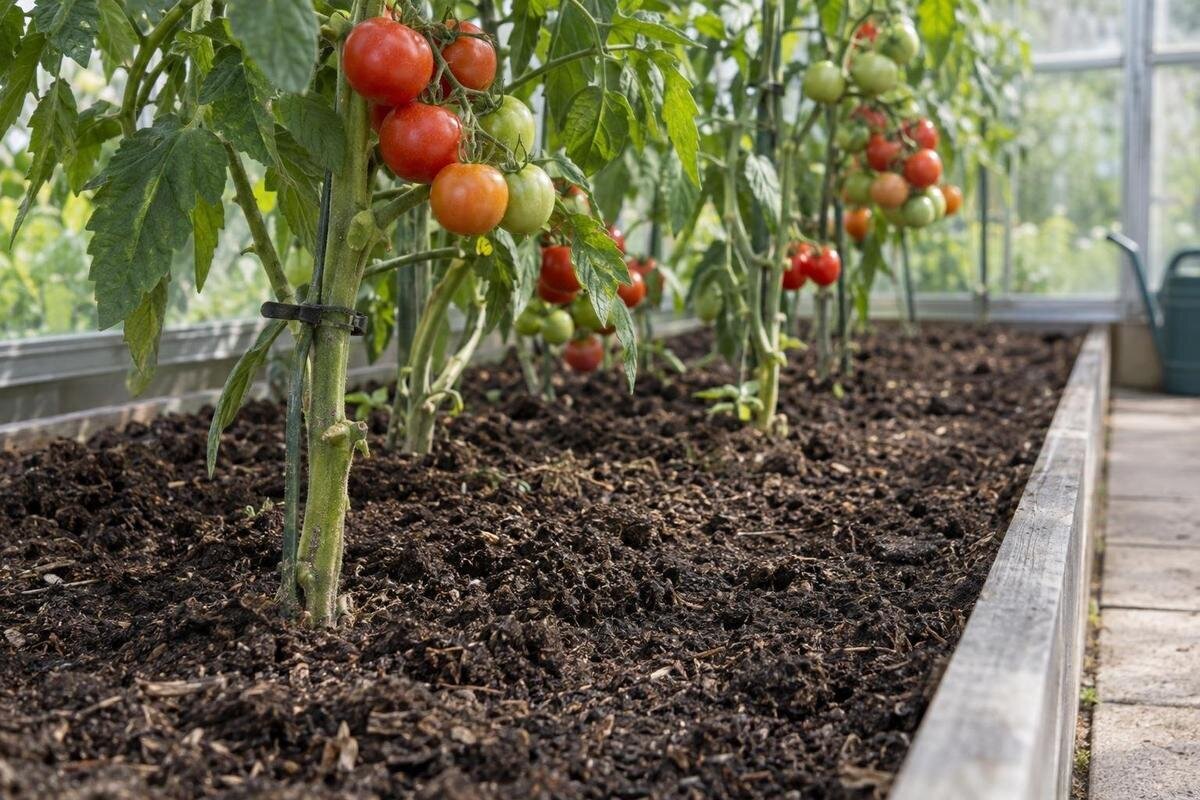
Greenhouse growing
When tomatoes return to the same greenhouse bed, weaker growth can look like soil fatigue. That label is only a starting point: irrigation, drainage, salt build-up, nutrient availability, heat and soil-borne problems can produce similar symptoms. Where full rotation is difficult, compare affected and healthy plants, test the root zone and choose a response that matches the evidence. That may mean changing the watering plan, moving tomatoes to a separate growing medium or renewing part of a bed—not automatically adding fertiliser or replacing all the soil.

What tomato soil fatigue means
Tomato soil fatigue describes declining performance after repeated crops in the same rooting area; it is not a specific disease or nutrient deficiency. A greenhouse bed may host tomato roots season after season, with fewer chances to rotate crops than an open garden. That can favour a build-up of some soil-borne pests or pathogens, while repeated fertilising and irrigation may also alter nutrient balance, salinity or soil structure. The term does not mean the soil has simply run out of one ingredient. Several pressures can overlap, so use the phrase as a prompt to investigate rather than as a treatment plan.
Look for a repeatable pattern: plants in one bed do worse than comparable plants elsewhere, or the same section declines over successive crops despite similar seedlings and care. Poor vigour, weak fruiting, yellowing and wilting are reasons to look closer, not proof of soil fatigue. The same signs can follow heat stress, uneven watering, root restriction, poor drainage or pH-related nutrient availability. Note whether the issue starts early or late, affects a whole plant or a patch, and returns each season. If plants are scattered across the greenhouse, check broader growing conditions before concluding that one bed is exhausted.
Map symptoms before changing the bed
Before disturbing soil, sketch the bed and mark each plant's position, planting date, variety if known, symptoms and the first date they appeared. Note where water enters, where the bed stays wet or dries, and any recent fertiliser or compost additions. Mark corners that are unusually hot, cold or shaded, too. Compare affected tomatoes with healthy plants in the same crop, then compare separate beds rather than blending observations. A pattern along one dripper line, wall or edge points to a different investigation from a decline across the whole root zone. Keep notes as symptoms change; memory is a poor record of watering and weather.
Check whether symptoms followed a hot spell, a ventilation change, missed watering, pruning or a new batch of seedlings. The timing may point away from the soil; avoid changing several growing conditions at once or it will be harder to tell what helped. If the evidence suggests a separate tomato zone is worth planning, compare a scale drawing with the T-Model Orangery Greenhouse product page and check the selected configuration's dimensions. Total greenhouse area is not automatically usable bed area once paths, access and other equipment are included.
Inspect roots, drainage and soil structure
At the first clear decline, lift one affected plant with as much of its root system intact as practical; compare it with a healthy plant if one can be spared. Look at root distribution and condition, not just leaves. Very sparse roots, soft dark tissue or an unpleasant smell can fit waterlogging or decay, while swellings or knots can be a clue to root-knot nematodes. These signs are not a reliable diagnosis, and roots vary with age and moisture. Photograph what you find and keep soil and plant material from suspect areas separate. If the problem recurs or the cause remains unclear, seek a suitable diagnostic service rather than treating the whole bed on appearance alone.
Check whether water pools after irrigation, whether the surface crusts, and whether a dense layer seems to restrict roots. Test moisture below the surface as well as at the top: the surface can dry while the root zone remains wet. Greenhouse beds may receive little rainfall, making the irrigation pattern especially important. Avoid walking on wet beds, as foot traffic can compact soil further. Leave room to reach each bed without standing on it. If comparing a new layout, use the Pyramid Greenhouse product page alongside your bed-and-path drawing to assess access for inspecting plants, checking moisture and removing an affected root system.
Test the root zone before adding amendments
Take a representative soil sample for a question you can act on. If one patch is affected and another grows well, sample those areas separately; blending them can average out a local problem. Follow the laboratory's instructions for sampling depth, number of sub-samples, preparation and handling, and collect soil before adding fertiliser, lime, gypsum or compost. A routine fertility panel may report pH and selected nutrient levels, but panels differ. Ask what is measured and whether the recommendations suit a greenhouse bed and the crop you are growing. Keep the result with your bed map so you can compare it with later changes.
For repeated tomato crops, consider whether the laboratory can assess soluble salts, often reported as electrical conductivity (EC). If a high reading recurs, ask whether the irrigation water should also be tested. A standard fertility result will not identify a fungus, bacterium or nematode; suspected disease needs a diagnostic service and correctly collected plant or soil material. When planning replacement media, measure the bed's length, width and intended depth using consistent units to estimate volume. If considering a new structure as well, compare the Bloomcabin Prestige Greenhouse listing with your footprint sketch, then calculate the soil volume for the beds rather than the entire greenhouse floor.

Separate nutrient imbalance from salt build-up
Poor growth does not show whether a plant lacks a nutrient or cannot take it up. A pH outside the crop's useful range can affect nutrient availability; too much fertiliser can raise soluble salts and stress roots; waterlogging can limit uptake even when nutrients are present. Use test results alongside fertiliser history, irrigation pattern and plant location. Do not respond to yellow leaves with a broad feed or pH-adjusting product unless the evidence supports it. Adding more can worsen an imbalance, increase salts or obscure the original pattern, making the next test harder to interpret.
In a covered bed, salts may build up where fertiliser inputs are repeated and rain does not reach the soil, but a roof alone does not prove salinity. EC indicates the concentration of soluble salts; it does not identify each salt or explain its source. If a result is high, ask about irrigation-water quality, drainage, fertiliser accumulation and an appropriate correction before trying to flush the bed. Leaching is not an automatic fix: without suitable drainage and water, it can leave roots waterlogged or fail to remove the cause. Record any change and follow up with testing if advised.
Use rotation where space allows
Even when tomatoes must stay in the greenhouse, rotation may still be possible between separate beds, raised sections or a genuinely separate container system. Move tomatoes away from the repeatedly used rooting area, not simply to another spot in the same continuous bed. Plan around plant families and the host range of the suspected pest or pathogen: capsicum, chilli, eggplant and potato are also nightshades and can share some pests or diseases, so they are not an automatic break. Remove volunteer tomato plants and host weeds that may maintain a problem between crops. A bed-by-season sketch is more reliable than memory.
Choose a non-host crop suited to local conditions and the suspected problem; no single rotation crop works for every soil organism. Some pests and pathogens persist beyond one season or use more than one host, so a short break cannot be guaranteed to clear them. Treat this as the tomato-specific part of a wider greenhouse crop-rotation plan that tracks families and likely hosts across all beds. A move helps only if the new rooting zone is genuinely separate. For more distinct zones, the Spacious Greenhouse page lists options from 47 to 70 m², but use the selected layout, not the headline area, to decide whether beds and paths fit.
Renew the bed in measured stages
Choose between amendment and replacement by asking what the test or diagnosis calls for. A surface dressing or mature compost may help organic matter or structure when those are genuinely lacking, but it will not remove a deep root-zone pest, automatically reverse salt build-up or correct every pH issue. A thin cap of new mix does not reset the bed if tomato roots grow through it into the old layer. If only part of the bed is affected, avoid treating the whole greenhouse as one unit. Define the area and depth to change first, then estimate volume from length × width × depth using consistent units.
If a recurring disease or nematode problem is confirmed, substantial replacement or a separate clean growing system may be justified. Replacing an entire bed without diagnosis can waste material and leave the cause untouched. Choose a new medium with known suitability for the crop and growing system, keep it separate from suspect soil, and avoid carrying old roots or dirty tools into it. Decide where removed soil will go before shifting it around the garden. For a reconfigured space, compare the Aluminium Classic Greenhouse listing with a plan showing how you will bring in fresh mix and remove old material without crossing clean growing areas.
Grow tomatoes in separate containers
A pot or grow bag can separate tomato roots from a suspect in-ground bed when rotation is not practical. The separation must be real: roots should not reach the old soil, and drainage should not carry contaminated soil or plant debris back into clean media. Use a fresh, fit-for-purpose growing mix and plan enough root space for the tomato and its expected growth; there is no universal container size for every cultivar and setup. Check how the container will be watered, supported and drained before planting. If it sits directly on the bed, make sure roots cannot escape through drainage openings into that soil.
Containers change the workload rather than remove it. A confined mix can dry or heat differently from an in-ground bed, while salts and nutrients may concentrate or wash out more quickly. Follow guidance for the chosen mix and tomato type rather than copying the bed's feeding routine, and check moisture throughout the root zone. Plan container positions, access to water, drainage collection and movement before planting. If a wall-based structure is part of the comparison, check the selected configuration on the Wall Greenhouse page against container placement and clear access; the product name alone does not confirm that arrangement will fit.

Treat soil only when the target is clear
Solarisation is one possible non-chemical soil treatment, not a universal reset. It uses sun-heated soil beneath clear plastic; the effect depends on sunlight, season, soil moisture, how well the cover is sealed, treatment depth and exposure. It may reduce some organisms in the heated zone, but can miss deeper or poorly heated areas. It does not correct nutrient, salt or structure problems, and may affect helpful soil life. Use a locally appropriate horticultural protocol for the diagnosed issue and site rather than selecting a duration from a generic calendar. Solarisation is not a substitute for identifying the cause of poor growth.
Steam or other specialised treatments also need to match the pest or pathogen and the bed; do not treat unknown soil simply because tomatoes have wilted. After a crop, remove roots and debris carefully, clean soil from tools before moving between beds, and keep suspect material separate from fresh mix. Do not assume a home compost heap will eliminate a suspected soil-borne problem. If tool storage is part of your layout, the Limited Edition Aluminium Greenhouses with Storage listing identifies a model with storage; check the actual configuration, and remember that storage is not a sanitation measure.
Plan a greenhouse layout that allows change
Before choosing a new greenhouse or rearranging an existing one, draw the beds, paths, door, water points, containers and the space needed to remove spent crops or inspect roots. A layout with two genuinely separate growing zones can make rotation or clean-media growing more workable, while accessible paths make diagnosis easier. Mark what must remain fixed and measure the usable interior of the selected configuration. Check door access and anything else that uses floor area, then compare the plan with the product's dimensions. Total area alone does not confirm that a preferred bed arrangement will fit.
Decide what you want to keep in the structure through a full growing cycle: in-ground beds, movable pots, grow bags or a mix. Map where tomato roots will go, how a different crop can be kept separate, and where clean mix and tools will stay. The Limited Edition Aluminium Greenhouses page is one model listing to compare with that plan; check the selected size and layout rather than inferring growing capacity from the range name. If the existing structure already accommodates your system, a better diagnosis and a revised bed plan may matter more than replacing the greenhouse.
Frequently asked questions
Does yellowing mean my greenhouse soil is fatigued?
No. Yellowing can have several causes, including watering problems, root damage, pH-related nutrient availability or disease. Compare affected plants with healthy ones, note where symptoms occur and check the root zone before changing the soil or adding fertiliser.
Will adding compost fix a tired tomato bed?
Only if the bed needs the organic matter or structure it can provide. Compost will not reliably remove a soil-borne pest, correct excess salts or resolve every pH problem. Use soil test results and, where needed, a diagnosis to guide amendments.
How long should I rotate away from tomatoes?
There is no single interval that works for every soil-borne problem. The useful break depends on the pest or pathogen, how long it persists and which other plants can host it. Track crop families and seek local advice if a recurring problem is suspected.
Can I use grow bags to avoid the old bed?
They can separate tomato roots from the bed if the roots cannot reach old soil and drainage does not carry soil or debris back into the clean mix. Use a suitable growing medium, and monitor moisture and nutrients as you would for any container crop.
Should I replace all the soil in the greenhouse?
Not as a first response. A soil test or diagnosis may show that a targeted amendment, crop break or separate growing medium is enough. Replacing a whole bed without knowing the cause can waste material and leave the original problem in place.
Repeated tomato crops do not automatically mean a bed is spent. The useful response is the one that fits the evidence: correct an identified watering or nutrient problem, give the bed a suitable non-host crop break, grow tomatoes in a separate medium, or investigate a specific soil-borne risk before treatment. A record of each bed's crops, soil results and changes makes a constrained greenhouse easier to manage, even when tomatoes return to the same structure.
