
Using a Pergola in Winter: Snow, Ice & Wind | Bloomcabin
In brief
Yes – provided you inspect, protect and operate it for winter conditions rather than treating the season as a cooler version of summer.
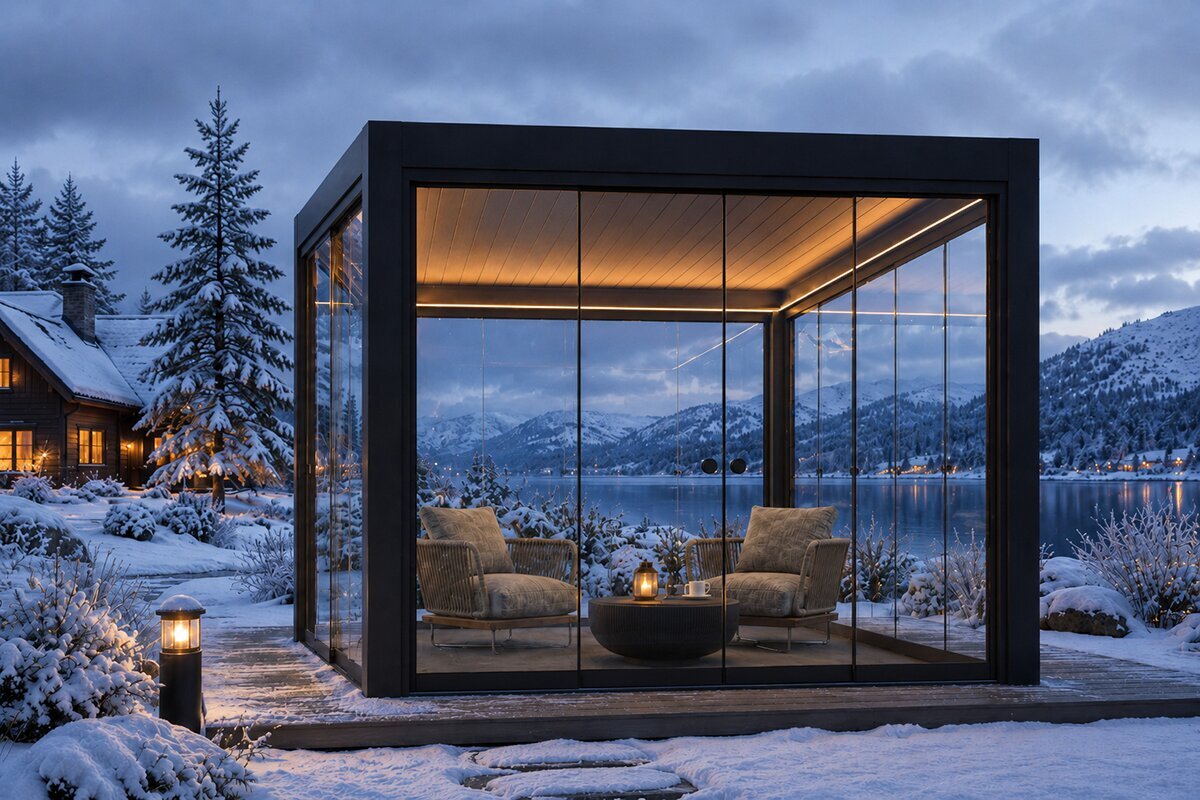
A crisp, bright day can still be enjoyed beneath a pergola. Well-positioned side elements or glass reduce chilly airflow, and the overhead structure offers some shelter from weather. The result is a terrace that remains inviting further into autumn, winter and early spring than an exposed seating area.
Conditions on the roof and the pergola design must be assessed together. Dry powder, heavy wet snow, drifting accumulations and freezing rain affect structures differently. Ignore one-size-fits-all depth rules found online; let the relevant Bloomcabin model documentation and actual site exposure guide each decision.
Motorised louvres require restraint in icy weather. Do not ask the drive to break frozen louvres, guides or joints apart. If movement feels or sounds abnormal, stop and identify the obstruction without taking unsafe action.
Preparation belongs in autumn. Empty debris from roof channels, remove leaves from running tracks, restrain lightweight furniture and trace where thawing water will travel if it freezes later. Completing these jobs early avoids many preventable winter faults.
Cold-season operation
Treat winter as its own operating period because the priorities no longer mirror those of warmer seasons.
Shade, airflow and showers dominate summer decisions. Winter shifts attention to frozen moving parts, snow, forceful gusts and recurring thaw-and-freeze weather. Although the pergola itself has not changed, the way it should be handled has.
Australia’s winter is far from uniform. Coastal districts may be mild, damp and windy while elevated or alpine locations experience frost and wet snow, with considerable variation possible inside the same state.
When temperatures allow frost, visually inspect every movable area before pressing a control. Look for ice, settled snow, twigs and other obstructions; a powered mechanism cannot perform that check.
Take the conservative approach whenever the current ice or snow cannot confidently be matched to the model guidance. Rather than improvising, establish the prescribed procedure for that particular system first.
Managing roof snow
Depth alone cannot describe a snow load, which makes universal height limits unsuitable for pergola advice.
A layer of dry powder may be much lighter than an equally deep layer containing substantial water. Drifting can also concentrate material along one section of the roof. Consequently, what you see from snow depth gives an incomplete picture of the imposed load.
Rapidly changing weather presents another challenge. Fresh snow may absorb water as the day warms slightly, gain weight, then harden again overnight. The same sequence can leave frozen deposits around edges, outlets and moving assemblies.
There is no universal winter angle for adjustable louvres. Use the operating guidance supplied for the actual roof, because a position that manages warm-season rain may be unsuitable when snow is involved.
Do not experiment with the motor when movable blades carry snow or ice. Frozen contact edges, compacted material between blades or an obstructed joint may all be responsible for resistance.
Avoid metal scrapers and forceful blows when clearing snow. Either can harm seals, surface finishes or aluminium profiles. Work safely and use only a removal method permitted by the product instructions.
Nearby features influence where snow settles. A tall wall may promote drifting, shade from trees can delay melting over one roof section, and areas receiving sun may clear much sooner.
A thaw converts the roof covering into runoff, so drainage condition deserves equal attention. Even a layer only several centimetres deep may produce a sizeable volume of water over a short period.
Where snowfall is routine, consider it before selecting the pergola. Exposure, position, intended winter use, roof design and footing should be evaluated as connected parts of the project.
Freezing rain + ice
Low temperature alone is less troublesome than components frozen together.
Freezing rain may coat tracks, joints and louvres with a thin, strongly adhered skin. Viewed from underneath, the roof might look clear even though ice still joins the contact surfaces of moving pieces.
End the operation as soon as a glass panel, louvre or other movable component becomes unexpectedly difficult to shift. Increasing drive force is not an appropriate response to icing.
Ground-level guides are vulnerable as well. Slush, runoff or snow collected inside a sliding-glass track can solidify as the temperature falls and immobilise the panels. During winter, clear the channel and limit standing water wherever practicable.
Consider the discharge point, not merely whether water leaves the roof. Runoff that flows harmlessly by day may ice over a path or step after dark. Keep outlets away from primary access routes and terrace doorways.
Following sustained frost, waiting for complete thawing before checking the assembly is often preferable to making repeated attempts while some contact points remain frozen.
Winter louvre management
The roof can still adjust, but its present physical condition must be assessed before each movement in winter.
Louvres may be repositioned repeatedly on warm days. Frost changes that routine: first scan the roof for settled snow, iced edges, branches or any foreign material lodged where parts must travel.
Consult the relevant Bloomcabin model instructions to determine the winter position. Applying one recommended arrangement to every adjustable roof would be inappropriate.
End the command if the drive produces an unfamiliar sound or cannot start smoothly. Repeated control inputs do nothing to make an obstructed assembly safer or more dependable.
Before alternating freezes and thaws, confirm that outlets and water channels are unobstructed. Trapped meltwater may solidify in a different place and form another blockage.
Where current conditions and model guidance permit, opening the blades on a sunny winter day can admit light to the terrace and nearby glazing. This is particularly relevant beside a house wall.
Winter behaviour deserves consideration when comparing conventional and bioclimatic designs. An adjustable roof provides extra options, yet freezing weather also demands more frequent observation and more disciplined operation.
Cold-season wind
A terrace may become unpleasant in a chilly breeze well before the measured air temperature seems severe.
Wind can make an otherwise sunny winter day feel markedly colder. Strategic side closure or glass screening may therefore deliver a pronounced improvement around the seating zone.
Hedges, buildings and boundary walls reshape airflow across a property. Wind may accelerate past one corner of the house while a spot nearby remains calm, so select the sheltered side from observed site conditions.
Although glazing limits airflow at chair height, it also presents additional area to powerful gusts. Plan the final arrangement of sides together with the anchoring, support and footing strategy.
Storm gusts may exceed the winds normally experienced during casual terrace use. Operate and secure screens, sliders and other movable elements as directed in their individual instructions.
Include pots, décor and lightweight chairs in the wind assessment. An object lifted by a gust may strike and damage glass even when the wall was installed correctly.
Enclosing every edge is seldom essential. Correctly placing protection on one or two exposed sides can improve winter comfort while preserving fresh air and the character of an outdoor area.
Winter glazing
Glazing moderates wind around a pergola; it does not turn the area into heated accommodation.
Transparent panels are useful in cooler weather because they retain the garden outlook and sunshine while tempering airflow. Under bright skies, that combination can make the sheltered terrace notably more comfortable.
With sliding panels, the exposed side can be shut against a breeze and reopened when sunlight strengthens or conditions soften. Such adaptability suits Australia’s changeable winter weather.
Fixed glass works well where one aspect consistently receives the weather. Pairing it with an opening garden-facing side can be more practical than creating a fully glazed perimeter.
Moisture may condense on a cold pane, which is expected in an outdoor setting. Supplying airflow encourages drying and avoids leaving the pergola persistently damp.
Track channels may collect slush and snow that later solidify. Leave sliding panels stationary whenever frozen material prevents the rollers or guides from travelling freely.
For any portable radiant heater, observe the appliance manufacturer’s directions on ventilation, clearances and safe operation. Even when surrounded by glass, the pergola remains an outdoor environment.
Australian winter settings
Coasts, inland frost districts, tablelands, alpine zones and courtyards each require a different emphasis.
Australia's winters range from wet, mild coasts to snowy highlands. Judge the terrace's actual exposure rather than national averages.
Plan for the site's main winter risk: wind, wet snow, ice, repeated freeze–thaw cycles or snowdrifts.
Coastal districts Driving rain and wind may outweigh snow as concerns. Prioritise sound anchorage, well-placed side shelter and reliable runoff.
Frost-prone inland districts Clear nights may freeze pooled water despite mild daytime conditions, making tracks, outlets and frequently used paths important inspection points.
Tablelands Frost, wind and increased prospects of snow call for careful snow management and operation that follows the selected model’s guidance.
Alpine zones Regular snow, including moisture-heavy falls, may occur. Conditions at the property and the exact model limitations require particular attention.
Sheltered courtyards Reduced airflow and stored warmth can support comfortable winter use, but adequate ventilation still matters whenever direct sun heats the enclosure.
Footings + frozen ground
Reliable winter geometry depends on what supports the visible frame below.
Long-term alignment is only as dependable as the load-bearing base. Water that drains poorly, frost-responsive ground and isolated settlement can gradually distort the structure’s geometry.
Minor base movement is especially noticeable with sliding glass because a long bottom guide depends on precise alignment. Surface pavers or slabs should not automatically be regarded as structural footings.
Each post needs an effective load path into adequate support. For timber decks, raised paving systems or terraces over rooms, account for the real structure underneath.
Australia does not experience freeze-and-thaw effects uniformly. The suitable footing response depends on site drainage, soil behaviour and local design conditions.
Design new-terrace footings, drainage, electrics and glass tracks together.
Inspect surfaces beside posts and tracks once winter has passed. Just one raised paver may be sufficient to redirect runoff.
On an established terrace, look for gradual settlement that has appeared since construction. Movement of only a few millimetres might be inconspicuous in daily use, yet affect long sliding tracks or posts that require accurate alignment.
For frost-prone locations, bring ground assessment, side-panel plans and water management together early in the project. The aim is a system that begins level and retains its intended geometry as dependably as possible through future winters.
Runoff during frosts
Correct daytime drainage may still leave a hazardous frozen patch after nightfall.
Sunlight can melt settled snow while the surrounding air is barely above freezing. The resulting runoff may then solidify again only hours later.
Route outlets so they do not send water across steps, doorway approaches or a sliding-glass guide. Managing winter runoff is part of keeping access around the pergola safe.
Ahead of the first expected frost, clear seeds, leaves and dirt from outlets and roof channels. Debris left from summer may otherwise become the centre of an icy obstruction.
Accumulations beside the roof edge also need consideration. During a thaw, these piles may feed water towards post bases or tracks even when the roof system itself is draining as intended.
When spring arrives, review the surrounding falls to see whether ground movement, winter weather or snow clearing altered the route taken by water.
Post-winter inspection
Complete a straightforward function review before returning the pergola to frequent spring operation.
Wait until frozen material and snow are gone, then look over louvre edges, roof channels, exposed fasteners, sliding guides and paving near every post.
Next, move each glass panel along its usual path. If it begins catching unexpectedly, avoid applying extra pressure and examine the guide for debris or a shift in alignment.
Operate the adjustable roof only after confirming that the mechanism is unobstructed and the weather is appropriate. New noises or resistance warrant investigation before further movement.
Remember changes in the garden as well. Growing branches, relocated furniture and recently added planters must remain outside every operating path.
This user check is not a substitute for a structural assessment. Its purpose is to notice visible changes before they develop into larger issues.
Attached or freestanding
Winter access, airflow, runoff and snow behaviour are all affected by how close the pergola stands to the house.
An attached design gains a sheltered rear boundary from the building, although the façade may encourage local snow or wind drifting. Water routes and low doorway thresholds consequently need close consideration.
Freestanding pergolas often face greater wind exposure, but their separation makes directing meltwater away from house doors and façade bases easier.
Whichever arrangement you choose, map the usual drifting areas, roof discharge locations and access paths that remain active throughout winter.
An adjustable roof positioned before large windows may alter daylight entering the home in winter. Select the blade angle from current weather and the model instructions, not daylight preference alone.
The choice between attached and freestanding layouts should account for water routes, snow-clearing access and winter circulation as well as warm-weather furniture.
One winter scenario
Observation produces better winter decisions than an automatic daily routine.
After a frosty night, sunshine alone does not make icy louvres safe to move. Inspect every moving area before using the terrace roof. Resume operation according to the model instructions only when the mechanism works normally and is ice-free.
Cold-weather checklist
Eight routine actions help prevent common winter difficulties.
01. Clear runoff routes before frost Take seeds and fallen leaves out of outlets and roof channels.
02. Clean every sliding guide Remove accumulated sand, slush, snow and frozen material from tracks.
03. Never drive through ice Stop at unexpected resistance, then establish what is obstructing movement.
04. Follow model guidance for snow Avoid borrowing a depth limit written for an unrelated pergola.
05. Monitor outlet icing Keep refrozen runoff away from door approaches and primary walking routes.
06. Restrain loose items before gusts Windborne furniture or décor may strike the glass or roof.
07. Review after thawing and refreezing Look for changed paving, track alignment and runoff direction.
08. Perform a spring function review Wait for complete thawing before running movable elements through normal travel.
Bloomcabin Australia / continue planning
Model choice, site position and suitable footings establish the basis for winter comfort.
Use these Bloomcabin resources to explore location, dimensions, roof style and ground preparation.
Adjustable roof Explore bioclimatic pergolas →
Freestanding Explore Bloomcabin pergolas →
Attached design Explore wall-mounted pergolas →
Dimensions Choose a pergola size →
Roof comparison Compare classic and bioclimatic pergolas →
Common questions
Winter questions about pergolas
Does a pergola stay installed throughout winter?
Outdoor pergolas remain in position, although acceptable operation during snow or icing is governed by the site conditions and specific model guidance.
May the pergola be used during snowfall?
The answer depends on the snow, model and operating directions. Movable components must never be driven against a frozen or snowy obstruction.
What if snow is resting on the louvres?
Act only as the specific model documentation directs. Leave the roof stationary whenever ice or another blockage restricts its mechanism.
Should the motor release frozen blades?
No. Resistance calls for an immediate stop and investigation, not additional power.
How does glass affect winter comfort?
Glazing can moderate wind and improve comfort in winter sunshine, but the resulting area is still outdoors rather than an insulated room.
Which maintenance task matters most?
Pay particular attention to unobstructed drainage and clean tracks serving movable panels.
Is a portable radiant heater suitable?
Use one only within the appliance instructions for safe clearances, airflow and operation.
What belongs in the spring review?
Examine runoff routes, guides, paving, visible connections and whether each component travels freely in its normal manner.
Thoughtful winter operation
A pergola remains usable in winter when its model limits, snow and ice determine each operating decision.
With appropriate planning, an aluminium pergola can add useful outdoor time across much of the year. Winter comfort relies on controlled wind exposure, dependable runoff, sound footings and patient operation that never drives a mechanism through snow or ice.
Browse bioclimatic pergolasAustralia: These general tips provide no structural ratings. Model and location determine snow, wind, ice, foundation and operating limits. Follow the specific Bloomcabin documents and local requirements.
