



Classic or bioclimatic pergola: making the best choice
Use this practical guide to weigh a classic aluminium pergola against a bioclimatic design across appearance, comfort, everyday use, cost and defining features.
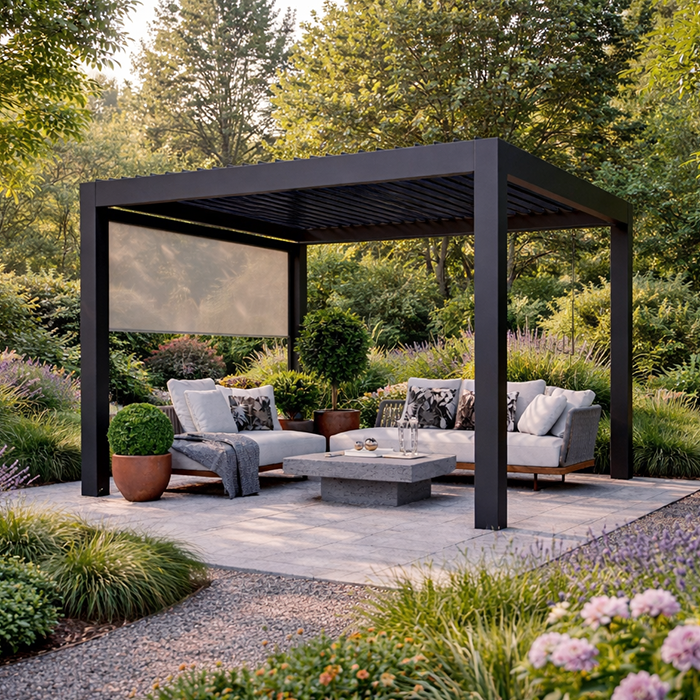
You may already know that you want a pergola, yet still be weighing up whether a classic aluminium design or a bioclimatic model better suits your patio. This comparison is designed to make that choice easier.
A common dilemma is whether a contemporary structure with clean lines and lasting quality is all you need, or whether day-to-day adaptability and added comfort justify a more advanced option.
Bloomcabin offers both options: Bloomcabin Pergola and Bloomcabin Bioclimatic Pergola. The following sections clarify what sets them apart and help you decide confidently.
What separates a classic pergola from a bioclimatic pergola?
Appearance is only part of the distinction; the central consideration is how much influence and versatility you expect the structure to provide.
For an elegant, long-lasting outdoor setting with disciplined architectural lines, a classic aluminium pergola is a strong fit. It serves its purpose dependably while lending a polished look to the terrace or garden.
A bioclimatic pergola better serves households planning frequent, comfortable use of the outdoor area. With a more premium focus, it appeals to anyone seeking benefits beyond the appearance of a well-designed overhead structure.
When does the classic aluminium style make more sense?
Consider a classic pergola when you prefer an attractive, well-resolved structure that improves the outdoor setting while keeping operation straightforward.
This option tends to suit buyers who:
- prefer a modern, uncluttered look;
- want a durable solution without extra complexity;
- want a quality pergola with a straightforward buying decision;
- wish to organise their outdoor area elegantly.
For contemporary looks, sound quality and fuss-free daily use, the classic format will often be the clearest answer.
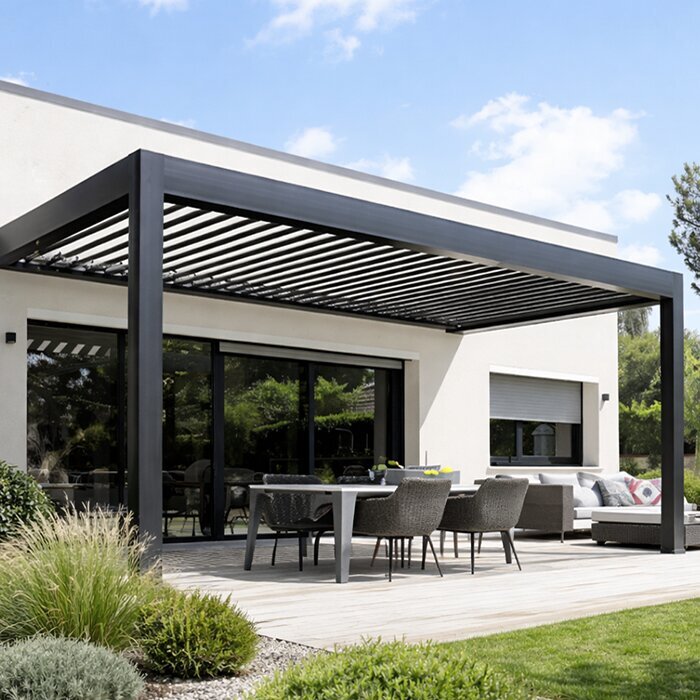
When does the bioclimatic design earn its place?
A bioclimatic pergola is especially worthwhile if you want more than a visual upgrade for your patio and wish to noticeably improve how you use it.
This approach works particularly well for people who:
- use their outdoor area very regularly;
- want more comfort and everyday possibilities;
- prefer a more technically oriented, higher-grade solution;
- regard their patio as a genuine outdoor living space.
Frequent terrace users seeking a more refined experience are generally the ones who feel the bioclimatic format’s advantages most strongly.
Which pergola offers more everyday comfort?
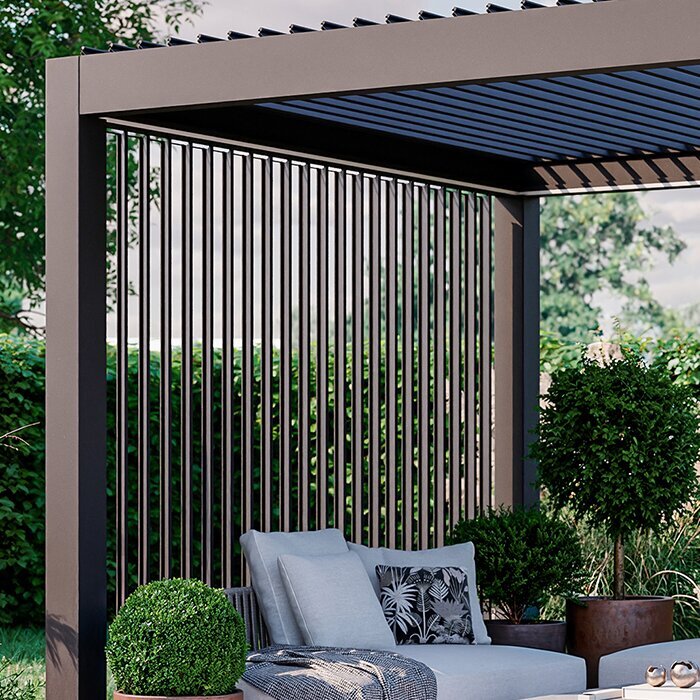
Judged on comfort, a bioclimatic pergola will usually come first. A classic design is not lesser; it simply addresses a different set of priorities.
A classic pergola excels as a streamlined, attractive and practical terrace structure. The bioclimatic alternative is directed towards households that spend considerable time outside and want more comfort from the space.
So, instead of asking which design wins, ask yourself: “How much use will this outdoor space actually get?”
How do the two styles complement contemporary architecture?
Either can sit comfortably beside a modern home, though each establishes its own character.
The classic pergola often gives a calm, architecturally crisp appearance. It is an excellent match for homes where minimalism, strong lines and restraint are central.
By contrast, the bioclimatic form is typically bolder, more engineered and more luxurious. Choose it when modern styling should also convey a distinct sense of added refinement.
How should you think about the budget?
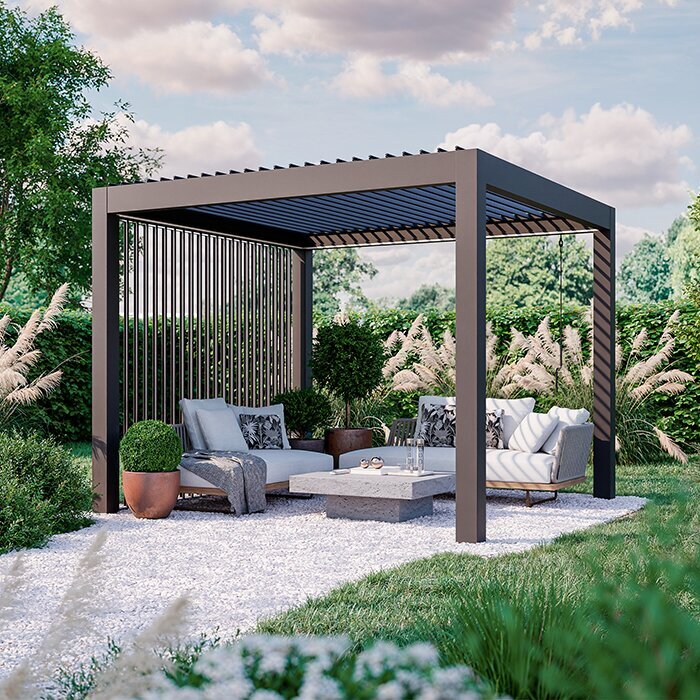
Cost alone should not frame the choice as simply the cheaper versus dearer structure. Instead, consider the value you will gain from regular use: Which design will genuinely earn its place in my routine?
Where enduring style and a contemporary terrace matter most, the classic version can provide a more sensible relationship between outlay and practical benefit.
For owners intending to use the outdoor setting frequently and seeking the greatest possible comfort, paying more for a bioclimatic pergola can be easier to justify.
Common mistakes when deciding
- letting appearance decide the matter while overlooking daily habits;
- believing the bioclimatic format must be superior in every project;
- thinking a classic pergola is too simple when it perfectly suits the project;
- focusing solely on price rather than actual value;
- failing to plan realistically for future patio use.
In practice, suitability comes from matching the structure to the way you actually live, rather than to an imagined ideal.
How can you match the pergola to your needs?
Choose the classic pergola if …
you value clean design, an easy decision, durable materials and an elegant patio solution.
The bioclimatic design may suit you when …
greater adaptability, comfort and a distinctly refined outdoor experience matter to you.
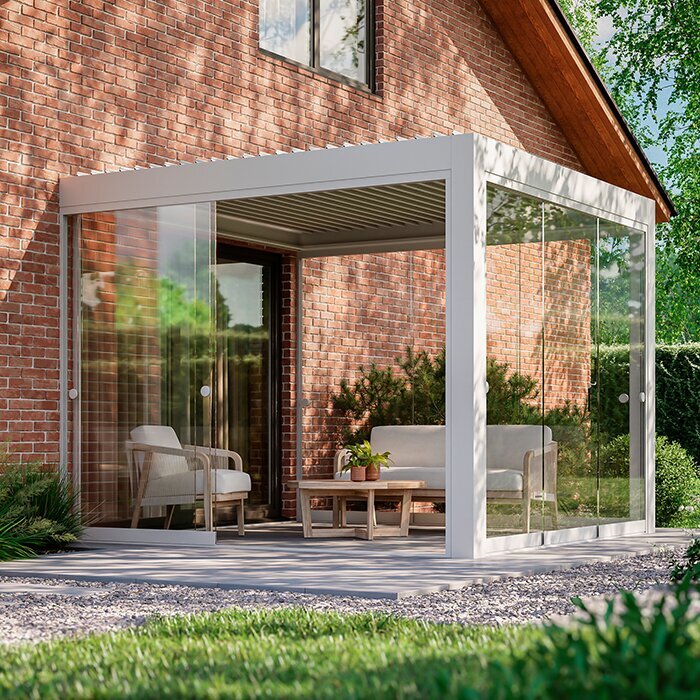
If you would like a simple rule of thumb, it can be put this way: Think of the classic format as the choice for visual order and simplicity, while the bioclimatic format prioritises adaptability and comfort.
Frequently asked questions
Does a bioclimatic design outperform the classic style in every case?
No. Its added adaptability and comfort are valuable for some daily routines, but they do not make it universally preferable. A classic pergola remains the sounder answer for many projects.
Which version is better for a smaller patio?
A classic pergola will often meet the needs of a compact terrace, especially when visual order and style are the main goals. Even then, consider how regularly the space will be occupied.
Can the classic style still feel refined?
Certainly. Aluminium construction can give a classic pergola a polished, contemporary presence. Extra functions are not the sole source of an upmarket result; proportions, material quality and integration with the terrace and home also shape it.
When does choosing a bioclimatic pergola make particular sense?
It makes particular sense for households that spend plenty of time on the terrace and wish to maximise its comfort. As use becomes more frequent, the case for this format grows stronger.
Can either style be visually integrated with the house?
Yes. Either a classic or bioclimatic pergola can be designed to sit well with the home’s architecture. Successful results depend on suitable dimensions, considered positioning and visual continuity across the façade and terrace.
Set the two approaches side by side
Popularity should not drive the decision. Choose according to the terrace itself, the way it fits into daily life and the amount of comfort you expect.
