



Pergola choice: wall-mounted or freestanding?
A practical comparison to help you match a pergola to your patio, covering attached and freestanding formats, visual character, daily use, siting and the final purchase choice.
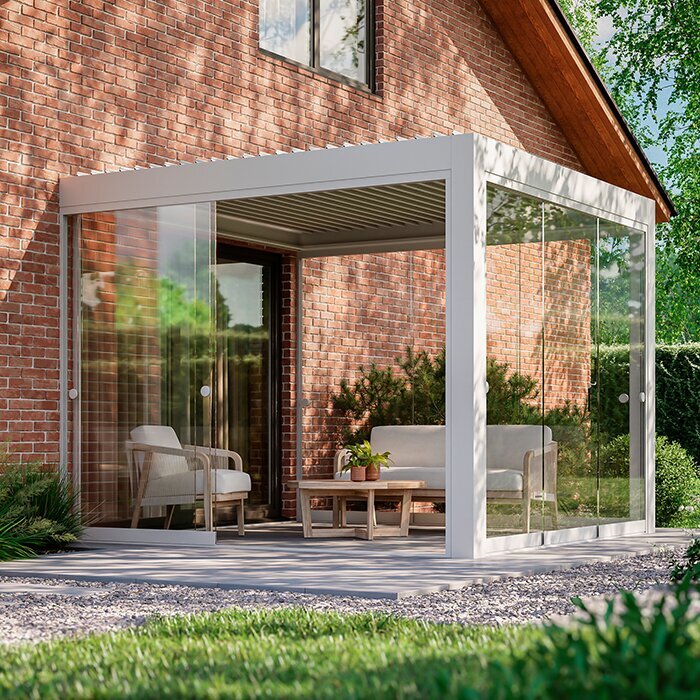
One of the first choices in planning patio shade is whether the pergola should connect to the home or stand on its own.
They may look much alike initially: each brings shade, gives the outdoor setting definition and lifts the appeal of a patio or garden. Yet dwelling architecture, patio configuration and household routines can favour one format over the other.
This choice therefore deserves more than judging a single photo. A successful design is the one that works with the dwelling, fits the patio and supports how you use the setting each day.
Bloomcabin offers both approaches: Bloomcabin Pergola as a freestanding option, and the Bloomcabin Wall-Mounted Pergola as the wall-mounted design. If flexibility and comfort weigh heavily in your plans, you may also want to explore the Bloomcabin Bioclimatic Pergola.
The guide Choosing an aluminium pergola: practical advice for Australia provides a wider introduction. To weigh the available comfort features, continue with Classic or bioclimatic pergola: finding the suitable design as a complementary comparison.
How do wall-mounted and freestanding pergolas differ?
Construction is only part of the distinction; equally important is the relationship between the structure and your home.
Fixing a pergola to the façade visually links it with the dwelling and adjoining patio. A freestanding structure has no wall connection, so its location can be chosen with fewer constraints.
Put simply:
- Choose a wall-mounted pergola for a patio against the home when a unified look is the goal.
- Consider a freestanding pergola where the plan calls for location flexibility or a self-contained place outdoors.
When should you favour a wall-mounted pergola?
Choose a wall-mounted model when the patio meets the dwelling and you want outdoor living to feel closely connected with the interior.
Its attachment can make the whole arrangement look intentional and architecturally coherent. By visually joining the indoor and outdoor areas, the structure helps the patio feel resolved rather than added as an afterthought.
Wall mounting is likely to suit you if:
- your patio runs along the dwelling;
- you want a visually integrated solution;
- the structure should complement the home's architecture;
- you want to define the house side of the patio;
- you use the outdoor area as an extension of indoors.
That integrated character often works naturally with contemporary homes. The Bloomcabin Wall-Mounted Pergola was created for this type of setting.
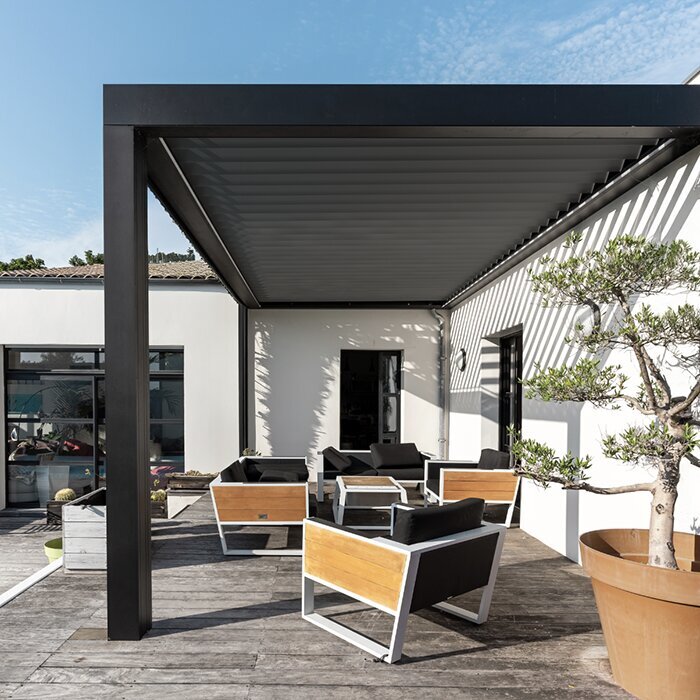
When does a freestanding pergola make more sense?
With no required wall connection, a freestanding pergola gives you greater latitude. Its position can follow the patio design, or it can establish an outdoor setting that feels separate from the dwelling.
It is well suited to forming a dedicated lounge, a separate dining setting or a flexible zone within the garden or across a generous patio.
Consider a freestanding pergola where:
- you need flexibility in locating it;
- the patio does not readily accommodate a wall connection;
- a distinct place to spend time is the aim;
- alignment with the dwelling's façade is unnecessary;
- you intend to shape a recognisable outdoor room, whether in the garden or over the patio.
For that arrangement, consider the Bloomcabin Pergola .
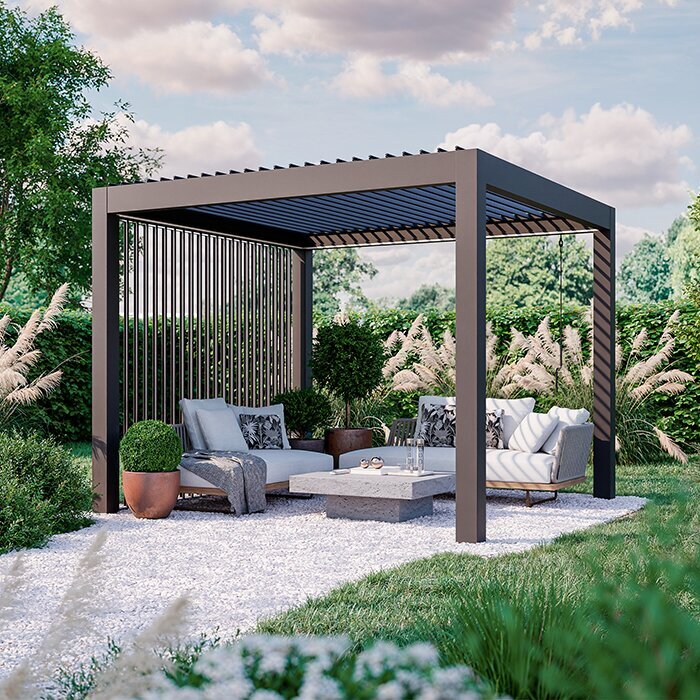
Which arrangement has greater visual appeal?
Neither format wins on appearance alone. Each can be striking when its form belongs with the dwelling and the patio setting.
Because it meets the façade, the wall-mounted version tends to feel composed, restrained and architectural. Choose that visual language when continuity from dwelling to patio matters.
By contrast, a freestanding design reads as an open, adaptable feature in its own right. Across a broad area, it can organise the landscape without relying on the house for visual support.
Rather than asking which type is universally prettier, consider which creates the most convincing result for your particular property.
Which format works best for everyday use?
That depends on your lifestyle too.
A wall-mounted pergola can simplify routines when you often step between indoors and the patio, serve meals just outside, or treat this area as part of the living zone. The close connection makes those movements feel easy.
For a dedicated spot to read, unwind, eat or welcome friends, the freestanding format may work better. It leaves the location and layout of this separate outdoor setting open to your plans.
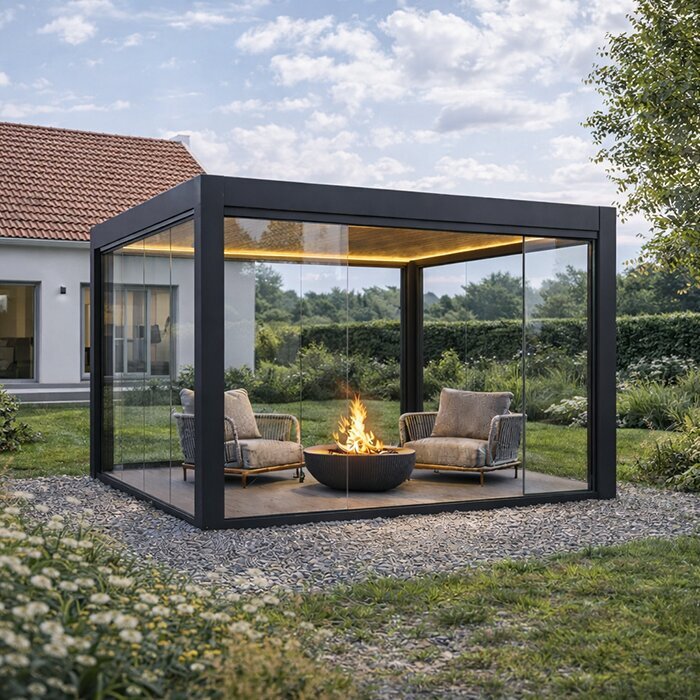
What about comfort and premium use?
Here, the choice becomes a little more nuanced.
Choosing between a wall-fixed and a freestanding pergola settles the structure's position and relationship to the dwelling. Deciding between classic and bioclimatic models instead determines the level of function and comfort.
Either mounting style can produce a refined result. If adjustable operation, greater control, added convenience and a more elevated outdoor experience are priorities, include the Bloomcabin Bioclimatic Pergola .
Our related article, Choosing between a bioclimatic and classic pergola explores that distinction. After selecting the mounting format, comfort may become the next useful comparison.
What should you consider before deciding?
Before making your choice, these practical questions can help:
- Does the patio adjoin your dwelling, or sit apart from it?
- Do you want an architectural continuation of the home, or a standalone feature outside?
- Is your aim to improve the patio edge nearest the dwelling, or to establish another place outdoors?
- Which matters more: visual continuity or choice of location?
- Will it support daily activity close to the home, or form a flexible living zone elsewhere in the garden?
Answering these questions honestly will usually reveal quite quickly which solution really suits you better.
For further guidance on care, warranties and the broader model range, visit Aluminium pergola questions and answers.
Pergola questions answered
Are wall-mounted pergolas always preferable beside a dwelling?
Often, but not invariably. Where a patio joins the dwelling and a continuous indoor–outdoor connection is desired, attaching the pergola to the wall will commonly feel more fitting.
Does a freestanding pergola offer greater flexibility?
Generally, yes. With fewer positional constraints, this type allows wider layout choices and can work particularly well on generous patios or in self-contained garden zones.
Which style has the more contemporary appearance?
Both styles can present a contemporary look; the key preference is architectural integration versus a structure with its own presence.
May a freestanding pergola be positioned near the dwelling?
Yes. The term describes its support arrangement, not a required distance. Placing one nearby can be sensible when that location better matches the patio configuration.
Is a bioclimatic pergola worth considering too?
It can be, particularly if adjustability, comfort and an enhanced way of enjoying the setting matter to you. Once mounting style is settled, assessing classic and bioclimatic designs is a logical next decision.
Choose the pergola that belongs with your patio
Do not choose solely by the structure that appears most appealing in one photo. Look instead for the pergola that complements your dwelling, fits the patio and supports your everyday habits.
Explore wall-mounted pergolas Explore freestanding pergolas Explore bioclimatic pergolas
