
Misshapen Greenhouse Strawberries: Pollination or Stress?
STRAWBERRY DIAGNOSIS
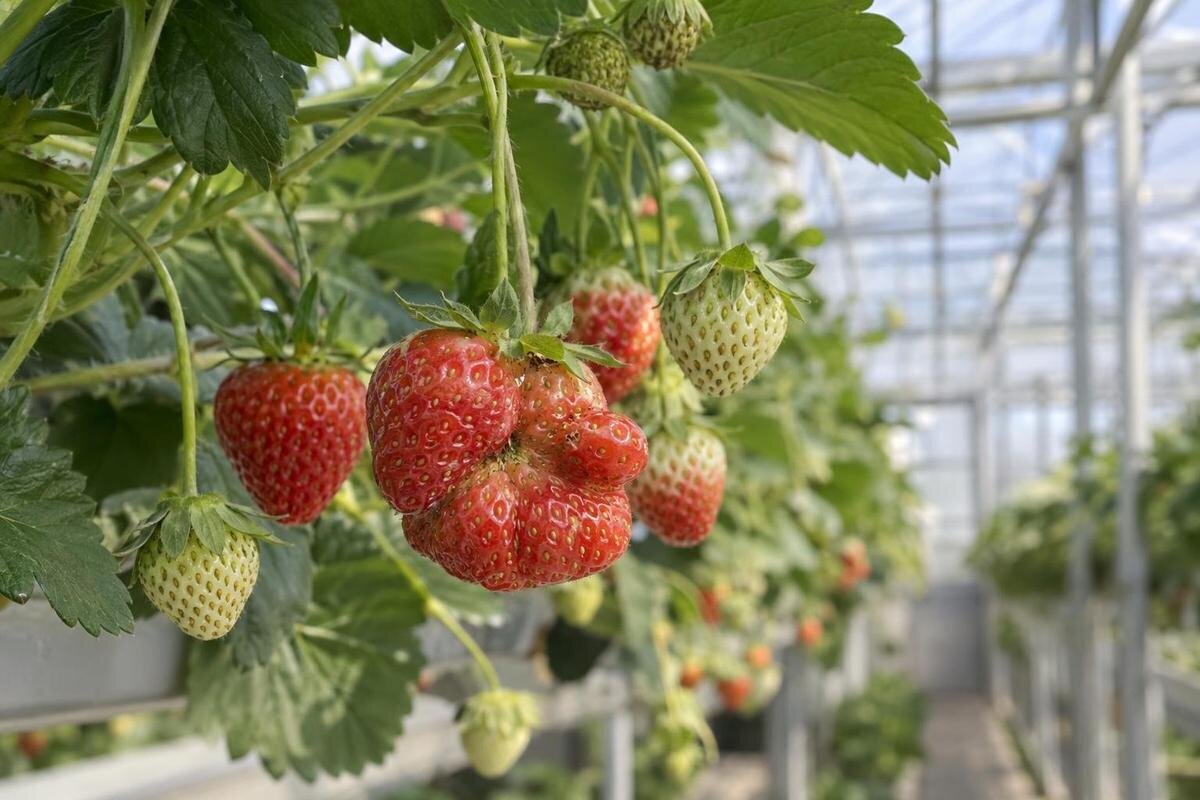
Uneven greenhouse strawberries can point to incomplete pollination, but fruit shape alone cannot identify the cause. Each strawberry forms from a flower with many tiny reproductive parts, so poor pollen transfer, flower injury or difficult conditions during flowering may leave part of the fruit underdeveloped. By harvest, the relevant conditions may be well in the past. Compare the surface achenes, inspect flowers during the next flush and keep a simple record of where and when the problem appears.

Why pollination affects strawberry shape
Strawberries do not form like a simple berry. The red, fleshy part is an enlarged flower receptacle; the tiny seed-like dots on its surface are achenes, each containing a seed. A flower has many pistils, and the ovules within them need to be fertilised. Developing achenes help signal nearby receptacle tissue to expand. If fertilisation fails in part of the flower, the corresponding tissue may remain small, leaving a pinched tip, flat side or uneven outline. That makes incomplete pollination a strong possibility when poorly filled parts align with poorly developed achenes, but it is not a definitive test.
Natural variation matters too. Cultivars differ in their typical shape, and fruit on the same plant can vary in size and outline. A berry can also be pushed or rubbed while young, before its final shape is obvious. One unusual strawberry on an otherwise healthy plant is weak evidence of a greenhouse-wide problem. Look for a repeated pattern: several fruits with similar defects on the same truss, plant, row or flowering period. A recurring pattern is more useful than one dramatic specimen because it can be compared with a shared exposure without assuming a single cause.
Read the achenes as well as the outline
Inspect a ripe fruit close up in even light. Compare the achenes across the well-filled and underfilled parts rather than counting them. An area with small or poorly developed achenes and flesh that has not filled out supports incomplete fertilisation as a possible cause. If the achenes look developed across the fruit but the surface is scarred, bronzed or rubbed, physical damage or feeding injury becomes more plausible. A smooth, evenly seeded but oddly shaped fruit can still reflect cultivar traits or flower damage. These are clues, not diagnostic rules: ripeness and scarring can make the achenes difficult to assess.
If the issue recurs, take three views: the whole berry, a close-up of its surface and a wider image showing the truss and leaves. Include a healthy fruit from the same cultivar at a similar stage for comparison, and note where the cluster sits in the greenhouse. Photograph a flower while it is open as well, since useful details may be gone by harvest. Keep dates with the images and note whether the fruit is fully coloured; avoid comparing a soft, overripe berry with a firm, newly coloured one. Photos cannot show whether pollen was viable, but they can reveal whether underfilled areas, surface injury or location patterns recur.
Check whether flowers received pollen
Most cultivated strawberry flowers can set fruit using pollen from the same flower, so a second variety is not automatically required. Self-fertility does not mean that every part of every blossom will be pollinated. Each flower has many stigmas; pollen must be released and reach them across the centre for a well-filled receptacle to develop. Bees and other insects can move pollen effectively. Air movement or vibration may move some pollen, but cannot guarantee even coverage. A greenhouse with closed doors or screened openings may receive fewer pollinators than an exposed bed. Watch over several observation periods: a quiet minute does not prove that flowers are not being visited.
During the next flush, watch newly open flowers and note insect visits and whether doors or vents are open at flowering time. Where access is poor, a small hand-pollination trial can help: with a clean, soft, dry brush, lightly sweep across the centre of a few open flowers without rubbing or breaking the parts. Mark those blossoms and leave similar flowers untreated for comparison; do not brush closed, wet or visibly damaged flowers. If you are planning an observation row, the T-Model Orangery Greenhouse is listed with area options from 16.52 m² to 30 m². Check the actual layout and openings rather than assuming that a stated footprint guarantees pollinator access.
Match misshapen fruit to its flowering period
The useful time window is when the flower is open and the fruit is first developing, not simply the week you pick the berries. A flower may have been pollinated or damaged well before its fruit shows a clear defect, so a current heat spell cannot by itself explain fruit already formed. Label a few trusses and record when their flowers open. Alongside those dates, note conditions at plant height, insect visits, whether vents or doors were open, and any unusual watering or cold event. Add the date when fruit starts to swell and when an uneven shape first becomes visible. Keeping these observations together lets you trace a ripe berry back to its flowering conditions rather than relying on the weather at harvest.
Compare successive flowering groups on the same cultivar. If fruit from one group is misshapen but earlier and later groups develop normally, review the events recorded for that particular flowering period. Keep labels attached to the relevant trusses so that fruit from different dates does not get mixed together in your notes. If you are planning a separate comparison area, the Pyramid Greenhouse range is listed from 5.53 m² to 18.9 m². Allow space to reach and revisit the labelled plants, using actual dimensions rather than treating the stated area as usable bed space.

Heat, cold and humidity during flowering
Temperature extremes can affect flower development and pollen performance. Cold conditions or frost may injure exposed flower parts; excessive heat can interfere with pollen function and shorten the period in which a flower remains receptive. A persistently damp, humid environment may make pollen less readily released, while a hot, dry spell can stress the plant. Effects depend on cultivar, flower stage and how long the conditions last, so there is no single reading that diagnoses a misshapen berry. If flower centres brown after a cold event, or defects follow hot, still conditions, stress becomes more plausible, but neither pattern proves the cause.
Measure conditions where the flowers sit, not just outside the greenhouse or near the roof. A min–max thermometer at canopy height and a short daily log can reveal peaks that a forecast misses; keep the instrument out of direct sun so it measures air rather than heating in the sun. Ventilation and shading may help moderate exposure, but note any change and compare the next flowers rather than adjusting several controls at once. The Limited Edition Aluminium Greenhouses with Storage range lists areas from 5.52 m² to 28.08 m². For any structure you compare, verify its actual ventilation and shading details instead of inferring them from its size or name.
Water and root stress can affect fruit development
Inconsistent root-zone moisture is a stress clue, but it often affects plant vigour and fruit size more broadly than it creates one distinctive shape. Plants that repeatedly wilt, grow unevenly or sit in saturated growing medium may struggle during flowering and early fruit development. Waterlogging can impair root function; repeated drying can also stress plants. If many berries are small or the plants look generally weak, consider root and moisture conditions alongside pollination. If only a few fruits are sharply pinched while foliage and other fruit look healthy, a whole-bed watering issue is less convincing, though still worth recording.
Check moisture at root depth in several parts of the bed, not just at the surface or in one pot. Keep watering reasonably consistent for the crop and make sure excess water can drain; do not compensate for a suspected pollination problem by flooding or feeding. Nutrient imbalance can affect growth, but berry outline alone cannot identify a shortage, and extra fertiliser may create another problem. If weak growth or leaf changes accompany the fruit defects, assess the growing medium and nutrient history before targeted corrections. For planning access to root zones, the Bloomcabin Prestige Greenhouse has listed area options from 3.77 m² to 28.08 m²; assess internal layout and watering access separately.
Look for flower injury and pests
Pollination and environmental stress are not the only explanations. Frost, physical contact, pests feeding in flowers or on very young fruit, and other damage can interrupt growth on one side. Look at the flower centre, petals and calyx when the next blossoms open, and inspect young berries before they become coloured. Scarring, rough patches, small feeding marks or distorted growth beneath the calyx may suggest injury rather than a simple lack of pollen. Some damage is easier to see on a young fruit than on a ripe one. Use a hand lens if needed, and note any insects or damaged tissue rather than identifying a pest from the final berry alone.
Check several flowers and young fruits on both affected and unaffected plants. If you find insects, eggs or repeated feeding marks, photograph the organism and the plant before choosing a treatment; pest identity and suitable controls vary. Avoid applying an insecticide simply because berries are misshapen, especially while flowers are open and pollinators may be visiting. Easy access helps with inspection, but a large structure does not prevent damage: the Spacious Greenhouse listing gives an area range of 47 to 70 m². Check its actual aisle and bed arrangement against the crop rather than assuming floor area makes every row easy to inspect.
Map affected plants within the greenhouse
Draw a simple plan, label each plant or row, and mark where misshapen fruit occurs. Use a consistent description for each defect, such as a pinched tip, flat side or scarred patch, so different problems are not grouped together. If one type of defect appears mainly near a door or at one end of a bench, compare ventilation, sun, shade and pollinator access there with an unaffected position. Compare the same cultivar at similar flowering and ripening stages. A location pattern can narrow down where to investigate, but it does not prove that a vent, wall or shaded corner caused the problem. Greenhouse microclimates change through the day, so record the time of each observation as well as the position.
Repeat observations over the next flowering period to see whether the same location produces the same defect. The Aluminium Classic Greenhouse listing spans 3.77 m² to 28.08 m²; use published dimensions and opening details, where available, to plan row access and monitoring points rather than judging climate from a model name. This is a layout check, not a claim that a particular structure prevents misshapen fruit. In an existing greenhouse, comparing labelled plants at the edge and centre may be more informative than replacing equipment.

Test one possible cause at a time
Use your observations to choose one comparison rather than changing the whole crop at once. Write down the suspected cause, the change you will make and which flowers will remain untreated. For a pollination trial, that means identifying the brushed and unbrushed flowers clearly; for a management change, record which plants or area received it. Keep the cultivar and flowering stage as similar as practical, and continue recording the other conditions without deliberately changing them. Decide in advance what you will compare, such as how often the same underfilled patch occurs across the labelled fruit. This makes the result easier to interpret than a general impression that the crop looks better. Already formed fruit cannot show whether a change has helped future flowers.
Do not interpret one better-shaped berry as a successful test; strawberry shape varies naturally. Look for a repeated difference across several labelled flowers, and repeat the comparison on another flush if practical. If both groups improve, check your notes for conditions that changed across the whole greenhouse before attributing the result to your treatment. For a wall-side growing area, include orientation and ventilation in those notes. When planning such a layout, the Wall Greenhouse listing covers areas from 3.69 m² to 14.34 m². Check its actual dimensions and openings to see where comparison plants could sit and how you would reach them without mixing up their labels.
When to seek help or change the greenhouse setup
If poor pollination remains the best fit, focus on pollen movement during bloom and access for visiting insects. If your log shows damaging heat, cold or humidity, address those conditions for future flowers. Where flowers or fruit show obvious injury, identify the cause before treating. Repeated deformity accompanied by distorted leaves, weak plants, widespread flower damage or unusual pest signs deserves closer assessment by a local horticultural adviser or plant clinic. Bring dated photos, cultivar information, a map of affected plants and your growing-condition notes. That evidence is more useful than a ripe berry alone, especially when pollination and stress may overlap.
If you later compare greenhouse changes or a replacement, turn the problems identified in your notes into specific layout requirements. Difficulty reaching flowers calls for a closer look at bed and aisle arrangements; uneven conditions call for scrutiny of ventilation and shading details. The Limited Edition Aluminium Greenhouse range is listed from 3.77 m² to 28.08 m². Compare the dimensions and relevant features of the options you are considering, including room for the crop and access around it. Keep the purchase decision tied to a practical management need: a different structure is not, by itself, a remedy for misshapen strawberries.
Frequently asked questions
Do greenhouse strawberries need a second variety for pollination?
Usually not. Most cultivated strawberries are self-fertile, but pollen still has to reach the many receptive parts of each flower. A second variety will not necessarily solve uneven pollen transfer; check whether insects can reach the flowers and whether pollen is moving across them.
Should I hand-pollinate every flower?
Not automatically. If few pollinators visit and the fruit pattern suggests uneven pollination, try a small, labelled group of open flowers with a clean, soft brush, leaving similar flowers untreated. Compare the fruit later. Hand-pollination will not correct damage or difficult growing conditions.
Does an underdeveloped strawberry tip prove poor pollination?
No. It can be a clue, especially if the achenes in that area are also poorly developed, but flower injury, temperature stress and physical damage can produce similar shapes. Compare several berries and the conditions when their flowers were open.
Can extra fertiliser correct uneven berries?
Shape alone cannot identify a nutrient shortage. Check plant vigour, root-zone moisture and any other symptoms first. If a nutrient issue seems plausible, assess the growing medium and its history before applying a targeted correction; extra fertiliser can create further problems.
Are misshapen strawberries safe to eat?
Shape alone is not a sign that a strawberry has spoiled. If the fruit is otherwise sound and has been handled appropriately, its uneven outline is a quality issue rather than evidence of decay. Discard fruit that is mouldy or rotten.
Treat each berry as a record of its flower, not as a diagnosis by itself. The strongest pollination clue is a poorly filled patch aligned with underdeveloped achenes, repeated on fruit from flowers with limited pollen movement. A consistent link to heat, cold, root moisture or injury points elsewhere. Photos, flowering dates and plant locations make those clues more useful, so you can test one factor on the next flowers instead of guessing from ripe fruit.
