
Growing Greenhouse Cucumbers: Planting, Spacing, Watering & Harvesting | Bloomcabin
Why greenhouse cucumbers earn their space
A greenhouse gives cucumber growing more control, not just a longer season.
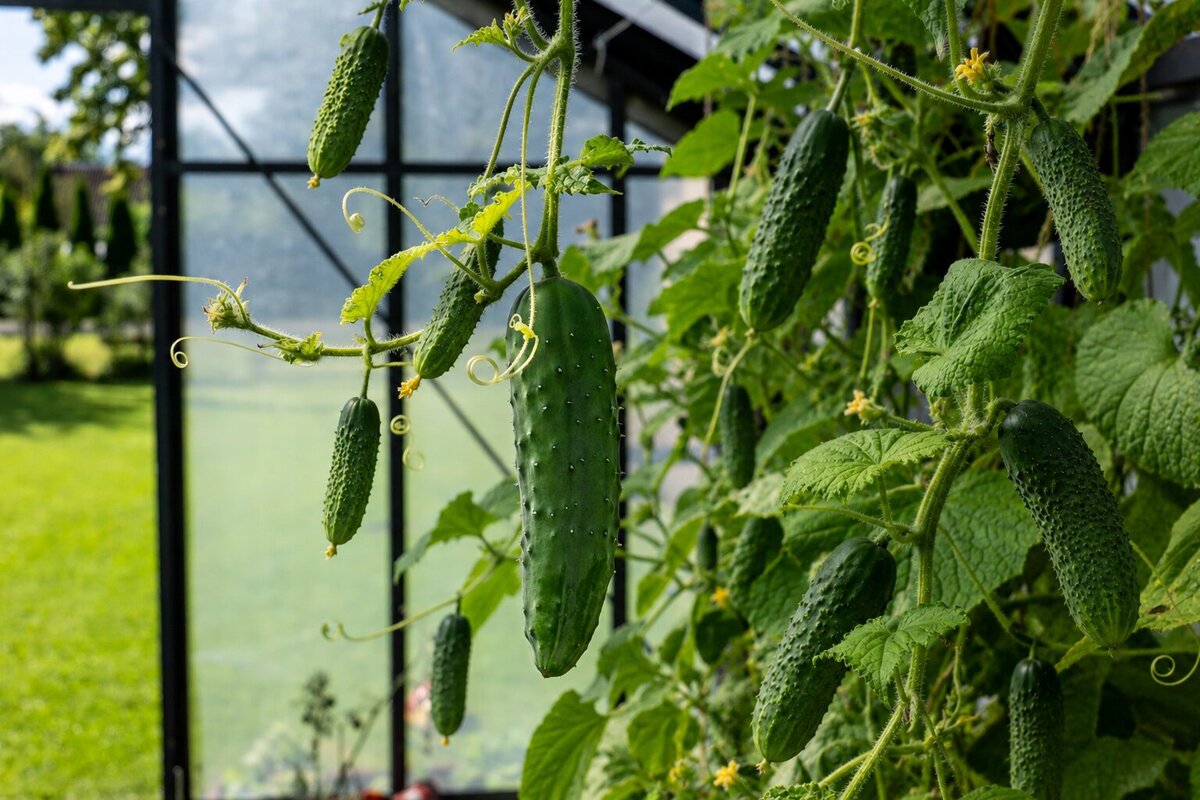
Cucumbers love warmth, yet outdoor conditions can change abruptly across Canada. A protected structure shelters plants from cold winds and prolonged rain, helps keep the root zone steadier and provides vertical room for vines. Rather than spreading across the bed, plants can become an orderly, productive wall that is easier to harvest.
Protection still requires active care. Rain no longer waters the bed, bright sun can create excess heat, and a dense cucumber crop releases substantial moisture. Successful growing depends on regular root-zone watering, early ventilation, dependable supports and enough room between plants.
That control is valuable where spring nights stay cool or summer weather shifts abruptly. Chilly darkness may undo the warmth of an afternoon, and the same structure can trap too much heat under strong midsummer sun. Coordinating temperature, moisture and airflow usually gives steadier growth and extends the picking period.
Cucumber climate
Begin with warm roots, maintain steady growth, and prevent heat stress before it starts.
Cold soil holds young cucumbers back. A brief spell of afternoon sunshine is not a sound reason to move them into an unheated structure. Wait until warmth persists around the roots and overnight conditions suit the cultivar. Plants established slightly later in a properly warmed bed often outgrow seedlings checked by an early cold start.
The challenge reverses as summer strengthens. Solar gain through glass or polycarbonate can raise indoor heat sharply. Begin exchanging air through high and low openings before the crop becomes stressed. Temporary shade may help on exposed sunny sites or in heat-retaining urban gardens, whereas growers in cooler locations may want to conserve warmth longer.
Let the crop help you read the greenhouse. Leaves that droop only at midday may reflect heat or urgent moisture demand, while weakness that persists deserves a closer look at the roots. Condensation after sunrise signals that humid air was trapped overnight. These observations give better guidance than treating one temperature setting as universally correct.
Cold root zone – slow establishment
Even warmth – sustained production
Excess heat – thirsty plants and troubled flowers
01 / Choosing varieties
For greenhouse cucumbers, the variety also determines the pollination plan.
Parthenocarpic cultivars are convenient under cover because fruit develops without pollen transfer. Their success therefore does not depend on bees finding the greenhouse. This group includes many long slicing cucumbers and newer mini types intended for protected cultivation. Read the seed information closely because vigour, lateral growth and mature fruit size differ considerably.
Many conventional outdoor cultivars bear both male and female blossoms, with pollen needing to move between them. Insects may handle this in a greenhouse that is opened widely; an enclosed crop may require the gardener to transfer pollen. The opposite concern applies to certain parthenocarpic cultivars, where stray pollen can result in seedy or distorted cucumbers.
Match the cultivar to the intended harvest. Long slicing types call for strong upright support and regular picking. Snack cucumbers provide numerous smaller fruits, while pickling types follow their own harvest pattern. For a compact Bloomcabin structure, restrained growth that is easy to train may serve the gardener better than sheer vigour.
02 / Sowing + planting
Set young plants carefully, disturb roots as little as possible, and install supports before vines take off.
You can sow cucumbers where they will grow or move in young transplants. Individual pots are helpful in parts of Canada where the greenhouse bed warms slowly in spring. Handle the roots gently and do not keep seedlings confined in undersized containers. Move each plant while it remains compact and its soil mass holds together.
For direct sowing, wait for truly warm soil. Cold, wet seedbeds slow germination and can rot seeds or young roots. Use loose, humus-rich, free-draining soil. Mature compost can be worked in before planting; fresh manure close to young roots is less suitable.
Decide where strings, netting or trellises will run before planting. Cucumbers grow rapidly once established. Adding support among large leaves later wastes time and can damage soft shoots. Planning the structure first lets each vine be guided from the beginning.
01Prepare a warm bed and secure the trellis
02Set out young plants or place seed in warmed soil
03Guide the main stem upward regularly
04Manage side shoots for the variety
05Keep water and nutrients steady once fruiting begins
06Harvest and inspect the crop several times weekly
03 / Spacing + supports
The right density leaves enough light and moving air within the cucumber row.
Packing plants into every available corner usually creates trouble. Cucumbers quickly form a heavy canopy that shelters lower leaves from moving air, obscures early pest activity and holds humidity after irrigation. Set the row according to the cultivar’s mature habit and the way you plan to train it.
For upright culture, train the primary vine along cord, firm mesh or another secure support. This keeps aisles usable, lifts fruit away from soil and spreads foliage through the available height. Taller Bloomcabin structures let gardeners occupy the upper growing volume without covering paths in trailing vines.
Cultivars differ in how they should be pruned: some suit a closely managed main vine, while others crop well on additional laterals. Use the seed supplier’s method instead of imposing one rule on every plant. Take away yellow, damaged or unmistakably diseased leaves, but retain sound foliage needed to fuel fruit growth.
Design access for picking as carefully as the trellis. Leave enough clearance to walk between rows without repeatedly brushing leaves aside. An unobstructed line from the entrance makes irrigation, inspection and harvesting easier. It is particularly helpful with long cucumbers, which can become oversized while hidden by broad foliage.
04 / Watering
Cucumbers need plenty of water, but even moisture matters most.
Rain cannot replenish a covered bed, so the gardener controls the entire water supply. A mature vine carrying several cucumbers may drink far more on a hot day than a recently planted seedling. Test moisture where the feeder roots are working and respond to the crop instead of following an inflexible weekly routine.
Soak the rooting area thoroughly, then avoid leaving it waterlogged. Roots also require air within the soil. Heavy beds are especially prone to trouble when a small dose is repeatedly poured onto one place. Organic-rich soil with good structure stores useful moisture while still draining the surplus.
Drip lines or careful watering at soil level reduce splashing and keep the canopy drier. This is especially helpful once cucumber foliage becomes dense. Irrigating in the morning often suits the crop: it replenishes moisture ahead of the sunniest hours and leaves time for ventilation to carry humidity away.
Repeated swings from very dry to very wet stress cucumber plants. Growth may stall and fruit can become bitter or uneven. Mulch can reduce water loss, but apply it only after the bed is warm enough that extra insulation is no longer unwelcome.
05 / Nutrients
Strong leaves matter, but the aim is fruiting plants rather than foliage alone.
Cucumbers are relatively hungry vegetables. A well-supplied, humus-rich bed is the best starting point. Mature compost before planting improves both structure and nutrient buffering. Where the same bed is used regularly, consider soil condition and plant performance rather than fertilizing automatically each year.
An oversupply of nitrogen encourages lush, soft foliage that shades itself and complicates air exchange. As cucumbers begin forming, aim for balanced, consistent nutrition. Choose a fertilizer labelled in Canada for edible crops and stay within its directions rather than mixing a stronger solution by intuition.
Nutrition changes faster in containers because roots cannot explore beyond the pot. A generously sized vessel with reliable drainage moderates swings in moisture and available nutrients better than a small one. Modest feeding at regular intervals generally suits this situation better than infrequent, concentrated doses.
06 / Ventilation + humidity
Warmth suits cucumbers; stale, moisture-laden air does not.
A mature cucumber canopy sends considerable moisture into the air. Crowded foliage and closed openings allow humidity to accumulate quickly. During a cool night, droplets may form on leaves and the glazing. Begin airing the structure after daybreak whenever outdoor conditions make that practical.
High vents release buoyant warm air, while an open door or low vent admits replacement air. Automatic openers can assist when weather changes, but crop checks are still essential. A house filled with mature vines has very different heat and humidity demands from one containing only recent transplants.
During hot weather, opening early works better than reacting late. Once the structure has absorbed too much heat, cooling it takes longer. Shading may offer extra protection at intensely sunny sites. The goal is not darkness, but avoiding extremes while preserving good photosynthesis.
The air-exchange plan starts with the layout of the crop. No opening can move air effectively through foliage that has knitted into a solid wall. Upright training, sensible removal of ageing lower leaves and unobstructed paths create routes for air among the vines.
07 / Pollination
Identify the cultivar’s flowering biology before inviting or excluding bees.
Conventional cucumbers rely on pollen reaching the female blossoms, which have a tiny swelling behind each flower. If that transfer does not happen, cucumbers may not form or may develop unevenly. Providing insect access or transferring pollen by hand can resolve the problem.
Parthenocarpic greenhouse cultivars make fruit without being fertilized, and pollen can be undesirable for certain ones. Bringing every possible pollinator into every cucumber house is therefore not a universal benefit. Base the decision on the instructions for the chosen seed.
The same decision applies before using insect mesh. Mesh can exclude cucumber beetles or other insects, but it also blocks pollinators. Separation is simpler for parthenocarpic varieties; crops that need pollination require planned access to flowers.
08 / Pests + diseases
Regular greenhouse checks are easier—make that advantage count.
Inspect plants before discoloration spreads across whole leaves. Look beneath foliage, around new growing tips, at flowers and near the base of each stem. Aphids, spider mites, whiteflies and other protected-crop pests can build populations quickly. Early discovery usually keeps the response smaller and more manageable.
Disease becomes more likely where foliage stays damp and air remains still. Directing irrigation to the soil, leaving adequate space and venting consistently are important preventive measures. Carry badly affected plant material out of the structure instead of allowing it to remain under the trellis.
Keep paths, containers and work surfaces clean. Old crop debris can harbour pests or disease organisms. At season’s end, remove the crop fully and prepare the growing area for what follows. An accessible aluminum greenhouse makes this reset easier.
If treatment is warranted, consult Health Canada’s registry and use only a product registered for cucumbers and the intended greenhouse setting. Follow its Canadian label exactly, and check provincial or municipal restrictions and whether it is authorized for home use. Where the cultivar relies on insects, observe pollinator precautions; sanitation, airflow and early scouting should remain the starting approach.
09 / Harvesting
Pick frequently before fruit passes its best stage.
Pick each cultivar when it reaches its preferred harvest stage. Long slicing, snack and pickling cucumbers are not judged at the same size. The seed supplier’s fruit description is more useful than applying the same centimetre figure to every type.
During peak production, inspect plants several times a week. Fruit hides easily behind large leaves. Overmature cucumbers become coarser, develop larger seeds and continue drawing on the plant. Regular picking supports continued fruiting.
Use a clean cut or a gentle twist so the trellised main vine is not tugged loose. Minimize handling while foliage is wet. Once picked, carry cucumbers promptly from the greenhouse heat to a shaded, cooler location.
Growing across Canada
Daily care should reflect the local greenhouse, not a single routine for the entire country.
Protected-growing conditions differ greatly across Canada. Retained warmth may be crucial in northern, coastal, upland or short-season gardens, while sheltered cities and sunny inland sites may encounter overheating sooner. Local wind, humidity and the difference between daytime and overnight temperatures should shape daily decisions.
Use the conditions inside the structure—soil warmth, overnight temperatures, solar gain and humidity—to guide each day’s adjustments. That responsiveness is a central advantage of growing under cover.
Cooler and northern regions Cool nights can delay the start. Ventilate on bright days, but avoid chilling young plants unnecessarily.
Humid or rainy regions Rain stays off the crop, but indoor humidity can still climb. Give leaves drying airflow and monitor the canopy.
Sunny inland locations Reliable watering, early venting and occasional shading may matter more in summer than storing extra heat.
Upland and mountain areas Large day-night differences reward flexible ventilation: release excess heat by day and reduce unnecessary heat loss in the evening.
Urban gardens Walls and buildings hold heat. That can help in spring but can also create very high afternoon temperatures in midsummer.
Wet summer periods A roof protects leaves from rain, yet humidity still needs managing. Check ventilation and leaf density.
Common mistakes
Many harvest problems can be traced to decisions made early in the crop.
01. Setting plants into a chilly bed Midday warmth in the air says little about the temperature around roots after dark.
02. Waiting too long to build the trellis Secure cords or mesh while the bed is open, before vines create a tangled canopy.
03. Crowding the row Extra plants may reduce moving air, trap humidity and complicate routine care.
04. Soaking the canopy during routine irrigation Deliver most irrigation at soil level where the roots can use it.
05. Overlooking the cultivar’s pollination needs Traditional flowering types and parthenocarpic cultivars call for different plans.
06. Waiting for severe heat before opening up Start exchanging air before the structure stores a damaging amount of heat.
07. Keeping overripe cucumbers on the vine Regular picking directs the plant toward continued fruit formation.
08. Neglecting the lower foliage Inspect beneath leaves, around the stem base and among ageing foliage to catch early signs of pests or disease.
Bloomcabin Canada / Greenhouses for vertical growing
Cucumber vines reward usable height. Look for a greenhouse where trellises, walkways and adjustable airflow can work as one layout.
The links below open the corresponding Bloomcabin Canada product records. When planning for cucumbers, compare usable height, access to ventilation controls, pathway clearance and room for upright rows.
Classic cucumber growing Classic Aluminum Greenhouse →
Generous growing volume Bloomcabin Orangery →
Metal base + clear geometry Bloomcabin Prestige →
T-shape for separate zones T-Model Orangery →
Wall model / sheltered position Wall-Mounted T-Model →
Architectural height Aluminum Wall Greenhouse →
Masonry base + planting bed Pyramid Greenhouse Oasis →
Storage + cultivation Pyramid Greenhouse for Wall Bases →
Hexagonal garden room Classic with Storage Area →
Additional model option Hexagon Greenhouse →
Questions and answers
Practical answers for greenhouse cucumber growers
What type of cucumber is simplest to grow under cover?
A parthenocarpic greenhouse cultivar is often convenient because cucumbers can develop even when no bee transfers pollen.
What spacing should I leave between cucumber plants?
Use the mature habit and training method as your guide. Finished rows still need light penetration, moving air and space for the gardener to reach the plants.
Is pollen transfer necessary for cucumbers grown under glass?
Usually, conventional flowering cultivars require it, whereas parthenocarpic cultivars do not. Confirm the directions supplied with the seed.
Is upright training worthwhile?
Yes. Guiding vines vertically frees the floor and makes efficient use of greenhouse height.
What determines the watering frequency?
There is no fixed interval. Assess moisture around the roots and adjust for soil, plant size and current weather.
What can make cucumbers bend or develop unevenly?
Potential causes include poor pollen transfer, stray pollination in a parthenocarpic cultivar, moisture stress and excessive heat.
May tomatoes and cucumbers share one greenhouse?
They can, provided both crops remain accessible and their irrigation and airflow needs can be coordinated without crowding.
How do I recognize the right picking stage?
Use the characteristic harvest size given for the cultivar and pick before the cucumber becomes coarse and overmature.
Grow upward
A dependable cucumber crop starts with warmth around the roots, consistent moisture, moving air and an orderly route for each vine to climb.
A Bloomcabin greenhouse supplies that framework: shelter around the bed, generous vertical room for trained vines and ventilation that can be adjusted above the foliage.
Compare greenhouse options See the Classic modelCanadian home-gardening overview: cultivar needs, planting schedules, pest pressure and greenhouse management vary with location and season. Use the seed supplier’s directions and Canadian product labels, and seek suitable local horticultural or pest-management advice when required.
