
A Guide to Buying a Greenhouse on Black Friday for Next Spring
Greenhouse buying guide
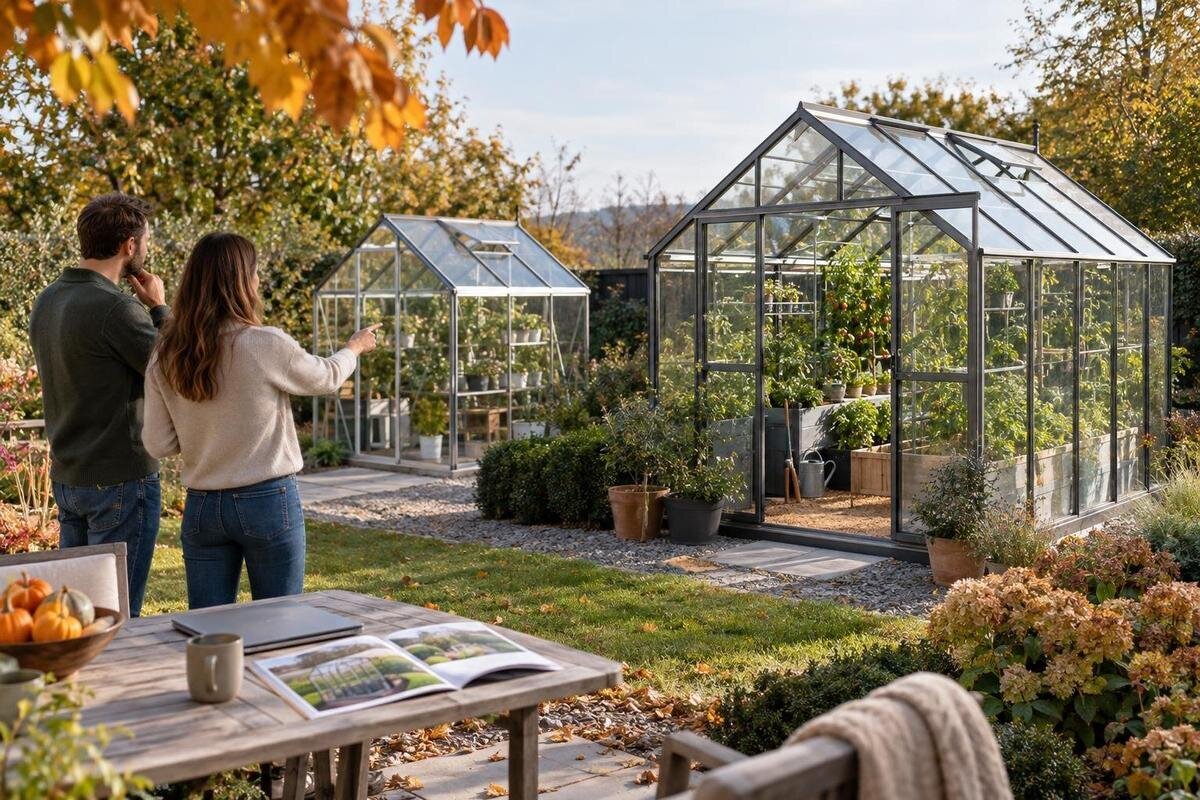
Planning to buy a greenhouse on Black Friday for next spring? Use the sale period, if an offer is available, as a point on the calendar—not as a reason to rush. A good choice starts with the plot you can use, what you want to grow and the work you are prepared to take on. This guide helps you measure and compare models, check material and glazing descriptions, and leave time for ordering and site preparation. It focuses on the buying decision rather than promising a particular discount or delivery date.

Set your greenhouse priorities before Black Friday
Begin with a written brief for the greenhouse you want next spring. List the main jobs: raising seedlings, growing crops under cover, keeping plants sheltered or a combination. Estimate how many pots or beds you expect to manage, and whether you need working space as well as growing space. Think about the part of the year you are most likely to use it; a greenhouse chosen for a single crop may be less useful if your plans change. This brief gives you a practical basis for comparing sizes and features instead of reacting to whichever listing has the most prominent offer.
Turn that brief into a short set of fixed requirements and preferences. Write down the largest outside footprint the site can accept, the usable height you need, your glazing preference, access and ventilation needs, assembly arrangements and a spending limit. Mark two or three non-negotiables; leave lesser preferences open so you can compare alternatives. A page such as Bloomcabin Prestige Greenhouse Metal Base is a model listing to assess, not proof of a particular size or included base. Check the actual details for the exact configuration, and note unanswered points rather than filling them in from the name. Keep the brief short enough to use while comparing: it should help rule options in or out, not try to predict every crop.
Measure the plot and the route to it
Measure the ground area you can genuinely use rather than estimating from a glance. Take the intended length and width in metres, then sketch fences, paths, beds, patios, walls and any fixed items that limit placement. If the space is irregular, divide it into simple measurements and draw the outline to scale. Note where the surface changes or slopes; a drawing alone cannot establish whether a proposed base will work. Measure from fixed points, check the figures twice and keep them with your shortlist so you can compare each greenhouse’s stated outside dimensions against the same clear area.
Include the route from the access point to the proposed spot. A structure that fits on paper may be awkward if a path, doorway or nearby item leaves too little room to move around it or carry materials through. Check overhead branches and projections, allow the clearances required in the product information, and think about how you will reach the greenhouse to clean or maintain it. For Bloomcabin Orangerie, as for any listing, use the stated measurements rather than the model name or photograph. If the dimensions or required clearances are not shown, ask before ordering; do not round measurements in your favour when the available space is tight.
Match the space to the crops and tasks
Translate your growing plans into working space, not just a plant count. Seed trays, pots, grow bags and taller plants use the floor differently, while shelving or benches reduce the space available below them. Consider the mature height and width of plants you expect to grow, where you need to stand to tend them, and whether you want to move plants in and out. If your plans include different crops or seasons, note which tasks might overlap. Seedlings and established plants, for example, may need space at the same time, so a simple list of activities can reveal competing demands.
Compare usable internal dimensions as well as the outside footprint, if a listing provides both. Check where the entrance sits, how much room remains for a route and whether working positions are accessible without shifting every pot. The model name Classic Plus 385 should not be read as a measurement; rely on stated dimensions and diagrams for the exact version. A quick sketch of the footprint, a route and rough bench positions can expose an awkward layout before you commit. If you are comparing different versions of a model, confirm that the measurements refer to the version you intend to order.
Assess the site beyond the summer months
Observe the proposed spot at different times of day and, where possible, at more than one point in the season. Shade from trees, walls and nearby structures can shift as the sun moves or foliage changes. Note the hours of direct light and any longer periods of shade rather than labelling a site simply sunny or sheltered. Consider how close the greenhouse would be to water run-off or places where rain collects, and whether you can reach it when the garden is wet. If water pools or the ground is uneven, check site suitability rather than assuming the position will be suitable once a greenhouse is there.
Also consider exposure to wind, access for delivery and assembly, and whether a nearby wall or boundary affects clearances. Do not choose a position from a product photograph alone: check the manufacturer’s stated siting requirements and the specified anchoring or base arrangement. A title such as Wall Based T Model Greenhouse Orangery is not enough to establish the space, fixing details or compatibility with your wall. If the ground, base or connection to an existing structure is uncertain, have the installer or another suitably qualified professional assess it before you buy.

Check the frame and base requirements
Compare frame construction using the material and finish actually stated for each model, then read the care instructions. Consider what routine cleaning or maintenance you are willing to do, whether the supplied information explains replacement components, and whether the frame and glazing are described together as one system. Broad labels alone do not tell you how a particular greenhouse is assembled or maintained. If two listings specify different materials, compare their published details and care requirements side by side rather than assuming one material is automatically stronger, easier or longer-lasting in every setting. Look for specific information about finishes and connections, not just a general material name.
Check the base interface separately from the frame. Confirm what surface or base is required, whether a base is included or optional, what dimensions or fixing details are given, and whether your prepared site matches those instructions. A name such as Pyramid Greenhouse for Masonry Bases is an identifier, not confirmation that an existing masonry base will fit or that the necessary components are included. If information about the base or ground preparation is incomplete, pause and ask the supplier or installer. Structural questions should not be resolved by guessing from a photograph or trying to make an existing surface fit.
Compare glazing on the published specification
Treat glazing as a separate choice from the frame. A product description should state what the panels are made from and provide details you can compare, such as panel construction, thickness, safety information and how panels are retained. Check any claims about light transmission, insulation or impact performance against the specification for the exact configuration; do not assume those properties from a broad phrase or a picture. Consider panel cleaning and replacement too: ask how to obtain matching replacements if the product information does not explain this. The relevant details may differ between versions, so confirm which specification applies to the one you are considering.
Decide which points matter most for your use. Clear views, safe handling, cleaning and the level of protection you need can all affect the choice, but details vary by product. The words in a title such as Aluminium Classic Greenhouse are not a glazing specification, so compare the panel information directly. If you cannot tell what is supplied or what a performance claim means in practice, get clarification before adding the model to your shortlist. The aim here is to make glazing one considered part of the whole purchase, rather than to choose a greenhouse on a single material label.
Plan for ventilation and everyday access
Think about how you will use the greenhouse on an ordinary working day. Check whether the listing specifies the door opening, the position and operation of vents, and whether controls are reachable from where you will stand. You should be able to bring in trays and pots and reach plants without blocking the main route. For routine care, consider how you will open and close the vents, sweep the floor and clean the panels. These details can make daily use easier or more awkward, so match them to the activities in your brief rather than treating them as optional finishing touches.
Compare only features that are confirmed for the model and configuration. Look for clear statements about ventilation and access rather than assuming a greenhouse has particular vents, a lock or other fittings. If the title includes a form or siting term, treat it as a label and check the exact dimensions, attachment requirements and clearances. For example, Aluminium Lean-to Greenhouse should be assessed from its own published information, not from a general expectation about lean-to models. Make a note of any feature you regard as essential and verify that it is included, rather than an optional extra.
Confirm what is included and how assembly is handled
Before ordering, establish precisely what the selected configuration includes. Look for a parts list or clear contents description covering the frame, panels, doors, vents, fixings and any base or accessories. Do not presume a component is included because it appears in a photograph or is mentioned in a category description. Check whether shelves or other extras are listed as optional and whether the product page distinguishes versions. If the package description is unclear, ask for confirmation and keep the answer with your order records. This makes comparisons more accurate and reduces the chance of planning around an item that is not part of the purchase.
Assembly is another part of choosing, even if you will not put the greenhouse up yourself. Read the assembly information before ordering, check what preparation or help it calls for, and decide who will do the work. Consider the access needed for delivery, temporary storage for parts and whether your chosen installer can work within the timescale you have. A product label such as Limited Edition Aluminium Greenhouse does not establish the package contents or current availability; verify both on the live listing. Avoid booking work around a delivery date that has not been confirmed.
Compare any Black Friday offer like for like
Black Friday is a possible buying window, not a guarantee that your chosen model will be discounted. Save your shortlist beforehand with the exact model or version, dimensions, glazing, frame, included components and the features you need. When an offer appears, check that it applies to that exact option and read its published conditions and validity. Similar names or photographs can refer to different configurations, so match the description carefully. If the offer leaves out a key detail, ask for clarification rather than treating the sale label as a substitute for product information.
Compare offers on an equivalent basis: an advertised figure is useful only alongside the greenhouse and specification it refers to. Note any stated delivery charge, delivery estimate, excluded item or condition that affects your purchase, but keep the main question in view: does this exact model meet your requirements? A lower price on an unsuitable configuration is not a better choice. Do not assume an offer is active, applies across the range or remains available for a particular period unless the seller’s published terms say so. There is no need to buy before the details are clear.
Work backwards from the spring growing season
Work backwards from when you hope to begin growing, allowing for the steps between checkout and a usable greenhouse. Check the latest stated availability and delivery estimate for the chosen configuration, then allow time to receive and inspect the order, prepare the site, arrange assembly and deal with any delay. No Black Friday purchase automatically ensures arrival before spring; the seller’s estimate and your own site-preparation schedule are what matter. If the timescale is tight, decide in advance whether you would accept a later start or prefer to wait for a more suitable option.
Before checkout, keep the product details and delivery terms together, confirm that access and base arrangements are settled, and make sure the person handling assembly has the necessary instructions. Leave a practical buffer instead of planning every task for the earliest possible date. If you are ordering as a gift or arranging installation through someone else, check that the recipient or installer can accommodate the expected window. That forward plan lets you use the winter to prepare without assuming a specific arrival date, and keeps the aim clear: a greenhouse that is ready for your actual spring plans, not simply one bought during a promotion.
Frequently asked questions
Is Black Friday a good time to buy a greenhouse?
It can be a useful time to compare options if a relevant offer is published, but no particular model or saving is guaranteed. Decide what you need first, then check whether any offer applies to the exact configuration and whether its terms fit your plans for spring.
How early should I order a greenhouse for spring?
There is no universal date: availability, delivery estimates, site preparation and assembly arrangements vary. Work backwards from when you hope to use it, using the current estimate for the exact model, and allow a buffer. A Black Friday order date does not confirm that it will arrive in time.
Which measurements matter before choosing?
Record the clear ground length and width, then consider the access route, nearby obstructions, door-opening clearance and space needed for maintenance. Compare those measurements with the outside dimensions and any required clearances stated for the exact version. Check internal dimensions and height against your planned layout.
Is glass or plastic glazing better?
Neither is best for every greenhouse or growing plan. Compare the actual panel material and construction, safety information, stated light or insulation claims, care requirements and replacement options. Check the details for the exact configuration rather than inferring the glazing from a frame name or photograph.
What should I verify before placing a Black Friday order?
Confirm the exact model and version, dimensions, glazing, frame and base requirements, package contents, any offer terms, availability and delivery estimate. Review the charges and conditions shown for the order. If a detail that matters to you is unclear, resolve it before buying rather than relying on a product name or image.
Buying ahead can be useful when it gives you time to compare, confirm what the chosen model includes and organise its arrival. Keep your measured site, growing plan and must-have specification beside each listing, and treat any promotion as an opportunity only when its terms and timing fit. If the available information leaves a key question unanswered, wait for a clear answer or choose an option whose details are confirmed. That is a practical route to a greenhouse for next spring.
