
Buying a Greenhouse for Orchids and Tropical Plants
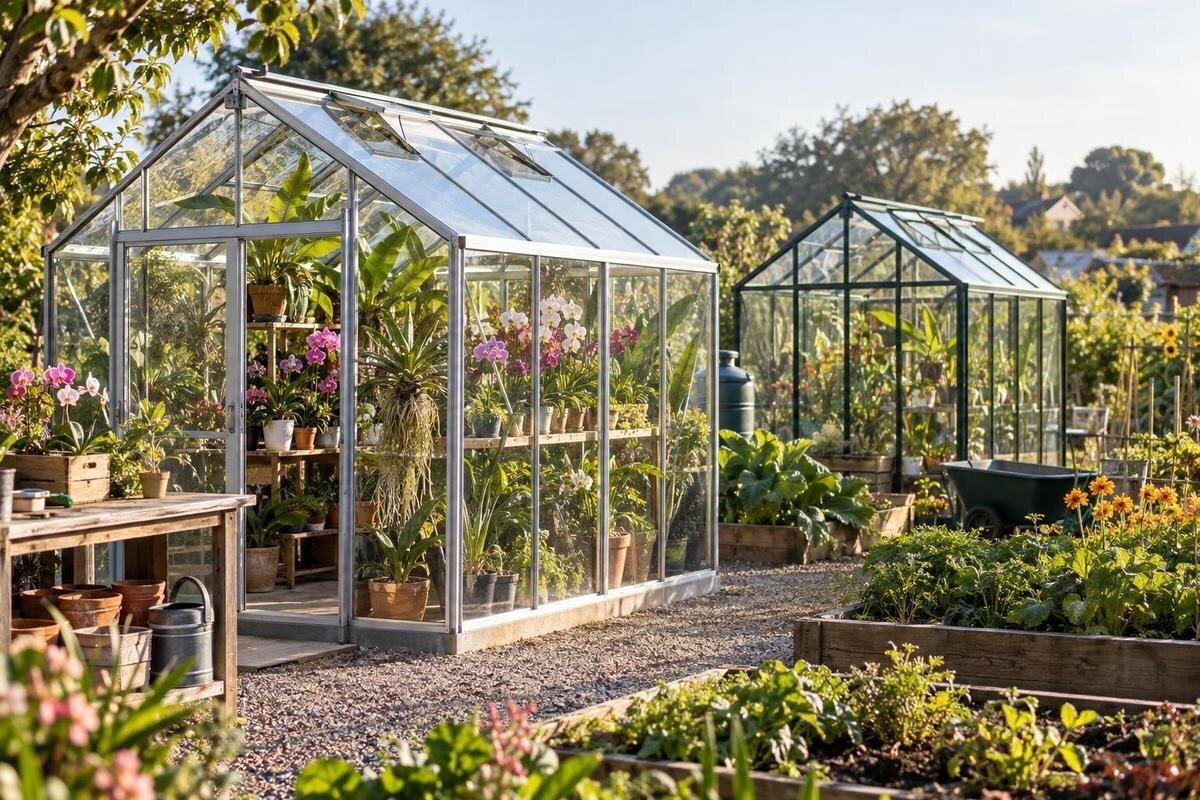
Greenhouse buying guide
When buying a greenhouse for orchids and tropical plants, begin with the growing conditions you can realistically provide, not a promise of a ready-made tropical climate. Orchids and tropical foliage plants differ in their needs for warmth, light, humidity and airflow. List the plants you want to house, then compare usable space, glazing, vents, heating and the work required to manage them. A greenhouse can offer shelter and let you adjust its environment, but it does not create warmth or humidity by itself. The strongest choice is a structure whose layout and equipment fit your collection and your plans for running it.

01
Match the greenhouse to the plants you will grow
Orchids and tropical plants are broad groups, not a single set of greenhouse requirements. One orchid may prefer bright filtered light and a distinct drying period between waterings, while another may need different temperatures or moisture; tropical foliage plants vary as well. List the plants you intend to keep, then check reliable growing guidance for their light, minimum temperatures, humidity preferences and seasonal changes. Include likely mature plants, not only the small specimens you have now. Record which requirements are essential and which are preferences, since this makes later compromises easier to recognise. This is more useful than choosing a greenhouse because its name includes “orchid” or “tropical”: those words cannot establish whether conditions will suit a particular species.
Look for overlap between the plants' needs rather than an average that suits none of them. If one group needs cooler nights or more air movement than another, consider separate areas, movable shelving or keeping the most demanding plants in a different growing space. Note which plants can tolerate seasonal variation and which need steadier conditions, and be realistic about the monitoring you can maintain. A greenhouse offers shelter and options for adjusting the environment; whether it is warm, bright or humid enough depends on its site, construction, ventilation and any equipment you add. Make a simple plant list showing where each specimen could go and what changes it may need through the year. This also reveals early whether one collection is too varied for a single enclosed space.
Size the growing space around mature plants
Measure for the plants you expect to grow, not just the number of pots you have today. Allow room for benches, shelves and a clear route for carrying trays or reaching plants without brushing foliage. Tall specimens may need uninterrupted vertical space, while small pots can be easier to tend at more than one level. Remember that leaves, flower spikes and supports may extend beyond the pot, particularly as a collection matures. Hanging baskets can make use of overhead space only when the intended fixing points have been confirmed as suitable; do not assume a frame or roof bar can support them. Avoid filling every surface at the outset, as spare room makes rearranging plants and cleaning much more manageable. Include a place for watering cans, labels and temporary plant quarantine, so routine tasks do not block the path or force plants onto the floor.
Sketch the proposed layout before choosing a footprint. Mark the doorway, work area and places where shelves could restrict access to plants or vents. Compare the external dimensions with clear internal space and door access wherever those details are supplied. A product page such as Bloomcabin Prestige greenhouse with metal base can be one entry in that comparison: check its published dimensions against your plan rather than inferring usable room from its name. Leave enough space to move plants in and out as their size or seasonal needs change.
02
Choose a site with useful light and practical access
Observe the proposed site at different times of day and consider how shade from trees, fences or buildings changes with the seasons. The amount of light reaching the greenhouse will affect which plants can be grown there and whether shading might be needed during brighter spells. Strong direct sun can heat an enclosed space quickly, while a heavily shaded position may not suit plants that need brighter conditions. Consider the requirements of your actual collection instead of assuming that one exposure is right for every orchid or tropical plant.
Check the plot for wind and rain exposure, water runoff and a convenient route for carrying compost, pots and equipment. Leave access for opening doors and vents, tending the structure and moving plants. Think also about where water for routine plant care will come from and where you can set down plants while rearranging benches. When reviewing a listing such as Bloomcabin Orangerie, compare its published dimensions and siting guidance with the light and access available at your chosen spot; do not infer that it will suit a particular garden position from the name. Conditions can vary across a garden, so assess the intended site itself. Visit the area after heavy rain if possible, as standing water, slippery approaches or splash from nearby surfaces can make daily care less convenient.
Compare glazing and frame details
Glazing affects the light entering the greenhouse and how much heat is retained. Broadly, clear single-pane glass gives a more direct view and light path, while multiwall polycarbonate can diffuse light and reduce heat transfer compared with single glass. These are general tendencies, not a substitute for the figures for a particular product. Check the glazing material, thickness and any stated light-transmission or insulation information. Some plants cope better with filtered light than others, so decide whether the greenhouse will need separate shade measures and whether those are included or bought separately. Consider how seasonal sun will reach the intended benches, because plants can receive very different light near a side wall, beneath a shelf or in the centre of the structure.
Look beyond the panel type to the frame description, finish, care guidance and availability of replacement parts. These details help you understand what maintenance may involve over time. If aluminium frames are on your shortlist, the page for Aluminium Classic greenhouse is one listing to inspect; check the stated frame and glazing details rather than assuming performance from the model name. Also consider the position of panels in relation to your benches and plants, and ask how damaged or worn glazing can be replaced.

03
Plan ventilation alongside humidity
Humidity and ventilation need to be considered together. Closing a greenhouse may help retain moisture, but still, persistently damp air and condensation can create problems for plants. Ventilation helps exchange air and manage excess warmth and moisture; its effect depends on the openings and how they are used. Compare the number, position and operation of the vents on each model. Check whether openers are manual or automatic, and whether any automatic controls are included or need to be sourced separately. Consider how readily you can respond when conditions change: vents that are awkward to operate may encourage delayed adjustments on hot or damp days.
Think about where air can move once plants, shelves and hanging pots are in place. A vent that is difficult to reach or blocked by a bench may be less useful in daily care. For an attached design, a listing such as wall-based T-model greenhouse orangery is a prompt to check the actual vent layout and opening details; the title does not establish ventilation capacity. A circulation fan may be useful in some setups, but it should not be treated as a substitute for choosing appropriate vents or checking the plants' humidity preferences. Plan space around openings so plants can be moved away if needed, and make sure any routine vent adjustment remains possible when the greenhouse is fully planted.
Work out how warmth will be maintained
Decide whether your plants need warmth throughout the year or only during particular periods, using guidance for the species you plan to grow. Note the lowest conditions you are prepared to protect them from and whether you can monitor the greenhouse when the weather changes. A greenhouse can shelter plants, but it does not maintain a chosen temperature by itself. Sunlight, outdoor conditions, glazing and ventilation all affect the environment inside, so do not assume that a structure advertised as a greenhouse will be warm enough for every tropical plant. Consider how quickly conditions may change on bright winter days, cloudy spells and overnight, rather than planning only for typical daytime weather.
If you plan to heat the space, check whether heating equipment is included or must be purchased separately. Have the supplier or a qualified professional confirm that the proposed equipment is suitable for the enclosure and can be installed safely. If electrical heating is planned, discuss the supply and installation with a qualified professional rather than relying on a product name or a guess. Consider ongoing energy use, monitoring and what you would do if conditions changed while you were away. Heating should be a practical part of the growing plan, not an afterthought.
04
Confirm the base and site preparation
Before ordering, find out what kind of base the greenhouse requires and whether it is included in the package. Check the stated base dimensions and preparation guidance, and consider whether the proposed surface is suitable and allows for water runoff. Make sure the doorway and planned route remain accessible once the greenhouse is in place. If the base or installation requirements are unclear, ask the supplier before buying rather than assuming that a convenient patch of ground will meet them. Account for the finished level of the base when planning entry, bench height and the position of nearby paths, especially where the site is uneven.
The structure and its base need to be compatible with the site, including its exposure to wind and rain. Follow the supplier's installation guidance, and ask a qualified installer to assess the site if you are unsure about preparation or anchoring. If you are comparing models with a named base type, the page for pyramid greenhouse for masonry bases is a useful place to check the stated requirements; its title does not provide the dimensions or installation details. Do not improvise a foundation or assume that one base arrangement suits every greenhouse.
Compare freestanding and wall-mounted layouts
A freestanding greenhouse gives you more choice about where to position the structure, provided the site has enough room and access. A lean-to or other wall-mounted design can make use of a space beside a building, but the wall may affect shade, airflow, access and the movement of rainwater. Check where doors and vents open, whether you can reach the greenhouse for maintenance, and whether the proposed position leaves enough room for daily work. Also consider whether nearby windows, downpipes, gates or garden furniture could limit access once the greenhouse is installed.
Do not assume that an adjoining wall will keep the greenhouse warm or remove the need for heating. Its effect depends on the wall, its exposure and the greenhouse design. Before choosing a wall-mounted layout, confirm the wall and base requirements with the supplier or installer. For a listing such as aluminium lean-to greenhouse, check the actual attachment, door, vent and base details; the product title alone cannot show whether your wall and site are suitable.

05
Plan for monitoring and day-to-day climate management
A greenhouse can have different conditions at the door, on a high shelf and among plants near the floor. A thermometer and humidity monitor placed close to the growing area can give a more useful picture than a reading near a door, heater or vent. More than one reading point may be worthwhile where the greenhouse is long, densely planted or arranged over several levels. Check conditions at different times, including during bright periods and cooler nights, and keep notes as you learn how the site behaves. These observations help you see whether your layout or routines are working for the plants you have chosen. Record when you open vents, add shade or move plants as well as the readings, since that context makes patterns easier to interpret over several weeks.
Shade, heating, ventilation and humidity equipment each address different conditions, so choose additions for a clear reason and check how they will be controlled. Do not assume that a greenhouse includes climate controls or accessories unless the listing says so. When reviewing limited-edition aluminium greenhouse, read the product information for package contents and stated equipment; its name alone does not confirm heating, shading or controls. If you plan to grow plants with different requirements, decide whether they can be managed together before buying extra equipment.
Check the full specification and order details
Compare listings using the same set of details: external and internal dimensions, glazing, frame, doors, vents, base requirements, assembly guidance and package contents. Add listings such as Classic Plus 385 to a comparison table, but enter figures only where the product information states them; do not interpret “385” as a dimension, capacity or performance figure. If a detail matters to your choice but is not clear, ask the supplier to confirm it before placing an order.
Check the current order information for delivery and assembly arrangements, any separately purchased accessories, and what support is available if a part needs attention later. Consider whether the components can reach the proposed site and whether you have the space and help needed for assembly. Compare the total cost of the structure and the equipment you expect to need, as well as the practical effort involved in running it. Reviewing these details now can prevent a greenhouse that fits the garden but not the growing plan. Keep your comparison table with the date checked, as package contents and available accessories should be confirmed again at the point of ordering.
Frequently asked questions
Can orchids and tropical plants share one greenhouse?
They can if their light, temperature and humidity needs overlap sufficiently. The names “orchid” and “tropical plant” cover many different growing requirements. Group plants by their care needs, and consider separate areas for plants that need noticeably different conditions. Shelves alone will not create separate climates.
Will a greenhouse keep tropical plants warm by itself?
No. A greenhouse can shelter plants and warm up in sunlight, but its temperature changes with the weather, glazing, ventilation and time of day. It may cool considerably overnight. Check the plants' requirements and decide whether suitable heating and ongoing monitoring are practical for your site.
Is high humidity always best for orchids?
No. Orchid species differ, and humidity does not replace suitable watering, air movement or growing conditions for the roots. Persistently damp, still air can cause problems. Check the needs of each plant and monitor humidity alongside ventilation and condensation.
Should I choose glass or polycarbonate glazing?
Neither is right for every collection. Broadly, clear glass tends to give a more direct view and light path, while multiwall polycarbonate can diffuse light and reduce heat transfer compared with single glass. Check the actual glazing specification, light transmission and insulation figures, if provided, against your plants' needs.
What should I check before ordering a heated greenhouse?
Confirm the greenhouse dimensions, glazing, vents, base requirements and what the order includes. Ask the supplier or a qualified professional to confirm that the proposed heating equipment suits the enclosure and can be installed safely. Consider ongoing energy use and how you will monitor conditions, rather than focusing only on the initial purchase.
A greenhouse for orchids and tropical plants is a combination of plant choice, site, glazing, ventilation and managed warmth, not a single feature or product name. Build a shortlist around conditions you can maintain, and separate plants that need noticeably different environments. Compare each listing using its stated dimensions, included parts and installation requirements. If a greenhouse cannot support the needs of your most demanding plants within the care and running costs you can sustain, consider growing a smaller group of compatible plants rather than assuming the structure will solve the mismatch.
