
Buying a Greenhouse for a Coastal Garden: Materials and Maintenance
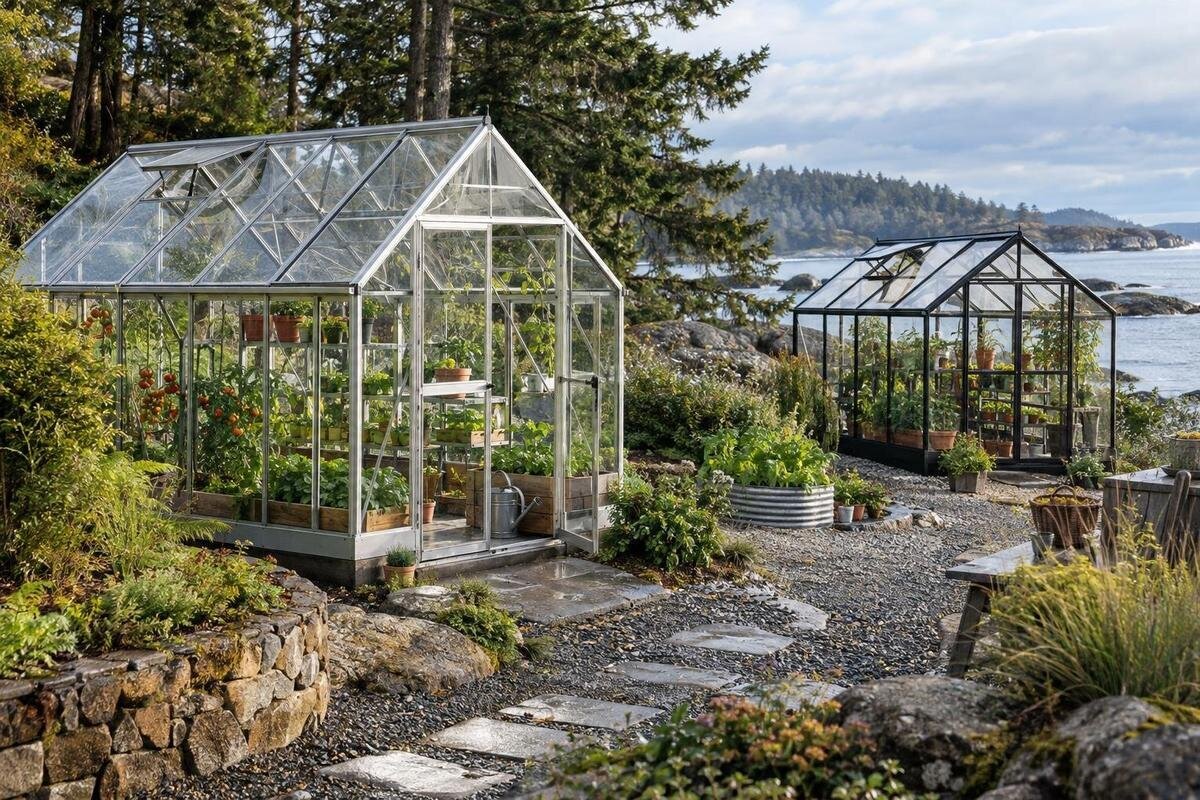
Greenhouse buying guide
Buying a greenhouse for a coastal garden calls for more than a broad claim about corrosion resistance. Salt may arrive as direct spray or settle from damp air, and the amount reaching a site varies with shelter, exposure and the greenhouse’s exact position. Two plots at a similar distance from the shore can therefore need different upkeep. When you compare options, look beyond the headline frame material: examine finishes, fasteners, glazing, seals, base details and the maker’s cleaning guidance. The choice should suit both the conditions the greenhouse will face and the maintenance you can carry out safely. Think about access for rinsing and inspection before you order, not after assembly.

Assess salt exposure at the exact site
The label coastal covers a wide range of conditions. A garden facing open water may receive more direct spray than a spot screened by buildings, landforms or planting, but a screen can redirect airflow or provide only seasonal shelter. Wind direction and the position of the greenhouse within the garden matter, so distance from the shore alone is not a reliable guide. Look at outdoor metal fittings, gates or garden furniture for signs of deposits or corrosion. These can offer useful clues about exposure, though they cannot predict exactly how a greenhouse will weather.
Assess the proposed footprint, not just the garden as a whole. Note whether it is open or sheltered, whether water tends to collect around it, and whether you will be able to reach the frame and glazing for cleaning. A back edge or base that is difficult to access can make routine checks awkward. Also observe the site after windy or wet weather: debris patterns, persistent damp and salt residue on nearby surfaces can reveal practical maintenance issues that are not obvious on a calm day. If the position is exposed to strong winds, ask for guidance on the exact model and site before buying. Do not assume that a greenhouse’s shape or material alone confirms that it is suitable there.
Compare frame materials and protective finishes
Salt-laden moisture can corrode metals that are vulnerable or poorly protected, and the frame material is only part of the picture. Aluminium does not develop iron rust, but it is not immune to corrosion; the alloy, finish and construction details matter. Steel may have a protective coating or galvanised finish, so ask what is used and how exposed edges are treated. Timber avoids metal corrosion but has its own moisture and surface-care requirements. If considering it, check how it has been treated and whether its finish needs renewal.
Check the materials of all the parts that meet the air and rain, not just the main frame: these may include the base, brackets, hinges, screws and glazing bars. Ask how to care for a damaged finish and whether replacement parts are available. It is also useful to establish whether routine cleaning requires particular products or whether the care guidance identifies areas needing closer inspection. The Bloomcabin Prestige greenhouse listing is a page you can examine by the same standard, but its name alone does not establish the exact metals, finishes, fasteners or suitability for salt exposure. Use the product details and ask about anything they leave unclear.
Check what the glazing material requires
Glazing affects cleaning and replacement as well as the greenhouse’s appearance. If you are comparing glass with plastic glazing, check the exact type specified rather than relying on a general label. Glass has a smooth surface that is usually straightforward to clean, but it can break if struck. Plastic panels can be scratched, and their care requirements vary by type. Salt can also collect around the edges of either material, where panels meet bars, seals or channels, so access to these joins is worth considering.
Before deciding, look for the glazing type, how panels are held in place, and whether replacement panels and retainers can be obtained. Check which cleaning products and methods are permitted, as these need to suit both the panel and its seals. Consider the practical route for replacing a damaged panel too: access around the greenhouse and clear space for handling a panel can matter as much as availability. The Bloomcabin Orangerie listing is another page to assess in this way: treat the title as an identifier, then confirm the actual glazing and maintenance information. If the details you need are not provided, ask the supplier rather than guessing from a product image.
Confirm the base, drainage and anchoring details
A greenhouse base and the foundation beneath it are separate considerations. Before ordering, check what the package includes, such as a base frame or fixings, and what site preparation the maker requires. Do not assume that a named base removes the need to check the ground or drainage. Water and wet debris around lower rails can leave joints harder to inspect and may contribute to maintenance problems. Make sure the proposed position allows you to check the base once the greenhouse is assembled.
For an exposed position, ask for model-specific guidance on anchoring and installation, and have a qualified installer assess any site-specific requirements. Generic advice cannot establish what is suitable for a particular greenhouse and plot, and there is no single foundation arrangement for every garden. Discuss access around the completed structure as part of that assessment, because a foundation layout that leaves no working space can make cleaning and checking lower components unnecessarily difficult. The Classic Plus 385 greenhouse listing is one product page you can review against these questions; the model name does not confirm the included base, package contents or site requirements. Resolve any uncertainty before placing an order.

Ask about fasteners, seals and material interfaces
Small connections deserve attention because they can be exposed to salty moisture and may be less accessible than the main frame. Screws, hinges, clips, washers and cut edges can use different materials or finishes. Where different metals meet in damp conditions, their compatibility and any protective separation can matter. Ask which fasteners are specified and whether replacements should match them. Avoid assuming that a general-purpose replacement will be suitable; use the maker’s guidance when a part needs attention.
Seals and junctions also affect the care a greenhouse needs. Ask whether seals can be replaced, how to check them and whether cleaning products must be avoided. Where a greenhouse meets a wall or another structure, clarify how that junction is intended to be finished and kept accessible, rather than assuming it will be sheltered or maintenance-free. Read any stated terms about the environment or maintenance rather than assuming that a general product description covers every location. The Wall Based T Model greenhouse listing can be checked for the details it actually provides, but its title does not establish the materials, fasteners or wall interface. Confirm those points with the product information or supplier.
Choose a cleaning routine you can maintain
Plan for cleaning before choosing a position. Salt deposits may remain on a frame or glazing even when the garden gets plenty of rain, so do not treat rainfall as a substitute for inspection. Ask the maker what cleaning method is suitable for the frame, glazing and seals, and how often it should be done for the stated materials. Rinsing exposed surfaces with fresh water may be appropriate where the instructions allow it. Avoid assuming that abrasive pads, strong chemicals or high-pressure washing are safe.
Consider which surfaces you can reach without difficulty, including the base, glazing edges and any channels that collect debris. If an area is high or awkward to access, plan a safe way to maintain it or ask about professional help rather than climbing onto the structure. Think about where rinsing water and loosened debris will go, especially if the greenhouse stands close to a wall, path or planted border. Keep the care instructions with your order details so that you can choose compatible cleaners and replacement parts later. The Pyramid greenhouse for masonry bases listing is a page to inspect for its stated care and base information; its title alone does not show how easy the installed greenhouse will be to maintain.
Inspect the frame and glazing at regular intervals
Set an inspection routine that reflects the site’s exposure and the maker’s guidance. Check the frame for damaged finishes or corrosion, and look at screws, hinges, clips and seals for signs of wear or movement. Examine panels for cracks or damage and make sure channels and drainage routes are not obstructed. Pay particular attention to joints and lower areas where deposits or damp debris may be harder to notice. A simple note of when you inspected the greenhouse can help you spot changes over time.
If you find a damaged finish, ask what repair method is compatible with the original coating before applying paint or another product. Use specified replacement seals and fixings rather than improvising. Record the model, configuration and any part reference when you contact the supplier, as this can help identify the correct replacement component. If a panel is loose or the frame appears damaged, seek advice from the supplier or a qualified fitter instead of forcing parts back into place. The Aluminium Classic greenhouse listing is a useful page to review, but the word aluminium in a model name does not confirm its finish, components or care requirements.
Allow for shelter, wind and maintenance access
A sheltered position may change how much salt reaches a greenhouse, but it cannot guarantee protection. A wall or fence can block exposure from one direction while redirecting airflow, and planting may provide different shelter at different times of year. Consider the actual position rather than assuming that a screen or nearby building will make the site suitable. If you are considering a greenhouse intended to sit beside a wall, check the maker’s instructions for that arrangement and ask how your site affects the choice.
Leave room to reach the glazing, frame and base for inspection and cleaning. Consider whether the door can be used comfortably and whether water can drain away as intended rather than collecting against the lower structure. Nearby storage or planting that blocks access may make upkeep harder later. Check that gutters, downpipes or roof runoff from a nearby building will not create a persistently wet area beside the greenhouse. The aluminium lean-to greenhouse listing is relevant only if you are considering that named product; verify its stated wall arrangement and site guidance. The title cannot show how your wall, orientation or exposure affects suitability.

Verify each product detail before ordering
For each greenhouse on your shortlist, separate stated facts from questions that still need an answer. Ask what materials and finishes are used for the frame and fixings, what type of glazing is supplied, and whether replacement panels, seals and other parts are available. Confirm what is included in the package and what base or anchoring components must be sourced separately. Request the cleaning instructions and any guidance or limitations relating to salt exposure. Compare answers in a simple written list, so that an omission is visible rather than being mistaken for a positive feature. A clear answer matters most where the detail could change your choice.
When reviewing the limited-edition aluminium greenhouse listing, do not infer construction or coastal performance from words such as limited edition or aluminium. Check the specifications and care information for the exact item and configuration. Product photographs help identify a greenhouse, but they do not establish its dimensions, materials or resistance to salt. Before ordering, confirm that the selected configuration matches your needs and that you have the information required to maintain it. If a key point is missing, ask the supplier for clarification.
Weigh ongoing upkeep alongside purchase needs
A useful shortlist should reflect the maintenance you can realistically carry out, not just the greenhouse’s broad material category. Consider whether you can reach all sides, access water for cleaning, inspect the lower frame and obtain compatible replacement parts. Compare the documented care requirements for the full combination of frame, fasteners, glazing and seals. Allow for busy periods or absences too: a routine that depends on frequent attention may be harder to sustain at an exposed site. A description such as low maintenance is not a substitute for instructions that explain what to clean and inspect. Note any task that would be difficult at your chosen site and use it when comparing options.
Before ordering, keep a record of the exact model and configuration, the stated materials, the glazing type, package contents and care guidance. Check the product dimensions and the space needed to use the door and maintain the greenhouse; do not rely on a photograph to judge these points. If installation or anchoring depends on site conditions, ask the supplier or a qualified installer for model-specific advice. If an essential material or maintenance detail remains unclear, pause the purchase until you have an answer.
Frequently asked questions
Is aluminium automatically the best frame material near the coast?
No. The alloy, finish, fasteners and the way the parts meet all affect maintenance needs. A product title that includes aluminium does not confirm the details or prove that a greenhouse suits your site. Check the specifications and care instructions, and ask the supplier about any missing information.
How often should I clean a coastal greenhouse?
There is no single interval that suits every garden. Exposure varies, so follow the maker’s guidance and set a routine that lets you remove deposits and inspect vulnerable joints. Rinse with fresh water only where the materials and instructions allow it; do not assume rain or a strong cleaner will do the job safely.
Can I choose glass glazing for a coastal garden?
Glass may be an option, but the choice depends on the specified glazing, how it is retained, the site and the greenhouse’s installation requirements. Check cleaning instructions and the availability of replacement panels. For an exposed position, ask the supplier or a qualified installer about the exact model and site rather than relying on the glazing material alone.
Will a sheltered position prevent salt-related maintenance?
No. A wall, fence or planting may change exposure, but it cannot guarantee that salt will not reach the greenhouse. Airflow and dampness vary across a garden. Assess the exact position, look at nearby signs of deposits and make sure you can reach the frame and glazing for routine cleaning and inspection.
What should I ask before ordering?
Confirm the frame materials and finishes, the materials used for fixings, the glazing type, and what base or anchoring components are included. Ask for care instructions, replacement-part information and site-specific guidance if your location is exposed. If a detail matters to your decision but is not stated, request clarification before buying.
A coastal greenhouse purchase is a balance between the materials and care requirements confirmed for a model and the work you can sustain in your garden. Assess the exact position, then compare finishes, fasteners, glazing, seals and base details alongside the cleaning instructions. A product name or photograph cannot confirm salt-air suitability. Choose once the details that matter to your site are clear, and seek supplier or qualified installation advice where exposure or anchoring questions remain.
