
Buying a Greenhouse for Seed Sowing: Benches, Light and Temperature Control
Greenhouse buying guide
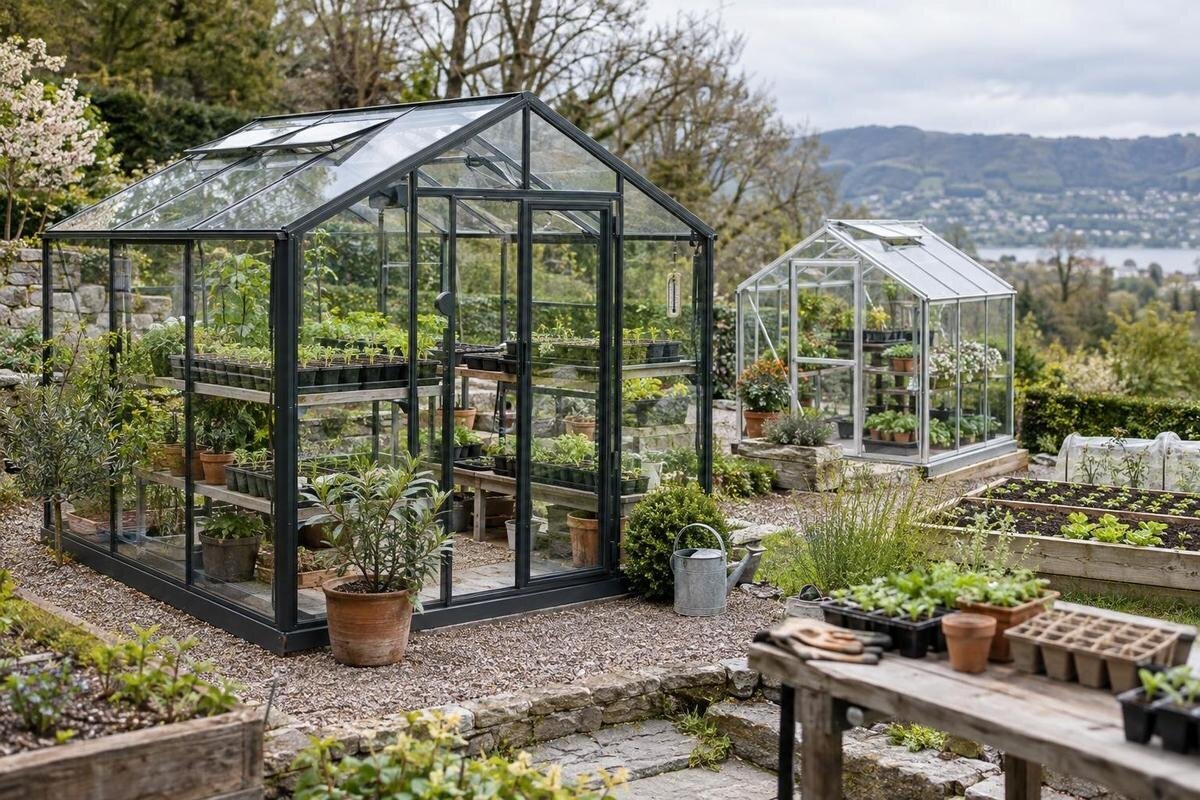
Raising seedlings from seed puts particular demands on a greenhouse: trays need dependable, reachable bench space, seedlings need adequate light, and conditions must be monitored as the weather changes. When you buy, do more than compare overall floor area. Work out how many trays you will have at the busiest point in your sowing calendar, assess the light at the proposed site, and decide how you will manage warmth and ventilation for the crops you intend to raise. A greenhouse provides shelter, but it does not automatically supply uniform light or a stable temperature. Measuring the working area, checking crop guidance and reviewing what each configuration includes before ordering can help you choose a structure that suits the routine you can realistically maintain.

Set a realistic seed-sowing capacity
Begin with the job you want the greenhouse to do. List the crops you plan to start, their sowing periods, and whether you will use the space only for germination or also for potting on and holding plants until they are ready to move outside. Those uses can occupy the same bench at different times. If you sow a few short batches, your space needs may differ from a plan with several overlapping sowings. Record a realistic peak rather than an optimistic maximum, and include room for labels, pots and the tools you use. This turns a vague sense of needing enough room into a capacity you can compare with product information.
Make a simple calendar showing when each batch is likely to be sown and how long it may stay under cover, using the seed supplier’s guidance. Count the trays that overlap, not just the new sowing for each week. A product name or photograph does not establish tray capacity: use the Bloomcabin Orangerie listing as a page to assess, then check its stated measurements and drawings against your peak tray count. If the internal dimensions or usable area are unclear, ask the retailer before ordering. That avoids choosing on the basis of how generous a greenhouse looks in a photograph.
Measure usable bench space
Do not equate advertised floor area with the surface available for seed trays. Floor area includes the route through the greenhouse, while benches provide the actual sowing space. Measure the trays and pots you already use, then sketch how many will fit along each bench with room to lift, label and move them. Count usable length and depth, rather than relying on a single headline dimension. If you plan to use shelves, check their stated positions and clearances too; a surface that is difficult to reach is not practical capacity. Keep the measurements together so you can compare different listings on the same basis.
Look for a dimensioned plan or written internal measurements, and check which figures refer to the outside frame, the inside floor or any bench supplied. A model name or number is not a measurement. The Classic Plus 385 listing is one page to include in your comparison, but rely on the dimensions and inclusions actually stated there, not on the number in its name. If benching is optional or sold separately, base your layout on the arrangement you intend to order. Leave enough clear surface to handle trays and equipment; using every available centimetre for pots can make routine sowing awkward.
Check what the greenhouse configuration includes
Before adding a greenhouse to your shortlist, read the included-components list rather than assuming everything shown in a photograph comes with it. The frame, covering, base, benches, shelves, vents, shade and heating equipment may be treated differently between configurations. Note anything described as optional or as an accessory. A seed-sowing plan that depends on a bench or a heater is only realistic if the item is part of the option you will order. Check whether the listed configuration matches the one shown in the images, and make a note of anything you would need to source separately.
Keep this check tied to the exact product page and configuration. For example, the Prestige greenhouse metal base listing should prompt you to read what the listing says about the base, which items are supplied with the chosen option, and whether benches or other seed-starting equipment are included. The wording of a product name cannot answer those questions. If an inclusion is unclear, ask before ordering. That also makes it easier to compare configurations fairly: you can distinguish what is included from what you may need to buy separately, without assuming a photographed accessory comes with the greenhouse.
Allow for seedlings as they grow
Seed trays occupy bench space from sowing until the seedlings are ready to move on, so estimate how long each batch will stay in the greenhouse rather than treating it as a brief visit. Larger seedlings may need more room than newly germinated plants, and potting on creates a temporary demand for pots, compost and clear working space. If several varieties reach that stage together, the greenhouse can feel full even when the original trays fitted comfortably. Add these stages to your sowing calendar, and reserve an area where you can work on a batch without first moving every other tray.
Think about how batches will move through the space. You might group trays by sowing date or stage, provided you can still reach and identify them easily. Consider what else you will keep inside during the busy part of the season, such as empty trays, pots, labels and watering equipment; these take up bench or floor space too. If plants will be moved outside to harden off, include a place for that transition in your routine. The aim is not to pack the greenhouse with the greatest possible number of trays, but to have enough room to manage seedlings as they develop.

Assess light at the proposed site
Check the proposed position at several times of day during the part of the year when you expect to sow. Note shadows from houses, sheds, fences, hedges and trees, and remember that deciduous trees can change the pattern between seasons. Look at the area where the benches would sit, not only the roof line: a bright patch above does not guarantee even light at tray level. The direction a greenhouse faces is one factor, but nearby obstructions and seasonal shade also affect the light reaching seedlings. If you can visit the site only once, mark likely shadows on a garden plan rather than making a decision from one sunny spell.
If you are comparing a wall-side model, assess the actual wall and garden rather than assuming that a nearby building improves the growing conditions. The page titled wall-based T-model greenhouse Orangery listing is one to check for stated siting information, but its name cannot tell you how much light your chosen position receives. Include roof overhangs, fences and future planting in your assessment, then compare the site with the guidance for the crops and sowing periods you have planned. If the position is shaded for much of that time, reconsidering the location may be more useful than expecting the greenhouse covering to compensate.
Read the glazing details for light
The greenhouse covering affects the light reaching a bench, so compare glazing information as carefully as frame dimensions. Different materials and finishes can change how much light passes through and how it is distributed; they may also affect heat retention. Take those details from the product specification, not from a photograph or from the frame name. If a listing does not provide the information you need, ask for it and compare like with like across shortlisted models. Consider the glazing alongside the light at your site: a different covering cannot make a shaded position equivalent to a brighter, more open one.
Read information about shading or other light-control accessories separately, as these may not be part of the standard configuration. The Aluminium Classic greenhouse listing is a product page to inspect, but the title by itself does not establish glazing type, light transmission or included accessories. Check what the selected option includes and whether the retailer documents alternatives. A comparison table with separate entries for frame, glazing, stated light details and optional extras can help keep those features distinct. For seed raising, the useful question is whether the documented greenhouse details and the proposed site together give you a workable light plan for your chosen crops.
Check ventilation and humidity management
Ventilation provides a way to exchange warm, humid air inside the greenhouse with outside air, but the openings and how they operate matter. Check which vents or openings are specified, where they are positioned, how they are operated and whether any automatic mechanism is included or optional. A photograph showing an open vent does not confirm what comes with the configuration you will order. Think through how you will notice a rise in heat and respond during a warm spell, even if the day began cool. Follow the manufacturer’s instructions for using the openings rather than assuming the same arrangement suits every site.
Make sure ventilation controls will fit your working routine: can you reach them and check trays when conditions change? Overcrowded benches can make it harder to get around plants, so include gaps in your layout and plan to monitor moisture rather than assuming a closed enclosure will stay balanced. If you are considering a wall-adjacent design, inspect the documented openings and operating requirements on the Aluminium lean-to greenhouse listing; its name alone does not confirm a particular ventilation arrangement. Where the site or product layout raises questions, ask the supplier or a qualified installer how the stated design should be used.
Plan a temperature-control routine
Temperature planning starts with the crops, not with a greenhouse feature. Germination requirements vary by seed, so use the packet or a reliable seed supplier’s guidance to identify the conditions needed for each batch. A greenhouse’s air temperature can change with sunlight and outside conditions; shelter is not the same as a temperature-controlled room. Plan to monitor conditions near the trays, using a suitable thermometer or monitor, rather than judging by how the space feels. Consider how you will respond if the conditions move outside the guidance for a particular sowing, and whether your planned routine is manageable when you are busy.
Some sowing plans may work with seasonal timing and ventilation alone; others may need shading or supplementary heat, depending on the crops and the conditions in the greenhouse. Decide which controls you expect to use and how you will monitor them before choosing a model. Do not assume a heater, thermostat, shade or automatic vent is supplied: check the option list. The Limited Edition aluminium greenhouse listing needs the same close reading as any other page, as its title says nothing about included temperature-control equipment. If you plan electrical heating, have the equipment and installation suitability confirmed by a qualified professional and follow the manufacturers’ instructions.
Confirm the base, site and delivery route
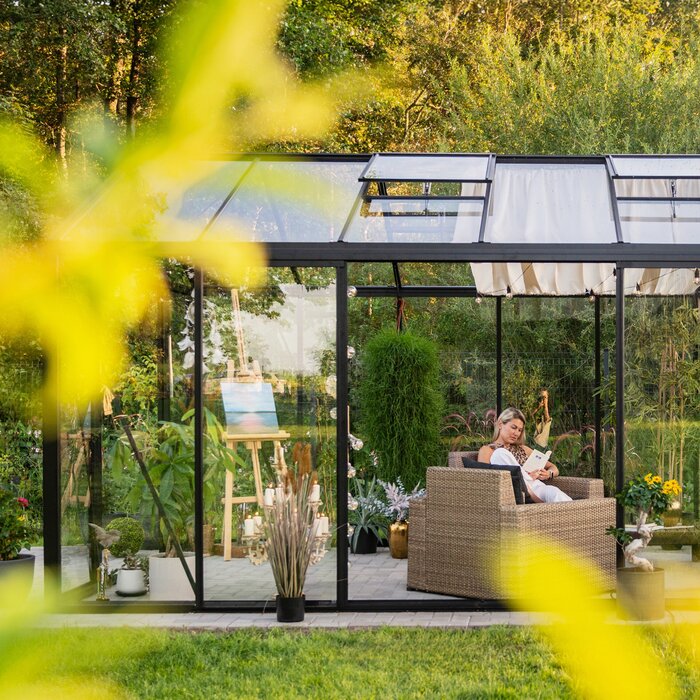
Before ordering, confirm the required base and site preparation from the manufacturer’s instructions. The base needs to match the specified footprint and installation requirements; do not assume that an existing patio or masonry platform is suitable from its appearance alone. Check the intended position and ask the supplier or a qualified installer about requirements that depend on the structure and site. A product name or photograph cannot determine foundation design, so do not improvise structural details. When marking out the position, allow space to open doors and work around the greenhouse as well as for its stated footprint.
A named base type is not a guarantee that an existing base will suit a particular model. The pyramid greenhouse for masonry bases listing identifies a page to review, not confirmation that your platform meets that model’s requirements. Compare the published base dimensions and preparation instructions, and ask for clarification before ordering if anything is uncertain. Then check the delivery route: measure gates, narrow paths, turns and any space where packages will be stored. Confirm who is responsible for unloading and assembly. A greenhouse may fit its final garden position but still be difficult to bring there, so include access and preparation in the purchase decision.
Compare greenhouse listings before ordering
Put shortlisted greenhouses into one comparison sheet. Record usable internal dimensions, the bench plan, glazing information, stated ventilation, base requirements, included components and any manufacturer guidance relevant to your crops. Mark each item as confirmed, optional or still unanswered; that makes gaps easy to spot when comparing separate pages. Compare the configurations you can actually order, rather than relying on a photograph or a headline description. Give priority to the features that affect seed raising directly: light, reach, tray capacity and a workable temperature routine. This keeps the decision grounded in information rather than in a model name.
Before placing an order, check that the selected configuration is the one you compared, and that any benching or controls you need appear in its included-items list. Make sure the site, base and delivery route are ready for the manufacturer’s requirements. Review the retailer’s current delivery, assembly, returns and after-sales information so you know what the purchase involves; those terms can vary and cannot be confirmed by a general buying guide. Finally, keep the growing plan realistic: extra floor area is useful only if it receives suitable light and can be ventilated and managed. Choose a greenhouse that supports the amount of seed sowing you can tend and the conditions your crops require.
Frequently asked questions
How much bench space do I need for sowing seeds?
Count the trays and pots you expect to have at the busiest point, including batches that overlap, then compare their footprints with the usable bench surface. Leave room to handle and label trays, move seedlings and pot plants on. The greenhouse floor area includes access space, so it is not a substitute for measuring bench space.
Will a greenhouse provide the right conditions for every seed?
No. Germination requirements vary by crop, and conditions inside a greenhouse can change with sunlight and the weather outside. Check the seed packet or supplier’s guidance, then consider whether the proposed site and your plans for monitoring and temperature control can meet it. A sheltered space does not guarantee ideal conditions.
Do I need to heat a greenhouse for seed sowing?
Not necessarily. Whether supplementary heating is needed depends on the crops, sowing period, site and conditions the greenhouse can maintain. Check crop guidance and plan how you will monitor temperatures before buying equipment. If you are considering heating, confirm that the equipment is suitable and have any installation requirements checked by a qualified professional.
How can I check whether my greenhouse site gets enough light?
Look at the proposed position at different times of day during the months when you intend to sow. Note shadows from buildings, fences, trees and hedges, and assess the light where benches and trays will sit. One sunny visit or a clear roof in a product photograph is not enough to judge the site.
Can I use a wall-side greenhouse for raising seedlings?
Possibly, if the particular model is documented for that arrangement and the site works for light, access and ventilation. Check the manufacturer’s siting and base requirements, and assess any wall shadow or restricted airflow. A wall-based or lean-to description in a product name does not prove that your location is suitable.
A greenhouse can make seed sowing more convenient, but a good purchase begins with a plan for the work it needs to support. Count trays at the busiest point, allow room for potting on, assess light at bench level and decide how you will monitor changing temperatures. Then use the product information to confirm dimensions, glazing, ventilation, base requirements and included equipment. When those details fit both your crops and the routine you can manage, your greenhouse is more likely to serve your seed-raising plans without relying on assumptions about what the structure can do.
