
Buying a Greenhouse in Stages: Essential Features and Later Upgrades
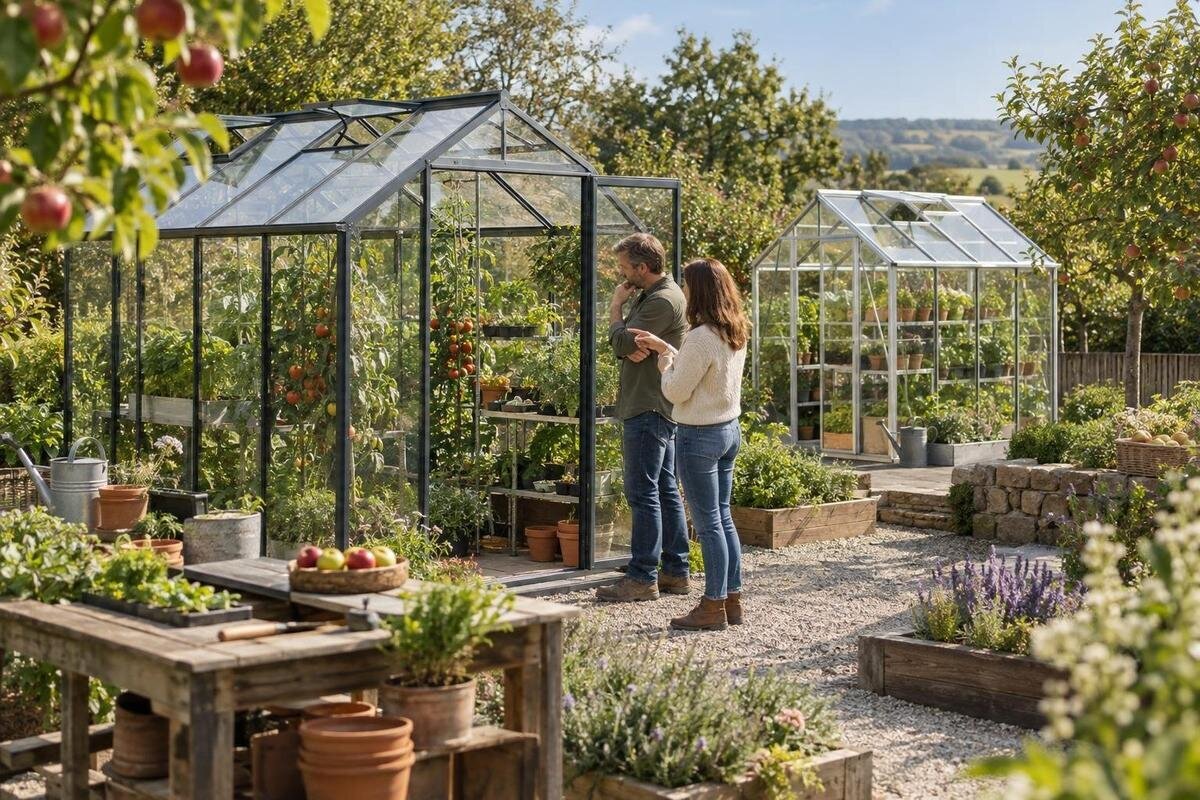
Greenhouse buying guide
Buying a greenhouse in stages means separating choices that shape the structure from extras you can add when your growing needs become clearer. It is not a reason to leave the greenhouse incomplete: the site, footprint, base, access and ventilation need to work from the outset. Staging, irrigation or shade may be phased in, but only if the selected model supports them. The stages here are about equipment decisions, not an assumed payment plan; the aim is to compare a complete first setup with realistic later upgrades.

01
Decide what the greenhouse must do from day one
A staged purchase begins with a description of the first jobs the greenhouse must do, not a list of accessories you might buy someday. Name the plants or tasks you have in mind—raising seedlings, growing in beds, keeping tender plants under cover, or a mix—and note when and how often you expect to work there. Consider whether you will carry trays, water by hand or use pots as well as beds. This helps you decide how much clear floor area, benching, headroom and door access you need. Include room to turn around and move supplies without disturbing plants. It also shows whether one layout must support several uses over the year, rather than only your first crop.
Separate choices that are difficult to change from items that may be added without altering the structure. Treat the site position, overall dimensions, base arrangement, doors, ventilation and glazing as first-order decisions. Benches, shelves, extra staging and some watering or shading equipment may be later purchases, depending on the exact design. Do not assume a basic package is expandable simply because accessories are sold separately. A listing such as Bloomcabin Prestige Greenhouse Metal Base identifies a catalogue option, but its name alone cannot confirm dimensions, package contents or compatibility with a planned extra. Compare the selected variant's written details before ordering and keep the essentials tied to your actual growing brief.
Measure usable space before choosing dimensions
Measure the ground you can give over to the structure, then mark the proposed footprint with string, canes or a simple sketch. Add the space needed to approach the entrance and open the door fully; inside, draw the walkway, beds, benches and storage before deciding how much area will remain usable. Check the stated overall height as well as length and width, including the part of the structure where you expect to stand or work. Measure the route from the garden path too, so the entrance remains easy to reach once borders or other garden features are in place. A footprint that fits on paper can still leave too little room for access or everyday jobs.
Allow for likely changes over the next few seasons, but avoid choosing much more space than you can prepare or manage. If you plan to add a bench later, reserve its place now and make sure it will not narrow the route or block a door. Compare the listed dimensions and layout for each option, including the Bloomcabin Orangerie; the product name is not a guide to capacity or internal working space. A scaled plan makes comparisons fairer and helps you see whether the greenhouse will remain practical when it contains plants, pots and tools. Consider how much space you will need to reach and tend plants, not only where they can sit.
02
Check sunlight, shelter and access at the site
Visit the proposed site at different times of day and, if possible, in more than one part of the year. Note shade from trees, fences and nearby buildings, and consider whether branches or future growth could change it. Think about the route from the house, access to a suitable water source and the path for carrying compost, trays and equipment. Look for places where water sits after rain, and note how exposed the area feels. These observations help you compare locations against your growing plans and daily routine. A sunny patch alone does not settle the decision if the entrance is awkward to reach or the space is difficult to use.
Decide whether a freestanding or wall-adjacent design fits the actual site before comparing models. A lean-to listing such as Aluminium Lean-To Greenhouse is a reason to check the details, not proof that a particular wall, eaves line or doorway will suit it. Confirm the required clearances, access, orientation and any support or fixing conditions with the supplier or a suitably qualified professional. Check that paths, beds or planned garden changes will not obstruct the entrance. Resolving these relationships before ordering is more reliable than expecting a later accessory to solve a placement problem.
Include the base and site preparation in the first-stage plan
Treat the base and prepared ground as part of the greenhouse purchase, rather than an upgrade to consider after delivery. The support arrangement must match the chosen structure's own instructions; there is no single base type that suits every greenhouse and site. Before placing an order, find out whether a base is included, optional or outside the package, and what site preparation is expected. Confirm who is responsible for preparing the area and when that work must be complete. A base influences how the structure is positioned, so it is important to settle the arrangement before installation rather than after the frame has arrived.
Read any wording about masonry or a separate base carefully. For example, Pyramid Greenhouse for Masonry Bases is a product name; it does not establish that an existing base is suitable, correctly sized or ready for use. Check the written requirements for the exact model and ask a qualified professional about the site if its condition or support is uncertain. Include preparation materials and any related work in the first-stage budget. The base is tied to the chosen footprint and support arrangement, so changing it later may mean repeating site work. It is not a casual add-on like a shelf or a water container.

03
Compare the frame, glazing and replacement parts
Compare the specified frame and glazing rather than relying on a photograph or a short product label. Check what each material is, how the panels are held in place, whether replacement panels or seals can be obtained, and what routine cleaning or care the manufacturer describes. The useful comparison is not an assumption that one material is always better; it is whether the documented construction, maintenance and repair options suit your use. Find out which panels and fixings the selected configuration includes, and identify any optional choices before comparing the full package. Knowing how you would source a replacement part is also useful when weighing up a long-term purchase.
A catalogue option such as Aluminium Classic Greenhouse is a prompt to check the specification for the exact frame and glazing, not to infer performance from its name or image. Note the stated panel type, any thickness or finish details provided, how parts are replaced, and whether the accessories you may want later are approved for that construction. Keep a copy of the specification for the chosen version; similar names or photographs do not guarantee identical packages. If an essential detail is missing or unclear, get written clarification before buying rather than planning around an assumption.
Choose ventilation and doors before you order
Consider ventilation and entry at the same time as size and location. Check which doors and vents the chosen version has, where they open, how they are operated and whether they will remain reachable once beds or benches are in place. A greenhouse that is awkward to enter or vent is unlikely to become easier when it is full. If you hope to use an automatic opener or add another vent later, confirm that it is compatible with the exact model and can be fitted as intended. Do not count an unlisted opener, vent or other control as included; check the package details for the selected version.
Map the door clearance and working routes on your site sketch, including space to carry a tray in or remove a plant without shifting everything else. Wall-adjacent or shaped layouts need particular attention to the approach and opening areas. The name Wall-Based T-Model Greenhouse Orangery does not explain how a particular installation will fit your space, so use the model drawing and written details to check access and ventilation positions. Ask the supplier to resolve any uncertainty about the intended configuration before ordering. Decide on extra vents or opening equipment early if adding them later would involve changing panels or the frame.
04
Separate first-order essentials from later accessories
Some elements belong in the first order because the greenhouse needs to work as a complete structure from the outset: the specified frame and glazing, whatever base arrangement the selected model requires, suitable access and ventilation for your intended use. By contrast, shelving, staging, seed trays, water storage, irrigation or shade may be added later if your first growing plan does not depend on them. Heating can raise separate questions about suitability and safe provision, so do not treat it as a simple afterthought. For anything involving electricity, have its suitability and installation considered by an appropriately qualified professional; this guide does not replace product instructions or professional advice.
Make a short first-season list and mark each item as needed at the outset or able to wait. A propagation bench might be essential for your chosen task, while plants grown in beds may call for a different arrangement. Decide from the crops and working method rather than a generic bundle. When reviewing a listing such as Classic Plus 385, check the actual configuration and included items instead of reading specifications into its name. Leave space for a possible next addition, and avoid buying several accessories before you know where doors, vents, plants and everyday tasks will compete for room.
Check compatibility before planning later upgrades
Before postponing an upgrade, check whether it can be added without cutting, drilling, loading or otherwise changing the structure. Accessories differ: a free-standing shelf may be simple to place, while a vent, shade system, guttering, irrigation route or heater may depend on particular fittings or a suitable design. Confirm compatibility with the exact greenhouse model and version, including approved fixing points and any stated limits. Never assume that the frame can carry a hanging load or accept an alteration just because a fitting appears to match. Ask the manufacturer or supplier if the product instructions do not settle the question.
Keep a note of each planned upgrade, why you want it and what must be in place before buying it: available space, compatible parts, access to water or an appropriately assessed power arrangement. If you expect several additions, mark their positions on the same drawing rather than fitting them one by one and discovering that one blocks another. It is also reasonable to buy an accessory with the greenhouse where compatibility is clear and the added cost suits your budget. Staged buying is not a rule that every extra must wait; the aim is to add features when useful without compromising the original setup.

05
Budget for the complete setup and plan the sequence
Set the budget around the whole usable setup, not just the greenhouse listing. Include the base and site preparation, delivery or assembly costs where relevant, essential starting equipment and the later accessories you have already identified. Allow for routine upkeep and any running costs associated with optional equipment. You do not have to buy everything at once; listing these costs makes the trade-offs clearer. Compare like with like by checking which parts are included, which need to be bought separately and whether an upgrade could require a different model or additional work. Avoid treating a lower initial specification as a saving if it leaves a core requirement unmet.
Choose a sequence that follows the work: confirm the location and product details, arrange the base and site preparation, order the core structure and any essential accessories, then reassess after using the space. Allow time to prepare the site and receive the goods, but use the supplier's current delivery information rather than assuming a standard timetable. Keep written clarifications with your order details. A first growing period can show whether you need more staging, a different shade arrangement or another approach to watering. Let those observations shape the next purchase rather than guessing at every future need before the greenhouse is in use.
Verify the exact specification before paying
Before paying, check that the selected version, dimensions, glazing, frame, base, openings and included accessories match your notes. Read the current product information, installation documents and package list; distinguish items shown in photographs from those stated as included. A label such as Limited Edition Aluminium Greenhouse identifies a catalogue option, but the wording alone does not confirm stock, a special offer or a difference in specification. Check the current information for those details and ask the seller if anything remains unclear. This matters if your budget or upgrade plan depends on a particular component being part of the order.
Consider the practical terms of ordering too: whether delivery access suits the site, what happens if the prepared area cannot be reached as expected, who handles assembly and what components should be checked on arrival. Confirm the delivery, returns and support terms that apply to your order; do not rely on assumptions based on another listing or an earlier purchase. Save the chosen specification and any confirmation of agreed extras. That record helps you compare the delivered version with the order and identify compatible accessories when you are ready to expand the setup.
Frequently asked questions
Which features should I prioritise in my first greenhouse order?
Begin with a location and size that suit your growing plans, then confirm the required base arrangement, frame, glazing, doors and ventilation for the exact model. Include anything essential for your first crop or task. Treat shelves and other extras as optional only if the greenhouse will be usable without them.
Can I add benches, irrigation or shade later?
Often, but it depends on the greenhouse and the accessory. Allow for the space and fixing points in your layout, and check compatibility for the exact model before buying. If an addition needs power or changes to the structure, confirm its suitability with the supplier or a qualified professional.
Can I add ventilation after the greenhouse is built?
Possibly, but do not assume a vent or opener can be added to every design. Check the product information for approved options and whether fitting one would involve altering panels or the frame. If ventilation is important to your growing plan, settle the arrangement before ordering.
Is it worth choosing a larger greenhouse for future plans?
It can be useful to allow for a realistic expansion, but compare the space you can prepare and manage with your likely needs. Map beds, benches, access and mature plants on the available site. A larger footprint is not automatically more practical if it leaves too little room around the structure.
How do I check whether an accessory will fit?
Match the accessory to the exact greenhouse model and version, then check the stated fixing method, available space and any conditions in the product instructions. Similar-looking models may have different configurations. If the details do not settle compatibility, ask the supplier for written clarification before ordering.
Staged buying works when the greenhouse is planned as a complete growing space from the start, even if some accessories arrive later. A measured site plan and a clear first-season brief help protect the choices that are difficult to change. Once you have used the space, choose additions that answer an observed need—more work surface, a different watering arrangement or shade—rather than filling it with extras in advance. That keeps the first order purposeful and the upgrade plan flexible.
