
Buying a Greenhouse Kit: What Assembly Skills and Tools Are Needed?
Greenhouse buying guide
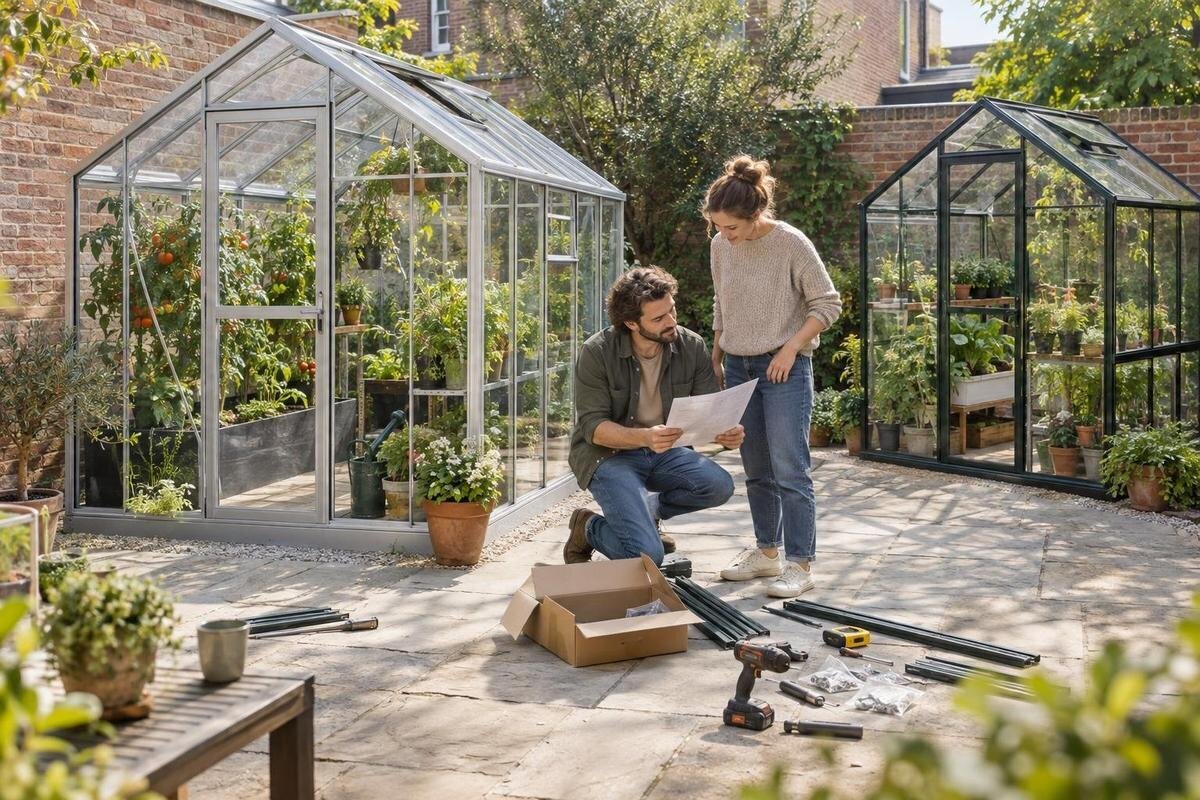
Buying a greenhouse kit also means deciding whether you can manage the assembly, tools and preparation—not just whether the finished structure suits your garden. Kits vary, so a product title or photograph will not show the full job. Before ordering, look for instructions for the exact model, a tool list, package contents and any base or site requirements. Compare those details with your experience, available workspace and the help you can arrange. This guide explains what to check so you can choose on the basis of the work involved, rather than a guess about how straightforward it will be.

Assess the assembly work against your experience
Assess the work itself rather than relying on a broad label such as beginner-friendly. Greenhouse kit assembly can involve reading diagrams, matching part codes, sorting fixings, taking measurements and following a sequence without skipping checks. Experience with flat-pack furniture may help with organising parts and following written steps, but it does not guarantee that every greenhouse task will feel familiar. Think about whether you can work methodically, refer back to instructions and stay patient when components look alike. These practical skills matter more than confidence based only on how many DIY projects you have completed. If diagram-heavy tasks tend to frustrate you, factor that in before choosing a kit.
Consider the conditions you can provide: time to work without rushing, a clear place for parts and, where the instructions call for it, another person available. Think about how you respond when a step is unclear or takes longer than expected; being willing to pause and ask for clarification is a useful assembly skill. For a named option such as the Classic Plus 385 greenhouse, locate the matching instructions before deciding. A model name or photograph cannot show the task sequence, required tools or duration. If you have not assembled a kit before, that may mean you need clearer guidance or help, rather than ruling out the purchase.
Read the assembly instructions before choosing a kit
Before buying, look for instructions for the exact model and variant, rather than relying on directions for a similar-looking greenhouse. Read enough to understand the sequence, the names or codes used for parts, and any notes about tools, helpers or site preparation. Check that diagrams are legible and explain how components are identified; similar profiles or fasteners can be confusing once a stage is under way. If the product has options, verify that the guide matches the version you intend to order. A specific manual gives you a better picture of the work than a general claim that assembly is straightforward.
If the guide is not available on the page, ask whether the exact instructions can be shared before you decide. Find out whether they list separately supplied items, describe any base preparation that happens before assembly, and state the tool or helper requirements. A listing named Prestige greenhouse with a metal base still needs a package check: wording in a product name does not explain which components are included or what the buyer must assemble. Keep the guide or written answer with your order notes, so you can plan tools, workspace and help from the same information. If a crucial point remains unanswered, treat it as an open buying question rather than guessing.
Check which tools you will need
Build your tool list from the exact manual, not from a generic greenhouse checklist. Depending on the kit, a guide may call for a screwdriver or spanner, measuring equipment such as a tape measure, or a particular key or bit. Check whether items are specified as essential or optional, and whether the guide gives a particular type or size. Do not assume every greenhouse uses the same fixings or needs a power tool. If you already own tools, compare them with the written requirements rather than relying on appearance or an approximate substitute. A spirit level may be useful for checks the guide specifies, but follow its directions about how to use it.
Keep the tool list separate from materials and protective equipment, which may be discussed elsewhere and may not be part of the kit. Note what you own, what you need to borrow or buy, and what still needs confirmation. For the Orangerie model, seek the instructions for the exact product rather than guessing at tools from its name or photograph. If a requirement is unclear, ask before ordering; there is little value in buying equipment the manual does not call for. Check any tool you need to borrow well in advance, so you are not left searching for it midway through the work.
Allow space for assembly and confirm the base
Measure the proposed finished footprint using the selected product information, then consider the additional space needed to unpack and lay out components. The assembly area and finished space are not the same: you may need somewhere to sort parts, move them towards the work area and keep packaging out of the way. Check the route from the delivery point to the garden, too, as a narrow or obstructed route can affect how easily parts are staged. Use listed dimensions and your own site measurements rather than estimating from a photograph. Also consider what needs to be moved before the delivery arrives and where packaging can be kept while you work.
Confirm what the manual says about the supporting surface, base and preparation, and whether any base components are included in the package or ordered separately. A product title that mentions a base does not settle the site work. For a name such as the Pyramid greenhouse for masonry bases, verify the exact requirement in the relevant product information; do not assume an existing wall, paving or foundation is suitable. If you are unsure about preparing or securing the support, ask the supplier or a qualified installer rather than improvising. Establishing this before purchase helps you see whether the greenhouse assembly can begin when the kit arrives.
Practise the skills that make assembly manageable
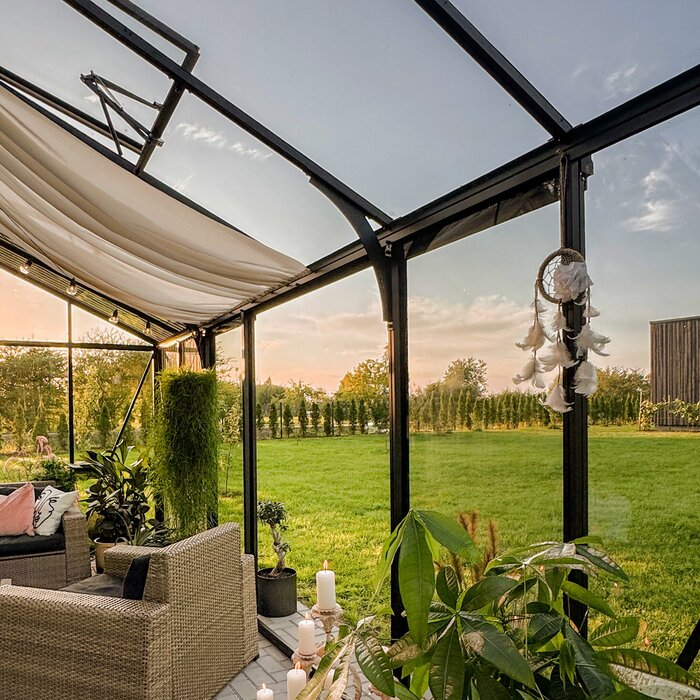
The most useful assembly skills are practical and repeatable: following numbered steps in order, matching diagrams to labelled pieces and keeping fixings organised. A few labelled containers can help prevent similar screws or clips being mixed, unless the manual gives a different method. Note part codes and orientation before setting components aside rather than relying on memory once several similar items are spread out. If the instructions use a legend or symbols, learn those before reaching the relevant stage. These habits reduce avoidable confusion and make it easier to notice whether you are working from the correct step.
Patience matters more than speed when something does not match the diagram. Pause, reread the step and check the part code; if the issue remains, ask for clarification rather than forcing a fit, swapping a fastener or modifying a component. If someone is helping, agree who will read the guide and keep track of fixings so instructions do not get lost in conversation. The aim is to follow the manufacturer’s sequence, not to finish as quickly as possible. If you find the guide hard to interpret at several points, seek clearer instructions or plan experienced help before the kit arrives.
Check how panels should be handled
Kits can use different types of glazing or other panels, and the material and handling notes vary. Read the product information and guide for the exact kit to find out what is supplied and how the maker says to lift, store and fit it. If protective equipment is specified, include it in your plan; do not assume a generic pair of gloves or an improvised support is right for every panel. Keep panels identified and protected from knocks while sorting other parts, and follow the guide on when to remove any wrapping. This is a separate preparation question from having the right screwdriver or spanner.
Consider whether you are comfortable with the handling stages and whether the instructions call for another person. A photograph or broad product name does not establish panel material, weight or fragility, so avoid planning around an assumption. If you need to store the kit before assembly, check the maker’s storage advice and leave room to keep components organised. Ask for an explanation if a handling instruction is unclear, rather than experimenting once a panel is in your hands. Knowing this before ordering can help you decide whether you have the space, time and support the task requires.
Verify what the kit includes
Read the package contents list as carefully as the assembly sequence. Establish which main components and fittings are included, and whether items shown in a photograph or mentioned in the guide—such as a base, glazing, door, vent, seals or accessories—belong to the selected package or are separate. These are examples to check, not a universal list: kits differ. If the page offers options, match the selection you intend to buy to the parts list you have read. That way you do not plan an assembly step around an item that is not part of your order.
Look at how the instructions name and count parts, and keep that list available for checking the delivery. If a component or fixing is mentioned but its inclusion is unclear, ask before ordering and note the answer. A page for the limited-edition aluminium greenhouse needs the same contents check as any other model: its title does not specify what is supplied, whether extras are separate or what you will have to assemble. Find out how to raise a query if the delivered contents do not match the package details, without assuming the store’s process. Then you can distinguish a missing part from an item that was never included.
Plan the time and any help you need
Use the manufacturer’s assembly guidance to estimate the commitment, not a time estimate borrowed from another greenhouse. If an estimate is provided, check what it includes: site preparation, unpacking and checking parts, assembling the frame or fitting panels may be treated as separate tasks. A stated duration cannot account for every garden or every person, so allow time to read instructions and pause if necessary. If work might extend over more than one session, consider where unused components and any partly assembled structure can be kept undisturbed, following the maker’s advice. Planning for interruptions is more realistic than assuming the entire job will happen in one continuous block.
Check the exact guide for stages that need a helper and decide in advance who can be available. Do not assume that a model which looks compact can be assembled alone, or that a larger-looking image proves more people are needed; only the instructions can guide that decision. For the Aluminium Classic greenhouse, compare its stated requirements with your schedule, tools, workspace and available support rather than borrowing an estimate from another product. If you are asking a friend to help, agree a realistic time in advance instead of relying on a vague offer. This keeps the plan tied to the actual kit without pretending you can predict an exact assembly time.
Check the configuration and site requirements
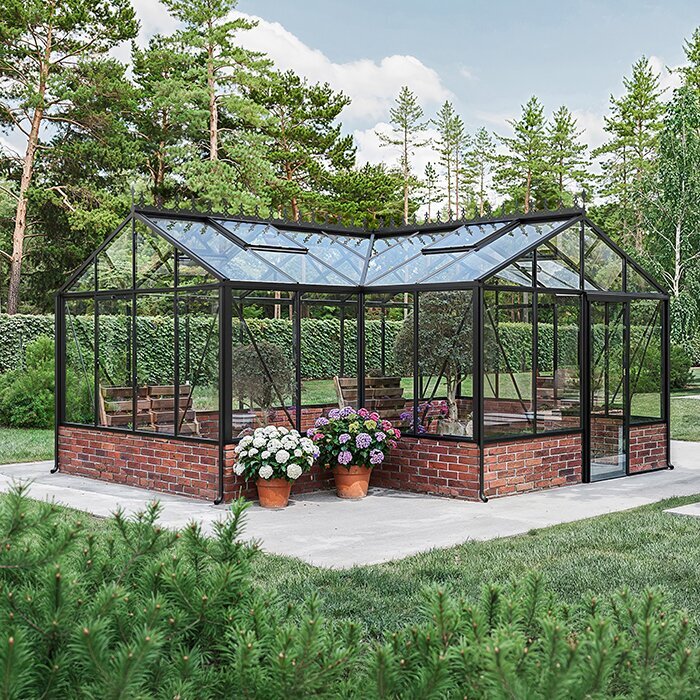
A greenhouse’s form and intended position can change the questions to ask before assembly, even when you are buying a kit rather than arranging installation. Do not carry assumptions from a freestanding model over to a wall-based or lean-to configuration: the instructions and site preparation may differ. Check the product information and guide for support, access and preparation requirements for the chosen model, and compare them with the location you have in mind. The product name and photograph can help identify its general configuration, but are not a substitute for the stated requirements. Review each option separately if you are comparing different forms.
With a named option such as the wall-based T-model greenhouse, find out which instructions depend on its intended position and whether a supporting surface must be ready first. Ask who is responsible for that preparation, and what information an installer would need if a support detail is unfamiliar. Do not derive a fixing method from an image or adapt a manual for another type. The assembly approach for one configuration may not answer the questions raised by another. Keeping site requirements separate from package contents in your notes makes it easier to compare options without mixing their assumptions.
Resolve questions before placing your order
Compare each option against the same practical questions: can you access the exact guide; are the tools and any helper needs clear; do you understand what is included; and can you meet the stated base and site preparations? Write down gaps instead of filling them in from another model or a customer image. If an answer changes the tools you need, whether you can assemble alone or how the site must be prepared, request clear confirmation before deciding. This is a more reliable test of suitability than an unqualified promise that assembly is easy.
If considering the aluminium lean-to greenhouse, review its own assembly information alongside the alternatives; do not borrow a manual or parts list from a similar-looking kit. Clarify whether you will assemble the kit yourself or arrange help separately, and do not assume tools or fitting are part of the purchase unless the order details say so. If you expect to rely on post-purchase guidance, find out how assembly questions can be raised. Keep the guide, contents list and written answers together as a record of your plan. If an important requirement remains unknown, pause before committing rather than discovering it midway through assembly.
Frequently asked questions
Can I tell how difficult a greenhouse kit will be from its product page?
Not from the title or photograph alone. Look for instructions for the exact model, the assembly sequence, tool requirements and any notes about help or preparation. If those details are not available, ask before buying.
What tools should I buy before ordering?
Wait until you have the exact assembly guide. It may specify hand tools, measuring equipment or a particular tool size. Make a list of what you already own and what you need to borrow or buy; avoid relying on a generic checklist.
Can one person assemble a greenhouse kit?
There is no universal answer. Check the guide for handling instructions and any stages that call for another person. If those details are missing, ask about them before deciding whether the assembly suits you.
Is the base included with a greenhouse kit?
Do not infer this from a product title or image. Check the contents for the selected package and distinguish any supplied base components from separate purchases or site preparation. Ask if the package details are unclear.
What should I do if I cannot see the assembly instructions before buying?
Ask whether the guide for the exact model can be provided, or request clear details about tools, parts, helpers and base requirements. If an unanswered point could affect your ability to assemble the kit, pause rather than guess.
The best greenhouse kit for self-assembly is not automatically the one with the most reassuring title or the simplest-looking photograph. It is the option whose instructions, tools, contents and preparation needs are clear enough for you to plan realistically. Check the exact model, account for your workspace and available help, and resolve uncertainties before ordering. If the work described does not suit your experience or schedule, arranging an experienced assembler is a practical alternative to improvising once the kit arrives.
