
Buying a Greenhouse Online: Dimensions and Details to Check Before Paying
Greenhouse buying guide
Buying a greenhouse online means matching a product specification to a real patch of ground and the route into it. A gallery image can suggest the general form, but it cannot confirm the finished footprint, height, space needed to open the door or what arrives with the order. Before paying, compare written dimensions with measurements from your garden, then check the base requirements, assembly information and delivery terms. This guide focuses on the details that prevent a size mismatch or an avoidable surprise when the greenhouse is delivered; it does not treat a model name or photograph as a substitute for missing specifications.

Compare the listed footprint with your site
Begin with the greenhouse’s stated external width and length, then compare those figures with a measured area on the ground. A listing may show several measurements, so note what each one describes: the assembled structure, a base, an internal measurement or a package. A photograph or perspective drawing is not a scale plan. If the page does not identify the measurement points or say whether the dimensions are external, ask before ordering. A listing such as the Prestige greenhouse metal base listing should be assessed from its written specification, not from the words in its name. Check that the figures relate to the exact version you have selected. Make a simple sketch showing the proposed position and each recorded measurement, so that later comparisons use the same reference points.
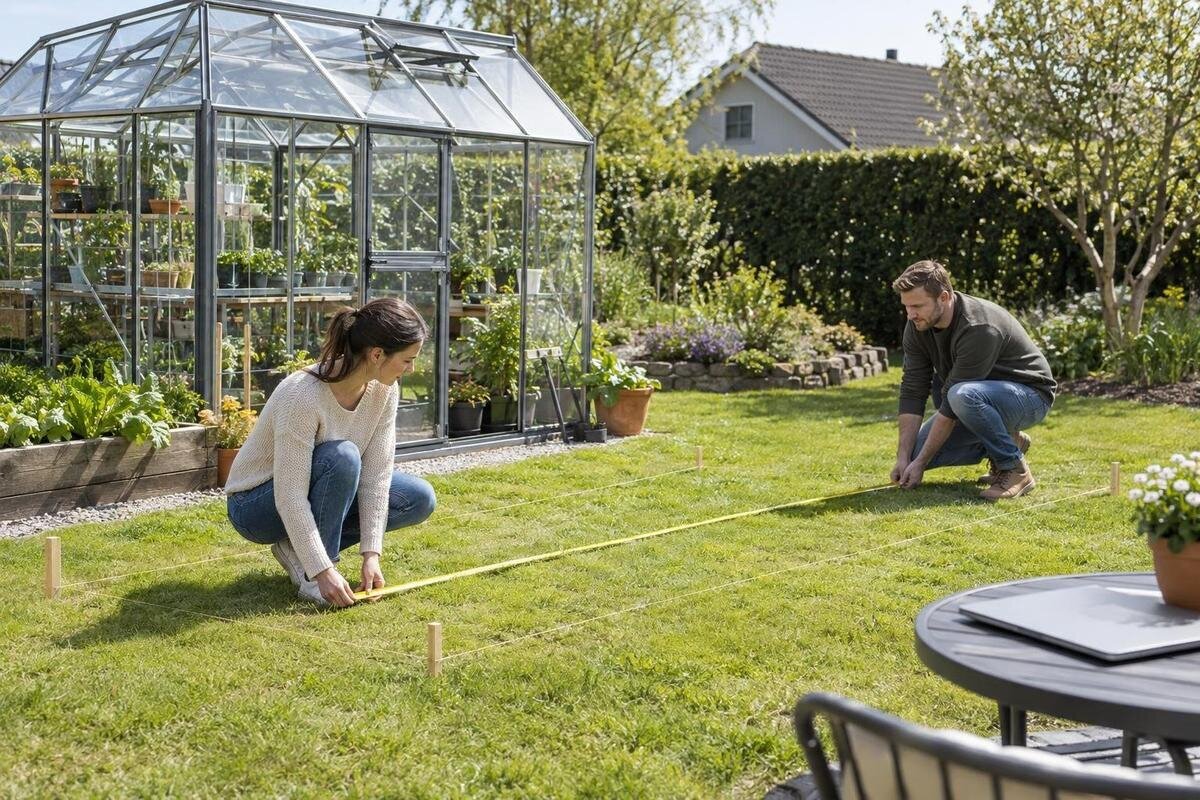
Measure the usable site in both directions and mark walls, fences, drains, trees or other fixed obstacles that reduce the available area. If the space is irregular, record the narrowest clear width rather than relying on the broadest part of the lawn. Compare the site with the listed footprint, not with the size of a nearby bed or the full garden. Take measurements where the greenhouse’s sides would actually sit, and repeat them at both ends if the boundary is not straight. Record product and site figures in the same units. This side-by-side check can reveal a size mismatch before you spend time comparing finishes or accessories.
Check the greenhouse height
Floor area is only part of the fit. Check the stated overall height and, if the listing provides them, separate ridge and eaves measurements. A single peak measurement does not show how high every part will be. Compare the relevant point with branches, walls, roof overhangs or other obstructions at the proposed position. Measure from the finished ground level you expect to have, and ask where the listed height is taken from if the page is unclear. Avoid estimating from a photograph against a fence or person; perspective can make relative heights misleading.
Height also affects how you can use the space once the greenhouse is in place. Think about the plants, trays, shelves and tools you plan to have, and whether you can enter and work without the layout becoming awkward. Look for an internal height or a drawing with labelled dimensions if headroom matters; do not treat the outside height as usable clearance inside. Check doorway height separately where available, especially if larger pots or equipment must pass through. If a key measurement is missing, ask for it in writing before using the product in your comparison. Keep any reply with the listing, as it may explain whether a stated dimension applies before or after a base is fitted.
Allow for doors and working space
The footprint describes the structure, not all the space needed to use it. Check how the entrance opens and whether its movement will conflict with a wall, path, fence or other object. Think about the route you will take when carrying pots, tools or watering cans, and whether you can reach the outside for routine cleaning without blocking a walkway. Do not apply a standard clearance copied from a different greenhouse: the opening arrangement and the shape of your site both matter. If the listing gives a required clearance, compare it with your own layout. Also consider where wet pots, tools or a wheelbarrow might be set down temporarily without obstructing the entrance.
Use any available plan rather than relying on a perspective image. On a page such as the Orangerie greenhouse listing, look for the published door arrangement and opening measurements; if the direction of opening or clear opening size is missing, ask before deciding where it will sit. Mark the footprint and any door-open area on the ground with string or chalk, then walk the route you expect to use. This simple test can expose a blocked entrance or cramped approach while you can still compare other sizes.
Measure the route into the garden
Walk the route from the delivery access point to the intended site and measure its narrowest sections: gates, side passages, sharp turns and gaps between walls or stored items. Note steps, uneven sections and low branches, as these may affect moving a long or bulky package. Measure the clear opening, not merely the width of the gate panel, and consider the space needed to turn at corners. Check whether temporary obstructions can be removed before delivery. This is a separate check from comparing the assembled greenhouse’s footprint with the ground where it will stand. Take photographs of difficult turns for your own reference when discussing access with the delivery provider.
An assembled dimension does not tell you whether the boxed components will pass through the route. Look for package dimensions, the number of packages and handling notes if they are supplied, or ask the seller for information that lets you assess access. A listing such as the Classic Plus 385 listing identifies a product to check, but its model name cannot answer a packaging question. Confirm what access the delivery service expects and whether the route needs to be clear on the day. Do not assume that a package will fit through every gate or passage just because the greenhouse fits the garden.

Confirm the base and site-preparation requirements
Before deciding on a position, check what the listing says about the required base, supporting surface and fixing method. These details are not interchangeable: a base shown in a picture or mentioned in a product name does not establish what is supplied or what preparation is needed. Read the product-specific instructions if they are available, and check whether any stated base or fixing component is included, optional or separate. A page such as the Wall Based T Model greenhouse listing should be checked for published base and fixing information; the name alone cannot confirm what your site needs.
Check what the instructions say about the surface and ground conditions, rather than assuming that soil, paving or an existing wall will be suitable. Note any preparation that must be completed before assembly and clarify who is responsible for it. If the site is sloped, the condition of an existing surface is uncertain, or the proposed fixing is not clear, ask a qualified installer or another appropriate professional to assess it. Do not try to work out a fixing arrangement from a general article. Resolve the site-preparation question before paying if it could change where the greenhouse can go or what else you need to arrange. Allow time for any agreed preparation before the expected delivery, rather than leaving it until the components have arrived.
Check the usable space inside
Once the outside dimensions fit, consider how much useful room the layout provides. External width and length do not tell you the internal dimensions or show how much space will remain for moving around after you add any planned benches or shelves. List what needs to fit: for example, seed trays, larger pots, tools or space to work with plants. Look for a labelled plan or stated internal measurements if these details affect your choice. Do not assume that furniture or accessories shown in a photograph are included, or that the image shows the arrangement you could use. Sketching your intended layout on paper can show whether there is a clear route from the door to the areas you need to reach.
Compare the product information with your list rather than choosing by the apparent spaciousness of a picture. The Pyramid greenhouse listing should be assessed using its published dimensions and layout details, not the model name. If the page does not show the internal measurements you need, ask for them before deciding. Check doorway measurements separately if equipment must pass through, and note whether the listed figures describe clear space or the overall structure. That distinction helps you compare two products on what you can actually use, rather than on external dimensions alone.
Read the materials and glazing specification
Use the written specification to establish what the frame and panels are made from. A product name, photograph or broad category label is not a complete description of the materials, and it cannot confirm thickness, finish or performance. If a particular panel type, frame material or maintenance requirement matters to you, look for that exact information in the listing. Do not infer strength, insulation or weather performance from appearance. If the page makes a claim you need to assess, check that the wording is specific enough to compare, and ask for clarification where an important detail is absent. Record the wording used for each shortlisted product, especially where apparently similar descriptions may refer to different components.
When reviewing the Aluminium Classic greenhouse listing, check that each attribute you care about appears in a written specification rather than relying on the title. Confirm the stated frame and glazing details, any finish information and whether replacement parts are described, if those points matter to your plans. Treat anything not listed as unknown, not as included or guaranteed. If you contact the seller, give the exact product name and selected version so the reply relates to the right listing. That makes it easier to compare specifications accurately without assuming that products with similar names have identical details.
Check what is included and how assembly works
Read the list of included parts alongside the assembly information. Check whether the greenhouse, panels, door components, base, fixings or any accessories you need are stated as included, optional or sold separately. Do not assume that every item in a product photograph comes with the order. If the listing links to an instruction manual or parts list, review it before paying; it can help you identify what must be ready at the site and what you may need to source separately. Where the contents are not clearly described, ask for a product-specific list rather than guessing.
Assembly details can affect whether a product is a practical choice for your circumstances. Look for information about preparation, tools and any stated requirements for assembly. Do not assume a particular assembly time or number of people unless the seller provides it. A page such as the Aluminium lean-to greenhouse listing is a place to check for available instructions, not evidence of what the assembly involves. If the work depends on a wall, base or other site condition you cannot assess, get advice from a qualified installer before committing. Keep the answer with your order notes. Check whether the instructions distinguish between optional components and the configuration you intend to order.
Review delivery and checkout terms
Read the delivery terms for your actual address before paying. Check whether a delivery charge applies, what delivery window is stated, where the goods will be left and whether unloading or carrying them to the garden is included. Do not assume that delivery means the greenhouse will be taken to the prepared site. Compare any access requirements with the route you measured, and ask about a restriction that could prevent delivery. If the product page and delivery information describe different arrangements, get the position clarified before placing the order. Make sure someone can receive the order if the terms require attendance, and plan how it will be kept safe before assembly if necessary.
At checkout, confirm the exact product and version, quantity, delivery address and total shown, including any stated delivery charge. Read the terms that apply if delivery cannot be completed or if something is missing, rather than assuming how an issue will be handled. A product page such as the Limited Edition aluminium greenhouse listing should match the item identified in the order summary; do not rely on a similar-looking name. Save the listing details and any written answers to questions that affected your choice, so you can check what you selected against the confirmation.
Compare shortlisted greenhouses on the same basis
A simple comparison table can prevent a persuasive photograph or one attractive feature from deciding the purchase for you. Give each shortlisted greenhouse a row and record its stated external width, length and height, internal measurements if needed, entrance details, base requirements, included parts, assembly information and delivery terms. Use the same units and write down what each figure measures. Mark an unlisted detail as unknown, not as a negative or as something that must be included. Then compare the product dimensions with your measured site and access route. Add the source of each detail, such as the product page, manual or written reply, so you can revisit it easily before ordering.
Before submitting payment, revisit any detail that could change the decision: a conflict between a drawing and a written measurement, an unclear base requirement or a missing package dimension. Ask about the exact product and selected version, and wait for a clear answer if the issue affects fit, preparation or delivery. Recheck the order summary for the chosen item, address and stated total. Keeping the comparison and responses together gives you a clear record of why the greenhouse fits your space and what you have arranged for its arrival.
Frequently asked questions
Which measurements should I take first?
Measure the usable ground area where the greenhouse will stand, then check the route into the garden and the space needed to use the entrance. Compare those figures with the product’s stated external width, length and height. Keep site and product measurements in the same units.
Do the dimensions on a product page include the base?
Do not assume they do. Check how the listing describes each measurement and whether it refers to the assembled greenhouse, a base or internal space. If the wording is unclear, ask for the exact measurement points and whether a base is included before ordering.
How much space should I leave around a greenhouse?
There is no single clearance that suits every product and site. Check how the door opens, whether any parts need room to open, and how you will reach the greenhouse for ordinary use and maintenance. Follow any product-specific clearance guidance, or ask if it is not provided.
Will delivery bring the greenhouse to the place where it will stand?
Check the delivery terms for your address rather than assuming where the goods will be left or who will unload them. Confirm the delivery point, access requirements, any stated charge and whether the route to the garden needs to be clear.
Can I order if the assembly information is missing?
If assembly affects your choice, ask for the product-specific instructions, site-preparation requirements and a list of included parts before paying. Do not guess at missing details from a photograph or model name. If the work or ground requirements are unclear, speak with a qualified installer.
A sound online choice depends on more than a greenhouse appearing to fit in a photograph. Compare the written footprint and height with your measured site, then check the route, working space, base requirements, included parts and delivery arrangements. If a dimension or responsibility that could affect the purchase remains unclear, resolve it before paying. The right match is the one whose documented details fit the space you have and whose assembly and delivery arrangements you can plan for.
