
Buying a Lean-To Greenhouse for a Narrow Side Garden
Greenhouse buying guide
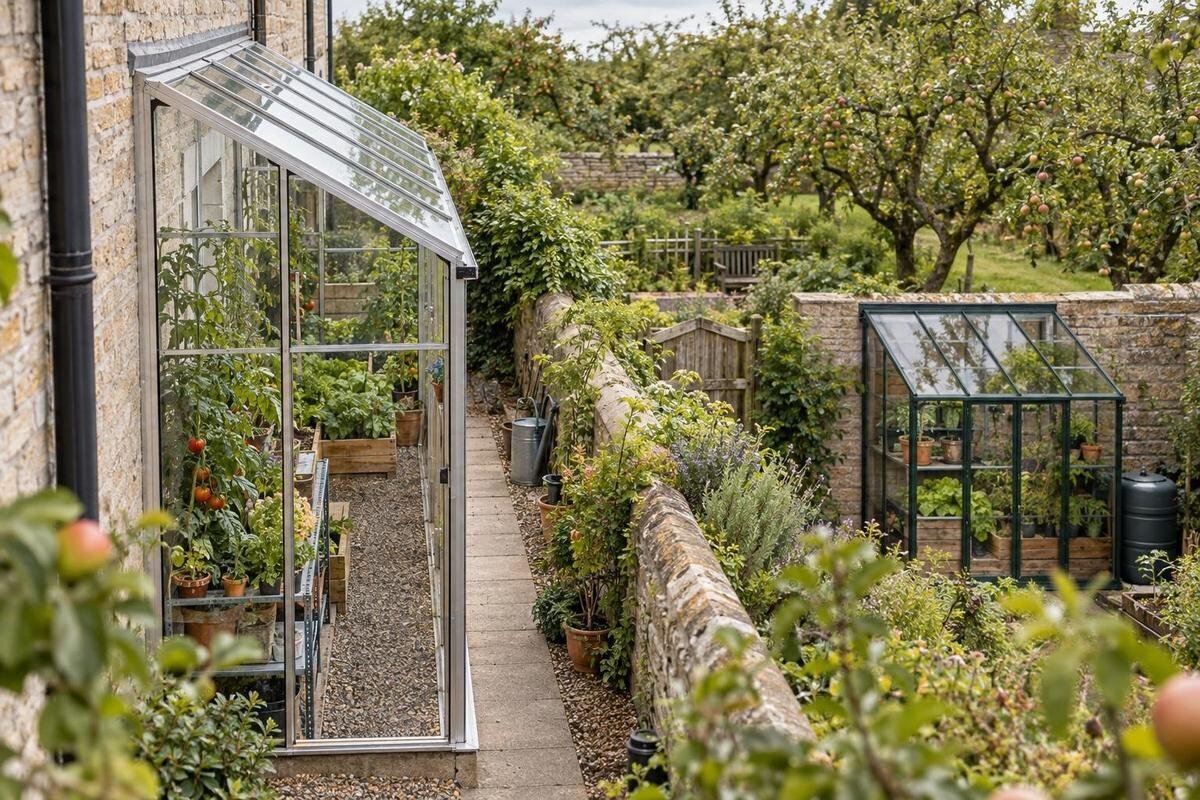
If you plan to buy a lean-to greenhouse for a narrow side garden, treat the gap as a working space, not just a rectangle on a plan. The greenhouse may occupy only part of the width, but you still need to reach the door, tend plants and keep any route to the house or garden usable. A wall can also shade the site, contain openings or require a mounting arrangement that needs checking. Measure the full position and approach first; then compare the stated dimensions, wall requirements and included components for each model. This keeps the decision focused on whether you can use and maintain it, not just whether it looks small enough.

What a lean-to changes in a narrow side garden
A lean-to greenhouse is generally intended to sit against an existing wall, so it can be worth considering when a side garden offers a long strip but little room for a separate position. It still occupies a real footprint: its depth projects into the garden, its length takes up part of the wall run, and the entrance and working area need space too. Compare the product page titled aluminium lean-to greenhouse with your measurements only after checking its stated dimensions and installation notes; the name alone cannot confirm that it suits your site. First decide how much of the garden you can give over without disrupting everyday access.
Identify which wall you have in mind: a house, garage, outbuilding or boundary wall may present different practical questions. Note windows, doors, vents, pipes, meters and outside equipment that must remain accessible. Check whether eaves or other projections affect the available height, and whether rainwater from the building will fall onto the proposed site. If the wall is shared or belongs to someone else, clarify permission before ordering. A wall is not automatically a suitable support or a guarantee of shelter, so treat its condition and position as part of the buying decision.
Measure the full footprint and height
Measure the proposed space at several points rather than taking one width and assuming the sides are parallel. A narrow garden may taper, while a wall or fence can have projections that reduce the clear space. Record the usable length, the narrowest width and the height available over the whole footprint, including any eaves or overhangs. Note fixed obstacles such as drains, taps and steps as well. These measurements show whether a model could fit on the ground, but they do not yet tell you whether its door or the remaining path will be usable.
Compare the model’s stated external width, depth and height with your notes, and check what those measurements include. A base, gutter or other projection may affect the space needed; do not assume that the footprint shown in a picture represents the full installed area. The number in Classic Plus 385 is not a measurement: use the dimensions published for that particular model. Sketch the garden to scale or mark the outline on the ground, then include the door opening and permanent obstructions. If a product page does not explain how a dimension is measured, ask before comparing it with another model.
Allow room for the door and everyday access
Measure the route from the entrance to the proposed site as well as the space where the greenhouse will stand. Note narrow gates, sharp turns, steps, low branches and anything else that could make it difficult to bring components through. Consider how the side garden is used now: it may be the route to bins, a shed, utility equipment or another part of the garden. A footprint can fit on paper yet leave too little room for those regular tasks, so decide which access needs must remain clear before you shortlist models.
Check where the door is positioned and how far it needs to open on the exact model you are considering. If it opens towards the passage, allow for that movement and for someone to stand nearby without blocking the route. Think about getting trays, pots and watering equipment in and out, reaching plants at the far end, and tending them without brushing against everything in the narrow space. Also consider where components could be unpacked and assembled. Ask the retailer about delivery and access requirements if the route is tight; do not assume that the greenhouse’s assembled dimensions are the only measurements that matter.
Check sunlight and nearby wall features
Observe the proposed position at different times of day and, if possible, at more than one point in the growing season. A wall, adjoining building, fence or tree may shade the greenhouse for part of the day, while eaves can cast additional shade close to the wall. Note where direct light reaches the ground and whether that changes along the length of the site. A single check at midday is not a full picture of the light conditions your plants will receive, and a bright-looking product image cannot tell you how your own garden is lit.
Look for windows, vents, doors and other openings in the wall, and make sure the greenhouse will not block access to them. Consider the wall surface and any fixtures where the structure is intended to meet it. The T-shaped wall-mounted greenhouse is another named wall-based model to examine, but its title does not establish whether your wall is suitable or what attachment details a particular site requires. Check the product information for the model you are considering, and get competent advice on wall suitability where needed. Treat light and the wall’s physical condition as separate questions: a good position for one may not settle the other.
Size the growing area around your plants
Before choosing a greenhouse, write down what you want to grow and how you expect to use the space. Seed trays and small pots take a different arrangement from mature plants or containers that need room to reach and tend. Include the number of plants, their expected size, any support they may need and the tasks you want to do inside, such as potting or harvesting. This helps you avoid selecting a greenhouse based only on its external width, when the usable growing area and the space needed to work inside may be more important.
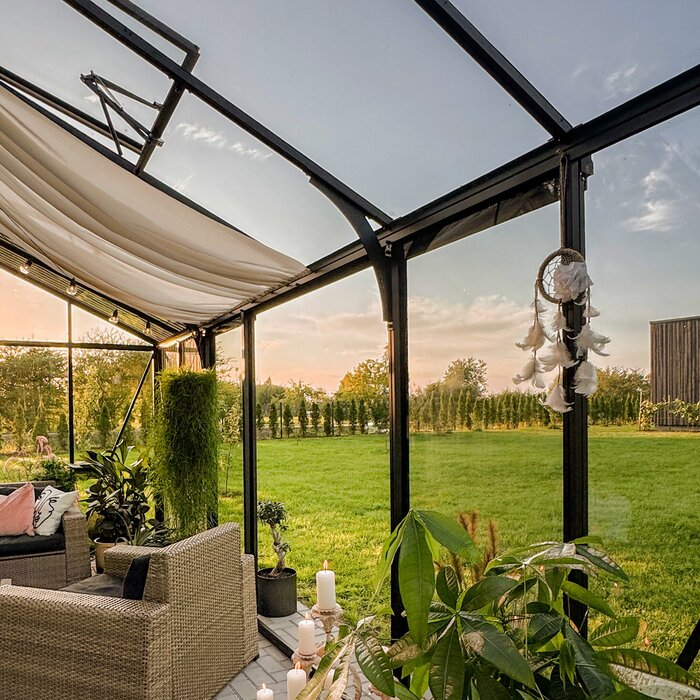
Allow for a route through the greenhouse, as well as any beds, containers or staging you plan to use. Check whether you can reach plants without having to move others, and whether the height and layout suit the work you expect to do. If you compare the Bloomcabin Orangerie with a lean-to, use its published dimensions and layout against the same plant list; the model name alone does not show how much usable growing room it offers. A small change in how you plan to use the space can affect which dimensions matter most, so settle the growing plan before deciding that the narrowest model is the best value.
Compare the details behind each model name
Read the product information for the exact greenhouse rather than assuming similar names mean similar contents or features. Check the stated glazing and frame details, the position and operation of doors and vents, and any maintenance guidance. If you want shelves or other accessories, look for information about whether they are included and whether the product details confirm compatibility. Compare like with like: an image may show a particular configuration, but the text for the model you order is what matters. If a feature important to your growing plan is not described, ask before making a decision.
Even a title such as Aluminium Classic Greenhouse is not a complete specification. Check the product details for the frame and glazing descriptions, any stated finish and the care guidance, rather than assuming the title answers questions about performance or upkeep. Use the same approach for every model: record the details that affect your site and intended use, and set aside names or photographs that do not answer those questions. This is especially useful when comparing greenhouses that look similar online but may have different dimensions, supplied components or documented requirements.
Check the base and wall requirements
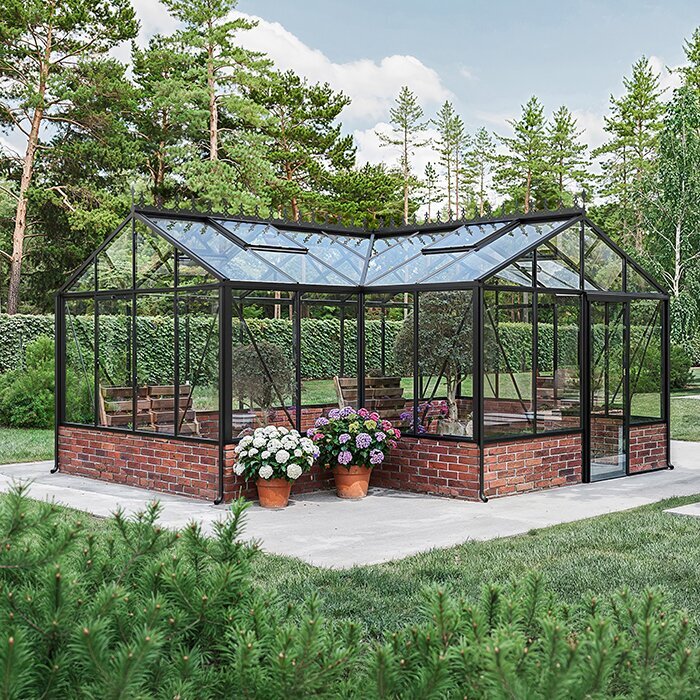
Find out what base or site preparation the model requires, whether a base is included and whether it must be bought separately. Check the dimensions and the manufacturer’s guidance for the surface beneath the greenhouse; do not assume an existing paved area is level or suitable just because it appears solid. If you are also looking at masonry-supported options, the page titled pyramid greenhouse for masonry bases is a separate model, not a guide to the requirements of a lean-to. Use the instructions for each exact product and do not assume that a base mentioned in a title will suit every site.
The wall and the base need to work with the installation requirements as a whole. Check the wall’s condition and construction, the space available at the fixing points and whether existing fixtures get in the way. Avoid attempting to work out structural suitability from a photograph or a general product description. If you are unsure whether the wall or ground is appropriate, ask a qualified professional to assess it before ordering. This is a practical buying check, not a reason to improvise: a model that cannot be installed as specified is not a suitable choice for the space, even if its outline fits.
Plan ventilation, watering and rainwater
Think about how you will open and reach any doors or ventilation features described for the model, particularly if the greenhouse will sit close to a wall or fence. Make sure you can operate them without blocking the passage or moving stored items. Consider where watering equipment will be kept and how you will bring water to the plants. A clear routine matters in a narrow garden: if each watering or maintenance task requires shifting pots or squeezing around equipment, the layout may be frustrating to use throughout the season.
Check how rain from the greenhouse roof could fall in relation to the building’s gutters, downpipes, path and neighbouring ground. A lean-to may sit below existing eaves, so consider both roofs rather than looking at the greenhouse in isolation. Avoid a layout that directs water onto a walkway or towards a wall, and check the product and installation guidance for relevant drainage requirements. Do not assume that a narrow strip will absorb runoff or that the wall will keep the area dry. Where the water route is unclear, discuss it with the person responsible for installing the greenhouse before the site is prepared.
Compare everything included in the order
Before paying, make a list of what the greenhouse needs and compare it with the item’s inclusion details. Check whether the order covers the greenhouse itself, any base, glazing, vents and other components you expect to receive. A product title such as Prestige greenhouse with metal base does not, on its own, explain what is included in the version you are ordering or what preparation is still required. Confirm the exact product and any separate items on the product page, and ask about anything that is not clear rather than relying on a photograph or an assumption based on the name.
Compare the full likely cost, including any required base or accessories, site preparation and professional installation if needed; do not judge by the greenhouse price alone. Check delivery information against your access route and ask whether the packaging or assembly arrangements raise any practical issue for your site. Read the retailer’s current order terms before committing, as delivery and returns details can vary. If the wall needs attention or the ground needs preparing, include that in your planning before you place the order. This gives you a more realistic comparison between models without assuming an offer, accessory or service is included.
Decide when to widen the search
A lean-to is not the right answer simply because the side garden is narrow. If the wall is unsuitable, the light is poor, or the door would obstruct the route you need to keep open, pause before trying to make the layout work. You could reassess another position or compare a different greenhouse format, but apply the same checks: measure its full footprint, account for access and make sure the installation requirements match the proposed site. A smaller outline is not useful if it leaves no practical way to tend the plants or maintain the structure.
When comparing more widely, treat every model name as a starting point for checking the product details, not a promise about fit or included features. For example, the words in limited-edition aluminium greenhouse do not establish its dimensions, specifications or current availability, and should not create pressure to order before you have checked the details. Keep a shortlist only of models that meet your fixed requirements for footprint, access, growing space and installation. Then compare the complete order information and choose the one that works in the actual garden, rather than the one with the most persuasive name.
Frequently asked questions
Is a lean-to greenhouse always the best choice for a narrow side garden?
No. It may use an existing wall as one side, but the wall can create shade or block windows, and the remaining walkway may be too narrow for everyday use. Compare the full footprint, entrance and support requirements before choosing this format.
How should I measure the space for a lean-to greenhouse?
Measure the usable length and the narrowest width at several points, then compare these with the model’s stated external dimensions. Include projections and any base, and check the door opening, height and delivery route. Do not estimate from a photo or model number.
Can I attach a lean-to greenhouse to any wall?
No. The wall and the model’s stated mounting requirements need to be compatible. Check the product information and ask a competent installer to assess the wall if you are unsure. If the wall is shared or belongs to someone else, clarify permission before ordering.
Will a wall keep the greenhouse warm?
Not necessarily. A wall may block sunlight or reflect light and heat, with the effect depending on the site and materials. Assess the actual light at different times rather than choosing a position on the assumption that the wall will provide warmth.
What should I check on a product page before buying?
Confirm the stated dimensions and how they are measured, the glazing and frame details, door and ventilation arrangements, base requirements and what is included. Check delivery and assembly information too, and ask about anything important that the page does not explain.
For a narrow side garden, a suitable lean-to greenhouse needs more than a footprint that fits between two boundaries. The wall, light, entrance, working space and growing plan all have to make sense together. Measure the space and access route, check the exact product and installation details, and allow for the complete order. That way, you can choose a greenhouse that suits the garden as it is used, rather than one that only fits on paper.
