
Buying an Aluminium Greenhouse: What to Check in the Frame
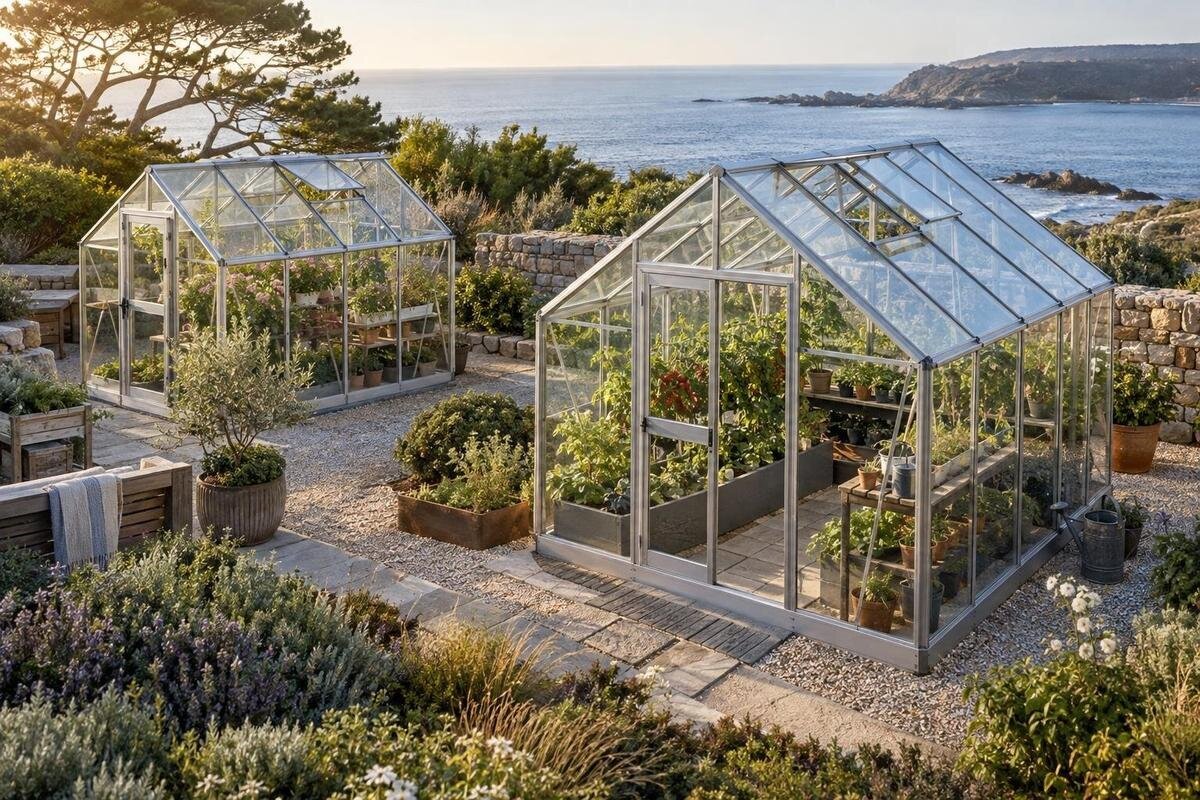
Greenhouse buying guide
An aluminium greenhouse should be compared by its documented frame, not by the colour or thickness suggested in a photograph. Before buying, check the profiles, joints, fixings, bracing and the way the frame meets its base; then confirm how glazing and openings are retained by those members. Ask for drawings and a parts list for the exact configuration you intend to order. These show what is included and help separate confirmed details from assumptions. The guide below explains what to look for and which questions can prevent an unsuitable comparison.

Read the frame drawing and parts list
Before comparing shapes or colours, establish exactly which greenhouse configuration the paperwork describes. The frame is an assembly of named members: uprights, eaves rails, a ridge, roof bars or rafters, purlins, braces, base rails and the frames around doors or vents. A parts list should identify these pieces, while an assembly drawing shows where they go. This makes comparisons more meaningful than counting bars in a photograph. Different sizes or roof layouts can use different members, so a visible difference alone does not tell you how the frame is built. Keep the drawing and parts list together while comparing models, because a part reference on one document may explain a detail shown only schematically on the other.
Ask for a drawing that matches the exact model, size and options you plan to order, with part references and a clear distinction between included and optional items. Check whether it shows the base rail, any separate base, glazing retainers, door and vent frames, and the connectors between sections. An overall dimension sheet is not a substitute for this detail. If the page shows only a rendering, ask for the assembly instructions or a dimensioned frame plan before comparing models. Confirm that the manual refers to the same configuration; a general brochure may illustrate another version. Note the document date or revision where available, so that you can check that the information supplied with a quotation has not been superseded.
Compare profile sections, not just apparent thickness
The visible width of a frame member is only one part of its profile. Where the drawing shows a hollow section, note its external width and depth separately from the wall thickness; internal webs and channels may also affect how it connects to brackets or glazing. A broad face in a photograph does not reveal the thickness of the metal behind it. Ask the supplier for a cross-section drawing and check which dimensions are stated, rather than treating an overall profile measurement as a complete specification. It is also useful to identify whether measurements apply to every frame member or only to a particular rail, upright or roof bar.
A profile's contribution depends on its shape and material as well as its position, spacing and connections in the finished frame. Do not treat one measurement as a guarantee of strength. Ask what material information is declared and which members use each profile. Use the Prestige greenhouse listing as an identifier, not a specification: check for model-specific profile details rather than reading construction information into the name. If the documentation gives a measurement without saying where it applies, ask for clarification before comparing it with another model. Record the supplier's wording rather than converting it into a simplified claim, as apparently similar measurements may describe different parts of two systems.
Inspect how the frame members join
Look closely at the points where the main members meet: the roof ridge, eaves, corners, gables and door frame. Depending on the design, a connection may use a bracket, an internal connector, a fastener through the profile or a member that slides into a channel. A drawing should show which pieces meet and how the connection is held together. This is more informative than a close-up of an assembled greenhouse, where glazing or trim may hide the joint. Pay particular attention to repeated junctions in the drawing, since the same detail may occur at several points around the frame.
Check whether the same connector is used throughout or whether roof junctions, corners and openings have different parts. The assembly instructions should make the parts and their locations identifiable, so you can see how a complete frame is meant to fit together. When reviewing the Orangerie greenhouse listing, look for model-specific connection diagrams; if they are not shown, ask for them. A photograph cannot establish whether the joints align as designed or what fixings they use, so avoid comparing frames by appearance alone. If a drawing uses symbols or part codes that are not explained, request the corresponding legend or schedule instead of guessing their function.
Check the fasteners and fixing schedule
Fasteners hold frame members to connectors and may also secure glazing retainers or other fittings. Find out which types are specified, what materials or protective finishes are stated, and whether the quantities and washers or other small parts are listed. Also distinguish assembly fixings from anchors used to connect the greenhouse frame to its base; these serve different purposes and may be supplied separately. If aluminium meets another metal, ask which combination is intended and whether the design specifies separating components. A complete list can also help you identify whether a named fixing belongs to the frame itself or to an optional door, vent or accessory.
A parts schedule that identifies fixings is easier to compare than a general reference to screws or bolts. Check whether special clips or connector pieces are included, and whether replacement parts can be identified by a reference number. On the Classic Plus 385 listing, look for the fastener information for the exact configuration rather than assuming it from the model name or photographs. If a detail is not stated, ask before ordering; choosing a replacement by appearance alone may not match the intended connection. Retain any answer with the model documentation, as it may clarify the scope of the supplied kit when you review the order.

Check how the frame retains the glazing
The frame needs to support and retain the glazing at its edges. Look at the assembly drawing for the parts that do this: they might be channels, clips, gaskets, cap bars or other retaining pieces, depending on the design. Check which parts are included and whether the instructions specify the glazing type and thickness that fit the frame. The aim here is to confirm the mechanical fit, rather than to compare the light or insulation qualities of different glazing materials. Check the drawing around the ridge, eaves and corners as well as on a large wall panel, because these areas may use different retaining details.
Make sure the frame, retainers and specified panels are described as a compatible set for the model you intend to buy. A panel that appears to fit a channel may still not be the format specified for that system. For the wall-based T-model greenhouse listing, check which retention components and panel details are stated for the chosen version. Ask whether replacement clips, gaskets or other retainers can be identified if they need replacing later, and do not assume that generic parts will suit the frame. If panels and retainers are listed separately, confirm precisely which items are supplied with the selected configuration.
Match the base rail to the base and anchors
At the bottom of the structure, identify the frame's base rail and any separate base or plinth. A base rail is a frame member; it is not the same thing as a foundation or a separate base kit. Check the parts list to see what is included and look for a dimensioned drawing of the interface, including the position of any specified anchor points. This helps you establish what the frame is designed to meet without assuming that an item shown in a product image forms part of the package. Compare the footprint information with the base drawing, as outside dimensions alone may not show where the frame is intended to sit.
For the pyramid greenhouse listing, as for any model, confirm the stated base requirements in the product information or instructions. If you are preparing a masonry base or another foundation, use the manufacturer's dimensions and ask a qualified installer to assess the fit and anchoring for the actual site. Do not size an anchoring arrangement from a generic photograph or by copying another greenhouse. If the required base details are not available, get them clarified before committing to a foundation or an order. It is sensible to resolve this early, because altering a completed base to suit an unstated frame detail can be inconvenient.
Look for bracing and frame performance information
Bracing and the arrangement of roof and wall members help the frame keep its shape. Identify the rafters or roof bars, ridge and eaves members, purlins and any diagonal or corner braces shown in the drawing. A simple count of bars does not explain how they work together: spacing, connections and the way the frame meets the base matter too. Ask the supplier to explain any members that are not clearly identified in the parts list or assembly instructions. Where bracing is supplied as a separate item or differs between configurations, make sure your comparison notes that distinction rather than treating it as standard.
Request wind and snow performance information for the exact model and configuration, along with any conditions or assumptions attached to it. A general sketch is not a load rating, and figures for a different size or arrangement may not apply. For the aluminium Classic greenhouse listing, check whether such information is provided for the model you are considering. If the site, base or stated performance raises questions, have a qualified professional assess them rather than trying to judge the frame's capacity from its appearance. Keep the stated conditions beside any figure you receive, as they are part of the information needed to make a like-for-like comparison.
Ask what finish is applied to the aluminium
Colour and surface finish are not the same specification. Ask the supplier to name the finish and explain whether it is stated for all relevant parts of the frame, including areas around connectors and exposed edges. If a finish is described with a technical term, ask what that means for routine care and which cleaning products the manufacturer recommends. Do not assume that a particular colour or a shiny surface tells you how the metal has been treated. If trims, caps or door components are mentioned separately, ask whether the same finish description applies to those visible parts as well.
Where possible, look for clear product information or photographs of corners and connection areas, not just broad, exposed faces. These details may be less visible in a finished greenhouse, but they can help you understand what the finish description covers. Check the aluminium lean-to greenhouse listing for published finish and care information; the model name itself does not establish either. If cleaning guidance or the finish specification is missing, ask the supplier before buying, especially if maintenance requirements are important to your choice. Keep care guidance separate from assumptions about durability, since only the supplied documentation can define the stated finish.
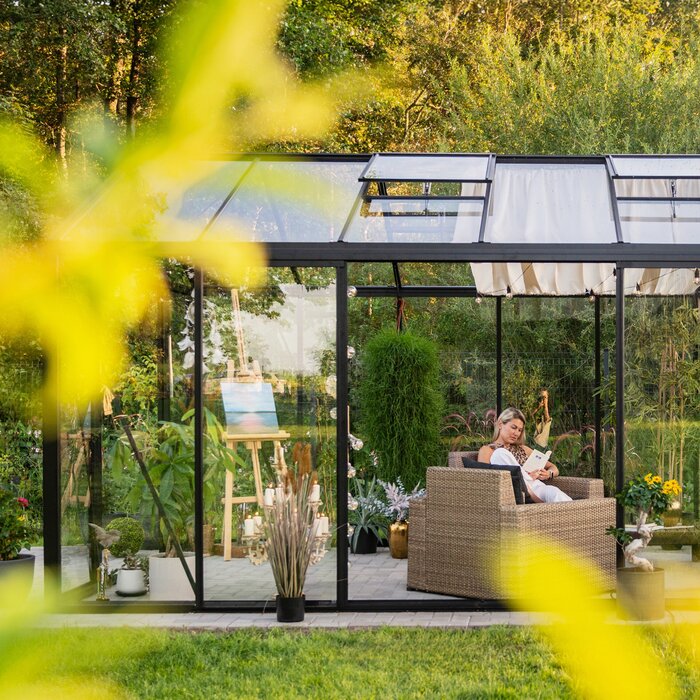
Check how doors and vents connect to the frame
Doors and vents rely on their surrounding frame members and fittings. Check the stated number and position of the openings, and distinguish the greenhouse's overall dimensions from the clear opening available through a doorway. The drawing or instructions should show how the door frame is supported and whether the door runs on a track or uses hinges. For vents, look for the frame members and fittings that hold them in place; do not assume that an opening shown in a photograph is included in the configuration you plan to buy. Check whether the drawing identifies opening-specific rails or additional members, as these may affect comparisons between otherwise similar layouts.
If a door, vent or accessory is optional, confirm that its mounting parts are compatible with the selected frame and are included in the order. The limited-edition aluminium greenhouse listing should be checked against its own stated opening schedule, just like any other catalogue page; its name does not establish the exact arrangement. Ask whether relevant replacement fittings can be identified, too. This is useful if you want to compare models by access or ventilation without assuming that their frames accept the same hardware. A clear itemised list is especially valuable where the opening itself is shown in images but its associated fittings are not individually visible.
Compare the documented frame before ordering
For each model on your shortlist, record the exact name or code and configuration alongside the profile sections, material and finish information, joint details, fasteners, bracing and base interface. Add the glazing-retention parts and the stated door and vent arrangement, since those components connect directly to the frame. Mark each detail as confirmed, optional or not stated. This simple comparison keeps a missing specification visible instead of turning it into an assumption, and it makes differences between otherwise similar product pages easier to spot. Include the source document or page for each entry, so that you can return to the original wording when two descriptions seem to conflict.
Before placing an order, read the itemised details and confirm which frame components, separate base parts and fittings are included or optional. Ask for a matching manual and parts list, and check how replacement components are identified if that matters to you. If the product page, quotation and assembly information use different descriptions, get written clarification tied to the model you intend to buy. Where information is missing, compare only what is documented and seek technical advice for questions about anchoring or performance. This final check is also a useful opportunity to ensure that the model code on the documents matches the configuration you have chosen.
Frequently asked questions
Which frame details should I ask the supplier for?
Ask for a drawing of the profile sections, including any stated wall thickness, and for the material and finish specifications. Request details of the joints, fasteners, bracing and base connection for the exact model and configuration. These documents are more useful than judging the frame by its appearance.
Does a wider-looking profile always make a stronger frame?
No. Profile shape, material, spacing, joints, bracing and the connection to the base all affect how the frame performs. A photograph or one measurement cannot establish its capacity. Look for model-specific performance information and have a qualified professional assess any uncertainty about the intended site.
How can I tell whether a separate greenhouse base is included?
Check the itemised product details or quotation. A base rail is part of the frame; a separate base or plinth and the anchors may be listed separately. Do not rely on a photograph or model name to establish what is included. Ask for written clarification if the parts list is unclear.
Can I use replacement fixings that look the same?
Do not assume that appearance means the fixing has the right size, material or compatibility for the connector. Check the model's instructions or ask the supplier which replacements are specified. This is particularly relevant where aluminium meets another metal, as the materials and any separating components need to be suitable together.
What should I do if the frame drawing is missing?
Ask for a frame drawing and assembly instructions that match the exact model and options you plan to order. If information about bracing, anchoring or load performance is needed but not provided, request it before making a comparison. Where the base or site conditions raise technical questions, consult a qualified professional.
An aluminium greenhouse is easier to assess when its frame can be traced from the profile drawing through each joint to the base. Set the confirmed details beside the exact configuration you are considering, and leave any unstated thickness, fixing or anchoring requirement as an open question. Where the supplied information does not establish performance or base compatibility, ask the supplier or a qualified professional rather than inferring it from appearance. That keeps the buying decision focused on documented construction and fit.
