
Buying a Greenhouse for a Hot Climate: Ventilation and Shading
Greenhouse buying guide
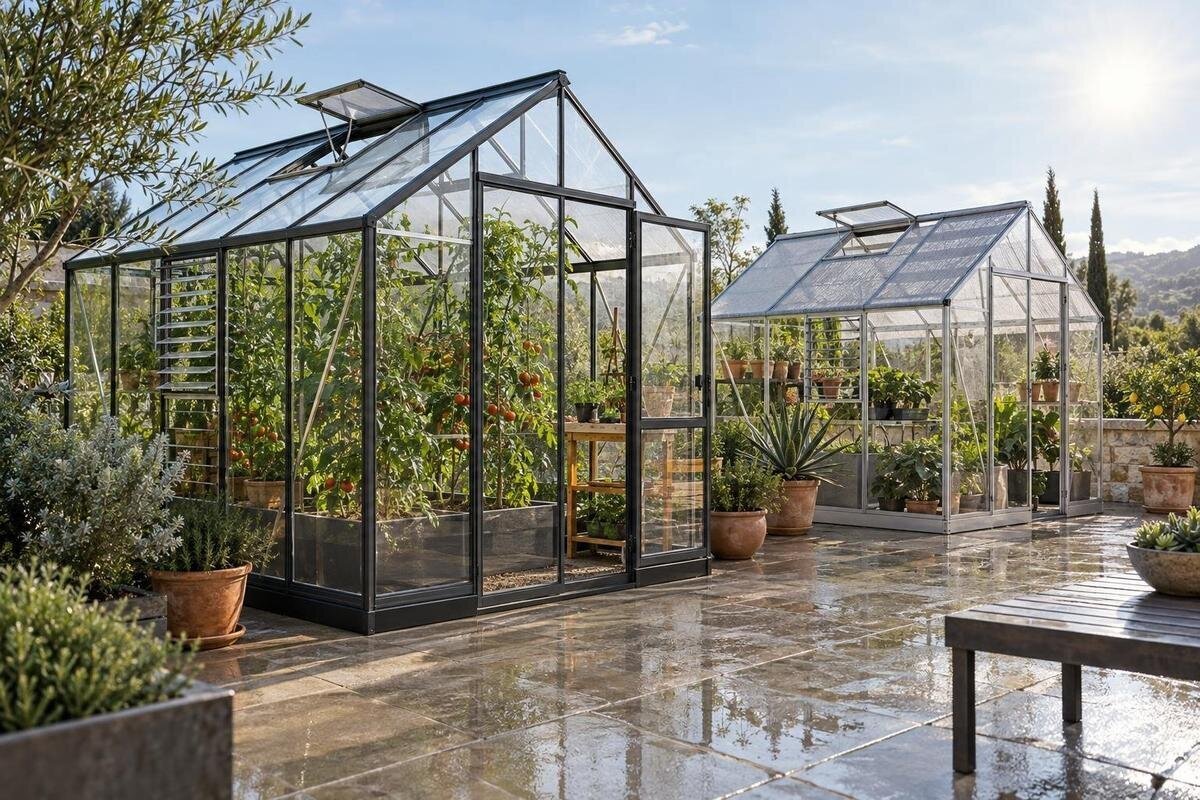
Buying a greenhouse for a hot climate is less about finding a structure that promises to stay cool and more about choosing one you can ventilate and shade in a controlled way. Sunlight can warm an enclosed growing space quickly, but conditions depend on the site, glazing, openings, shade and everyday use. Before comparing models, identify your crops, the hours of direct sun and who will operate the vents. Then check which features are specified, which accessories are separate and whether your preferred shade can work with the ventilation layout. This guide focuses on those buying checks rather than treating a model name or product photograph as a performance guarantee.

01
Heat control should shape the shortlist
Treat a greenhouse in a hot, sunny setting as a controlled growing space, not as a shelter that automatically creates mild conditions. Glazing admits sunlight; surfaces and plants absorb energy, and the enclosed air can warm quickly when little outside air is exchanged. Conditions depend on the site, season, ventilation, shade and daily use, so a product title alone cannot show whether a structure suits a particular crop. Begin with the plants you intend to grow and the months you expect to use the greenhouse. Propagation, summer crops and year-round growing place different demands on light and heat control, and affect which features deserve priority.
Before comparing appearance or footprint, note your main heat-control requirements. Record how long the site receives direct sun, whether someone can open vents during the day, whether shade needs to be removable and how often you can check the space. These points turn a broad claim such as good ventilation into useful questions: which openings are specified, where are they, how are they operated and what is included? Assess a listing such as Bloomcabin Prestige Greenhouse with Metal Base against the same checklist, but do not treat its name as evidence of a cooling feature. Compare only details the product information confirms.
Check the sun at the proposed site
Map direct sun at the intended position instead of judging it from a single midday glance. Morning and afternoon exposure can differ, while nearby walls, fences and trees cast moving shadows as the sun and seasons change. A spot that looks protected on one visit may be exposed during the period you plan to grow; a permanently shaded position may leave plants short of useful light. Note when sunlight reaches the proposed footprint and which hours bring the strongest direct sun. This helps you assess whether adjustable shade is likely to be useful, where openings need to remain accessible and whether obstacles could interrupt the airflow route you plan to use.
Think carefully before relying on a wall or boundary for shade. A lean-to format may suit a particular layout, but its label does not establish how much sun a wall blocks, which way the greenhouse will face or what ventilation it has. If an Aluminium Lean-To Greenhouse is on your comparison list, record its stated siting requirements and vent positions, then compare them with the actual wall and sun path at home. A freestanding structure also needs room for its openings and shade to remain accessible. Site choice contributes to heat management; it cannot replace ventilation or a workable shading method.
02
Compare vent positions and opening areas
Ventilation is not simply a count of openings. Warm air tends to rise, so higher outlets can help it escape, while lower openings can admit replacement air. Openings on different sides may create a route through the structure, but shelving, dense plants, partitions or a closed door can interfere with air movement. Ventilation exchanges indoor air; when outside air is itself hot, it cannot guarantee a cool growing space. When comparing greenhouses, look for stated vent positions and opening areas rather than relying on a general description. Check which vents are included and whether additional ones are optional; do not assume a roof vent is present just because a product is called a greenhouse.
Match the arrangement to the way you plan to use the space. A crowded growing layout needs air to reach the plants, not just circulate through an empty centre; tall crops and benches can alter the route. On the product page for Classic Plus 385, note only the openings and accessories expressly listed, then compare them with the ventilation pattern you need. If you plan to fit insect mesh or screens, ask whether they are compatible and whether they may affect airflow. If opening sizes or positions are unclear, ask the seller before ordering rather than treating a photograph as a specification.
Choose a ventilation system you can operate
Vent openings need to be practical to use, particularly when sunshine is intense or the weather changes quickly. Compare manual and automatic operation only on the basis of what the product information confirms. For manual vents, consider whether you can reach the handles, whether opening them means moving benches or plants, and whether regular use fits your routine. For automatic openers, check whether they are supplied or sold separately, which vents they operate and what restrictions or care the manufacturer describes. The phrase automatic ventilation can cover different arrangements, so confirm which components are included. Keep access clear for routine checks; an opener cannot help if its vent is obstructed or the system is not set up as directed.
Consider who will manage the greenhouse while you are away. Your routine may depend on someone being able to open vents, adjust shade and check conditions. If no one can attend at short notice, compare the stated control options and ask what is compatible; do not assume automation is standard or works with every vent. Use the Aluminium Classic Greenhouse as one named candidate in a comparison table, but let the listed operating arrangement—not its name—determine how it could fit your routine. Whatever model you choose, accessible controls and clear instructions matter if the ventilation features are to be used consistently.
03
Match greenhouse shading to the crops
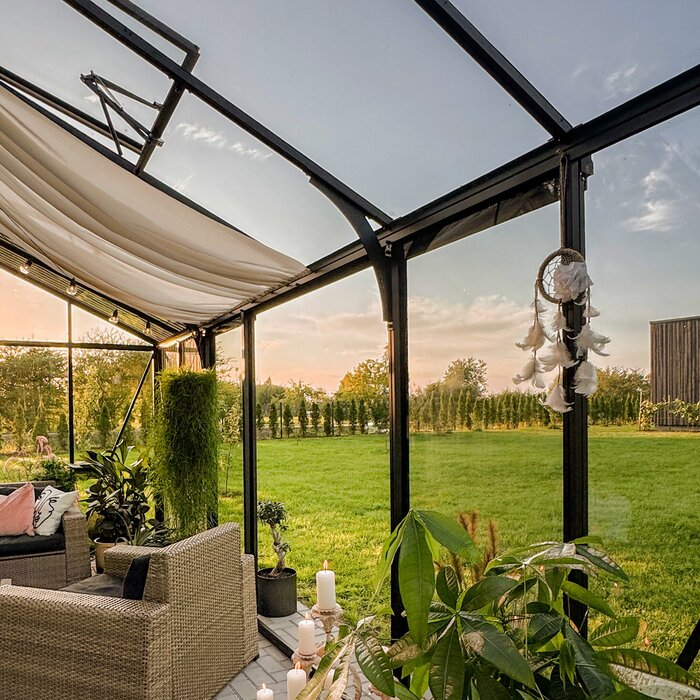
Shade should address the light reaching your crops, not simply make the greenhouse darker. Different plants, growth stages and seasons have different light requirements, so identify what you intend to grow before choosing a cover or fixed screen. A system that helps protect one crop during a bright spell may reduce useful light for another or for seedlings. Check whether the option is seasonal, adjustable or intended to remain in place, and whether its stated guidance suits your use. Do not infer a shade percentage from a product photograph. If the information gives no light-reduction figure or fitting detail, ask for clarification rather than treating a general description of shade as a measurable result.
External shade intercepts sunlight before it passes through the glazing; internal shade is fitted after light has entered. This distinction helps you compare where a system sits and what it needs to fit, but it does not establish how much it will cool the greenhouse. Consider an accessory alongside the Bloomcabin Orangerie only if its published compatibility explicitly covers the greenhouse you are buying; do not infer compatibility from a name or image. Check whether shade is included or must be sourced separately, and whether a chosen cover can be removed, adjusted or secured as its instructions require.
Make sure shade and vents can work together
Ventilation and shading need to be considered as one arrangement. A shade cover placed over an opening can restrict the route you were relying on, while a loose cover may shift in changing weather. Ask where a proposed system is fixed, which areas it covers and whether it leaves the specified vents free to open. If the shade is removable, consider how you will install and store it; if it stays in place, make sure its light effect suits the crops beyond the hottest weeks. These details affect everyday use as well as fitting. Follow the product and accessory instructions, and ask the seller or an appropriately qualified installer about compatibility or fixing questions.
The name Limited Edition Aluminium Greenhouse does not establish that a particular shade can be attached. Use the product information and the accessory maker’s instructions to verify fit, fixing points and any limits on coverage before buying items together. Before securing a screen to the frame, check the fitting guidance rather than improvising attachment points. Also consider whether the covered area would block access to a door or a higher-level outlet. A system that is awkward to fit or interferes with vents may be left unused, so compatibility and ease of adjustment are practical buying criteria.
04
Compare glazing, light and heat control
Include glazing in a heat-and-light comparison, but do not choose on a material name alone. Ask for stated light-transmission information, whether panels diffuse light, how they are replaced and whether the details apply to the exact greenhouse. Strong direct sun can create a different growing environment from bright shade, so the aim is to match light to your crops while retaining a manageable way to ventilate and shade. A clearer panel is not automatically best for every plant, and a panel described as diffusing light does not remove the need to manage heat. Compare the glazing information alongside the vent layout and any compatible shading options.
If Pyramid Greenhouse for Masonry Bases is a model you are considering, confirm its base and glazing details in its own product information rather than assuming them from the name. This matters when comparing direct light or planning where shade will go. Ask for explicit information on glazing type, light properties and included components, and distinguish a stated figure from a general description. If the details cannot be confirmed, mark them as unknown in your comparison instead of filling the gap with assumptions. A sound choice weighs light, airflow and crop needs together; no panel label guarantees a particular indoor temperature.
Plan the growing layout around airflow
Usable space matters to airflow as well as planting capacity. Sketch where benches, pots, tall crops, watering equipment and the main path will go, then check whether you can reach each vent without leaning over plants or shifting equipment. Dense planting beside an intake or under an outlet can disrupt the route you planned, while a narrow path can make daily opening and shade adjustments awkward. If sizes differ, compare the stated external and internal measurements, door clearance and headroom; do not use a model number as a dimension. Leave room for shade controls and routine access. A greenhouse that fits the plot but prevents practical vent operation may not suit your plan.
The layout also determines how much of the crop receives direct sun. Grouping plants by light and watering needs can make movable shade easier to direct than covering the whole greenhouse, though the best arrangement depends on what you grow. Add the Wall-Based T-Model Greenhouse Orangery to a comparison only after checking its stated layout, measurements, mounting information and openings against your site. A simple sketch can help you test the footprint and likely shade coverage. If a wall or another obstacle restricts one side, make sure the vents and doors you expect to use still have clear access.
05
Turn product details into a comparison
Use a comparison table to keep promotional language separate from verifiable details. For each greenhouse, note the stated vent locations, opening dimensions or area, manual or automatic operation, opener components included and any stated compatibility with additional vents. Add the glazing information and any available shade options, marking whether each item is included or an extra. Record unanswered questions rather than guessing from a photograph. This makes it easier to compare products on the features that affect heat management, rather than on a broad phrase such as suitable for sunny conditions. Keep the model name or product code with each note so that details are not accidentally assigned to a different item.
Ask specific questions before placing an order: How many vents are included? Where are they, and what are their stated opening sizes? Can openers be fitted to the openings you intend to use? Is a shade system confirmed as compatible with this exact model, and will it leave the vents usable? Ask which measurements are product specifications and which accessories are optional. If a retailer clarifies a point, keep the answer with the details for that model. Written information makes a more dependable comparison than an image or a description that does not explain the feature you need.
Include daily operation and extras in the decision
Think through a typical hot day and a sudden change in conditions before choosing. Decide when vents will be checked, who can operate them, how you will observe the greenhouse and when shade will be adjusted. A thermometer can help you understand how the chosen site behaves, but one reading is not a guarantee that conditions will suit every crop; use reliable growing guidance for the plants you intend to raise. Consider whether your routine can cope with weekends or absences. The purchase is only one part of heat management: opening vents, adjusting shade and arranging plants determine whether the features you select can be used effectively.
Add required accessories and site work to your comparison before deciding what represents value. A greenhouse may need separate openers or shading, while a package may not include an option you expect; use the explicit included-items list and ask about ambiguity. Account for installation, access and storage for removable screens, without assuming the product listing gives a complete setup cost. Finalise your shortlist by ranking ventilation route, shade compatibility, suitable light, access and dimensions for your plants and site. If a key specification remains unclear, resolve it before ordering. This is more useful than choosing on a climate label alone.
Frequently asked questions
How much ventilation does a greenhouse for a hot climate need?
There is no single opening figure that suits every site and crop. Compare the stated number, position and size of the vents, and look for a usable route from lower openings to higher ones. If the product information does not give enough detail, ask the seller rather than inferring performance from the model name.
Is external shading always better than internal shading?
External shade intercepts sunlight before it passes through the glazing; internal shade is fitted after light has entered. Neither arrangement guarantees a particular indoor temperature. Compare compatibility, coverage and adjustability, and consider the light your crops need.
Should greenhouse shade stay in place all year?
Not necessarily. The useful amount of shade depends on the crops, season and exposure at your site. Check whether a proposed system can be removed or adjusted, and follow the supplier’s instructions for its use and storage.
Can an open door replace dedicated vents?
Do not rely on the door as your entire ventilation plan. It may provide another opening when it is practical to leave open, but it can be closed or poorly placed in relation to other openings. Compare dedicated vents and the airflow route they create.
What should I confirm before ordering?
Confirm which vents and opener mechanisms are included, their positions and sizes, the glazing information, dimensions and any compatible shade options. Ask about unclear details for the exact model, and check whether accessories are included or listed separately.
Choose a greenhouse for hot, sunny conditions by considering where sunlight falls, how air can enter and leave, and how shade will fit around the vents and suit your crops. Test that plan against the exact product details and the routine you can manage. If an important point is unclear, keep it as an unanswered buying question rather than relying on appearance. A sound purchase decision is one where ventilation and shading are practical parts of the growing setup, not assumed benefits of the model name.
