
Greenhouse Black Friday Bundles: Which Accessories Are Worth Buying?
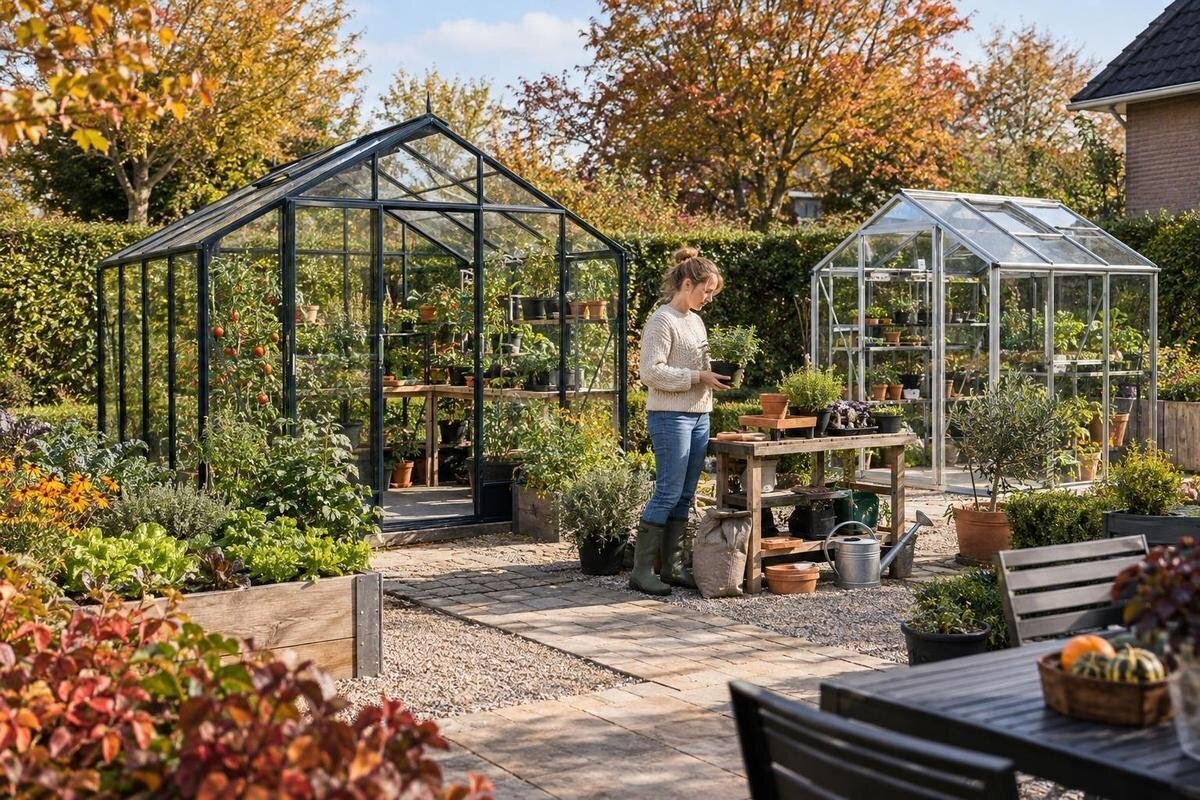
Black Friday buying guide
Buying a greenhouse bundle around Black Friday makes sense only when the extras will do useful work in your greenhouse. A long list of shelves, clips and watering parts can look like good value, yet still leave you with fittings that do not suit your chosen model or equipment you never use. Base the choice on your crops, available floor space and the greenhouse's stated fittings. Compare what is actually included with the items you would buy anyway; the number of accessories is not a measure of value.

Before you buy 1
What makes a greenhouse bundle worth buying?
An accessory bundle is worthwhile when it covers jobs you expect to do, not simply because its item count is high. Separate the greenhouse itself from the add-ons in the offer: a base, staging, ventilation or watering equipment may be pictured together without every item being included. Read the contents and quantities, then mark each item as useful now, useful later or unnecessary for your plans. A potting bench has little value if there is nowhere to put it, while a small fitting may matter if it is needed for an accessory you genuinely intend to use. Relevance, rather than a full-looking package, is the first test.
Then compare like with like. List the accessories you would buy individually and note their current prices, where available, alongside the bundle price. Check that the bundle contains the same models and quantities you need; a cheaper-looking set may leave out a connector or include duplicates that add no value to your setup. Do not treat a Black Friday label or a stated saving as proof that the package suits you. A bundle can still be convenient when its contents match your list, even if convenience rather than a lower total is its main advantage.
Choose accessories around the crops you plan to grow
Write down what you expect to grow and what you will do with it. Starting seeds, potting on young plants, raising a small number of seedlings and keeping established plants all create different demands on a greenhouse. Think about how many trays or pots you are likely to handle, whether plants will need support, and how much bench space you will use at busy times. If your plans are still tentative, avoid filling the bundle with equipment for several possible hobbies. A short list of real tasks is a better guide than a photograph showing a greenhouse at full capacity.
Turn those tasks into an accessory list: trays for propagation, shelves for pots, a suitable watering arrangement or extra ventilation may be relevant, but none is automatically essential. Check the exact greenhouse you are considering before settling on quantities or fit. For example, use the named Bloomcabin Orangerie as a model reference when checking accessory details; do not read the model name as evidence of its usable space or of what comes with it. If a crop plan changes later, accessories bought for a specific purpose may be easier to add then than to store unused from the outset.
Before you buy 2
Settle the base and site before adding extras
Before buying optional equipment, establish what the selected greenhouse requires or includes for its base and floor. A bundle photograph or short product title may not tell you whether base components are included, whether separate preparation is needed or which parts are sold as extras. Read the greenhouse information and the relevant manufacturer guidance, and ask the supplier if an important detail is unclear. For a named reference, the Bloomcabin Prestige greenhouse metal base page identifies a particular greenhouse listing; confirm its exact included parts and any site requirements rather than inferring them from the name.
Measure and plan the intended area before adding benches, shelves or storage that could make access awkward. Leave room for the greenhouse entrance to be used, for plants and equipment to be moved, and for the route you will take while watering or potting. Use the product's stated dimensions and plans rather than estimating from an image. Keep any proposed floor covering or internal layout separate from the base decision until you know what the greenhouse calls for. If you are unsure whether the site or base arrangement is suitable, seek advice from the supplier or a qualified installer rather than guessing.
Check ventilation accessories against the greenhouse
A ventilation accessory can be useful when it addresses a real routine, such as opening a vent without interrupting other work. But the accessory must match the greenhouse's actual openings and the manufacturer's compatibility guidance. Do not assume that one opener suits every vent, or that adding an opener resolves all ventilation needs. When your shortlist includes the Classic Plus 385, check the stated configuration for that exact model before choosing an opener or other ventilation extra. A model name or a similar-looking frame does not confirm where an accessory fits.
Compare the type of operation, how many openings it is intended for and what components are actually supplied. If you prefer to open vents yourself, consider whether they will be accessible as part of your usual routine; an automatic accessory may be unnecessary if it does not solve a problem for you. Check the manufacturer's instructions for any operating limits and fitting requirements. If a proposed accessory involves powered equipment or specialist installation, confirm what is required with the supplier and use a qualified professional where appropriate. Do not improvise a fitting to make an incompatible accessory work.

Before you buy 3
Make shelving and staging useful, not obstructive
Shelves and staging can make pots and trays easier to organise, but they also occupy space that may be needed for walking, watering or working at a bench. Decide what you want to store and where you need to reach it before choosing a bundle. Check the greenhouse's stated internal dimensions and the accessory's dimensions, not just its name or the apparent scale of a photograph. If a model such as the wall-based T-model greenhouse orangery is on your shortlist, use its specific product information to assess the layout rather than assuming that a shelf arrangement will suit it.
Look for clear details about how staging is supported and what load, if any, the manufacturer states it can carry. Do not estimate a shelf's capacity from its appearance or attach equipment to a greenhouse frame unless the instructions allow it. Removable or adjustable staging may be useful if your use of the space changes, but check that the particular item is designed that way. Also consider access: a high shelf that blocks a vent, shades plants or makes watering difficult can create more work than it saves. A few well-placed surfaces are often more practical than using every available wall.
Choose watering equipment for your routine
Decide how you will water before adding hoses, irrigation lines, trays or timers to a bundle. Consider the number and position of your plants, how often you expect to water and whether you normally use a watering can or another method. An automatic arrangement may help with a regular task, but it is not automatically useful for every greenhouse or growing plan. Check the exact greenhouse details alongside the accessory information; the aluminium lean-to greenhouse listing is an example of a named model to identify, not evidence that a particular hose or timer will fit it.
Check what the equipment connects to, which parts are included and whether any timer or controller needs a particular power source. Confirm that the accessory is intended for the water supply and arrangement you have, and do not assume connectors are interchangeable. Watering equipment that is awkward to reach or maintain can end up unused, so think through where you would store it and how you would keep it in working order. If a product's requirements are unclear, ask the manufacturer or supplier before ordering; seek qualified help for any specialist electrical work rather than attempting an improvised setup.
Before you buy 4
Consider shade and seasonal growing needs
Shading accessories can be worth considering if your crops or the greenhouse location make control of incoming light important. Their effect depends on the material, placement and growing conditions, so check crop-specific guidance and the accessory maker's recommendations rather than assuming that more shade is always better. Think about when you would use the item and whether it can be adjusted or removed as your needs change. Do not buy a screen simply because it appears in a bundle; an accessory that reduces light may not suit every plant or every part of the year.
If you are considering an insulating cover or another seasonal screen, check how it fits the chosen greenhouse and whether it could interfere with openings or access. Such an accessory is not a substitute for a suitable greenhouse setup, and its presence does not guarantee a particular growing environment. Read its intended use and care instructions, including whether it is meant to stay in place or be adjusted. When reviewing a named option such as the Aluminium Classic greenhouse, verify compatibility for that exact model rather than assuming an accessory will transfer from another greenhouse in your shortlist.
Buy propagation tools and storage for a real routine
Propagation accessories are easy to overbuy when a bundle groups together trays, pots, labels and other small items. Estimate how many plants you actually plan to start at once and where you will keep the trays while you work. Check the size and quantity of the included items against the space you have available; several trays are not useful if they leave no room to tend plants or move them safely. Reusable equipment may suit a regular routine, while a small trial can help you learn what you need before committing to a larger collection.
Storage for hand tools, labels and twine can keep work organised, but it should not block the entrance, vents or access to plants. Think about where small items will be easiest to reach and whether a storage accessory is designed for the greenhouse rather than simply advertised for general garden use. Avoid adding hooks or hanging equipment unless the maker confirms an appropriate fixing point and use. Keep the bundle focused on items that support the work you have planned; a neat display of accessories is not a reason to buy duplicates of tools you already own.

Before you buy 5
Verify compatibility and exactly what is included
Before ordering, match each accessory to the exact greenhouse model, not just to a broad category such as aluminium or lean-to. Check any stated dimensions, fittings, attachment points and compatibility notes from the accessory manufacturer. A title such as pyramid greenhouse for masonry bases identifies a particular listing, but its name alone does not establish that a separate base accessory or fitting is suitable for your plans. Where the details do not answer a practical question, ask the supplier rather than relying on a product photograph or an assumption based on appearance.
Read the bundle contents line by line. Note what is supplied, how many of each item are included, and which parts or connectors, if any, must be obtained separately. Check whether the accessory is intended for the exact greenhouse configuration you have chosen; a bundle may be designed for a specific model rather than every greenhouse in a range. For items that attach to the structure, follow the manufacturer's fitting instructions and do not make unapproved alterations. If the information remains unclear, pause the order until the supplier or a suitably qualified professional has clarified the point that affects fit or installation.
Compare Black Friday bundles by useful cost
Make a like-for-like comparison using the prices and contents shown when you are deciding. Add up the accessories you actually want at their individual prices, where available, and compare that total with the bundle price. Include the cost of any necessary parts that the bundle leaves out, and subtract nothing for items you would not have bought in the first place. A claimed saving is meaningful only against the same useful items and quantities; a large number of low-priority extras does not make a bundle better value. Do not assume that a seasonal label means the offer is right for your plans.
Sort each proposed extra into one of three groups: needed for the setup, useful later or not needed. Buy only when the first group fits the greenhouse you have selected, and consider waiting on the second until your routine becomes clearer. Keep the comparison tied to the exact greenhouse listing; the limited-edition aluminium greenhouse is one named model page, not evidence that a particular accessory set is included or compatible. This simple check helps separate a genuinely useful package from one that merely contains more items.
Frequently asked questions
Should I buy greenhouse accessories as a bundle?
Only if the included items suit your chosen greenhouse, support jobs you plan to do and offer useful value compared with buying those items separately. Check quantities and compatibility, and account for accessories you already own.
Which greenhouse accessory should I prioritise?
Start with the task that is most important to your growing plan, such as preparing a suitable base, improving access to ventilation or organising watering. The right priority depends on your greenhouse setup and routine, so there is no single accessory that suits every buyer.
Will a greenhouse accessory bundle fit every model?
Do not assume so. Check the accessory maker's compatibility details against the exact greenhouse model, including any stated fittings or measurements. A similar-looking frame or a model name alone is not confirmation that an accessory will fit.
Are automatic watering or ventilation accessories worth including?
They may be useful if they address a regular task and suit the greenhouse and your routine. Check what each item needs to operate, including any water connections or power requirements. Follow the manufacturer's instructions and ask a qualified professional about specialist installation.
Is a Black Friday bundle cheaper than buying items separately?
Not necessarily. Compare the same accessories, in the same quantities, at the prices shown when you are deciding. Include any extra parts you would still need, and judge the bundle by its useful contents rather than a headline saving.
A good greenhouse bundle is one that fits the chosen model and earns its place in your growing routine. Use your crop plans, site layout and the manufacturer's compatibility information to decide which accessories are useful now, which can wait and which add nothing. When comparing Black Friday options, focus on the exact contents and the cost of the items you would genuinely use. That makes it easier to choose a practical package without paying for extras simply because they are grouped together.
