
Buying a Small Greenhouse on Black Friday: Choose a Size You Won't Outgrow
Greenhouse buying guide
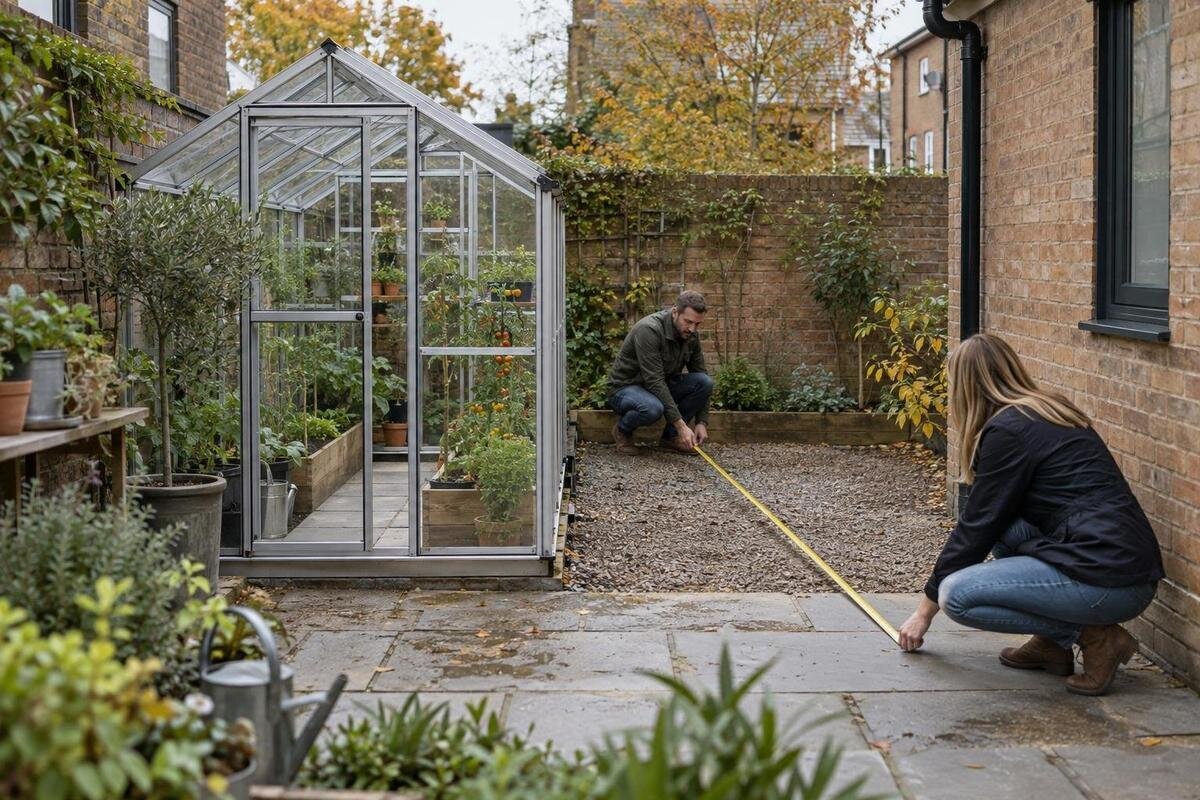
Buying a small greenhouse on Black Friday starts with a measurement, not a discount label. The size that fits a free corner today may feel cramped once plants mature, benches go in and you need to work inside. Plan for the garden you have and the realistic growing plans you expect to add.

Before you buy 1
Define “small” by the space you actually have
Small is a relative label, not a measurement you can plan around. Begin with the proposed position in the garden and record the longest usable width and depth, including irregular edges, beds, paving and fixed obstacles. Measure the clear area rather than the convenient gap you hope the greenhouse will fill. You may need room to reach the entrance, open the door and move around for routine work, and the chosen position may have boundaries that limit how close you can set it. Note overhead obstructions and the route to the site as well. If the space is shared with bins, a path or a clothes line, mark those uses so the footprint does not displace something you rely on.
Then distinguish the greenhouse’s external footprint from its usable space inside. A frame, base and changing wall profile can affect how much floor remains for plants and access; product titles do not settle that question. Compare the exact measurements for each candidate and check what each figure includes: overall width and depth, overall height, and any separately stated dimensions for the base or interior. If reviewing Bloomcabin Prestige Greenhouse Metal Base, look for those distinctions; if the listing leaves them unclear, ask for confirmation instead of estimating from its name. This gives you a reliable boundary for the next decision: laying out the intended growing space, rather than merely checking that a rectangle fits.
Plan around crops you may grow next
Write down the greenhouse jobs you expect to do, not just the plants you own now. You might want to raise seedlings and harden them off, grow crops to maturity, keep a few potted plants or have a place to pot up young plants. Those uses compete for floor area and usable height. List the main crops by their mature size and support needs, then note how many you want at one time. A tray of seedlings occupies less room than the established plants it becomes, and busy periods can overlap with existing crops. Counting only what is in the greenhouse on a quiet week can make a compact structure look more generous than it will be.
Make a second list for plausible additions over the next couple of growing seasons: more seed trays, a taller crop, another bench or several additional pots. Keep this realistic; buying space for every possible future interest can take over the garden and be harder to manage. Compare each candidate against your peak use, including the route between plants, rather than treating every centimetre as plantable floor. A listing such as Bloomcabin Orangerie should be judged against the written plan using confirmed measurements, not selected on the strength of its name. A clear crop list turns the wish for room to grow into something you can test, while still leaving you free to choose a smaller option if future additions are unlikely.
Before you buy 2
Map the usable floor area and route
Sketch the interior as a simple plan and place the items that will stay there: beds, staging, shelves, pots or a potting surface. Leave the route you need to carry trays in and reach plants at the back; if the path disappears when the greenhouse is full, the nominal floor area overstates its usefulness. Try a few arrangements on paper before assuming benches can run along both sides. Their depth, the width of a clear route and access to each plant matter more than a tidy-looking plan from above. For a compact interior, test a layout with one work surface and a clear route before deciding that two full rows will fit.
Use masking tape, string or spare cardboard on the ground to mark the outside dimensions, then stand at the entrance and imagine the plan inside. Test where the door opens and how you would carry a watering can or tray through; do not count the same strip as both access and permanent growing space. A marked outline also reveals whether the greenhouse would obstruct the path or leave an awkward pinch point beside a bed. When comparing Classic Plus 385, rely on its exact listed measurements and any plan drawing rather than the number in the model name. If your layout works only with a route too tight for regular use or plants pressed against every edge, reconsider the arrangement or the size.
Check headroom where the plants will stand
Footprint alone can still lead to a cramped choice. Overall height, side height and the clearance beneath a sloping roof are different measures. Tall crops may need supports and room for you to reach them; shelving can bring plants closer to the roof as well. Think about where the tallest intended plants will stand, not just whether the ridge sounds high. Check the clear opening at the entrance too, particularly if you expect to carry larger pots, trays or equipment in and out. A workable height is about the whole growing area: a high centre with low sides may leave less room than its maximum measurement suggests.
Look for a dimensioned drawing that identifies the side height and highest point, and note where each measurement is taken. A single maximum height cannot show how much space a tall plant has away from the centre, or whether your planned shelf will block access. The name T-shaped wall-mounted greenhouse identifies a product form, but it does not tell you the clear internal height or layout. Use the exact information for those points; if a drawing omits a dimension you need, ask for confirmation before ordering. This check can prevent a greenhouse that fits the garden yet rules out the crop you meant to grow, or makes routine work awkward.
Before you buy 3
Include the base and site in the measurement
Check whether the dimensions refer to the frame, the base, or the full outline once assembled. A base can affect the footprint, the finished floor level and the threshold at the entrance; all three matter when space is bounded by a path, wall or bed. Measure the site to its widest and longest points and allow for any projections shown on the product drawing, rather than using the nominal area alone. Also measure the route from the gate or storage area to the chosen site. A greenhouse can fit where you intend to place it but still be awkward to bring there if the route has narrow turns, steps or obstructions. Treat transport and final position as separate measurements.
Confirm what base or support arrangement is required, what is included in the order and whether the stated measurements match the surface you intend to use. The title Pyramid Greenhouse for Masonry Bases is a product identifier; it does not establish that an existing base is compatible or that its outer dimensions suit your plot. Check the product information and, where the site needs structural preparation or anchoring, ask a qualified professional to assess it. This is a sizing question as well as an installation matter: a mismatch can change the finished position or the clear space around it. Do not assume a base detail from a title or image.
Allow for benches, shelves and everyday work
An empty greenhouse is a poor guide to its working capacity. A bench or shelf may free some floor space for pots, while also using width and tightening the central route. A potting surface, stored compost or a few large containers need room if they will stay inside. Draw them into the plan at their intended size and decide which will be permanent and which can be moved. If the structure is expected to serve several purposes, sketch its busiest arrangement; measuring only the quietest week can leave it crowded exactly when you most need access. Leave room for normal tasks such as carrying trays, turning a pot or reaching plants at the back.
Check the listing for the greenhouse’s own dimensions and for any accessories you intend to rely on; do not treat a shelf or bench as included unless the listing says so. Consider whether the entrance and its opening still work with your planned layout. The Aluminium Classic Greenhouse listing, like any candidate, needs to be assessed against those exact requirements; the name alone cannot tell you how much room your benches will leave. If you plan to buy fittings separately, check their dimensions and attachment requirements before counting their intended space as usable. That way you can compare the whole arrangement, rather than buying the shell and discovering that its planned interior does not work.
Before you buy 4
Match the greenhouse shape to the plot
Two greenhouses with similar outside measurements can make very different use of a garden if their outlines and entrances differ. A rectangular footprint may suit a clear corner, while a more complex outline could align with a particular boundary but leave awkward corners inside. Treat named forms as prompts to inspect the plan, not as proof of a better fit. Look at the complete outline, including any projection, and imagine the door open; compare the area you can actually organise, not only the maximum width or length. On a narrow site, depth and access can matter more than an attractive area figure. Consider whether the shape leaves room to work at the back and keep a usable route.
A lean-to label, for example, does not by itself show how far a model projects, what interior space remains or how its entrance meets your path. Before considering Aluminium Lean-To Greenhouse, match the exact footprint and drawing to the marked site and check that ordinary access remains possible. Apply the same test to every other form you shortlist. If a wall, fence or boundary is involved, include the space needed for access and upkeep without assuming a greenhouse is suitable for a particular wall or position. Form is part of the size decision, but the confirmed measurements and intended layout—not the label—must settle it.
Make future capacity purposeful
Buying one size up can be sensible when it accommodates a real plan: another crop row, more seed trays at a busy time or a working bench you will actually use. It is less useful to take over garden space for a hobby you may never pursue. Decide which future use would make the smaller choice feel restrictive, whether it is likely, and when plants or equipment would need the extra room. That gives you a practical margin to plan for instead of an unlimited just-in-case allowance. Think about how much of the added area would be useful through the growing year, not only during a short busy spell, and whether you can maintain that space.
Set a clear test: identify the largest realistic layout you expect to use, including the access route, then compare it with each candidate’s confirmed interior measurements. If the future plan only fits by blocking access or crowding plants, the option may be too small; if the extra floor has no defined role, it may be more greenhouse than your garden needs. A model such as Limited Edition Aluminium Greenhouse should pass the same test as any other listing; its title is no evidence of capacity and no reason to rush. Tie future-proofing to space you can use, not to a larger number on a product page. The goal is room for likely plans, not a promise that no change will ever require a different setup.
Before you buy 5
Use Black Friday to compare a prepared shortlist
Make the sizing decisions before browsing event pages. Write down your maximum footprint, required headroom, crops you want to fit and the access route you will preserve. Then compare only candidates that meet those conditions. A Black Friday label can draw attention to a product, but it does not establish that an offer is active, that a saving is genuine or that a greenhouse is the right size. If a promotion is shown, check the exact model and configuration against the product information rather than assuming a similar name means the same dimensions. Keep your must-haves separate from optional extras so an advertised package does not quietly change your space plan.
Keep a shortlist with each model name, confirmed outside dimensions, interior-layout information and any question still to resolve. When you return to a page, verify those details before ordering; do not rely on a saved tab or promotional graphic as your only record. Check the stated delivery and order terms as part of the purchase, but do not let an apparently attractive price override a poor fit. This is particularly helpful when two candidates have different shapes or present height and base measurements differently. If the offer is tied to a configuration, compare that exact configuration, not a superficially similar version. A worthwhile Black Friday purchase is the one that fits your garden and growing plan on the terms shown.
Check for both an undersized and oversized choice
An option is probably too small if your planned crop count depends on blocking the route, leaving no working room at the entrance or placing tall plants where there is not enough headroom. A sketch that works only while everything is a seedling is not a reliable test; use the layout at the plants’ expected mature size and during the busiest overlap of uses. Do not count the whole floor as planting area if benches, storage or access must remain. If the dimensions are ambiguous, pause instead of treating a close estimate as confirmation. Revisit the layout or shortlist rather than forcing an arrangement that will be frustrating every time you work inside.
An option may be larger than you need if it takes more of the garden than you can sensibly manage and the spare area has no planned role. Compare it with a second layout that includes only the plants and equipment you genuinely expect to use. Your choice should fit the real site and a realistic future version of your growing plan, with enough space to reach and tend the plants. If technical questions about the surface, support or positioning remain, resolve them with the appropriate professional before purchase. There is no universal percentage of extra area or plant count that guarantees the right fit; the useful margin depends on your crops, layout and site. Keep that judgement grounded in the way you will actually use it.
Frequently asked questions
How do I know whether a greenhouse is small enough for my garden?
Measure the proposed site and the space needed to reach and use the greenhouse. Compare those measurements with the exact outside dimensions of each option, including any base or projections shown in its product information.
Should I choose a size for seedlings or mature plants?
Plan for the mature plants and the busiest period when different uses overlap. Seedlings take up less room, so a layout that fits them may not leave space for established crops, supports or access later.
Is the maximum height enough to check headroom?
No. Check the height at the sides as well as the highest point, and consider where taller plants will stand. A single maximum measurement does not describe the usable height across the whole interior.
How much extra space should I allow for future plans?
There is no universal allowance. Name the likely addition, such as another crop or a bench, then test whether it fits alongside a clear route and your current growing plan.
Should I choose a larger greenhouse because it has a Black Friday offer?
Not unless the extra space suits a realistic plan and fits the garden. Check the exact model and configuration; an event label alone does not confirm a saving or make a size suitable.
A small greenhouse is worth buying when its measured footprint, interior height and working layout match the garden you have and the plans you are likely to pursue. Decide those requirements before reacting to a Black Friday price, then use exact model measurements—not names or event labels—to compare candidates. Leave enough space for plants to mature and for you to tend them, without buying a structure whose spare capacity has no purpose. That is a more durable way to avoid outgrowing a compact choice.
