
Growing Cucumbers in a Greenhouse: Planting, Spacing, Watering & Harvesting | Bloomcabin
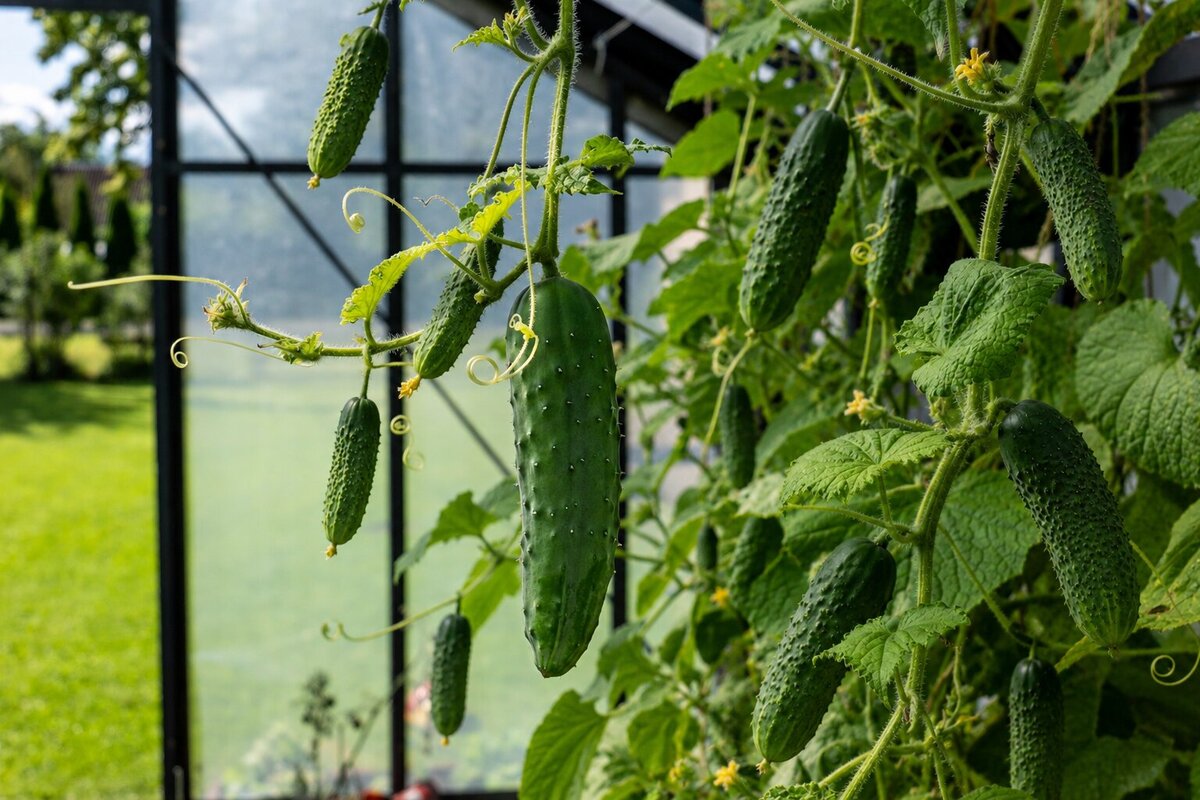
Why cucumbers thrive under cover
A greenhouse extends the season while making cucumber growth more predictable.
Cucumbers love warmth and grow rapidly outdoors only once soil and nights are warm enough. A greenhouse gives you much greater control over that start. Plants are protected from cold winds and prolonged rain, roots experience steadier conditions, and vines can be trained vertically. A sprawling crop becomes an organised, easy-to-harvest green wall.
That protection also brings responsibility. Natural rainfall is excluded, heat can build quickly on sunny days, and dense cucumber foliage creates high humidity. A productive cucumber house is not a sealed warm box. It needs active management: regular watering, early ventilation, clear supports and enough room between plants.
This matters especially in New Zealand, where spring and early summer weather can change quickly. A warm day may be followed by a cold night, while the same structure can become very hot in midsummer. Treat temperature, water and air as one connected system for steadier growth and a longer harvest.
Cucumber climate
Start warm, grow steadily and prevent heat peaks early.
Young cucumbers dislike cold soil. Do not move them into an unheated greenhouse simply because one afternoon is sunny. The root zone needs lasting warmth and night temperatures must suit the variety. Planting later into warm soil often produces stronger plants sooner than an early start followed by stalled growth.
In high summer, the task reverses. Glass and polycarbonate can convert strong sun into considerable heat. Open roof vents, doors and other openings before temperatures become extreme. Shade may help in warm northern districts or sheltered urban gardens, while a greenhouse’s stored warmth remains useful for longer in cooler southern or elevated locations.
Plants quickly reveal when conditions are out of balance. Limp leaves at midday can indicate heat or high water demand; persistently weak growth can point to root-zone problems. Morning condensation shows that overnight moisture remained inside. Observation is therefore more valuable than relying on one rigid temperature figure.
Too cool – roots and growth slow
Warm + even – productive growth
Too hot – water stress and flower issues
01 / Choosing varieties
For greenhouse cucumbers, the variety also determines the pollination approach.
Parthenocarpic varieties are particularly practical under cover. They set fruit without fertilisation, so they do not depend on bees reliably reaching the greenhouse. Many long salad cucumbers and modern mini cucumbers bred for protected growing belong to this group. Check the variety description carefully, as habit, side-shoot growth and fruit size vary greatly.
Traditional outdoor cucumbers often carry male and female flowers and need pollen transfer. In a widely opened greenhouse, insects may do this work. In a mostly closed house, hand pollination may be needed. Conversely, unwanted pollination can produce seedy or misshapen fruit in some parthenocarpic greenhouse varieties.
Use matters alongside pollination. Long cucumbers need robust vertical support and regular picking. Snack cucumbers produce many smaller fruits and suit family gardens well. Pickling cucumbers are usually harvested to a different rhythm. In a small Bloomcabin greenhouse, a compact, easily trained variety is often more practical than maximum vigour.
02 / Sowing + planting
Plant while young, disturb roots little, and prepare supports before growth begins.
Cucumbers can be direct-sown or planted as seedlings. For an early greenhouse crop, raising plants in individual pots is useful. Cucumber roots resent rough transplanting, so do not leave plants unnecessarily long in small containers. Plant while the root ball remains intact and the plant is still compact.
For direct sowing, wait until the soil is genuinely warm. A cold, wet sowing zone delays germination and increases the risk of rotting seeds or young roots. Soil should be loose, humus-rich and free-draining. Mature compost can be worked in before planting; fresh manure directly around young roots is unsuitable.
Before planting, decide where strings, netting or trellises will run. Cucumbers grow rapidly once established. Installing supports later among large leaves takes time and can easily damage shoots. Plan the structure first, then plant, so every vine can be guided in the intended direction from the start.
01Warm the bed and install supports
02Plant seedlings or sow into warm soil
03Guide the main stem upwards regularly
04Manage side shoots for the variety
05Keep water and nutrients steady from fruiting
06Harvest several times weekly and inspect plants
03 / Spacing + supports
The right density still lets light and air pass through the cucumber wall.
A common mistake is filling every possible part of a greenhouse with plants. Cucumbers soon respond with a dense canopy. Lower leaves then receive poor airflow, pest checks become difficult, and moisture lingers after watering. Plant spacing should therefore suit both the variety and the chosen training system.
With vertical cultivation, guide the main stem up strings or strong netting. Paths stay clear, fruits hang cleanly, and leaf area is distributed through the height. Taller Bloomcabin models use greenhouse volume efficiently without allowing vines to block the growing area at ground level.
Some greenhouse varieties are trained to one stem, while others can retain more side shoots. Follow the variety guidance rather than a universal pruning rule. Remove damaged, yellow or clearly diseased leaves, but do not cut away excessive healthy foliage purely for appearance. Leaves supply the fruits with assimilates.
Plan the harvest route too. You should be able to move between rows without continually pushing foliage aside. A clear line from the entrance through the house makes watering, inspections and picking easier. This is especially valuable with long cucumbers, as overlooked fruit quickly becomes oversized behind broad leaves.
04 / Watering
Cucumbers need plenty of water – but consistency matters most.
In a greenhouse, plants depend entirely on your irrigation. A cucumber with large foliage and several fruits can use much more water on a hot day than a young plant in spring. Rather than watering to a fixed weekly timetable, check moisture in the active root zone regularly.
Water deeply without keeping soil permanently saturated. Oxygen must remain between soil particles. Heavy soils can be troublesome under cover when small quantities are applied to the same spot every day. Well-structured, humus-rich soil absorbs water, keeps it available to roots and still drains excess away.
Drip irrigation or focused watering at soil level keeps leaves dry, a major advantage in dense cucumber crops. Morning watering often suits the daily rhythm: roots begin the bright part of the day supplied, while excess moisture can be vented away as the day progresses.
Sharp swings between very dry and very wet conditions stress cucumbers. Growth pauses, bitter fruit or uneven shapes can result. Mulch can reduce water loss, but apply it only once soil is warm enough and extra insulation from cool conditions is no longer unwanted.
05 / Nutrients
Strong leaves matter – but fruit, not foliage alone, is the aim.
Cucumbers are among the more nutrient-demanding vegetables. Humus-rich, well-supplied soil is the best foundation. Mature compost before planting improves structure and nutrient buffering. Where soil is used regularly, do not fertilise blindly every year; consider soil results and how the plants are developing.
Too much nitrogen can create very soft, lush leaf growth. Such a crop shades itself and becomes harder to ventilate. Once fruiting starts, keep nutrition even and balanced. Use fertilisers suitable for edible crops according to the manufacturer’s label, rather than increasing concentrations by guesswork.
Nutrient management is more demanding in containers because root volume is limited. Large pots with good drainage buffer water and nutrients better than small pots. Regular, moderate feeding is usually more useful here than occasional heavy applications.
06 / Ventilation + humidity
A cucumber greenhouse may be warm – but never stale.
Large cucumber leaves transpire substantial water. Humidity rises especially quickly when plants are dense and doors or windows stay shut. On cool nights, moisture can settle as condensation on glass and leaves. Vent promptly in the morning whenever outside conditions allow.
Roof vents are especially effective because warm air rises. Open doors or lower openings support air exchange. Automatic vent openers can help, but they do not replace watching the crop. A greenhouse full of mature cucumbers has different humidity behaviour from the same house just after planting.
During hot spells, opening early is more effective than reacting late. Once the structure has heated strongly, it takes longer to lower the temperature again. Shade can add protection in very sunny sites. The aim is not darkness, but avoiding extreme heat while retaining good photosynthesis.
Good ventilation begins with plant spacing. Even open windows offer little help if leaves have grown into a solid mass. Vertical training, removing old lower leaves and maintaining clear paths create channels through which air can genuinely move around the crop.
07 / Pollination
Understand the variety first, then admit or exclude bees.
In traditional cucumber varieties, pollen must travel from male to female flowers. Female flowers have a small fruit behind the bloom. Without pollinators, fruit may fail to set or grow unevenly. Open doors or hand pollination may then be necessary.
Parthenocarpic greenhouse cucumbers, by contrast, set fruit without fertilisation. For some varieties, outside pollination can even be undesirable. It is therefore wrong to attract as many pollinators as possible into every cucumber greenhouse. The seed description determines the right strategy.
If insect mesh is used, decide on pollination before flowering. Mesh can keep insect pests out, but it also excludes pollinators. This is simpler with parthenocarpic varieties; varieties that require pollination need managed access to their flowers.
08 / Pests + diseases
Regular checks are easier in a greenhouse – use that advantage.
Do not inspect cucumbers only once whole leaves are discoloured. Check leaf undersides, young shoot tips, flowers and the lower stem regularly. Spider mites, aphids, whitefly and other pests can multiply quickly in protected conditions. Early detection keeps control measures smaller.
Disease pressure rises when leaves remain wet for long periods and air barely moves. Soil-level watering, sufficient spacing and consistent ventilation are therefore key preventive measures. Remove severely damaged or diseased plant material from the house rather than leaving it beneath the vines.
Keep paths, pots and work surfaces clean. Old plant debris can allow pests or disease organisms to survive. At season’s end, clear the crop completely and prepare the area for the next planting. An accessible aluminium greenhouse makes this hygiene much easier.
If crop-protection products are needed, check that the New Zealand label permits the product for cucumbers and the intended use, then follow all directions. For flowering varieties that require pollination, protect pollinators as well. Preventive crop management remains the first line of defence.
09 / Harvesting
Pick frequently before fruits become overmature.
Harvest cucumbers at the size intended for each variety. Long salad cucumbers, snack cucumbers and pickling cucumbers have different ideal stages. The variety description is therefore more useful than a single measurement in centimetres applied to every type.
During peak production, inspect plants several times each week. Fruits hide easily beneath large leaves. Overmature cucumbers become coarser, develop larger seeds and continue to use plant resources. Regular picking supports continuous fruit production.
Cut fruits cleanly or twist them off carefully without pulling the main stem from its support. Avoid working unnecessarily in wet foliage. Move freshly picked cucumbers quickly from the hot greenhouse into a cooler, shaded place.
New Zealand through the seasons
From Northland to Southland, the same cucumber variety needs different daily care.
New Zealand offers very different microclimates for greenhouse cucumbers. Northern areas can provide an early, warm start, while spring and early summer remain cooler in southern and inland locations. Sheltered city gardens may experience heat early, and elevated regions often have larger day-to-night temperature changes.
Rather than gardening strictly by the calendar, respond each day to soil warmth, overnight temperatures, sunlight and humidity. That responsiveness is what makes greenhouse growing so flexible.
Northern regions Warm periods may arrive early. Open roof vents and doors in strong sun before heat builds inside.
Central regions Changeable weather can delay the season. Vent early, but avoid chilling young plants unnecessarily.
Southern regions Cooler nights can prolong the need for stored greenhouse warmth, especially early in the season.
Elevated areas Large day-night changes call for flexible ventilation and careful evening heat retention.
Urban gardens Walls and buildings hold heat. Helpful in spring, this can create particularly high afternoon temperatures in midsummer.
Humid summer periods During prolonged rain, the roof is valuable, but humidity still rises. Ventilate and manage leaf growth.
Common mistakes
Most cucumber problems begin well before the first harvest.
01. Planting too early into cold soil A warm greenhouse at midday does not automatically mean warm roots overnight.
02. Installing supports only after vines lengthen Plan strings or netting before planting, not when growth is already dense.
03. Planting too closely More plants can mean less air, more humidity and harder care.
04. Repeatedly wetting leaves Water belongs mainly in the root zone, not across the whole canopy.
05. Ignoring pollination type Parthenocarpic and traditional varieties need different strategies.
06. Venting only in extreme heat Open early enough to prevent temperatures building up in the first place.
07. Leaving overmature fruit hanging Frequent harvesting keeps the crop in a more productive rhythm.
08. Not checking the lower crop Leaf undersides, stem bases and old leaves reveal early pest and disease issues.
Bloomcabin New Zealand / Greenhouses for vertical growing
Cucumbers use height. Choose a greenhouse that combines supports, paths and ventilation well.
The links below lead directly to Bloomcabin New Zealand product pages. For cucumbers, height, accessible vents, clear paths and enough space for vertical rows are especially useful.
Classic cucumber growing Aluminium Classic greenhouse →
Generous growing volume Bloomcabin orangery →
Metal base + clear geometry Bloomcabin Prestige →
T-shape for zones T-model orangery →
Wall model / sheltered site Wall-mounted T-model →
Architectural height Aluminium lean-to greenhouse →
Masonry base + bed Oasis pyramid greenhouse →
Storage + growing Pyramid greenhouse for masonry base →
Hexagonal garden room Classic with storage area →
Additional model option Hexagon greenhouse →
FAQ
Frequently asked questions about greenhouse cucumbers
Which cucumber variety is easiest for a greenhouse?
Parthenocarpic greenhouse varieties are often easiest because they set fruit without pollination.
How far apart should cucumbers be planted?
It depends on the variety and training system. Keep light, air and access between mature plants.
Do greenhouse cucumbers need pollination?
Traditional varieties usually do; parthenocarpic varieties do not. Read the variety description.
Should cucumbers be tied up?
Yes, vertical training is very useful in a greenhouse and saves ground space.
How often should I water?
Avoid a fixed rhythm. Check the root zone and adapt quantities to weather, plant size and soil.
Why are cucumbers crooked or misshapen?
Possible causes include pollination problems, unwanted pollination of parthenocarpic varieties, water stress or excessive heat.
Can cucumbers and tomatoes grow in one greenhouse?
Yes, if there is enough room for both crops and watering and ventilation are organised well.
When should cucumbers be harvested?
When fruit reaches the typical harvest size for its variety, before it becomes coarse and overmature.
Grow vertically
Warm roots, even water, fresh air and a clear climbing line begin a good cucumber harvest.
A Bloomcabin greenhouse provides that architecture: sheltered roots below, tall climbing space through the centre and adjustable ventilation above the crop.
View greenhouses Open ClassicNew Zealand: general gardening guidance. Varieties, sowing times, pest control and climate management vary by region and season. Follow seed supplier advice and product labels, and seek regional horticultural or plant-protection information where needed.
