
Growing Carnivorous Plants in a Greenhouse
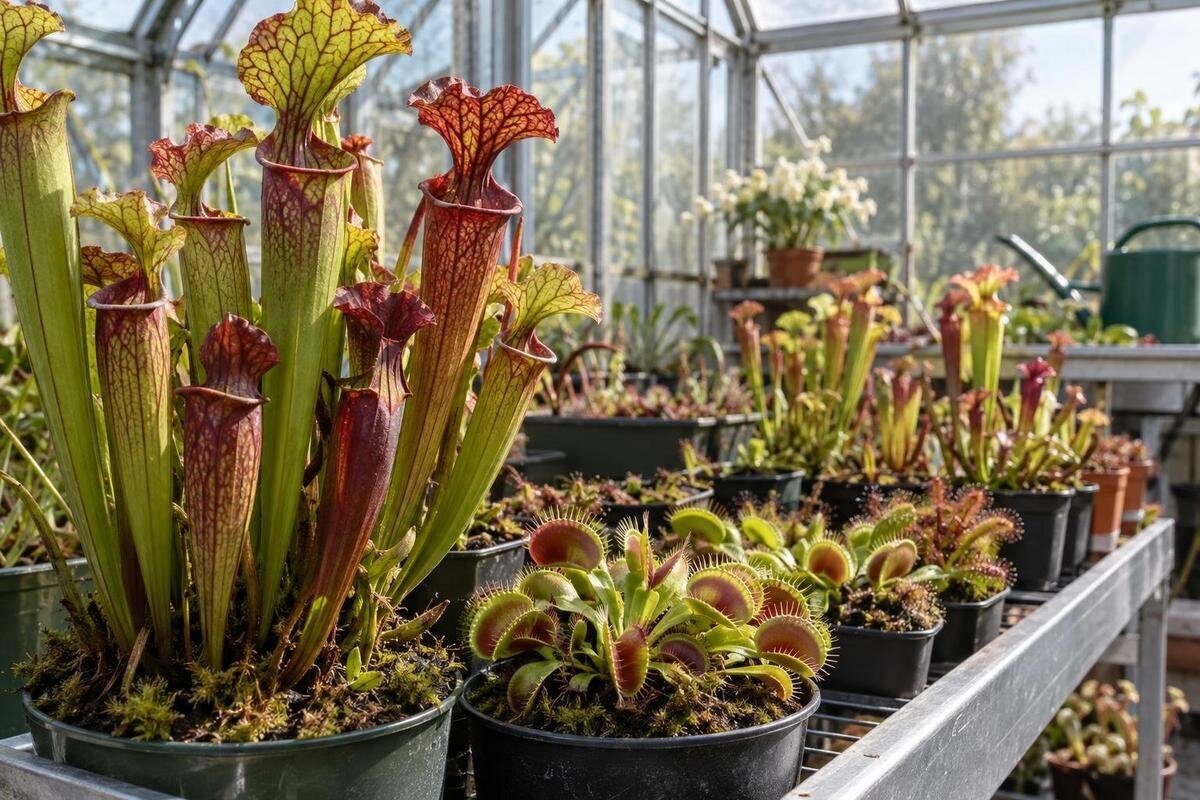
Carnivorous plants in a greenhouse
Growing carnivorous plants in a greenhouse works best when the collection is grouped by its actual ecology, not by the label “carnivorous.” A Venus flytrap, a North American pitcher plant, and a tropical Nepenthes can need very different light, night temperatures, watering patterns, and winter routines. A greenhouse can help you manage those conditions, but sunlight can also create sharp heat swings. This guide compares plant groups, water quality, growing media, airflow, dormancy, and greenhouse space without assuming one climate fits every species.

Choose a growing setup for the plant group
“Carnivorous plants” describes a way of obtaining nutrients, not a shared climate. Venus flytraps (Dionaea muscipula), many North American pitcher plants (Sarracenia), and temperate sundews such as Drosera rotundifolia are adapted to seasonal conditions. Tropical pitcher plants (Nepenthes) include species from warm lowlands and cooler mountain habitats. Sundews, butterworts (Pinguicula), and bladderworts (Utricularia) add still other growing patterns. Their needs for light, temperature, moisture, and a cool or dry rest are not interchangeable. A humid greenhouse is not automatically suitable for all of them.
Before buying plants or setting one greenhouse climate, note each plant’s botanical name, cultivar or hybrid, known origin, and recommended light, day and night temperatures, and seasonal routine. Common names such as “pitcher plant” can refer to unrelated genera. Group pots by shared requirements; keep plants needing different night temperatures, watering, or dormancy in separate, managed zones instead of applying one thermostat and one tray system to all. For a mixed collection, be clear about which group needs the most specialized conditions. If it cannot be managed separately, it may not belong in the same growing space. Labels and care notes help prevent mix-ups later.
Give each species the right amount of light
Many Venus flytraps and Sarracenia grow best with strong light and substantial direct sun. Too little light can contribute to weak growth, but color alone is not a reliable measure: cultivar, age, and other conditions also affect appearance. Many Nepenthes prefer bright, filtered light, though their tolerance varies by species and hybrid. A sudden move from shade to intense greenhouse sun can stress plants, so make changes gradually and watch for signs of scorching or declining growth. Do not assume that all benches receive the same light simply because they are under one roof.
Track how direct light shifts across the growing space and through the seasons. Tall plants can shade smaller ones, while glazing, nearby trees, and building shadows affect the light that reaches a bench. A light meter can help compare locations; phone apps provide only rough estimates. When comparing the Classic aluminum greenhouse options, mark the proposed bench positions on the selected plan and compare them with shadows at your site. Consider whether shade-loving plants would occupy a different bench from sun-loving bog plants. Check the glazing details before choosing shading, and leave room to move pots as seasonal light changes.
Choose low-mineral water and check its quality
Carnivorous plants commonly come from nutrient-poor habitats, and dissolved minerals in irrigation water can accumulate in pots and growing media. Cleanly collected rainwater, distilled water, and reverse-osmosis water are common low-mineral options. A handheld total-dissolved-solids meter can help compare water sources and track changes, but its reading does not identify individual minerals or detect every contaminant. Rather than relying on one numerical cutoff for the entire collection, compare your water results with guidance for the plants you grow. Check the water you actually plan to use, because quality can vary by source and over time.
Avoid water passed through a sodium-exchange softener, and do not assume that bottled mineral or spring water is suitable. Use tap water only after checking its mineral content and suitability for the plants. A pale deposit on pot rims or trays is a reason to review the water source, though it does not identify the cause by itself. For a compact layout such as one of the Lean-To Greenhouse configurations, plan a convenient place for covered water containers without blocking the aisle or door. Estimate how much water your collection uses between refills, and keep containers labeled so suitable irrigation water is not confused with cleaning supplies.
Match the growing medium and watering method
Ordinary potting soil, compost, and garden soil can contain more nutrients or minerals than many carnivorous plants tolerate. Choose a medium intended for the genus you grow, and avoid adding fertilizer to it unless you have reliable, species-specific guidance. Bog-dwelling plants such as flytraps and many Sarracenia are usually grown in acidic, nutrient-poor media. Nepenthes commonly need a more open, airy mix that holds moisture while allowing excess water to drain. A recipe suited to one group is not a universal carnivorous-plant mix. If using a peat-free alternative, check that it is formulated for the plants rather than substituting a compost-rich soil.
Watering should reflect how the roots grow. Venus flytraps and many Sarracenia are often grown with their pots standing in a shallow tray during active growth; adjust practice for the season and the plant’s needs. Nepenthes are generally kept moist but not waterlogged, with water allowed to drain through the pot rather than leaving it continuously submerged. Keep trays separate where plants need different moisture levels, and do not let mineral-rich runoff reach another group. When reviewing the Limited Edition aluminum greenhouse layouts, allow access to remove and clean each tray. Pots should remain easy to lift out without disturbing neighboring plants, and drainage should not spill onto stored media or supplies.

Monitor greenhouse temperature and airflow
A greenhouse can warm quickly in sunshine, so outdoor weather reports do not tell you exactly what plants experience inside. Record daytime highs and overnight lows with a thermometer or logger placed near the plants, not only at the entrance. Temperatures can also differ between a sunny upper shelf and a low bench. If the collection includes groups with different requirements, compare readings in each growing zone over both sunny and cloudy days. Relative humidity readings are useful context, but humidity alone does not show whether a plant has the right temperature or enough light.
Ventilation helps limit overheating and stagnant, humid air. Air movement matters, but avoid exposing sensitive plants to conditions they cannot tolerate. Shading can reduce direct light and heat at the same time, so assess both after making a change rather than assuming one adjustment solves everything. For a configuration from the T-Model Greenhouse range, check vent positions, opening dimensions, and operation against your proposed bench arrangement. Keep tall plants and shelving clear of openings. Also consider how ventilation will be managed while you are away; opening a door occasionally is not a dependable plan for controlling daytime heat.
Plan for winter dormancy in temperate species
Venus flytraps need a winter dormancy, and many Sarracenia and temperate sundews also have a seasonal rest. Growth often slows as days shorten and temperatures cool; some leaves may brown or die back. Cold tolerance is a separate question from the need for dormancy. For example, the Royal Horticultural Society lists Sarracenia purpurea as hardy to around 5°F and S. leucophylla to around 23°F. These are horticultural hardiness examples, not recommended dormancy temperatures or guarantees for exposed greenhouse pots. Check the exact species or hybrid and its growing situation before deciding how much winter protection it needs. Tropical plants do not automatically share this seasonal routine.
A greenhouse can shelter plants without providing the right winter conditions. Sun can warm it during the day, while an unheated structure can still become very cold; the temperature around a pot may differ from the reading on a nearby wall. Compare a plant’s dormancy needs with actual readings at its growing position before relying on a greenhouse for winter care. If considering the Pyramid-type greenhouse range, reserve an accessible position for dormant pots and a nearby temperature sensor. Continue inspecting those plants even when growth has slowed. Decide in advance where they could be moved if recorded conditions fall outside their species-specific winter requirements.
Separate lowland and highland pitcher plants
Nepenthes illustrate why a single “tropical” setting is not enough. Lowland and highland growing groups have different temperature patterns: lowland plants generally need warmer nights, while highland plants generally need cooler nights. Those labels help narrow the choice, but they are not complete care instructions. Hybrids can also differ from either parent in their growing requirements. Before buying, obtain day and night temperature guidance for the exact plant from a specialist grower, then compare it with greenhouse records. If a plant is sold only as “tropical pitcher plant,” ask for its identity before deciding which growing zone it belongs in.
Measure overnight temperatures as carefully as daytime highs: a greenhouse that reaches a suitable daytime temperature may stay too warm at night for a highland plant. Many Nepenthes appreciate humid air, but humidity does not replace suitable temperature, light, and airflow. Some growers keep plants with different requirements in separate, monitored enclosures within a greenhouse; those enclosures also need attention to heat and ventilation. If you want space for clean pots or media, the aluminum greenhouse with built-in storage is one catalog option. Check the selected layout; the product name does not establish that the storage area is a separate climate-controlled growing zone.
Arrange mixed collections by light, height, and moisture
Organize benches around the conditions plants need, not just their appearance. Put groups with comparable light and temperature requirements together, and keep trays or saucers separate when their watering differs. Leave access to pots for watering, inspection, and repotting; a tightly packed display makes it harder to notice mineral deposits, pests, or changes in growth. Consider mature size as well as the size of a newly purchased plant. Sarracenia can produce upright pitchers, while many Nepenthes develop climbing stems that need room above or beside the pot. Keep larger plants from shading smaller ones.
Some Mexican Pinguicula change to compact, succulent leaves during a drier seasonal phase, while other butterworts and bladderworts follow different routines. Place plants with changing moisture needs where their pots can be removed from shared trays without rearranging the entire collection. Height deserves similar attention: a climbing plant needs accessible support, not just an empty space above it. When comparing the Prestige Greenhouse configurations, check clear height at the intended growing positions, door access, and the space available around benches. Sketch mature plants rather than newly purchased specimens, and leave their leaves and pitchers clear of walkways and moving vent components.

Plan space for an expanding collection
Estimate future space by listing the plants you intend to keep, their mature sizes, and how quickly you expect the collection to expand. Reserve a place to inspect new arrivals before adding them to established groups; a spare corner beside existing plants does not provide meaningful separation. Repotting also needs temporary room for empty pots, fresh media, and plants waiting to return to their benches. Keep this workspace distinct from the growing trays so spilled materials are easier to collect. A layout that accommodates these occasional tasks can remain manageable as the collection grows, rather than becoming crowded after the next purchase.
For a larger collection, the Orangerie greenhouse range lists floor areas from 506 to 753 sq ft. Compare the selected plan with a sketch showing growing benches, working space, water storage, and clear walking routes. This helps distinguish space you can use for plants from space needed to care for them. Consider whether benches can be rearranged as climbing plants mature or the balance between growing groups changes. A larger footprint also means more positions to monitor and more pots to maintain. Choose an arrangement that fits the collection you can care for consistently, rather than filling every available surface immediately.
Keep records and respond to plant changes
Inspect plants as part of routine watering. Look for new growth, changes in leaf or pitcher development, pests, and mineral deposits, and compare each plant with its normal seasonal pattern. A Venus flytrap trap that does not close on cue, or a sundew with less visible dew, is not enough by itself to identify a problem. Review recent changes in light, temperature, water, and growing medium before drawing conclusions. Check new acquisitions before placing them beside established plants, and keep trays and tools clean to reduce the chance of spreading pests or other problems through the collection.
Keep a brief record of the water source, any TDS readings, greenhouse highs and lows, changes in shading or ventilation, and seasonal growth. This makes it easier to distinguish an expected dormancy from a problem caused by a recent change. Adjust one condition at a time where practical, then observe the response rather than repeatedly changing several things at once. Most healthy carnivorous plants can catch small prey on their own; do not add food or fertilizer as a substitute for suitable light, water, and growing conditions. Consistent observation is more useful than forcing every plant into the same routine.
Frequently asked questions
Can I keep all my carnivorous plants in one greenhouse?
Only if their needs can be met in the same conditions or in separate, well-managed zones. A Venus flytrap’s winter dormancy and a lowland Nepenthes’ warm nights, for example, call for different seasonal care. Group plants by their actual species or hybrid requirements, not just by the fact that they are carnivorous.
Can I water carnivorous plants with tap water?
That depends on the water’s mineral content and quality. Test it rather than assuming that tap water is suitable; a low total-dissolved-solids reading is a useful screening measure, not a complete test for every contaminant. Cleanly collected rainwater, distilled water, or reverse-osmosis water are common low-mineral choices.
Do carnivorous plants all need high humidity?
No. Some tropical pitcher plants appreciate humid air, but humidity needs vary by species and hybrid. Venus flytraps and many Sarracenia are temperate plants, not tropical greenhouse plants. In any group, high humidity without adequate airflow can create problems, and it cannot make up for unsuitable light or temperature.
Do Venus flytraps need a winter dormancy?
Yes. Venus flytraps are temperate perennials with a seasonal winter rest. Many Sarracenia and some other temperate carnivorous plants also need a cool dormant period. The conditions differ by species and growing origin, so check the requirements of the plants you have and measure the greenhouse climate rather than assuming it provides the right winter conditions.
Should every carnivorous plant sit in a tray of water?
No. Tray watering is commonly used for Venus flytraps and many Sarracenia during active growth, with practice adjusted to season and conditions. Nepenthes generally need a moist, airy medium that drains freely rather than standing in a water tray. Match watering to the plant’s growing group and keep trays separate where groups have different needs.
A workable greenhouse collection starts with the needs of the plants, not a single temperature or watering schedule. Keep temperate bog plants on their seasonal cycle, research Nepenthes by species and growing group, and use low-mineral water. Record conditions where plants actually grow. When two groups need conflicting temperatures or seasonal care, separate their growing zones or choose a different place for one group rather than forcing them into the same routine.
