
A Greenhouse for Cacti and Succulents
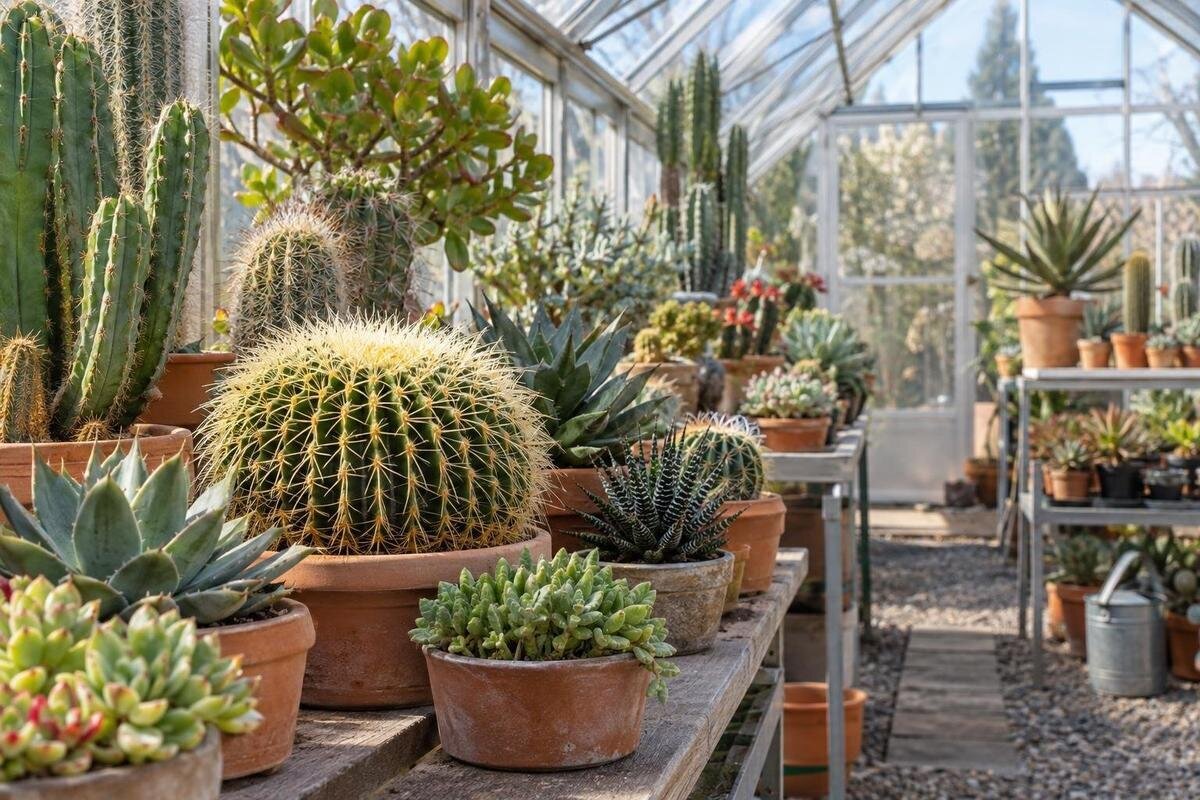
Cactus and succulent greenhouse guide
A greenhouse can keep winter rain off a cactus collection, extend a bright growing season, and make pots easier to organize. It does not automatically create desert conditions: sunlight can heat an enclosure quickly, overnight temperatures can still fall, and limited ventilation can allow moisture to accumulate. A workable setup begins with the plants’ identities and growing habits. Desert cacti, forest cacti, tender rosette succulents, and cold-hardy outdoor species may share a building, but they should not all receive the same light, watering, or winter treatment.

What a greenhouse can and cannot do
A greenhouse changes the exposure around plants; it does not set a climate by itself. Its roof can keep rain off containers and its enclosure can shelter a collection from wind, but transparent walls also admit solar heat. On a sunny day, interior air may rise well above the outdoor temperature; after sunset, an unheated structure may cool sharply. Summer overheating and winter frost can therefore happen in the same building. A warm-looking afternoon is not evidence that a frost-sensitive plant will be safe overnight. Observe conditions where the pots sit rather than treating the greenhouse as a fixed warm zone.
Be clear about the purpose before choosing a layout. A rain shelter for plants that need a dry winter rest has different demands from a place intended to hold frost-tender plants through cold weather. A propagation area, display collection, and seasonal holding space also compete for bench area, access, and temperature control. Identify which plants need protection from wet weather and which need a reliably frost-free environment. A greenhouse without planned heat or a protected indoor fallback may solve the first problem but not the second. Keeping those goals separate prevents you from designing for one imagined cactus climate.
Separate plants by light and temperature needs
Record each plant’s species or, when that is unknown, its genus and growing guidance. The Royal Horticultural Society’s cactus and succulent growing guide distinguishes sun-loving plants from rainforest cacti such as Schlumbergera and Epiphyllum, which need partial shade and more frequent watering. Its general winter-rest guidance for many indoor cacti and succulents gives night temperatures of 46–50°F with minimal watering, but it treats winter-flowering Schlumbergera differently, recommending warmth and regular watering. That range describes a growing regime, not a universal cold-survival limit. These distinctions are useful when planning separate greenhouse zones; they are not a reason to assign every pot the same conditions. For each identified plant, keep a care record covering light exposure, active growing season, winter moisture needs, and cold tolerance. Record where the guidance came from so you can revisit it rather than relying on an unlabeled nursery pot or a remembered temperature. When comparing references, distinguish survival limits from recommended growing conditions and check whether the advice concerns plants in containers or in the ground. If you cannot identify a plant confidently, keep it accessible so you can observe it and adjust its care before assigning it to a permanent group.
Sort plants into practical groups: those suited to stronger sun, those needing filtered light, those that take a dry winter rest, and those that must stay above freezing. Label pots with the group and the lowest temperature you are prepared to allow; genus-level assumptions are not reliable for a mixed collection. Count the pots and allow room for future growth, working access, and temporary isolation of new arrivals. As a footprint reference, the Classic aluminum greenhouse line is listed from 40.6 to 302.3 sq ft. That range is not usable bench area, so plan from the selected configuration’s interior dimensions.
Choose a sunny site and an appropriate footprint
Choose a site for the light it receives through the growing season, not for one sunny afternoon. Buildings, fences, evergreen trees, and summer foliage can cast different shadows as the sun moves. Observe the intended bench area at several times of day and consider how nearby deciduous trees will look once in leaf. Cacti that need strong light can stretch in a persistently dim corner, while some succulents may need protection from harsh afternoon sun. Do not assume one orientation is best for every property; local shade and the needs of your collection matter more than a compass rule.
Check where rainwater drains around the proposed base, where roof runoff goes, and whether doors and vents can be reached without squeezing past benches. A wall-adjacent structure can be convenient, but the wall may shade one side or interrupt airflow; measure the actual site rather than estimating from a sketch. The Lean-To Greenhouse line is listed in sizes from 40 to 154 sq ft. Use those figures to compare footprints only: the selected model’s orientation, access, and ventilation still need to suit its location. Leave room to reach the structure and to move plants in and out.
Give strong light without sudden exposure
Strong light benefits many desert cacti, but moving a plant directly from a shaded shelf or indoor window into intense summer sun can cause bleaching or dry, brown scorch patches. Increase exposure gradually, checking the plant and adjusting its position or shade if new damage appears. Stretched new growth, loss of compact form, or unusually long gaps between leaves can indicate that a plant needs more light, although other care problems can look similar. Do not use one color change as a diagnosis; compare new growth with the plant’s previous form and conditions.
Plan separate light positions rather than giving every pot the brightest spot. A temporary shade layer or moveable pots can protect tender rosettes during acclimation, while brighter positions can be reserved for plants that need them. The Limited Edition aluminum greenhouse line is listed in footprints from 40.6 to 302 sq ft. Use the selected footprint to sketch zones and aisles, not to assume a particular light level or glazing performance. Confirm the configuration’s glazing and any proposed shading method, then observe how the arrangement works as the seasons change.

Ventilate before heat and humidity build up
Ventilation matters when sunlight raises the interior temperature and after watering adds moisture to pots and surrounding air. Openings should allow air to enter and warmer air to leave; a closed greenhouse can become much hotter than the outdoor forecast suggests. Check conditions near the plants, including on clear days and after sudden weather changes. Air movement is useful, but a fan does not replace adequate ventilation openings. If the growing plan depends on powered equipment, have the arrangement assessed by a qualified professional rather than improvising electrical work.
Make vent placement part of the model comparison: note what can be opened, where it sits relative to benches, and whether you can reach it easily. Ventilation needs depend on the floor plan and how densely plants are arranged, so area alone cannot answer the question. The T-Model Greenhouse Orangery is listed in versions from 178 to 323 sq ft; compare the exact version and ask for its documented opening layout, rather than relying on the overall range. Leave space between pots so air can move around them, and avoid crowding the glazing with trays and foliage.
Keep watering and moisture under control
Water according to the plant and its current conditions, not by a weekly greenhouse calendar. Many desert cacti and drought-adapted succulents are watered during active growth, then allowed to dry through their potting mix before another watering. The time this takes varies with pot size, growing medium, temperature, light, and species. Epiphytic cacti such as Schlumbergera generally need a less desert-like routine and should not be given the same long dry intervals without checking their care requirements. Use containers with drainage and a mix suited to the plant, and do not leave roots sitting in water.
Keep watering groups close enough for efficient care but separate trays and pots when they need different moisture levels. Watering can raise local humidity, and dense foliage or tightly packed containers may take longer to dry. Check the mix in representative pots instead of judging by greenhouse air; a dry surface does not always show what is happening around lower roots. After watering, check that drainage holes are unobstructed and empty any standing water from collection trays. Allow room to remove a pot for inspection without tipping it over neighboring plants. Large containers and small propagation pots may dry at different rates even when they hold the same species, so they should not automatically receive equal amounts of water. Keep watering equipment within reach, with hoses routed away from aisles. The Pyramid-type greenhouse line is listed from 60 to 203 sq ft. Compare the selected floor plan with the bench and aisle space needed to water, drain pots, and reach each group without moving the whole collection.
Match winter protection to cold tolerance
Do not assume an unheated greenhouse will protect a frost-sensitive plant. It can warm quickly in winter sun and still approach outdoor temperatures overnight. Measure cold conditions where plants actually sit, especially near exterior walls and at bench level, with a min/max thermometer or logger. Check readings in more than one part of the collection before treating a single measurement as representative of the whole building. A sensor beside a sunny wall may not describe conditions on a shaded shelf. Record overnight lows alongside outdoor weather so you can recognize vulnerable positions and the effect of extended cold spells. A cool winter rest is not permission for frost, and keeping a pot dry does not make a tender plant cold-hardy. Compare your measurements with documented guidance for each species. Set a relocation threshold that leaves time to move vulnerable pots before conditions reach their limits, and keep the route to their protected location clear.
Some sempervivums and stonecrops (Sedum) have greater cold tolerance than tender indoor succulents. The RHS identifies these as examples for outdoor cultivation, while emphasizing drainage and protection from excessive winter wet. This does not establish a winter temperature limit for every species, cultivar, or US location, nor does it make tender Echeveria equally hardy. Container roots also need consideration because they lack the surrounding ground’s protection. If comparing a structure for staging plants, the Prestige Greenhouse line has listed sizes from 40.6 to 302 sq ft. Footprint is not a temperature rating, so base winter plans on measured conditions.
Plan bench height, spacing, and access
Arrange benches so plants with similar light and watering needs are together without blocking access. Leave enough room to lift a pot out, inspect it, and turn a plant without knocking neighboring containers. Consider mature height as well as current dimensions: a young columnar cactus may eventually need more vertical clearance, while a wide rosette can occupy more shelf space than its pot suggests. Place taller plants where they will not shade smaller ones at the times those plants need light. Use stable surfaces suited to the full weight of pots and wet growing medium; do not infer a shelf load limit from the greenhouse floor area.
Storage for potting supplies and tools can prevent clutter around watering areas, but it should not take away growing space you expect to use. The aluminum greenhouse with built-in storage line is listed from 59.4 to 302 sq ft. Confirm how the selected configuration divides its interior between storage and plant area, and whether the doors and aisles leave pots accessible. Keep newly purchased plants apart until you have checked them for pests or other problems. A clear spot for temporary isolation is more useful than relying on the main display bench for every task.

Adjust care as weather changes
Adjust shade, vent openings, and watering as outdoor conditions change instead of applying the same settings from spring through fall. In spring, bring plants from dim indoor storage into stronger light gradually, and do not put frost-sensitive pots outside just because a warm day arrives. In summer, monitor the interior temperature on sunny days, not only the outdoor forecast; adjust shade and ventilation to the conditions your plants need. In fall, move frost-sensitive species before cold nights reach their verified minimum, while allowing hardy plants to follow their own seasonal pattern. Do not assume every succulent becomes dormant in winter: check the growing season for each group before reducing water. A plant producing new growth may need a different routine from a resting neighbor. When adding or removing shade, also check the plants behind it; changing one panel can alter exposure across several shelves. Make gradual adjustments where possible so you can judge their effects.
Keep a simple record of min/max temperatures, when each group was watered, and which plants show stretched growth, scorch, or prolonged wetness. Patterns can help distinguish a location problem from an issue with one pot and make it easier to adjust a single zone at a time. Check the greenhouse after storms and extended cloudy or hot spells for shifted shade, condensation, or blocked openings. Treat your notes as a guide, not as a substitute for species-specific growing information when a plant’s identity or needs are uncertain.
What to verify in the greenhouse specifications
Before ordering, note the collection’s mature height and approximate footprint, bench depth, required aisle, door clearance, and the number of pots you expect to overwinter. Compare usable interior dimensions with the full outer footprint. Confirm the selected model’s ventilation configuration, glazing details, and access rather than assuming those features from its listed area. For a large collection, the large backyard greenhouse line is listed from 506 to 753 sq ft. Treat that range as a size reference, not proof of a particular climate, vent capacity, or winter rating.
Ask for specifications that apply to the exact size and configuration, including interior height where tall plants will sit and how vents are operated. Check whether local wind, snow, drainage, or base conditions call for professional assessment; have qualified installers handle structural, heating, or electrical questions. If you will keep frost-sensitive plants, compare your greenhouse plan with their documented temperature limits and decide what will happen during a prolonged cold spell or power outage. A structure chosen for the collection’s real needs and workable access is more useful than one that only looks spacious in a photograph.
Frequently asked questions
Will an unheated greenhouse keep cacti above freezing?
Not reliably. Sun can warm a greenhouse during the day, but an unheated structure may cool toward outdoor temperatures overnight. Measure the coldest conditions near the pots through winter. Keep frost-sensitive plants somewhere reliably frost-free unless the greenhouse has a suitable, professionally planned heating system.
Can desert cacti and forest cacti grow in the same greenhouse?
They can share a building if you can provide separate light and watering zones. Many desert cacti suit stronger light and a drier winter rest. Forest cacti such as Schlumbergera generally need bright, filtered light and more frequent watering; winter-flowering plants should not automatically receive the desert group’s winter routine.
Do all cacti need full sun?
No. Many desert cacti need strong light, but forest cacti such as Schlumbergera generally suit bright, filtered exposure. Even a sun-loving plant can scorch if moved abruptly from shade into intense summer sun. Acclimate plants gradually and adjust their positions if new damage appears.
How often should I water succulents in a greenhouse?
There is no reliable schedule for every species. Consider whether the plant is actively growing, how quickly its potting mix dries, and the light and temperature around it. Many desert cacti need the mix to dry between waterings; epiphytic cacti often need a different routine. Use containers with drainage.
Which cacti and succulents tolerate cold?
Some sempervivums and stonecrops (Sedum) are suitable for outdoor cultivation, but exact identity, drainage, and local winter conditions matter. Their hardiness does not apply to every plant sold as a cactus or succulent. Check species- or cultivar-specific guidance, including any extra protection needed when roots are in containers rather than the ground.
Treat the collection as a set of related but distinct growing groups. Strong light suits many desert cacti, while forest cacti and some rosette succulents need different exposure; winter rest, watering, and cold tolerance vary just as much. Choose a site and footprint that leave room for light zones, circulation, and access, then observe temperature and moisture where the plants sit. A greenhouse works best when it provides the specific shelter each group needs, rather than expecting every pot to share one climate.
