
Growing Ranunculus in a Greenhouse: Planting and Care
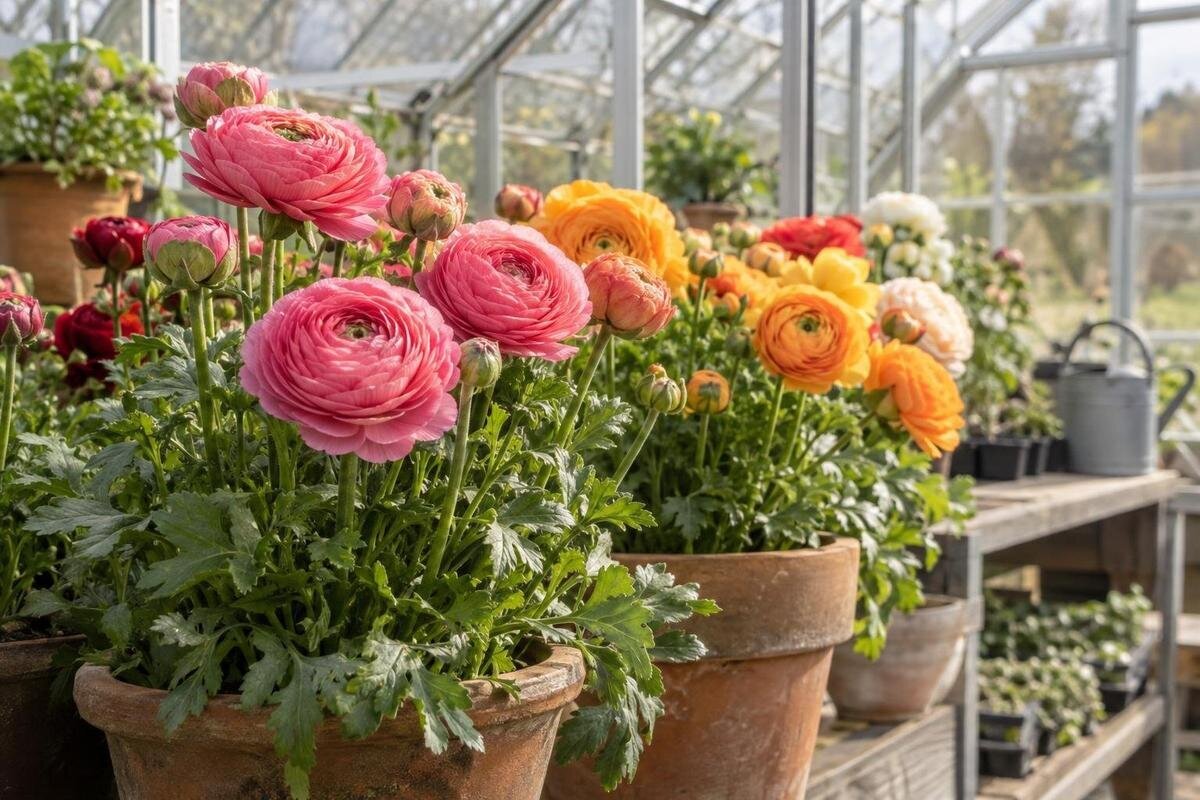
Greenhouse growing guide
Growing ranunculus in a greenhouse works best when the structure supports a cool, bright growing season rather than a warm, humid one. These flowers are started from dormant, claw-shaped planting material commonly sold as corms. They need a free-draining root zone, steady moisture once growth begins, and ventilation to keep sunny afternoons from overheating the crop. Under cover, you can manage exposure to rain, but a greenhouse does not erase seasonal temperature swings. This guide follows the crop from corm selection through flowering, drawing on the Royal Horticultural Society’s guidance for Persian buttercups. Match planting dates to your local conditions rather than importing another region’s seasonal calendar.

Ranunculus are a cool-season crop
The ranunculus discussed here are Persian buttercups, Ranunculus asiaticus, rather than the meadow or aquatic buttercups in the same genus. Their dormant, claw-shaped tuberous roots are commonly sold as corms. The Royal Horticultural Society recommends a cool greenhouse and bright light for this crop. A greenhouse can shelter leaves and flowers from rain, but cover alone does not set the temperature. On a bright day, an enclosed house can warm quickly; at night, it can still lose heat. Plan a cool-season planting window rather than treating ranunculus as tropical plants to keep warm all year.
Choose planting dates according to local weather and the growing space. In places with mild winters, fall planting can give corms time to establish before late-winter or spring flowering. Where winters are colder, growers may schedule planting later under cover, following local advice and the corm supplier’s guidance. An unheated greenhouse can still freeze, so do not assume that planting in fall is safe everywhere. Consider soil conditions, expected nighttime temperatures, cultivar guidance, and how much bright daylight remains for active growth. If warmth arrives before flowering is finished, the display may be shorter; prolonged cold can slow emergence and growth.
Temperature and light set the flowering pace
The Royal Horticultural Society’s ranunculus growing guide gives a documented example of temperature management: growing Persian buttercups below 59°F produces compact plants and delays flowering. That observation does not establish a universal daytime and nighttime schedule, or a safe minimum for newly planted corms. Ask your supplier for guidance for the cultivar and stage you are growing. Use a minimum-maximum thermometer near the foliage to record daytime peaks and overnight lows; an outdoor reading may not reflect conditions around the plants. Compare those records with emergence and flowering dates so you can see how your own greenhouse affects the crop.
Provide bright light, as the Royal Horticultural Society recommends for Persian buttercups under cover. Its guidance does not specify a daily sunlight-hour requirement, so avoid treating a single number as a guarantee of good growth. Check how sunlight moves across the growing area: framing, nearby walls, and neighboring plants can shade a bed even when the greenhouse looks bright at midday. Short winter days also limit the available light. When sunshine raises the temperature, open the available ventilation rather than automatically applying heavy shade. If temporary shading is needed to manage intense sun, check how much light it removes from the crop.
Plan the greenhouse footprint and airflow
Sketch the growing area before ordering corms. Allow space for beds or pots, an aisle, and room to open the door and tend the crop without stepping through foliage. Include a place for trays if you intend to pre-sprout corms. The Limited Edition greenhouse with built-in storage is listed in sizes from 59.4 to 302 sq ft. Compare the layout of the size you are considering with your planting plan, including the storage area. Keep supplies out of the crop-care aisle, and make sure you can carry a watering can or harvest bucket through the door without catching stems.
Keep openings and paths for air exchange clear as plants fill out. When comparing greenhouse plans, look at the actual vent arrangement, where doors open, and whether benches or storage would block airflow. Check internal height if you plan to use raised beds, benches, or taller cultivars, since floor area does not tell you how much working clearance is available. A thermometer near the crop helps reveal hot spots that a reading by the door could miss. A well-planned layout makes it easier to ventilate and tend the plants without brushing wet leaves or damaging stems.
Choose sound corms and rehydrate them carefully
Start with corms that are firm and intact, without soft spots, visible mold, or a sour smell. Their naturally dry, claw-like shape can look unusual, so judge them by condition rather than expecting a smooth, rounded bulb. Check the variety label and keep different colors or cultivars separate from the moment they arrive. If you are unsure whether a corm is viable, ask the supplier before planting a whole batch. Sorting questionable material out early reduces the chance of carrying a problem into the bed, where it can be harder to identify and remove.
Rehydrate dried corms according to the supplier’s instructions rather than choosing an arbitrary soaking time. The Royal Horticultural Society describes soaking Persian buttercup tubers for a day before planting, but a supplier may specify a different treatment for its planting material. Use a clean container, keep batches labeled, and drain them before planting. If the supplier recommends pre-sprouting, follow its directions for the medium and conditions; do not assume that soaked corms can remain indefinitely in a wet tray. Handle any emerging roots gently. The Bloomcabin Prestige Greenhouse listing spans 40.6 to 302 sq ft. When planning a tray station within that footprint, reserve an accessible surface where labeled batches stay separate from harvested flowers and used pots.

Prepare a well-drained bed or container
Ranunculus need a loose growing medium that drains freely. In a greenhouse bed, break up compacted soil and address standing water before planting; a raised bed helps only if excess water can drain away. A soil test can guide pH and nutrient adjustments more reliably than adding amendments by guesswork. For containers, use a suitable potting mix and pots with drainage holes, and do not leave them sitting in water-filled saucers. Avoid planting into cold, sodden soil simply because the greenhouse is available. A well-aerated root zone is especially important while corms are establishing.
Clear old plant debris and clean reused pots before bringing in a new crop. Do not reuse growing medium from plants that showed rot or another disease problem. Check that drainage holes are open and that water can escape from the container’s base when it is in its intended position. The Classic aluminum greenhouse listing gives size options from 40.6 to 302.3 sq ft. Decide whether your planting will use in-ground beds, raised beds, or containers before selecting a size. Containers let you inspect and move individual plants, while beds require access along the rows. Include the width of pot rims or bed edges in your plan rather than measuring only the planted soil.
Plant corms at a consistent depth and spacing
Set each corm with its claw-like points facing down. For container-grown Persian buttercups, the Royal Horticultural Society describes placing the tubers 4 inches apart and covering them with 2 inches of potting mix. The covering depth refers to material above the tuber, not the total depth of the planting hole. Treat this as a documented container example rather than a spacing rule for every cut-flower bed. Follow cultivar-specific supplier directions for your planting system, and leave room to inspect the plants as their leaves develop. Mark positions before planting so spacing stays consistent throughout each row.
After planting, label rows with the variety and date, then water gently to settle the medium without saturating it. Note how many corms went into each row so you can distinguish empty planting positions from delayed emergence later. The Lean-To Greenhouse listing spans 40 to 154 sq ft. For a planting plan in that footprint, measure the beds after allowing for access and work surfaces, then mark the intended spacing along each row. Keep labels visible as leaves develop, and avoid putting corms directly beneath a place where roof condensation repeatedly drips. A simple planting record makes it easier to compare emergence and flowering among varieties.
Water consistently without saturating the root zone
Before shoots appear, avoid keeping dormant corms in continuously wet soil. Once growth is established, aim for even moisture rather than a fixed watering schedule: check the soil below the surface and water when it begins to dry, allowing excess to drain. Beds and pots dry at different rates, so assess each growing area instead of treating the whole greenhouse as one unit. Water near the soil rather than over the leaves when possible, and avoid splashing soil onto foliage. The limited-edition aluminum greenhouse listing shows area options from 40.6 to 302 sq ft. When planning watering access, consider how you will reach the far side of each bed and where a hose can run without lying across stems. Recheck container moisture after sunny afternoons rather than assuming that yesterday’s watering is still sufficient.
Base feeding on the growing medium and the fertilizer instructions rather than assuming that every greenhouse crop needs the same treatment. Check whether a purchased potting mix already contains fertilizer, and use a soil test to guide amendments in an established bed. Keep a record of the product, application date, and amount so repeated feeding does not become guesswork. If leaves look pale or growth is weak, inspect moisture, drainage, roots, light, and temperature before adding more fertilizer. Similar-looking symptoms can have different causes, and feeding will not correct a waterlogged root zone. Ask the corm supplier for a feeding program appropriate to the variety and medium if you need more specific guidance.
Harvest flowers and manage the end of the cycle
For cut flowers, harvest before the flowers are fully open, as the Royal Horticultural Society advises for Persian buttercups. Check the cultivar supplier’s guidance for a more precise harvest stage rather than assuming all varieties open at the same rate. Use clean, sharp shears without damaging nearby leaves or developing shoots, and place cut stems promptly in a clean container of water. The T-Model Greenhouse Orangery listing spans 178 to 323 sq ft. If your plan includes a flower-handling area, allocate it separately from propagation trays and used growing supplies. Keep buckets stable and out of direct sun while you work, and record the first harvest date for each variety to help compare future planting batches.
After flowering, distinguish plants that are declining unexpectedly from those finishing their seasonal cycle. Note whether the change affects the whole planting or only scattered plants, and inspect any soft or decaying material rather than assuming every collapse is dormancy. If you intend to retain corms, get lifting, drying, and storage instructions from the supplier before clearing the bed; do not treat an empty greenhouse as a suitable storage environment by default. Saving planting material is not essential: the Royal Horticultural Society recommends growing Persian buttercups as annuals and replacing them each year. Include that option when planning next season’s order, especially if the current crop has had unresolved disease problems.

Prevent rot and foliage disease with routine sanitation
Waterlogged soil and stagnant, damp air raise the risk of corm or root rot and gray mold. Good drainage, sensible spacing, and regular ventilation help reduce conditions that favor these problems. Inspect the base of plants and both sides of leaves as the crop develops, especially after a spell of cool, wet weather. A soft corm, collapsing plant, or gray growth is a reason to investigate, but appearance alone may not identify the cause. Remove obviously damaged material promptly and avoid leaving fallen leaves or spent flowers in the bed, where they can hold moisture and make scouting harder.
Check the crop at least weekly for spreading discoloration, mold, aphids, or thrips, and look more often when conditions change. Examine buds and new growth as well as older leaves. Clean tools between suspect plants, remove affected debris, and avoid carrying wet soil from one bed to another. The Large backyard greenhouse listing gives options from 506 to 753 sq ft. In a planting spread across that much space, divide your inspection route into labeled rows or bed groups so distant corners are not overlooked. Record where symptoms first appear and whether they spread. If plants continue to decline, seek identification from a local extension service or plant diagnostic clinic before choosing a treatment.
Match greenhouse specifications to your site
Before choosing a greenhouse, observe the proposed site during the season when you intend to grow ranunculus. Winter shade from a building may cover a planting area that receives plenty of summer sun. Note nearby trees, roof overhangs, and the hours when direct light reaches the site. Consider whether the space will also hold plants that need warmer conditions: one shared growing area may not suit both crops at the same time. If you already have a greenhouse, records of daytime peaks and overnight lows are more useful than an assumption that enclosure makes the site suitable. Use those observations to decide whether your planting window is realistic.
Use product specifications to assess what the structure can provide and what you may need to manage separately. The Pyramid-type greenhouse listing includes size options from 60 to 203 sq ft. Ask for the selected model’s layout drawings, glazing details, and available ventilation configurations rather than inferring them from the name or exterior photographs. Confirm which openings and controls are included and which are optional. If your planned season requires heating or powered equipment, discuss the intended conditions and installation requirements with the supplier and qualified installer. Floor area alone cannot establish frost protection or cooling capacity; the useful comparison is between documented features, your site observations, and the season you intend to grow.
Frequently asked questions
What temperatures suit ranunculus in a greenhouse?
Provide cool conditions and check the cultivar supplier’s guidance. The Royal Horticultural Society reports that growing Persian buttercups below 59°F produces compact plants and delays flowering. That is a documented response, not a complete day-and-night temperature schedule or a safe minimum for every growth stage. Record temperatures near the crop rather than relying on outdoor readings.
How much light do greenhouse ranunculus need?
Provide bright light, as the Royal Horticultural Society recommends for Persian buttercups in a cool greenhouse. Its guidance does not establish a fixed daily sunlight-hour target. Check shade from framing, buildings, and other plants throughout the day, and manage overheating with ventilation without unnecessarily darkening the growing area.
How deep should I plant ranunculus corms?
Place the claw-like points downward. The Royal Horticultural Society’s container method uses 2 inches of potting mix above the tubers and 4 inches between them. This is a container-growing example; use the cultivar supplier’s directions when it specifies a different depth or spacing for your planting system.
Why are my ranunculus corms rotting?
Waterlogged soil, poor drainage, or keeping dormant corms too wet can encourage rot. Check moisture around the corms and make sure water can drain from the bed or pot. Inspect nearby plants and remove clearly decayed material. If losses continue despite correcting wet conditions, seek a diagnosis rather than assuming that every case has the same cause.
Can I save ranunculus corms after flowering?
You can ask the supplier for a suitable lifting and storage method if you want to try retaining them, but saving corms is not necessary. The Royal Horticultural Society recommends growing Persian buttercups as annuals and replacing them each year. Do not retain visibly decayed material, and resolve unexplained crop losses before deciding what to keep.
Successful greenhouse ranunculus begin with a cool planting window, bright light, and a root zone that stays moist without becoming waterlogged. Use the documented growing examples as context, then follow cultivar-specific directions for planting and temperature management. Keep notes on emergence, greenhouse temperatures, and the first flowers so the next planting reflects your own conditions. Once flowering ends, decide whether to replace the plants or obtain a suitable storage method for retained corms. The greenhouse is most useful when you manage its daily conditions, not simply when you put the crop under cover.
