
Growing Sweet Peas in a Greenhouse for Earlier Flowers
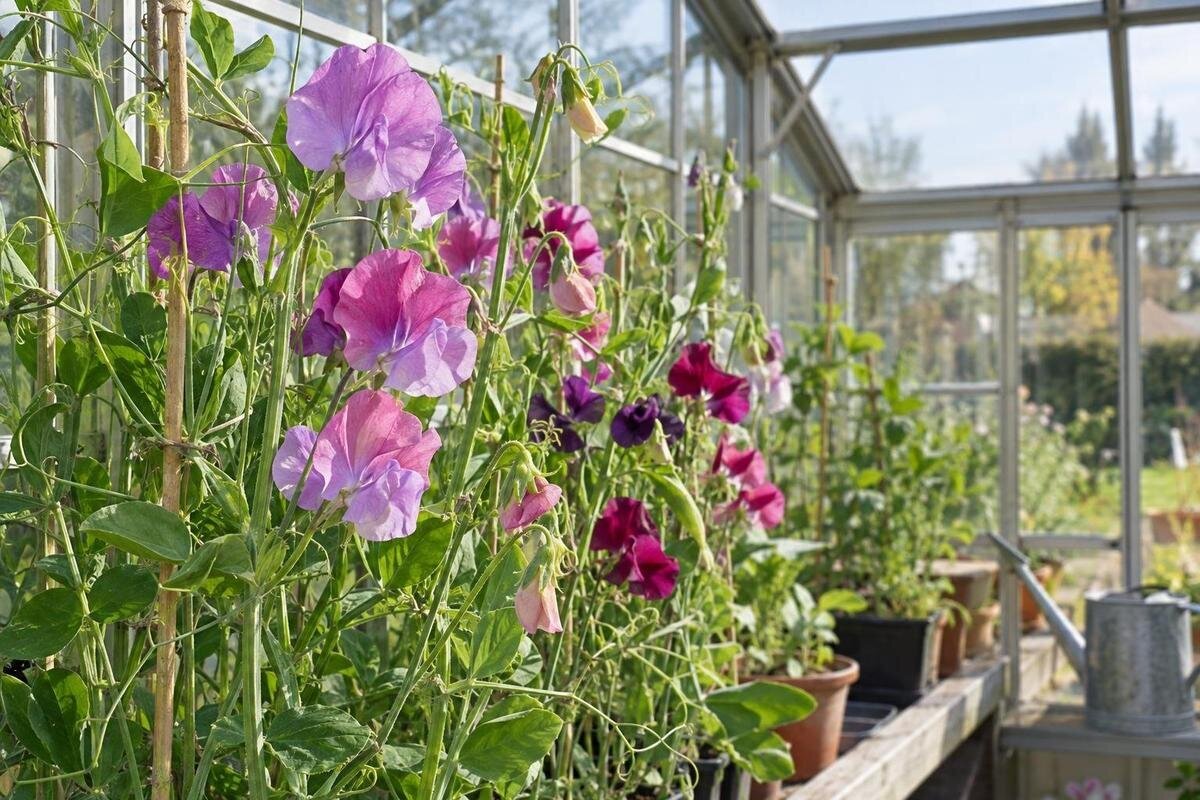
Cool-season cut flowers
Sweet peas can flower ahead of the outdoor season under glass, but earlier blooms depend on more than sowing sooner. These cool-season climbers need strong winter light, a cultivar suited to shorter days, sturdy vertical support, and a greenhouse that can be ventilated before it overheats. An unheated structure may shelter plants without keeping nights warm, while sunny days can bring rapid temperature swings. This guide explains how to schedule an early cut-flower crop, raise seedlings without disturbing their roots, manage water and airflow, and keep vines producing accessible stems.

What a greenhouse changes for sweet peas
Growing sweet peas under glass can advance the first cut by sheltering seedlings from wind-driven rain and giving you a protected place to establish them before outdoor planting time. The benefit depends on the greenhouse: an unheated structure is not frost-free, and a clear winter day can warm it far above the outdoor air. Treat glass as a way to manage exposure and monitor the crop, not as a substitute for matching variety and sowing time to your climate. Heat alone is not an advantage; warm, dim conditions encourage soft, stretched growth. Decide whether your goal is winter flowers, very early spring stems, or protection for plants that will flower as days lengthen.
Before choosing plant numbers, reserve space for the whole cut-flower routine: a bed or deep containers, vertical netting, a usable aisle, and somewhere to set a clean bucket. Sweet peas climb several feet, depending on cultivar, so floor area alone does not describe the space required. Draw the bed, support line, doors, and vents on the selected greenhouse plan. The Pyramid-type greenhouse is one listed format, with versions from 60 to 203 sq ft; compare the exact size drawing with your intended row instead of deciding from the product name or outside footprint. If you will grow in pots, allow room to move them without tangling the vines.
Choose the flowering type before sowing
Sweet peas are cool-season flowers, but flowering time varies with genetics and day length. Look for terms such as winter-flowering or short-day for cultivars bred to flower under shorter winter days; a spring-flowering type may remain leafy until days lengthen. Seed catalogs also distinguish early, midseason, and later selections, but these labels are relative. Compare the sowing window and flowering notes for the named strain rather than assuming all sweet peas behave alike. For an early cut crop, choosing the right type is a scheduling decision, not merely a color preference. Check that the variety is intended for the season you have in mind and is suitable for cutting.
Work backward from the first harvest you want using the packet’s seasonal sowing advice and flowering guidance, then account for local fall and winter conditions and whether the greenhouse is heated. In a mild climate, a fall sowing of a winter-flowering strain may establish plants for earlier cutting; in a colder unheated house, low soil and air temperatures can stall growth. If space permits, sow a small first batch and a second a few weeks later. Staggering spreads risk and harvest, although both batches may flower together as light and temperature change. A small trial also shows how the variety responds to conditions in your own greenhouse.
Give sweet peas the best available light
Sweet peas need a sunny position; the Royal Horticultural Society recommends full sun for these climbers. In a greenhouse, give the row the brightest available location rather than trying to compensate for shade with extra warmth. Note when direct sun reaches the plants during the season you intend to grow them, not just during summer. A sunny position still has fewer daylight hours in winter, and the chosen cultivar must suit that season. Lower winter sun throws longer shadows from rooflines, trees, fences, and greenhouse framing. Dusty glazing, shade screens, tall benches, and neighboring crops can further reduce the light reaching the vines.
Map shadows in the morning, midday, and afternoon before setting the trellis; a location that looks sunny at noon may be shaded for much of the day. Keep taller crops from screening the vines, and clean glazing when dust or algae visibly reduces light. When comparing structures, use the actual orientation, glazed roof and wall layout, and site plan rather than relying on a model name. The Bloomcabin Prestige Greenhouse is listed in sizes from 40.6 to 302 sq ft, but neither the model nor its size range tells you how much winter sun a particular site receives.
Manage cool temperatures and ventilation
Sweet peas are cool-season flowers, not crops to keep as warm as possible. The Royal Horticultural Society recommends a cold greenhouse or cold frame for overwintering fall-sown seedlings to help prevent leggy growth. That is a useful example of protected cultivation without tropical conditions, rather than a calendar to copy across US climates. Monitor sunny-day warming as carefully as overnight cold, and follow any cultivar-specific temperature guidance from the seed supplier. A heater may protect a crop from cold, but it cannot supply missing daylight. If midwinter cutting is your goal, confirm that the variety is intended to flower during that season before planning heated production.
Place a min-max thermometer near the vine canopy, shaded from direct sun, and check it before midday heat peaks. Open available vents or doors early enough to release hot air, then adjust the airflow as outdoor temperatures fall; avoid directing a cold draft at tender seedlings. If openings are manual, build a repeatable check into your routine on clear days. The Bloomcabin Orangerie is listed in sizes from 506 to 753 sq ft, but floor area alone does not establish airflow. Check the selected configuration’s vent locations, opening method, and access to understand how easily you can exchange air.

Sow in deep pots and transplant carefully
Sweet-pea roots grow downward quickly, so use deep pots or root trainers instead of shallow plug trays. Sow one or two seeds per container at the packet’s depth. For a documented pot-sowing example, the Royal Horticultural Society recommends covering seed with about half an inch of seed mix and keeping it at about 59°F for germination. Follow the supplier’s instructions if they differ for your seed. If both seeds germinate, snip the weaker seedling at soil level rather than pulling it and disturbing the survivor. Use fresh, free-draining seed mix, and label each container with cultivar and sowing date. If you plan to soak or nick hard-coated seed, follow the supplier’s directions rather than treating it as essential for every variety.
Keep the mix evenly moist but not saturated. When roots reach the bottom of the container, transplant before they circle tightly; lift each root ball intact and set it at the same depth. If seedlings were raised in a warmer place, move them gradually into greenhouse conditions rather than exposing soft growth to a sudden change. Group cultivars by sowing date so their needs and flowering progress are easy to track. Seed trays and labels also take room: the greenhouse with built-in storage is listed in sizes from 59.4 to 302 sq ft; check the chosen plan to see how storage is arranged and what bench or bed space remains.
Prepare fertile, well-drained soil
Sweet peas need fertile but well-drained soil with room for roots, not a bed that stays saturated. If the greenhouse bed is compacted, loosen it before planting rather than trying to work wet soil; add mature compost where organic matter is lacking. A soil test is a better basis for pH or nutrient corrections than a general fertilizer schedule. Sweet peas suit neutral to slightly alkaline soil, but avoid adding lime or feed without a reason. For container growing, choose deep pots with drainage holes and fill them with potting mix rather than dense garden soil. Allow enough root space that the mix will not dry out between routine checks.
Water the root zone consistently as stems lengthen and buds form. Let excess drain, then check below the surface before watering again: a dry pot stresses plants, while waterlogged roots can rot. Greenhouse surfaces often dry before the deeper mix, so do not rely on the top inch alone. Pots may need closer attention on bright days, when a small volume of mix can warm and dry quickly. Avoid heavy, repeated nitrogen feeding, which can push leafy growth at the expense of flowers. The Classic aluminum greenhouse is listed from 40.6 to 302.3 sq ft; use the selected footprint plan to distinguish actual bed space from paths and container positions.
Set up support before the vines climb
Install support before planting or while seedlings are small. Sweet peas climb with tendrils, so taut netting, vertical strings, or a trellis gives each stem something to grasp. Choose support height and mesh spacing from the cultivar description; flowering vines need room for airflow and for your hands to reach stems. Guide young shoots before they knot together, and use soft ties only where needed. If the earliest possible first stem is the priority, do not pinch automatically: removing the growing tip can encourage side shoots but delays the leading shoot. Pinch only if more branches are worth that tradeoff.
Treat greenhouse framing and plant support as separate questions. Do not assume glazing bars can carry a crop trellis; check the greenhouse maker’s guidance or ask a qualified installer, and use freestanding support if an attachment is not approved. Keep the trellis clear of vents, doors, and the working aisle. The Lean-To Greenhouse is listed in sizes from 40 to 154 sq ft; check the selected plan’s usable depth and clear height before deciding where a vertical row will fit.
Cut flowers often to maintain stem quality
For cut flowers, harvest when most flowers on the stem are open but before the lowest blooms begin to fade. Do not rely on tightly closed buds to open after cutting; stems picked too early may never develop a full display. Use clean, sharp snips and cut the flower stem near its base without damaging the vine or nearby shoots. Cut when plants are firm rather than wilted, often early in the day, and move stems into a clean bucket of water promptly. Keep the bucket out of direct sun while you continue picking. Flower stage and stem length vary by cultivar, so compare a few cuts at different stages to find the best balance between a full display and vase life.
Frequent picking also helps keep the crop producing. Remove spent flowers before seed pods mature, because seed development can reduce continued flowering. During a flush, check every few days, cut healthy stems, and deadhead short or damaged flowers instead of leaving them to set seed. Keep the path clear so a bucket can pass without snagging tender growth. The Limited Edition aluminum greenhouse is listed in sizes from 40.6 to 302 sq ft; compare the exact plan for access to beds and room to turn with harvested stems.

Reduce humidity problems and catch pests early
Cool-season crops can still have pest and disease problems in a greenhouse, especially when vines are crowded or air is stagnant. Inspect shoot tips, leaf undersides, new buds, and stem bases at least twice a week. Aphid clusters, distorted new growth, stippling, white powdery patches, and gray mold on aging petals can signal different problems; remove badly damaged plant material and identify the cause before treating. Check the bed surface for fallen petals and leaves, which can stay damp and conceal early rot. Regular scouting catches small problems before they spread through a tangled row.
Leave the spacing recommended for the variety, water the soil rather than repeatedly wetting foliage, and ventilate to reduce trapped heat and humidity when conditions permit. Remove dead leaves and fallen petals, and clean reusable pots and tools between sowings. More ventilation is not useful if it sends a freezing draft through young plants, so balance fresh air with thermometer readings and plant response. The T-Model Greenhouse Orangery is listed in sizes from 178 to 323 sq ft; check the chosen configuration’s vent positions and access, since floor area alone does not show how air will move through the crop.
Use crop symptoms to refine the schedule
If vines are leafy but have no buds, first check the flowering type and the supplier’s seasonal guidance: a spring-flowering cultivar may not be ready to bloom during short winter days. Then review light, feeding, watering, and recorded temperatures rather than diagnosing from foliage alone. For weak stems or buds that fail to open, note whether the problem affects the whole row or only individual plants, and inspect for pests or damage. If seedlings stall, check root moisture, temperature, and whether they have outgrown their pots before resowing. Change one manageable factor at a time and record the response; overlapping symptoms rarely identify a single cause.
Keep a small crop log with cultivar, sowing and transplant dates, emergence, daily maximum and minimum temperatures if available, first bud, and first cut. Note stem length and problems as well. Compare the record with the seed packet’s schedule and your local weather, then adjust the next sowing date or cultivar. If the first flush arrives later than expected, use the actual interval to plan a later batch instead of simply heating the greenhouse more. Early stems come from aligning variety, light, and cool growing conditions, not forcing every plant to meet a calendar date.
Frequently asked questions
Can I grow sweet peas in an unheated greenhouse?
Yes, if the variety and sowing time suit your local conditions. An unheated greenhouse can shelter plants, but it does not guarantee frost protection. Check temperatures inside, especially overnight, and avoid assuming that sunny daytime warmth will carry through the night.
Which sweet peas flower earliest under glass?
Look for winter-flowering or short-day varieties described for flowering under shorter winter days. A spring-flowering sweet pea may stay leafy until daylight increases. Check the named variety’s sowing and flowering guidance; labels such as early or late can be relative.
Do greenhouse sweet peas need full sun?
Yes. The Royal Horticultural Society recommends full sun for sweet peas. Give greenhouse plants the brightest available position, while recognizing that short winter days can still limit flowering. Check seasonal shadows from trees and buildings, and keep neighboring crops from shading the vines.
Should I pinch sweet pea seedlings?
It depends on your goal. Pinching can encourage side shoots and more flowering stems, but it delays the first stem from the main shoot. If the earliest possible cut is your priority, check the variety guidance before pinching.
How often should I cut sweet peas?
Check the plants every few days once flowers begin opening. Cut usable stems before flowers fade and remove spent blooms before seed pods mature. Regular cutting helps keep the plants producing flowers instead of developing seed.
The most reliable route to earlier sweet pea stems is a season-appropriate variety, bright light, cool growing conditions, and support that makes regular cutting easy. Use the thermometer and your crop notes to respond to the greenhouse you actually have. Glass can extend the season, but good timing still comes from matching the plant’s needs to the light and temperatures available.
