
Overwintering Oleanders in a Greenhouse
GREENHOUSE CARE
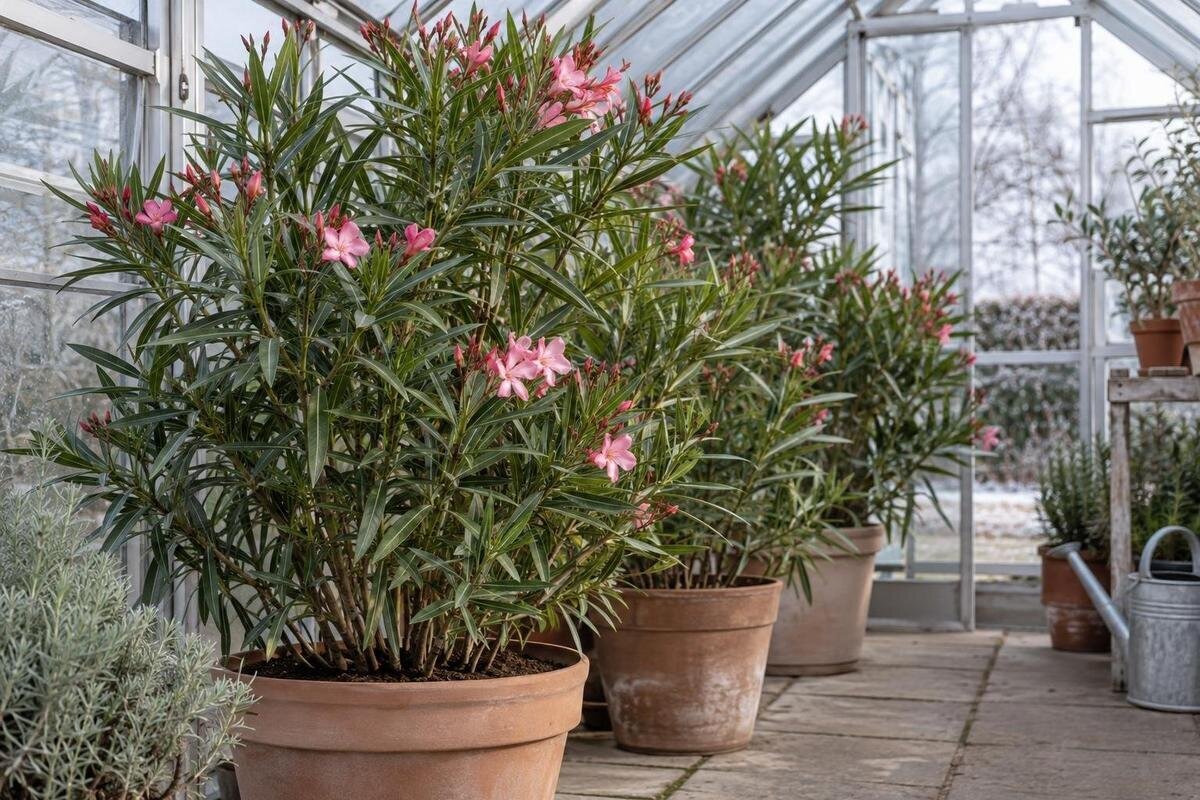
An oleander’s winter routine differs from that of a dormant, leafless plant: it stays evergreen, slows in cool conditions, and still needs good light as its water use falls. A greenhouse offers shelter, but glass does not guarantee frost-free nights, and sunshine can create sharp daytime temperature swings. Begin with readings where the pot actually sits, then adjust watering and airflow to those readings. Because every part of oleander is toxic if eaten, moving, pruning, and checking for pests also call for deliberate handling.

Oleander’s winter temperature and light needs
Oleander (Nerium oleander) is an evergreen shrub native from the Mediterranean region to western China. In a container, it generally slows during cool weather rather than becoming fully leafless, so its foliage still needs daylight. The Royal Horticultural Society recommends full light and good ventilation under glass, but its plant profile does not establish a winter thermostat setting for potted specimens. Plan for cool, bright, frost-protected conditions rather than using outdoor hardiness as a greenhouse temperature target. Cultivar, prior acclimation, the length of a cold spell, rootball moisture, and the temperature beside the pot all affect how the plant responds. Ask the supplying nursery for any cultivar-specific winter guidance.
The aim is to keep it cool without exposing it to freezing conditions or maintaining summer-like warmth in low light. Too much warmth with too little daylight can encourage soft, stretched growth; an unheated greenhouse can still become too cold during a winter cold spell. Roots in a container have less protection from temperature changes than roots planted in the ground, so monitor conditions near the rootball as well as the foliage. Move the oleander before temperatures fall outside the range you can maintain. Survival after one brief cold dip does not establish a safe minimum for future cold spells. An overnight minimum is more informative than a warm reading at noon.
Measure conditions where the pot will sit
Glazing shelters plants from wind and admits daylight, but it does not guarantee warmth after sunset. An unheated greenhouse can approach outdoor temperatures during a cold spell; sun may make the same space much warmer by midday. Use a min-max thermometer near the plant at foliage height, away from roof glazing or a warm wall. Record the overnight minimum and daytime peak for several days, including both a cold night and a sunny day. A 60°F afternoon reading, for example, does not tell you how cold the greenhouse will become overnight. If the pot will sit in another corner, repeat readings there; a central reading may miss a colder spot near a door or exterior wall.
Choose the position after checking its climate, not just its appearance at noon. Keep branches from resting against cold glazing and leave room to reach both sides of the pot. Measure the crown as well as the container so foliage does not block a path or hide the thermometer. If footprint is part of the decision, the Lean-To Greenhouse collection is listed from 40 to 154 sq ft. Use those sizes to sketch the plant and working space, then confirm the selected site’s exposure and winter lows. The product-area range is not a promise of frost protection.
Give evergreen foliage the brightest practical light
Oleander keeps its leaves through winter, and cooler weather slows growth without making a dark storage area suitable. Give it the brightest practical place in the greenhouse, away from opaque shelves and dense neighboring plants. Light matters especially if the space warms enough for new growth: shoots formed in dim conditions can become weak and stretched. Check the whole plant, including lower foliage, rather than judging brightness from the roof. If shaded leaves decline over several weeks, review placement alongside temperature, water, and pest signs instead of labeling every change as normal winter dormancy. Bright daylight remains useful even when growth is slow.
Oleander is sun-loving in active growth, but direct winter sun through glass can heat an area quickly, so pair good light with temperature checks. The Classic aluminum greenhouse collection is listed in footprints from 40.6 to 302.3 sq ft; when drawing a layout, verify the selected size’s orientation, glazing, and shade from shelves or other pots. A footprint figure cannot show how much light reaches one location. Leave enough clearance to inspect leaf undersides, and keep foliage from pressing against cold panes. If one side leans toward the light, turn the pot carefully during routine care if it can be moved safely.
Reduce winter watering and pause routine feeding
Cooler conditions and slower growth reduce water use, so a pot that needed frequent summer watering may stay moist much longer in winter. Check the potting mix, not the calendar: feel the surface and a little below it, bearing in mind that a large container can remain wet at its center after the top looks dry. Water when the mix has dried somewhat, but before the rootball becomes parched. If you know how the pot feels after watering and draining, its weight can provide a useful second cue. Avoid small, repeated splashes that wet only the surface; leaf appearance alone cannot tell you whether the roots need water.
Use a pot with unobstructed drainage and let excess water leave freely; empty any saucer rather than allowing roots to stand in runoff. The interval depends on pot size, mix, plant size, temperature, and airflow, which makes a weekly schedule unreliable. Persistent wetness in a cool greenhouse is a reason to pause and check drainage before watering again. Avoid routine fertilizer while oleander is cool and scarcely growing; extra feeding cannot compensate for low light and may encourage soft shoots. Resume seasonal feeding when warmer, brighter conditions support active growth, following the fertilizer label.

Keep air moving without exposing the plant to cold drafts
Air movement around an oleander helps prevent a damp pocket around its foliage, but the aim is not a cold draft. Keep it clear of walls, stored supplies, and dense canopies so air can circulate and you can see the leaves. Persistent condensation, wet foliage, and stale air can favor fungal leaf problems; a single misted pane does not by itself diagnose disease. Remove fallen leaves from the pot surface and greenhouse floor, and avoid crowding plants so closely that damp foliage cannot dry. Check conditions again after watering and on still days when condensation builds, because the balance changes with the weather.
Ventilate according to measured temperature and outside weather. On mild, sunny days, air exchange can limit excessive heat and stagnant humidity; during a cold snap, an open vent may pull the plant below its chosen winter range. Check the thermometer after airing rather than leaving an opening by habit, and recheck the plant’s actual position rather than assuming every corner is alike. The T-Model Greenhouse Orangery is listed from 178 to 323 sq ft; when comparing floor plans, verify the selected configuration’s vents and the room left around a potted oleander. Area alone does not specify vent placement or airflow.
Inspect for greenhouse pests through winter
Inspect the oleander when it enters the greenhouse and continue checking leaves and stems during winter. The Royal Horticultural Society identifies scale insects, mealybugs, and greenhouse red spider mites as potential pests on oleander under glass. Look under leaves, along veins, around stem joints, and at tender tips; sticky honeydew, hard or cottony bumps, pale stippling, and fine webbing are clues worth investigating. A few yellow leaves alone do not identify a pest, so check for insects and also consider temperature, light, and root moisture. Early inspection matters because a sheltered space can allow pests to persist unnoticed.
If you find insects, separate the pot from neighboring plants where possible and inspect nearby foliage; do not wait for a severe infestation to spread. Identify the pest before choosing a treatment, and use only a product whose label covers the plant and use setting, following its directions. Avoid homemade sprays that may injure leaves or leave residues in a shared growing space. If you need an inspection or isolation area, the Pyramid-type greenhouse collection lists footprints from 60 to 203 sq ft. Check the chosen plan: an area range alone does not create a separate plant zone, and you still need room to reach and inspect the oleander.
Handle pruning and plant debris safely
Treat every part of oleander as toxic if swallowed. The Royal Horticultural Society also warns that it is toxic to pets and recommends gloves and other protective equipment when handling it. Wear gloves and long sleeves when moving or pruning the plant, and use eye protection when cutting branches near your face. Keep hands away from your eyes and mouth while working, then wash your hands and clean tools before using them elsewhere. Keep the plant, fallen leaves, and cuttings out of reach of children and pets. Do not use oleander trimmings as food, tea, animal feed, or decorative material where someone might mistake them for edible foliage.
Pruning is not an automatic requirement when bringing oleander indoors. Check whether the plant actually needs damaged growth removed or its size reduced; the Royal Horticultural Society notes that restrictive pruning under glass may be needed in late winter. Measure the available space before deciding how much to remove. Wear protection even for a small cut, collect the material promptly, and follow local yard-waste guidance. Never burn oleander trimmings; smoke from burning the plant is harmful. If a dedicated place for clean gloves and tools is useful, the greenhouse range with built-in storage is a category to compare. Verify the specific layout, keep tools out of children’s reach, and do not assume storage is suitable for plant clippings.
Check door access and headroom before moving the plant
Measure the whole plant and the route into the greenhouse before moving a mature specimen. Include the pot, crown width, branches, and any supports; check the clear doorway opening, interior height at the chosen position, and space to turn without forcing branches against a frame. Leave room to reach both sides for watering and pest checks, not just enough floor area for the pot. A large container can become awkward to handle when wet, so plan help or suitable moving equipment rather than dragging it past glazing. If the oleander has grown since last winter, repeat the measurements before moving it.
The Limited Edition greenhouse range is listed in sizes from 40.6 to 302 sq ft, a useful catalog range for comparing footprints. The listing does not by itself show whether a particular selected size has the required doorway or clear height. Check the current drawing and product details for the model and size you intend to use, then compare them with your plant and route measurements. Consider where the door opens and whether access to ventilation controls remains clear after the pot is in place. Do not infer interior height from floor area.

Choose greenhouse space for the whole collection
Choose the greenhouse around every plant and task it must accommodate, not around the oleander alone. A single pot may fit easily on paper, yet the shrub still needs light, air around its foliage, and room for inspection; a collection adds paths, watering access, and space to separate plants during pest checks. Plants with different winter requirements should not automatically share the warmest or brightest position. Make a simple plan with mature plant size, routes, and any temporary isolation area before deciding how much floor space is useful. This helps avoid crowding the oleander behind other pots or buying space that is difficult to manage.
If you are planning for a wider collection, the large backyard greenhouse collection is listed from 506 to 753 sq ft. That is a footprint fact, not an indication that such a scale is needed for one oleander or that all parts will share the same climate. Compare the intended uses, ventilation, clear working paths, and the conditions you can monitor and maintain. A greenhouse used for several types of plants may need distinct placements because light, temperature, and humidity needs differ. Choose an arrangement that supports the collection and routine care you actually intend.
Verify ventilation and heating for the selected configuration
Before committing to winter use, check the selected greenhouse’s actual clear height, door access, glazing, and the position and operation of its vents. Ask how the chosen configuration handles ventilation in the conditions you expect; model names and floor area do not answer that question. If supplemental heat is part of your plan, verify compatibility and safe installation with the greenhouse manufacturer and a qualified professional rather than improvising electrical or fire arrangements. A thermometer near the plant remains necessary even with equipment, because results depend on the installed setup and weather. Check controls and access before bringing the oleander inside, while the space is still clear.
The Prestige Greenhouse collection is listed from 40.6 to 302 sq ft; compare the specific model’s documentation for height and ventilation rather than assuming those details from the collection name. Keep a simple winter log of minimum and maximum temperatures, watering, leaf changes, and pest findings. It can help show whether a problem followed a cold night, persistently wet mix, or pest discovery. In spring, ease the oleander toward stronger outdoor light and air when local conditions are suitable, rather than moving it straight from shelter into bright sun and wind.
Frequently asked questions
What temperature should I keep an oleander at in winter?
Aim for cool, bright, frost-protected conditions rather than summer-like warmth. The supplied horticultural guidance does not establish a universal winter temperature setting for potted oleanders. Ask the supplying nursery about your cultivar, and measure overnight lows beside the pot. Outdoor hardiness ratings are not thermostat recommendations for container plants.
Can oleander overwinter in an unheated greenhouse?
Only if readings show that the plant’s position stays suitably cool and frost-protected during cold weather. Glass does not make an unheated greenhouse frost-free, and temperatures can vary between corners. Track the minimum at pot level; if the space gets too cold, use a more protected winter location.
How often should I water oleander in winter?
There is no reliable weekly schedule. Cooler conditions usually mean slower growth and lower water use, so check the potting mix below the surface and water when it has dried somewhat. Let excess drain and empty any saucer. Avoid both persistently wet soil and letting the rootball become parched.
Does oleander need direct sun in a greenhouse during winter?
Give it the brightest practical position because oleander keeps its leaves through winter. Direct winter sun can also warm a greenhouse quickly, so check temperatures as well as light. Avoid dark storage and make sure shelves or neighboring plants do not shade the foliage for long periods.
Is oleander safe to prune?
Oleander can be pruned with appropriate precautions, but it is toxic if eaten and requires careful handling. Wear gloves and protective clothing, with eye protection when cutting near your face. Keep clippings away from children and pets, and wash your hands and clean tools afterward. Do not burn oleander trimmings; their smoke is harmful. Follow local yard-waste guidance for disposal.
Oleander overwinters best when its actual conditions are cool, bright, frost-protected, and easy to monitor. Use temperature readings at pot level, reduce watering as growth slows, and keep air moving without exposing the plant to cold drafts. Regular pest checks and careful handling matter just as much as the greenhouse itself.
