
Overwintering Olive Trees in a Greenhouse
Olive tree winter care
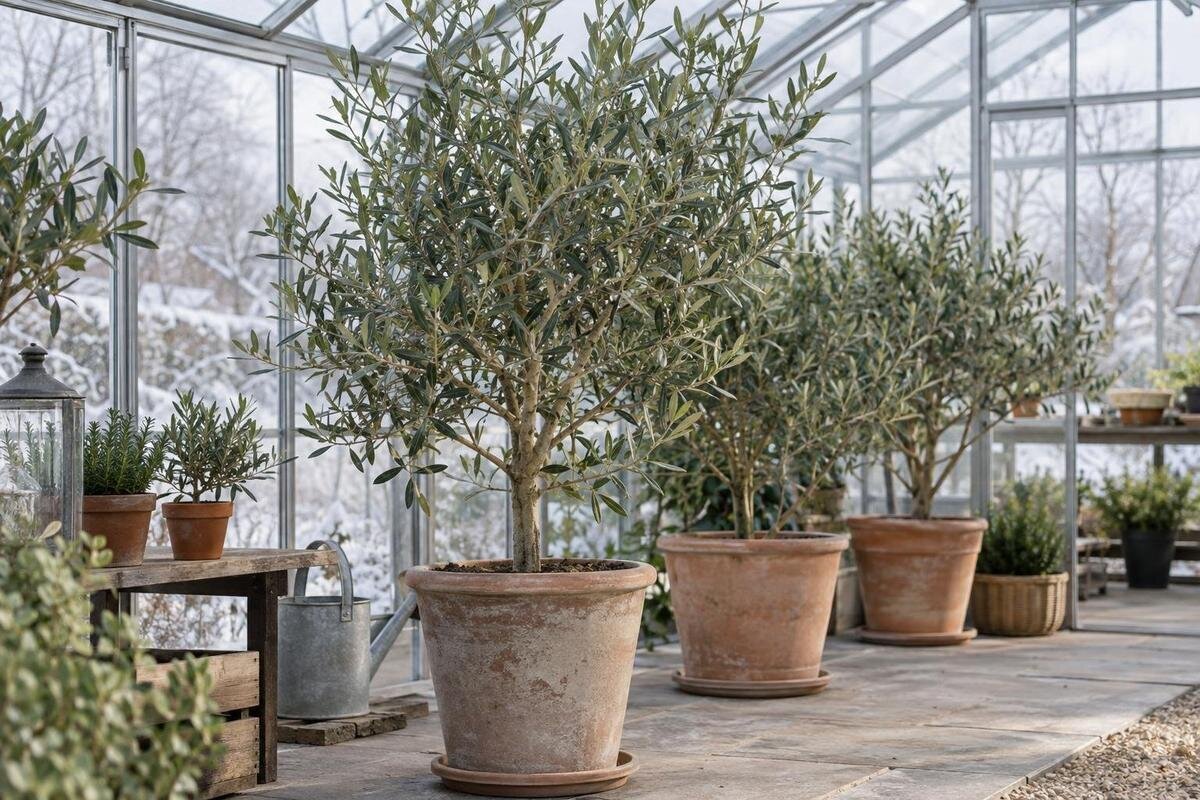
An olive tree still needs a winter plan when it is under cover. A greenhouse can shelter the canopy and pot from much of the wind and rain, but an unheated structure is not a frost-free room: bright days may warm it, while nights can still become cold. For a potted olive, the root ball, evergreen leaves, watering pattern, and air movement all matter. The most dependable approach is to match care to the cultivar and local winter, then respond to conditions measured inside the greenhouse instead of assuming every structure holds the same temperature.

01
What a greenhouse changes in winter
A greenhouse changes an olive tree’s exposure to winter weather, but it does not eliminate the need for cold protection. It can shelter the canopy and container from much of the wind and rain, and sunshine may warm the interior by day. At night, an unheated structure can cool quickly. A warm afternoon inside says little about the lowest temperature the tree may experience overnight. Before relying on the space, compare readings near the planned pot position with outdoor conditions over several days and nights. This helps distinguish daytime warmth from the overnight protection the tree actually receives.
A potted olive lacks the surrounding ground that moderates temperature around an in-ground root system, so a hardiness claim for planted trees may not apply to a container. Ask the nursery that supplied the tree or a local horticultural extension service how that guidance applies to your cultivar, pot, and winter conditions. Share the container’s size, the potting mix, and whether the tree has already spent time in cool weather. When comparing Classic aluminum greenhouses, use the listed range of 40.6 to 302.3 sq ft to narrow the size options. Then check the exact configuration against the space needed for the tree, access around its pot, and any additional cold-protection equipment you are considering.
Winter light for an evergreen olive tree
Olives are evergreen trees that need a sunny position, as the Royal Horticultural Society’s olive-growing guide explains. Reduced winter growth is not a reason to store them in darkness. Short days and a low winter sun can make a greenhouse much dimmer than it seems on a summer visit. Nearby buildings, fences, trees, rooflines, and stored supplies can cast long shadows. Observe the proposed canopy position at several points through the daylight hours, not only at noon or when the greenhouse is empty. A record of direct sunlight and shade over several days is more useful than judging brightness during one quick visit.
Place the pot where the leaves receive the best available open light while leaving access for inspection and ventilation. A wall beside a lean-to arrangement can affect winter exposure, so assess the actual wall, orientation, and surrounding shade before deciding where the tree will stand. When considering the lean-to greenhouse, compare the proposed position against shadows cast by the adjoining building during winter. The model name and listed floor area cannot establish how much light reaches the canopy at your site. If the intended corner remains dim for much of the day, look for a brighter position or seek plant-specific advice about supplemental lighting. Leave enough clearance to check the foliage and reach the pot.
02
Timing the move into the greenhouse
Don’t wait until the pot or root ball has been chilled by a hard freeze before deciding where the tree will spend winter. Prepare the space while conditions are manageable: clear fallen leaves and debris, inspect foliage and branch joints for pests, and make sure the final position is reachable for watering and routine checks. Use forecasts as prompts, not as a universal move-in date. Sheltered yards, exposed sites, and local elevation can have very different overnight conditions; the tree’s prior exposure to cool weather also affects how it responds. Correct crowding or drainage problems before a cold spell makes the move urgent.
Before moving the tree, measure its full height and canopy width as well as the pot, then check the doorway and turning space along the route. Keep a clear path; don’t force branches through a narrow opening or drag a container that could tip. If the tree is heavy, arrange suitable help or moving equipment beforehand. The limited-edition aluminum greenhouse models are listed with areas from 40.6 to 302 sq ft, but overall floor area does not establish entry clearance or interior height for a particular configuration. Confirm the exact model’s dimensions and access points before winter arrives, including whether you can move the plant through the route without squeezing the canopy.
Protecting roots in a container
Container roots are exposed to cold air around the sides and often underneath; unlike a tree in the ground, the root ball has little surrounding soil to moderate rapid temperature changes. A small pot or a thin container may cool sooner than a larger, sheltered one, and persistently wet mix adds root stress in cold conditions. Container size and material affect how quickly it loses warmth, so don’t assume all pots respond alike. Move the pot away from exterior doors and cold glazing, where conditions may fluctuate, but don’t place it directly beside a heat source. Aim for a sheltered position with fewer swings, not one that promises the roots cannot freeze.
Insulating the container can help protect the root ball, but it does not protect every part of the tree. Use a removable insulating wrap around the pot’s sides or a protective surround without obstructing drainage holes. If you raise the pot off a cold surface, use a stable support and leave room for runoff to escape. Inspect beneath the insulation for trapped moisture. The T-Model Greenhouse Orangery page lists options from 178 to 323 sq ft; check that the chosen layout leaves room for the insulated pot without blocking a walkway or watering access. Temporary canopy protection may also be appropriate during severe cold, but it should not become a permanent covering that limits winter light.

03
Winter watering for a potted olive
In winter, cool air and slower growth usually reduce water use, but an olive should not be left completely dry. The Royal Horticultural Society recommends keeping the potting mix barely moist during winter. Check below the surface rather than following a weekly schedule: the top may look dry while deeper mix remains wet. Feel at more than one point when practical, using the same method each time so you notice a trend. If the root zone is still moist, wait and check again; as it begins to dry, water rather than letting the entire root ball become parched. Reassess after sunny spells, when greenhouse warmth can speed drying.
Drainage matters as much as frequency. Water enough to moisten the root ball, let excess drain freely, and empty a saucer or outer container rather than leaving the pot standing in water. Avoid repeated small top-ups that wet only one layer while the rest of the mix remains unevenly moist. Water during a mild part of the day when possible, so runoff has time to leave before colder night conditions. When considering the Pyramid greenhouse, check the exact layout for watering access: you should be able to reach the soil, see whether water is draining, and empty any catch tray without shifting the tree. Its listed range of 60 to 203 sq ft provides a starting point for comparing footprints, not the working space around an individual pot.
Ventilation on sunny winter days
A sunny winter afternoon can warm a greenhouse far above the morning or night conditions around it. If the interior becomes warm or condensation lingers, open suitable vents or a door when outdoor conditions permit, then close up before temperatures fall. There is no single opening schedule: wind, cloud, sun, and the forecast change what is sensible from one day to another. Aim to limit overheating and stagnant, damp air without exposing the olive to a sudden cold draft. Don’t leave an opening in place overnight simply because ventilation was useful earlier in the day.
Leave space around the canopy so air can move and you can inspect leaves without shifting every pot. A thermometer that records minimum and maximum temperatures, placed near the tree in shade and away from the greenhouse covering, gives a more useful record than a reading at roof level. When considering the greenhouse models with built-in storage, compare the exact arrangement so equipment will not block vents, narrow the working aisle, or crowd the olive. Record whether vents were open when you note temperatures; this helps you understand how the space responds to ventilation. Choose an opening that allows air exchange without directing a strong cold draft onto the tree.
04
Planning for freezing weather
The Royal Horticultural Society gives a useful example of a cautious overwintering approach: in colder areas, grow olives in containers that can be moved to a frost-free place for winter. Its guidance reflects UK growing conditions, not a cold-hardiness guarantee for every US location or potted tree. Compare the lowest readings near your olive with advice for its cultivar from the supplying nursery or a local horticultural extension service. A brief low and a prolonged freeze pose different risks. Age, acclimation, moisture, and root protection also matter, so a published hardiness figure for an established outdoor tree should not become your greenhouse thermostat setting.
Decide in advance what you will do if readings approach the guidance for your tree. Identify a bright, cool, protected backup location and make sure the plant can be moved there before a damaging cold event, rather than after it. If considering supplemental heat, consult the greenhouse manufacturer and a qualified professional about the suitability of the exact structure and equipment; don’t improvise an installation. The Prestige greenhouse listing covers models from 40.6 to 302 sq ft, but a product name or floor area is not a winter-temperature rating. A contingency plan is more useful when the route and destination are ready before a cold snap.
Pests and signs of winter stress
Inspect leaves, stems, and branch joints regularly, including the undersides of leaves. Raised scale-like bumps, fine stippling, webbing, sticky residue, or sudden leaf drop can point to pests or a change in growing conditions. Check newly acquired plants before placing them beside the olive, and remove fallen leaves where pests can hide. Some older leaves may be shed as a plant adjusts, but a rapid or widespread change merits a closer look. Short, regular inspections make it easier to spot a problem before it spreads through a crowded group of pots. Note whether signs are limited to one side or affect the whole canopy.
Leaf drop is a symptom, not a watering instruction. Check the root ball, drainage, recent temperature swings, light, and visible pests before changing care; adding water to already wet mix can worsen root stress. If you suspect an infestation, separate the tree from nearby plants and identify the pest before choosing a treatment. Use any control product only as its label directs for the plant and greenhouse setting. A note or photo of the affected area can help you track whether it is spreading. Routine spraying will not correct stagnant air, inadequate light, or a pot that remains too wet.

05
Sizing a greenhouse around the tree
Size the greenhouse around the whole tree, not just the pot footprint. Measure current canopy width and height, allow for the cultivar’s expected growth, and include space to reach the container, open vents, and move through the doorway. Check clear interior height as well as floor area: a generous floor plan can still be awkward if the roofline, doorway, or layout restricts where the tree can stand. The Orangerie greenhouse listing covers models from 506 to 753 sq ft, but those areas alone do not establish usable height, access, or winter light at a particular site. Include room to work around the plant without bending or pulling its branches.
Compare published dimensions and the ventilation arrangement for the exact configuration, then plot where the olive will stand in relation to doors, vents, and other plants. You should be able to check the potting mix and drainage and move around the canopy without repeatedly shifting containers. Check that vents are reachable from a normal working position and that stored items won’t obstruct routine care. If the site has unusual wind, snow, or exposure concerns, ask the supplier or a qualified installer about documented product limits and siting requirements. Don’t infer that a general greenhouse category fits every site or that a larger footprint guarantees a better winter environment.
Returning the olive tree outdoors
Moving the olive outdoors again is a weather decision, not a fixed date. Wait until forecasts and cultivar-specific guidance make expected nighttime conditions appropriate, then acclimate it gradually. Begin in a sheltered position with bright shade or filtered sun, and increase exposure to direct sunlight and wind over successive stages. A tree kept under cover may not be prepared for abrupt outdoor sun, gusts, or temperature swings, even when daytime weather feels pleasant. Avoid moving it straight into strong midday sun on its first day outside. If a cold snap returns, be ready to protect it again rather than leaving the pot out because the days are mild.
Continue checking the pot as outdoor air and wind change how quickly the mix dries. Resume stronger feeding only when the tree is actively growing, and follow the fertilizer label; extra fertilizer will not repair cold or root damage. Avoid pruning in response to every winter blemish before you know whether a shoot is alive, and assess suspected damage once conditions stabilize. Note new growth, leaf loss, pest issues, and the greenhouse’s lowest readings so next winter’s plan reflects what happened to this tree. Those records can also help you see whether a problem followed a move, a cold night, or a watering change.
Frequently asked questions
Can an unheated greenhouse keep an olive tree frost-free?
Not reliably. An unheated greenhouse can reduce exposure to wind and rain and may warm in sunshine, but it can cool sharply after sunset. The lowest temperature depends on the structure and site, and a container’s roots are more exposed than those of a tree in the ground. Use guidance for the specific cultivar and readings inside the greenhouse, and plan a suitable backup for severe cold. Don’t treat one temperature as safe for every olive.
How much light does an olive tree need in winter?
Give it the brightest practical position. Olive trees are generally evergreen, so slower winter growth doesn’t make deep shade or a dark shed suitable for months. Light at the pot’s position can differ from light higher in the greenhouse, particularly near buildings or a wall. Check the site during winter and seek cultivar-specific advice if it remains dim; don’t assume that being under cover automatically provides enough light.
How often should I water a potted olive tree in winter?
There isn’t a reliable fixed interval for every pot. Cool conditions and slower growth often reduce water use, while a sunny greenhouse can warm up and dry the mix faster. Check below the surface and assess the root ball, then water as it begins to dry. Let excess water drain, and don’t leave the pot standing in a saucer of water. Pot size, mix, light, and ventilation all affect timing.
Should I open the greenhouse on sunny winter days?
Often, if the interior is warming in the sun or condensation is lingering. Open suitable vents or a door when outdoor conditions permit, then close it before temperatures fall. Avoid a fixed all-day routine or a cold draft directly on the tree. Monitor conditions near the plant and adjust for the sun, wind, and forecast rather than using the same opening pattern every day.
Why is my olive tree dropping leaves?
Leaf drop can follow low light, a sudden temperature change, uneven watering, root trouble, or pests; by itself, it doesn’t show that the tree needs more water. Check the mix and drainage, then inspect the leaves and stems for pests. Note whether the loss is gradual or sudden and whether it affects one area or the whole canopy. Make one informed adjustment at a time instead of changing watering, warmth, and fertilizer together.
Successful greenhouse overwintering depends on managing the particular tree and the conditions around its pot. Give the evergreen canopy the best available winter light, keep roots drained and protected, ventilate when the weather permits, and pay attention to the actual overnight lows. With cultivar-specific guidance and a backup plan for severe cold, a greenhouse can be a more manageable winter shelter without being mistaken for a guarantee against freezing.
