
Greenhouse Glass That Keeps Cracking: What an Installer Should Check
GREENHOUSE REPAIR
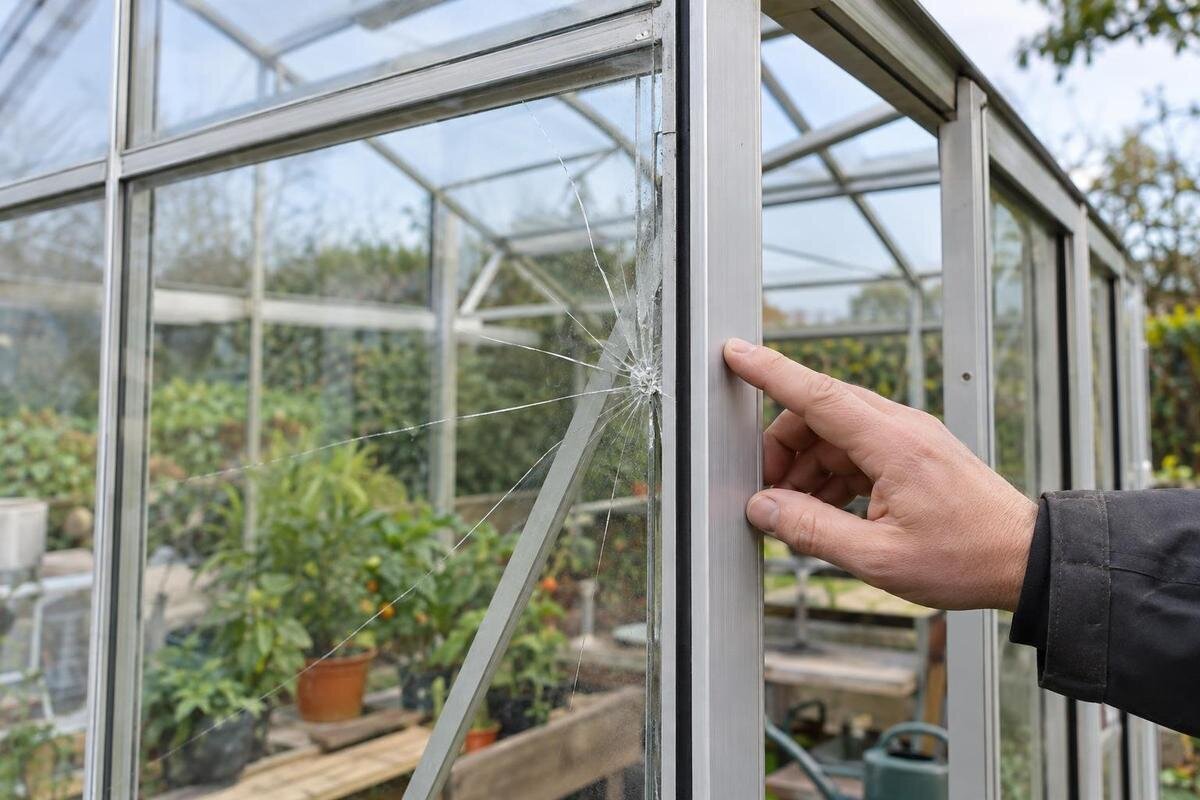
When greenhouse glass cracks repeatedly, replacing the pane may restore the opening without correcting the condition that is stressing it. A qualified installer should treat the recurrence as a pattern to investigate: where each crack begins, whether failures repeat in one bay, how the glass is retained, and whether the frame and its supports remain aligned. An impact, a damaged edge, a glazing-fit problem, and movement in the structure can produce overlapping clues, so a photograph alone rarely settles the cause. The practical priorities are to keep people away from broken glass, preserve useful evidence, and have the complete glazing assembly checked before ordering another pane.

Record each failure before another pane is ordered
Identify each damaged location before the glass is disturbed. On a simple sketch, mark the roof or wall, the side of the greenhouse, the bay, and the neighboring panes; give each event a date or number. Take one wide photo showing the location and a closer image only if it is safe to do so. Record where the visible crack seems to start and the direction it travels, but do not press on the pane, wipe an edge, or move fragments to get a better picture. A crack’s path is evidence for an installer to assess, not a reliable diagnosis by itself. An overview may also show whether nearby panes or framing appear affected, so keep the original images rather than cropping out their context.
Add what changed around the event: recent weather or a known impact, whether a nearby door or vent was being operated, and any heating, shading, or repair work that may be relevant. Note whether the failed pane was a replacement and how long it had been in place, if known. Copy the greenhouse maker, model, purchase record, and any part number from paperwork. If those records identify the Aluminum Limited Edition greenhouse, include that product reference in the inspection file. Keep a simple chronology even when some conditions are unknown; distinguish an event you witnessed from damage you discovered later.
Keep people clear of damaged glass
First consider whether anyone can approach the area without passing beside or beneath unstable glass. Keep children, pets, and other occupants away from the pane and from any fragments on the floor. A cracked roof pane, glass that has shifted in its channel, or a panel that appears loose can change position without warning; do not touch, push, or test it. Avoid climbing a ladder, leaning on the frame, or entering beneath an overhead pane to inspect it. If the damage is overhead or movement is visible, keep the nearby passage off-limits until qualified help has assessed the area. Arrange for a qualified greenhouse installer or glazing professional to inspect and handle the damaged glazing.
Do not tape over a crack, pry out a shard, remove clips, or improvise a prop or board to hold a panel. Those actions can expose sharp edges or change how the pane is supported, and may make the original condition harder to evaluate. If the area cannot be kept clear or a pane looks liable to fall, tell the installer when arranging the visit and follow their guidance on securing the area; leave stabilization and removal to a qualified person. From a safe position, photograph visible damage and keep receipts, packaging, and part labels from previous work. If pieces are already on the ground, keep people away rather than sorting them.
Use the fracture pattern as a clue, not a diagnosis
A central impact mark, a small chip at an edge, or a crack that appears to begin at the edge may point an installer toward different lines of inquiry. None proves a single cause. A mark can be hard to see in reflections; an edge-originating crack can relate to edge condition, contact, support, or another stress; and a longer line can have more than one possible explanation. The broken pane may also obscure the original point of failure. Describe only what is visible, and say whether you saw the break happen or noticed it later. Avoid naming the cause as impact, installation, or temperature before the structure has been examined.
Ask the installer to note whether the break begins at an edge, a visible impact point, or an area where the pane meets the frame, and whether similar clues appear in photographs of earlier failures. Compare those images with the current opening; do not move glass to improve the comparison. The inspection can consider signs of edge damage, contact, uneven support, or a retention component near the apparent starting point, but these remain questions to check rather than owner diagnoses. A crack confined to one panel is a different pattern from similar damage in separate bays, though neither is conclusive. Looking at the pane and its surrounding glazing system helps avoid assuming that identical replacement glass will solve the recurrence.
Check frame alignment and its supporting base
The installer should inspect the frame as a connected assembly, not just the empty opening. From a safe position, visible clues may include a rail that bows, a joint that has separated, a corner that looks displaced, or a glazing bar that no longer lines up with neighboring bars. These observations can direct a closer inspection, but they are not measurements of whether the frame is square or plumb. Ask the installer to compare the frame geometry with the manufacturer’s instructions or drawings for the exact greenhouse and note any difference that could affect how panes are held. If you have photos from earlier in the greenhouse’s life, views taken from the same position may help show whether something has changed.
Support beneath the frame matters too. The professional can look for movement, damage, gaps, or changes at the base and its connections to the frame, taking the greenhouse’s design into account. Report changes noticed during normal use, such as a door or vent that recently began to catch; do not force it open. Include dates of any relocation, base work, or repair. For an identified T-Model Greenhouse Orangery, request the corresponding frame and base drawings so the installer can compare the existing arrangement with the documented design. Any correction to the support or frame should follow that assessment, rather than an attempt to shim or square it yourself.

Verify the glazing fit and pane specification
Glazing details are model-specific. An installer should identify the pane type and verify that its size, thickness, orientation, and edge treatment match the manufacturer’s specification for this greenhouse; those details cannot be safely inferred from the last pane alone. The inspection should include how the glass sits in its channel, whether it is supported as designed, and whether a gasket, clip, bead, cap, or other retainer is missing, damaged, displaced, or incompatible. Not every greenhouse uses the same retention system, so generic advice about adding packing or tightening a clip is no substitute for the manual. Even a pane that seems to fill an opening may not have the fit specified for that glazing system.
Ask whether the replacement part can be matched to an exact spare-part identifier and whether any substitute is approved for the design. The professional can also look for trapped debris, an obstruction, or damaged sealing material that affects the pane’s seating. Keep the failed pane’s order details and installer’s invoice, but do not treat its dimensions as proof that it was correct. If you own the Pyramid greenhouse Bloomcabin Oasis, name it explicitly when requesting the glazing documentation. Mention any change in supplier or glass specification between the original pane and its replacement; that history may reveal a mismatch that an opening measurement would miss.
Inspect bars, retainers, and neighboring panes
Have the installer review the bars and connections that carry or retain glazing around the failed opening. Depending on the design, relevant parts may include glazing bars, cross-members, clips, fasteners, joints, and the points where a bar meets the frame. The question is whether any part is damaged, displaced, absent, or no longer performing the role described in the product instructions—not whether the owner can tighten or add something. A loose-looking connection is useful to photograph from a safe distance, but it is not an invitation to handle a roof panel or test the joint. Because systems retain glass differently, parts that look similar are not necessarily interchangeable.
Inspection should extend to nearby panes and their supports. Ask whether adjacent panels, bars, or joints show similar contact marks or displacement, and whether the issue follows one line of framing. Note maintenance, a known object strike, or work that may have disturbed the glazing. For repairs to the Limited Edition greenhouse with built-in storage, make sure the parts enquiry identifies that version rather than relying on the family name alone. Ask the installer to record which components need replacement and which can remain. Do not add clips, screws, sealant, or reinforcement unless the manufacturer and qualified installer specify the correct part and method.
Review thermal movement without assuming it is the cause
Temperature can be relevant, but it is not a diagnosis. Glass and frame components can respond differently as temperatures change, and the greenhouse’s specified glazing arrangement must accommodate movement in the way its design requires. A pane constrained at an edge or held incorrectly may be exposed to stress, yet a crack noticed after a hot afternoon or cold night does not prove that thermal movement caused it. Nearby heat sources or uneven sun exposure are context for the inspection, not proof. An installer should check the actual fit, the frame condition, and the applicable manufacturer guidance before connecting a break to temperature.
Write down whether failures follow a repeatable timing pattern: direct sun on one area, a heater or vent near the panel, a sudden weather change, or a period when shading changed. Note whether breaks recur at a similar time of day or season, but do not deliberately heat, cool, or wet the glass to test a theory. Ask the installer to compare the documented movement allowances with the actual glazing arrangement. If a replacement such as the Bloomcabin Prestige Greenhouse is under consideration, request its glazing instructions as part of the comparison. A different model should not be assumed to resolve a suspected temperature-related problem without examining those details.
Look for a wider pattern across the greenhouse
Repeated damage in one opening and damage scattered across several sides call for different questions, though neither pattern proves structural failure. Ask the installer to examine the frame beyond the cracked pane, including adjacent bays, joints, and visible support points, and to consider whether the same alignment issue or glazing condition recurs elsewhere. A localized failure can still merit a broader check if its position lines up with a frame joint; several unrelated failures are worth documenting separately. If a base, anchor, or supporting surface appears changed, record what you see rather than correcting it. The installer can decide whether more inspection is needed; do not infer stability or a repair method from the shape of one crack.
Include events that could have affected the greenhouse: an object strike, severe weather, nearby construction, or repeated contact from a door or vent. These are leads to check, not automatic explanations. Do not step onto the roof or press the walls to test for movement. If findings point to wider damage, ask the installer to separate pane replacement from frame or support work and explain what remains uncertain. A replacement enquiry should also address the existing site. For example, the Bloomcabin Orangerie large backyard greenhouse is listed from 506 to 753 square feet; comparing it requires a separate review of the selected size and its support requirements.

Prepare a focused brief for the installer
Before the visit, send the overview photographs, sketch, event dates, greenhouse make and model, and any manual, sales record, glazing order, or earlier repair invoice you can locate. Include an exact part number if it appears on paperwork, and say when a replacement pane was installed and where it came from. Explain which details are factual—such as a door that recently began to catch—and which are only suspicions. If the original installer or glazing supplier is unknown, say so rather than relying on memory for the glass specification. This gives the professional a starting point without asking them to diagnose from a picture. Do not remove a panel or take close measurements of broken glass for a more complete file.
Agree on the inspection scope: pane fit and retention, neighboring glazing, frame alignment, visible supports and connections, and the applicable instructions. Ask for a written summary separating observed damage from the likely cause, identifying approved parts, and stating whether other areas need attention. It should explain what could not be checked rather than present a guess as fact. If replacement is being considered alongside repair, identify the proposed option—for example, the Classic aluminum greenhouse—so the installer can distinguish work on the current structure from preparation for a new one. Keep those scopes separate when requesting estimates; otherwise, two apparently comparable proposals may cover different work.
Choose repair or replacement from the inspection findings
If the installer finds that the frame and supports remain in their intended condition and can identify the correct pane and retention parts, a pane-level repair may be reasonable. That is different from repeating the same replacement without checking why the earlier glass broke. Recurring damage, mismatched glazing, damaged components, or a frame that needs broader work may call for a wider repair plan. Ask which inspection finding supports the recommendation, which parts are approved for the exact model, and whether neighboring areas have also been assessed. Repair and replacement should be compared on documented condition and part availability, not on the crack alone.
If a whole greenhouse is being considered, compare the complete project rather than just the product name. Confirm the selected model’s dimensions and configuration, then discuss site suitability, support requirements, and installation with the qualified professional. The Aluminum Lean-To Greenhouse is one option to investigate, not an automatic substitute for the damaged structure. Ask which existing components, if any, are approved for reuse and what would need replacing; do not assume that glazing or supports transfer between models. Keep the inspection findings alongside the new proposal so you can see whether replacement addresses the identified problem and what additional work it involves.
Frequently asked questions
Does a crack that starts at the edge prove the pane was installed incorrectly?
No. An edge-originating crack is a clue, not proof of one cause. Edge condition, pane fit, support, impact, and other stresses can produce overlapping signs. Keep the area clear and have a qualified installer inspect the pane and its retention against the instructions for the exact greenhouse model.
Can a temperature change crack greenhouse glass?
Temperature-related movement can be relevant, especially if a pane is constrained, but timing alone does not confirm it as the cause. Record when and where the damage appeared, then ask the installer to check the actual glazing fit and the manufacturer’s guidance for the installed model.
Should I remove loose glass before the installer arrives?
No. Keep people and pets away from the damaged area, and do not handle, lift, or pry out glass. If a pane appears loose or the area cannot be kept clear, tell the installer when arranging an inspection and leave stabilization and removal to a qualified person.
Can I order a replacement pane by measuring the opening?
Do not rely on an opening measurement or the dimensions of a pane that may have been the wrong fit. Confirm the greenhouse’s exact model, glazing specification, and replacement-part identifier against manufacturer documentation, with the installer’s help where needed.
If a second pane cracks, does the whole greenhouse need replacing?
Not automatically. Ask the installer to check whether the recurring damage relates to pane fit, retention, frame alignment, supports, or another condition. Repair and replacement decisions should follow the inspection findings and the availability of the correct parts, not the number of broken panes alone.
Repeated cracking changes the question from which pane fits to what may be affecting its support, retention, or surrounding frame. The inspection should establish both the correct glazing specification and any condition that needs correction before another pane is installed. If the cause remains uncertain, record what was checked and what remains unresolved rather than treating another replacement as a confirmed solution. Those findings provide a sounder basis for deciding whether a pane-level repair is enough or the greenhouse needs broader work.
