
Finding Replacement Parts for a Discontinued Greenhouse
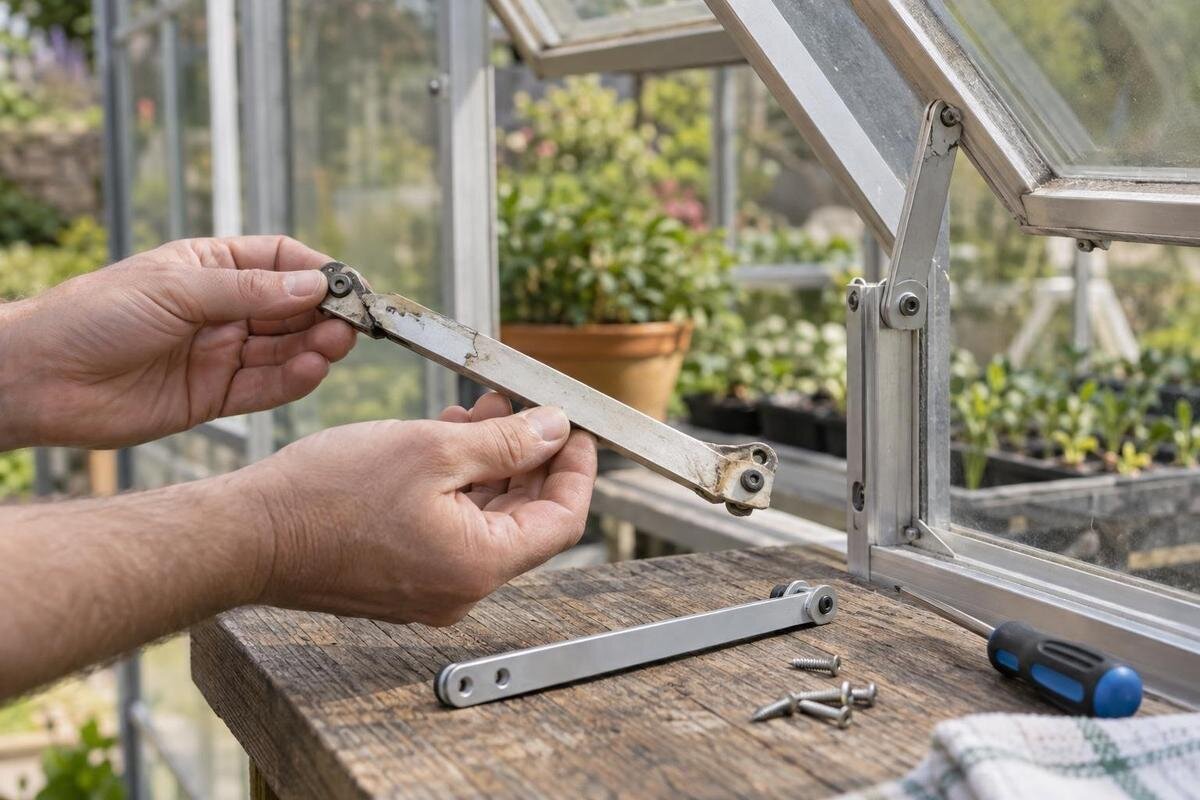
Greenhouse repair guide
Finding parts for a discontinued greenhouse starts with identification, not a visual guess. The same model name may cover different sizes or production revisions, and a similar-looking clip, seal, or frame section may not fit. Gather the original records, a clear photo set, and measurements of the actual component before asking the manufacturer or seller to confirm the exact part number and compatibility.

A discontinued model can still have supported parts
“Discontinued” usually describes the sales status of a greenhouse model or family; by itself, it does not say whether a particular door part, seal, glazing retainer, fastener, or frame piece is still supported. The manufacturer may have remaining stock, an approved successor number, or no further supply. Availability can differ between components on the same structure. A similar shape or a seller’s generic “universal” description is not proof of fit, because the profile, connection, or production revision may differ. Ask the original manufacturer or seller to check the exact part against the greenhouse identity. Also ask whether it is sold individually, as a kit, or only as a larger assembly.
Keep a spare-part request separate from a whole-greenhouse replacement inquiry. First ask whether the original component is available and whether the manufacturer recognizes a replacement code. If not, ask whether an approved assembly-level substitute exists; replacing the complete structure is a different decision. A listing such as the T-Model Greenhouse Orangery can start a separate new-model conversation, but its catalog presence says nothing about parts for an older greenhouse. This sequence helps you check the repair route before considering a full replacement.
Start with records from the original purchase
Gather the documents that came with the greenhouse: the invoice or order confirmation, delivery paperwork, installation manual, parts list, technical drawing, and any label photographed during installation. Record the manufacturer, retailer or installer, approximate purchase and installation dates, exact wording of the model name, and stated size or configuration. If the greenhouse came with a previous owner, ask for old emails or manuals; it may have been purchased years before you acquired it. Photograph a model or serial label in place, including its surroundings, rather than relying on a handwritten transcription. Separate records for the original greenhouse from receipts for later repairs or accessories. A replacement door or vent may have its own identifying information, so note which documents describe the complete structure and which describe later additions. If you know the greenhouse was moved, extended, or repaired, include that history without assuming the work followed the original design. This helps explain discrepancies between records and photographs.
Write the identity as separate fields: model or family, size or configuration, serial or batch number if present, and suspected part number if known. A model name is not a spare-part code, and the installation year may not identify a production revision. If a catalog label resembles Pyramid-type greenhouse, treat that as a clue to check against original records, not proof of an exact match. Keep original spellings and abbreviations; a suffix or single letter may distinguish variants. When sharing an invoice, retain the useful order details but leave payment-card information out.
Photograph the greenhouse before describing a part
Take one photo from far enough back to show the complete greenhouse, then images of each side, the roof line, door area, vents, and any attached sections. Include the damaged or missing part in its installed location, not just a loose fragment on a bench; the surrounding frame helps show where it belongs. Note which side you photographed and whether the view is from inside or outside. Number the images and add a short caption, such as “left-side door, upper hinge as viewed from outside,” so a supplier can connect a close-up to the correct opening.
Add close-ups showing the component’s full length, ends, slots or holes, and the pieces it touches. Place a ruler beside an accessible part for scale, but don’t obscure a groove or edge. Photograph any label or stamped code sharply, and keep the original image if small details matter. A combined configuration, such as a greenhouse with built-in storage, should be photographed at the junction as well as overall; the photo documents what you own, not whether a catalog model is interchangeable. Don’t climb onto the greenhouse or remove glass or structural parts just to get a picture.
Name the component by location and function
Describe the item by both function and location. Is it a door roller at the lower track, a hinge at the frame, a glazing bar between panels, a cap over a joint, a seal inside a channel, or a fastener at a base connection? Use the manufacturer’s term when a drawing supplies one, but add a plain description rather than guessing a technical name. For a missing item, mark its empty position on a photo or sketch; for a loose item, show both faces and note its installed orientation. Saying “lower door guide is missing” gives a supplier more to work with than “the door doesn’t close.” Describe the symptom separately from your suspected cause. For example, record that a door catches at one corner rather than concluding that a roller needs replacement. Note when the problem began and any visible damage to adjacent parts, without forcing the mechanism to demonstrate it. That distinction helps a supplier or installer decide whether the requested item addresses the problem or whether the assembly needs inspection.
Count how many are needed and identify left or right, inside or outside, or roof or side position when that distinction applies. Note whether a matching component remains in place, but don’t assume it is the same part just because it looks similar. A complete product title such as Bloomcabin Prestige Greenhouse identifies a greenhouse family; your request still needs the name, code, or marked location of the individual component. Keep the number of damaged pieces separate from the number you hope to replace, especially if an installer needs to inspect the assembly before specifying parts.

Measure the part and its connection points
Measure the component itself and its mating area, and write down what each number describes. Depending on the part, useful details may include overall length, width and thickness, cross-section shape, hole spacing measured center-to-center, or the opening and depth of a retaining channel. A simple profile sketch can make a small groove easier to explain than a string of numbers. Use inches and fractions if that is how you measured; if a supplier requests metric, provide the conversion separately. State your reference points and avoid implying more precision than your tool allows. Don’t remove a structural piece just to obtain a measurement. Flag any measurement taken from a bent, stretched, worn, or incomplete sample. A damaged part may no longer show its original dimensions, and a flexible seal can change shape when removed from its channel. If an intact counterpart is safely accessible, document it separately and identify its location; let the supplier decide whether it is a valid reference rather than combining the two sets of measurements.
Do not confuse a whole-greenhouse size with a component dimension. For example, the Large backyard greenhouse listing describes complete-model area options from 506 to 753 sq ft; that figure cannot identify a frame profile, panel edge, or fastener. Likewise, measuring an opening does not necessarily give a pane’s order size. Ask the manufacturer which reference points it needs, and note whether you measured the old component, the clear opening, or the frame’s outside edges. If the part is already detached and safe to handle, a straight-on photo beside a ruler can help explain the measurement.
Treat glazing and seals as a separate case
Treat glazing, glazing retainers, and seals as related but separate parts. A replacement panel may need to be identified by its material, thickness, shape, edge or channel details, and the frame system that holds it; the visible opening alone may not specify a cut size. Check old paperwork or a parts drawing for confirmed details instead of estimating from a nearby pane. If a panel is cracked, missing, overhead, or difficult to reach, don’t handle it or remove neighboring glazing just to measure it. Ask the manufacturer or a qualified greenhouse installer how to identify it safely.
A gasket, cap, clip, or retaining strip can look simple but depend on the exact profile and the way the panel is held. Send its location, cross-section photos, and any original code; ask whether related retainers or seals also need to be replaced. A whole-unit listing, such as the Classic aluminum greenhouse, is not a glass specification for an older structure. Don’t substitute a different glazing material or alter a retainer on appearance alone. Get model-specific direction or an installer’s assessment before glass work.
Search for manuals, drawings, and part numbers
Look for the original manual, installation instructions, exploded parts diagram, archived catalog sheet, and technical drawing—not just a sales page. Use every identifier you have: exact family name, model number, serial or batch number, approximate year, configuration, and the words printed near the component. A retailer or installer may have an older copy even when the product page is no longer available. When you find a document, record its title, revision or date, page number, and figure or item number. Send the relevant page with your inquiry so the supplier can see which version you used. Distinguish a diagram’s item number from an ordering code: a numbered callout may simply point to a row in the parts table. Capture that table and its notes as well as the illustration. Check whether the document identifies multiple sizes or configurations, and mark the entry you believe applies. If two manuals disagree, send both references and ask which one corresponds to your greenhouse.
A part code in a diagram is stronger evidence than a visual match, but ask whether the code has been superseded and which greenhouse revisions it covers. Request the current code, any required companion pieces, and confirmation that the drawing applies to your exact configuration. A current Lean-To Greenhouse product page may identify a complete model family; it is not a dated parts diagram for a unit already installed. Preserve leading zeros and suffixes in any code you transcribe, and don’t assume a manual for a similarly named greenhouse covers a discontinued revision unless the manufacturer confirms it.
Send one organized parts inquiry
Send one organized request rather than several unlabeled photos. Start with the manufacturer and model, approximate purchase year, size or configuration, and any serial or batch mark. List each requested item separately with its location, function, quantity, and part code if known. Attach a wide photo, a close-up, and a marked image showing where the item sits; label files consistently and keep a copy of each original. Add measurements with units and state how they were taken. If you do not know a detail, write “unknown” instead of filling the gap with a guess.
Ask direct questions: Is the original part available? Is there a current part number or approved successor? Does it fit this model, size, and revision? Are any matching seals, fasteners, or retainers required? Is a drawing or installer review needed before ordering? If the first contact cannot identify the part, ask what additional view or measurement would resolve the issue, then send only that information. The original seller, manufacturer, or a qualified greenhouse installer may be able to route the request. For glazing, an installer can assess safe measurement and replacement requirements. Once the item is identified, request a quote that names the part and states what is included. Clarify whether the quantity refers to individual pieces, pairs, or complete kits, and whether any required companion items are quoted separately. Ask about current availability, shipping arrangements, and the applicable return terms before purchasing. This makes it easier to compare responses without confusing a component-only quote with a complete repair.

Decide when replacing the whole greenhouse makes more sense
Repair is easier to evaluate once you have a confirmed parts list. One replaceable item with an available, documented match is a different problem from several missing or damaged pieces, an unidentified frame section, or repeated difficulty locating parts. Those facts do not automatically mean the greenhouse should be replaced, and a photo alone cannot establish structural condition. Ask a qualified greenhouse installer to assess frame or glazing concerns before deciding whether the repair scope is practical. Compare the confirmed parts and labor scope, documentation, and expected future support with the effort of a complete replacement—not with a guessed part price.
If a full replacement is on the table, make a separate list of what the site needs: usable footprint, access route for delivery and installation, door placement, and any existing base or attachments that may need professional review. Don’t assume a new model fits an old footprint or foundation. A limited-edition aluminum greenhouse page can begin a whole-model inquiry, but it is not evidence that the model is a drop-in substitute. Compare exact product documentation and have an installer verify site fit before committing; keep the parts inquiry open until the replacement decision is clear.
Confirm compatibility before ordering or installation
Before ordering, match the confirmed part number to the greenhouse model, configuration, and revision—not only to a photograph or measured width. Verify the supplier’s written fit confirmation, quantity, orientation, and any companion components shown in the relevant diagram. If a proposed code replaces an obsolete number, ask whether the manufacturer approves it for your exact unit. Make sure the quoted description and drawing refer to the same item, and save the answer, document revision, and part number with your greenhouse records. If the fit depends on a substitute, ask what documentation supports that choice.
For a frame connection or any glass-related part, have a qualified installer review fit and installation requirements when instructions are incomplete or the work involves structural members or difficult glazing. Don’t drill, cut, reshape, or force a part to make an uncertain match, and don’t undertake unsafe glass removal. If key dimensions, code history, or model revision remain unresolved, pause the order and ask the supplier to identify what is missing. Keeping the confirmed part details with the manual will also make future maintenance requests clearer.
Frequently asked questions
Can I still get parts for a discontinued greenhouse?
No. Discontinued status describes the product, not the stock or support status of every component. The manufacturer may still supply a part or identify an approved successor, but only a parts lookup for your exact model and revision can confirm availability and fit.
What should I send if I can’t find a model label?
Gather the original invoice, manual, order confirmation, and any photos or drawings from installation. Add wide and close-up photos of the structure and part, its location, and safe-to-take measurements. A manufacturer or installer may be able to narrow down the identity, but don’t guess at a model or part number.
Can a similar-looking part fit?
Appearance alone is not enough. Profiles, connections, and production revisions can differ even when parts look alike. Ask the manufacturer or supplier to confirm the exact part number and compatibility with your greenhouse before ordering.
What if the original part number is obsolete?
Ask whether the manufacturer has an approved successor and which model revisions it fits. Also check whether that replacement requires related seals, retainers, or fasteners. An obsolete code or a similar item in a catalog does not, by itself, confirm a suitable substitute.
Can I remove a cracked panel to measure it?
Don’t handle broken glass or remove neighboring glazing just to obtain a measurement. Use the original drawings or ask the manufacturer or a qualified greenhouse installer how to identify the panel safely. A visible opening may not give the correct panel size.
The strongest parts request is one a supplier can trace back to a specific drawing: greenhouse identity, exact component location, useful photos, and measurements with clear reference points. Once the manufacturer or a qualified installer confirms the part code and fit, the decision rests on documentation rather than resemblance. Keep that record with the manual so the next repair does not have to start from scratch.
