
A School Greenhouse: Class Use and School-Break Care
SCHOOL GREENHOUSE PLANNING
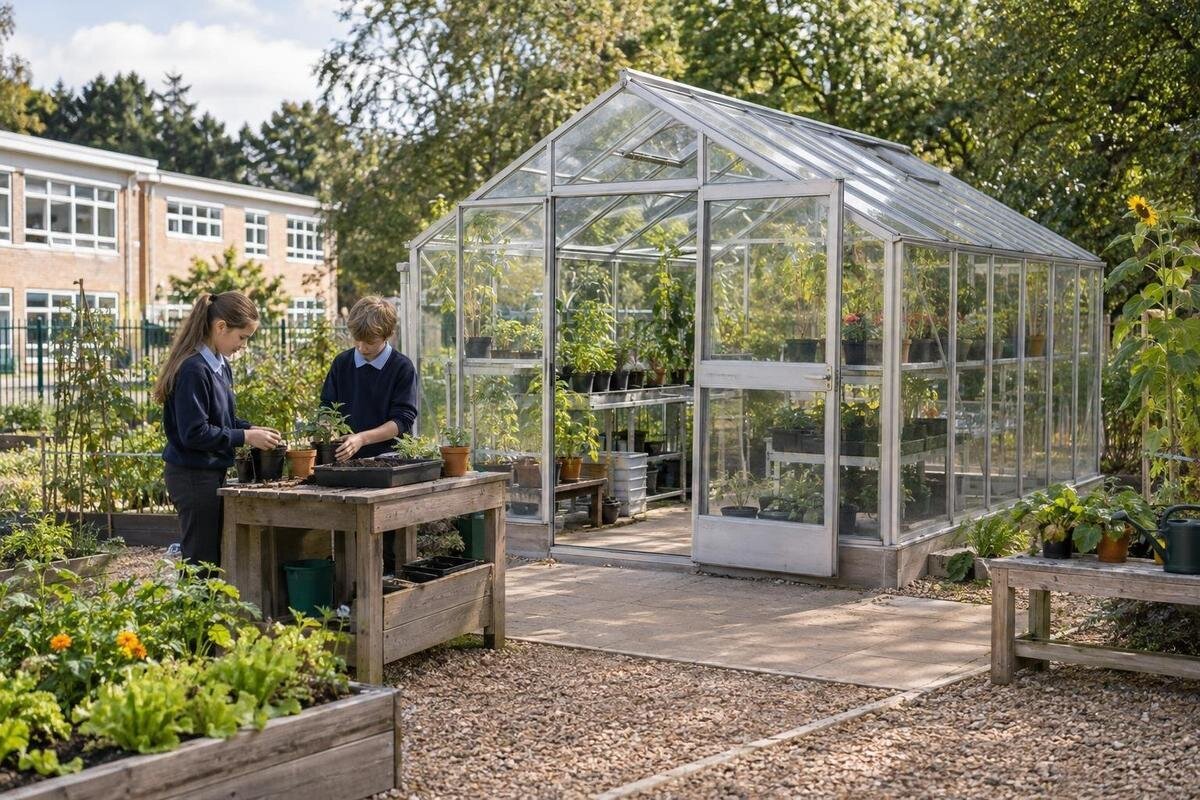
A school greenhouse can make plant science, data collection, and shared work tangible, but it is also a supervised school space with care needs beyond the class period. The plan has to work on ordinary teaching days, when staff are managing a group, and during weekends or school breaks, when students may not be on campus. Begin with the lessons the school can deliver, the adults who can supervise, the access rules that already apply, and the people who can care for plants when classes stop. Then review the site and project requirements with school facilities staff and qualified local professionals before choosing a structure.
Questions to resolve before choosing 1
Set learning goals before choosing crops or size
Begin with a teaching objective, not a shopping list of crops. A class might compare leaf development over several visits, record plant growth, study soil and water, or connect food production with math and science. Decide what students should observe, measure, explain, or document, then match the activity to grade level and the school calendar. A lesson that can be completed in one visit or revisited flexibly is easier to maintain when assemblies, weather, or staff absences disrupt a schedule. Avoid planning a yearlong sequence that depends on one teacher, one class period, or a precise harvest date; the growing space should support instruction rather than dictate it.
Learning aims also determine how much space earns its keep. Estimate the largest group likely to be inside at one time, the adults who must supervise, whether students will work as a whole class or rotating teams, and where materials and movement routes go. A catalog area is a comparison point, not a headcount or a measure of usable work area: Bloomcabin Prestige Greenhouse is listed from 40.6 to 302 sq ft. Compare the selected configuration with a simple classroom plan and actual lesson tasks, and request exact dimensions before deciding whether work surfaces, routes, and teaching positions fit. No listed floor area establishes student capacity or school suitability.
Choose a location that fits the school day
Map the route from the classroom or gathering point to the greenhouse at the time students will use it. Consider staff sightlines, nearby campus activity, the distance a group must travel in poor weather, the door and gate approach, and how a teacher can account for everyone on arrival and return. A greenhouse that is easy to reach and supervise is more practical than one selected only because a corner appears unused. Include deliveries and facilities access too, so maintenance work does not have to pass through a student activity. Walk the proposed route with the staff who will lead visits and note bottlenecks or places where the group is difficult to observe.
Ask school facilities staff to review ground conditions, drainage, water and power availability if needed, an accessible approach, handwashing access, emergency routes, and any changes to existing grounds. The school and qualified local professionals must determine which permissions and design reviews apply; a garden structure should not be assumed to meet school-site or public-building requirements automatically. For a scale comparison, the Lean-To Greenhouse is listed from 40 to 154 sq ft. That range does not establish that its form suits a particular wall, path, or campus; check the actual drawing against the approved site and circulation plan.
Questions to resolve before choosing 2
Apply the school’s student-safety rules
Before students enter, ask the school or district administrator responsible for student safety to identify the written rules that govern the activity. Confirm how the school handles adult-to-student supervision levels, staff and volunteer screening, one-to-one interactions, visitor access, student sign-in and release, and incident reporting. These rules are not interchangeable across schools or programs, so do not copy a ratio from another site or treat a student buddy system as adult supervision. Ask separately about class time, after-school use, and school-break visits; permissions for one period may not extend to another. Put approved access conditions into the greenhouse operating plan.
Translate the school’s requirements into a visit procedure: who is the responsible adult, who covers an absence, where adults stand so activity remains observable, which areas students may use, how attendance is checked, and what happens if a student or visitor arrives unexpectedly. Include the school’s normal process for reporting an injury, near miss, damaged structure, or concerning interaction. Have staff review site-specific risks from tools, wet surfaces, weather, plants, and movement through doorways; agree on accommodations and emergency response with the appropriate school personnel. Students may help with tasks, but an adult remains responsible for supervision and access.
Plan class movement and accessible participation
Draw the busiest plausible lesson, not an empty greenhouse. Mark the adult teaching position, each student work group, the walking route, door swing, places for bags and materials, and a clear way to leave. Think through transitions: one class may arrive while another finishes, students may carry trays or watering cans, and a staff member may need to assist one learner while overseeing the rest. A taped floor mock-up or site walk can expose pinch points before a specification is chosen. If several grades will use the space, decide whether the whole class can enter or whether the lesson should use smaller rotations. Keep the planned activity within the space and supervision the school can reliably provide.
Compare proposed dimensions with the school’s access and participation needs, not just the number of benches shown in a brochure. The Large backyard greenhouse catalog range is 506 to 753 sq ft, but total area does not tell you aisle width, clearances, turning space, sightlines, or student occupancy. Ask for a dimensioned plan for the exact option and have school facilities or accessibility staff, plus qualified local professionals as needed, review circulation and emergency access. A large footprint can still be poorly arranged for a supervised lesson, and a smaller one may require rotating groups; settle capacity only after the actual layout and school requirements are reviewed.
Questions to resolve before choosing 3
Make greenhouse lessons repeatable
Give every class a dependable rhythm: gather outside, enter when the adult is ready, hear a short task and boundaries, work in defined groups, pause to observe, then put materials away and exit together. The exact sequence can vary by age and activity, but students should know where to wait, where they may work, how to ask for help, and which tasks are off limits. For younger learners or first visits, a short demonstration and one clear job per group can be easier to supervise than several open-ended stations. Include handwashing and cleanup in the allotted lesson time rather than treating them as optional extras, and build in a few minutes for the adult to check the space before the next class.
Create a simple task card or teacher plan that names materials, setup, cleanup, and the adult responsible for each step. Keep school-approved tools in a controlled location, count them before and after use, and assign an adult to handle broken or missing items; students should not decide for themselves that an unapproved product or tool is suitable. The Greenhouse with Built-In Storage listing may be relevant to a storage discussion, but its title does not show the chosen layout, capacity, or access controls. Request configuration details and check that any storage arrangement supports the school’s tool-control and inventory procedures.
Assign adults to care during the school year
Separate program leadership from individual garden jobs. Name an adult program lead, a backup for absences, and a facilities contact for matters involving the structure, grounds, or services. Write down who authorizes access, opens and closes the space, orders supplies, records plant-care tasks, contacts facilities staff, and decides when a problem means students should not enter. The responsibilities can sit with different people, but they should not disappear between roles. Students can take on age-appropriate observation or routine jobs as part of class, while an adult checks completion and retains responsibility for safety and decisions. Keep the assignment current when staffing changes.
Estimate workload from the growing plan and the number of users, not from area alone. The Classic Greenhouse is listed from 40.6 to 302.3 sq ft; that range describes catalog options, not how many hours the school must devote to care. List expected class-period tasks separately from work needed when students are absent, then assign each to a named person with a realistic time window. Include checks on plants and supplies, cleanup, recordkeeping, and a route for reporting leaks, damage, or other issues. Ask a knowledgeable growing adviser about crop-specific routines before promising a schedule the staff cannot sustain.
Questions to resolve before choosing 4
Name the people responsible during school breaks
Put weekends, holidays, teacher workdays, and summer vacation on the planting calendar before seeds are ordered. Identify every period when students and ordinary school staff will not be available, then decide what the greenhouse can responsibly support during that gap. If no approved adult can provide the necessary care, reduce the planting plan, choose activities that pause safely, or arrange an authorized care program before the closure; do not make personal time or informal student visits the unspoken fallback. A successful summer plan is a staffing decision as much as a horticultural one. Decide who has authority to change or cancel a visit if the school site is closed.
Use a named primary caregiver and backup, a written visit schedule, access authorization, and a brief checklist tailored to the crops and site. Provide orientation on permitted tasks, who to contact if water or equipment is unavailable, how to report damage, and when to stay out and notify school facilities staff. Confirm volunteer approval and supervision rules with the district before arranging help, and avoid handing over keys or access informally. The Limited Edition Greenhouse is listed from 40.6 to 302 sq ft; compare a specific option only after deciding how much planting and care the authorized team can cover through closures.
Match crops and care routines to the calendar
Build crop choices around the dates when students can observe and maintain them. Work backward from breaks and class visits with a local growing adviser or reliable crop guidance, and select projects whose observation period and care tasks fit the school’s calendar. A mix of short and longer activities can keep lessons useful without making the whole program depend on one harvest. Record what is planted, where it is located, and the care instructions approved by the adult lead, so a substitute or vacation caregiver is not expected to guess. Do not assume an automatic device eliminates the need for a named person to check conditions and respond to a problem.
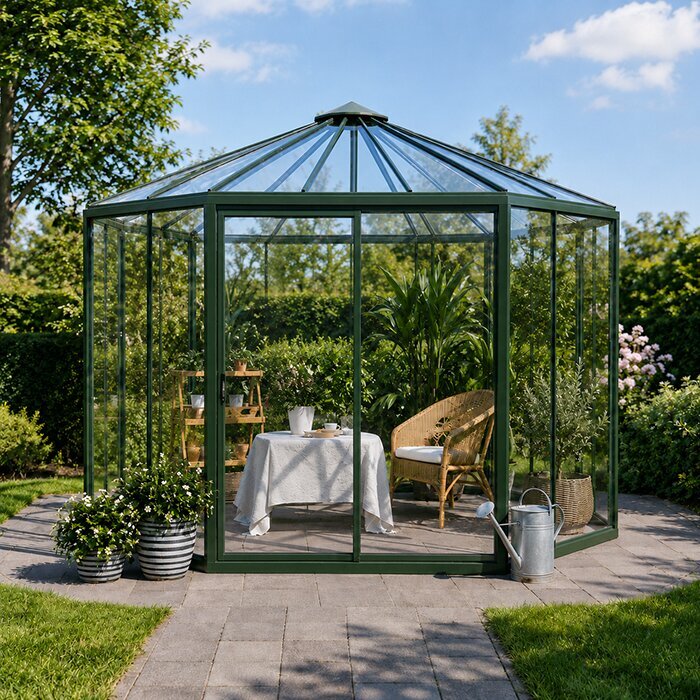
Translate the plan into a closure-specific checklist: what should be inspected, when a scheduled check is due, how the task is recorded, and who receives an escalation. Have the school set policies for harvesting, tasting, food handling, and allergies with its appropriate staff; students should not be invited to eat produce simply because they helped grow it. If an unexpected closure, severe weather, or missed visit disrupts care, the written plan should identify who can assess the situation and whether access should pause. The Pyramid Greenhouse listing spans 60 to 203 sq ft; a selected area can help map planting zones, but it cannot define care frequency without the crop and operating plan.
Questions to resolve before choosing 5
Review the greenhouse project before purchase
Treat procurement as a school project with an owner, not an individual purchase by an enthusiastic teacher. Prepare a short brief with intended grades and lessons, peak group size, supervision plan, access route, expected use calendar, break-care coverage, site constraints, and who will maintain it. Take that brief to the school or district administrator, facilities team, and staff responsible for budget and student safety. Confirm written site approval, responsibilities after installation, and how the school will handle maintenance and records. A supplier conversation is more productive when the school can describe both the teaching purpose and its operating capacity.
Ask suppliers for the exact proposed dimensions and layout, what is included, what site preparation is assumed, and which project documents they can provide for review. Then have the district and qualified professionals check applicable local permitting, construction, accessibility, fire or life-safety, and other site requirements; this article cannot establish compliance for a particular school. The T-Model Greenhouse Orangery is listed from 178 to 323 sq ft, a catalog range useful only for an initial scale comparison. It does not establish student capacity or compliance. Base a final decision on the selected design, approved site, and staff plan rather than a model name or headline area.
Evaluate the program and hand off responsibility
Review the program after a few lessons and again at the end of each term. A short log can track which lessons ran, whether setup and cleanup fit the period, which tasks were missed, how much adult time care actually took, and what maintenance issues interrupted use. These observations reveal whether the planned group size, planting load, or schedule is too ambitious. Keep records proportionate to the program and follow school rules for student names, photographs, and other identifying information; a useful growing record does not need to expose student data. Use the review to adjust the next term’s activities and care assignments.
Use the term-end handoff to inventory tools and supplies, record plant status and outstanding work, confirm who holds approved access, and transfer the care calendar to the next named adult. Ask students for feedback on what helped them learn, then let the school team decide what to change in the following term. If the greenhouse will sit unused, the responsible adults should agree on its restricted access and care arrangements rather than leaving those decisions to the last class. A short, accurate handoff keeps teaching, supervision, and plant care connected when people or schedules change.
Frequently asked questions
What should a school plan before buying a greenhouse?
Define the lessons, likely class size, supervision plan, access route, and care coverage for weekends and school breaks. Ask school facilities staff to review the site, then have the district and qualified local professionals identify the approvals and design reviews that apply. Request a plan for the exact greenhouse configuration before judging its usable space.
How can students use a school greenhouse safely?
Follow the school’s written rules for adult supervision, volunteer screening, one-to-one interactions, visitor access, and student sign-in and release. Assign a responsible adult for each visit, set clear boundaries, and review activity-specific risks with the appropriate school staff. Student pairs can support a lesson, but they do not replace adult supervision required by school policy.
Who should care for a school greenhouse during summer vacation?
Name an authorized adult caregiver and backup, agree on a visit schedule and task list, and provide the access and reporting instructions they need. Check district rules before involving volunteers. If the school cannot arrange approved care, scale back the planting plan rather than relying on informal student visits or a teacher’s personal time.
How much greenhouse space does a class need?
There is no reliable class-size estimate based on floor area alone. Consider the largest group, required adult supervision, work stations, movement routes, accessibility needs, and whether lessons will use rotating groups. Review the exact proposed layout with school facilities staff before treating a catalog area as usable teaching space.
Can students or volunteers visit during school breaks?
Only under the school’s rules for access, supervision, screening, and after-hours activities. Confirm whether those rules differ from ordinary class time, and name the adult who authorizes and oversees each visit. If no approved adult is available, students should not be expected to provide unsupervised care.
The strongest school greenhouse plan is not the one with the most ambitious planting list. It is the one where students can take part under the school’s actual supervision rules, adults understand their responsibilities, and the crop calendar fits both class days and closures. Keep the learning purpose, site review, access plan, and care roster connected as the project changes. When class size, staffing, or the school calendar changes, the operating plan should change with it.
