
Starting Dahlias in a Greenhouse Before Outdoor Planting
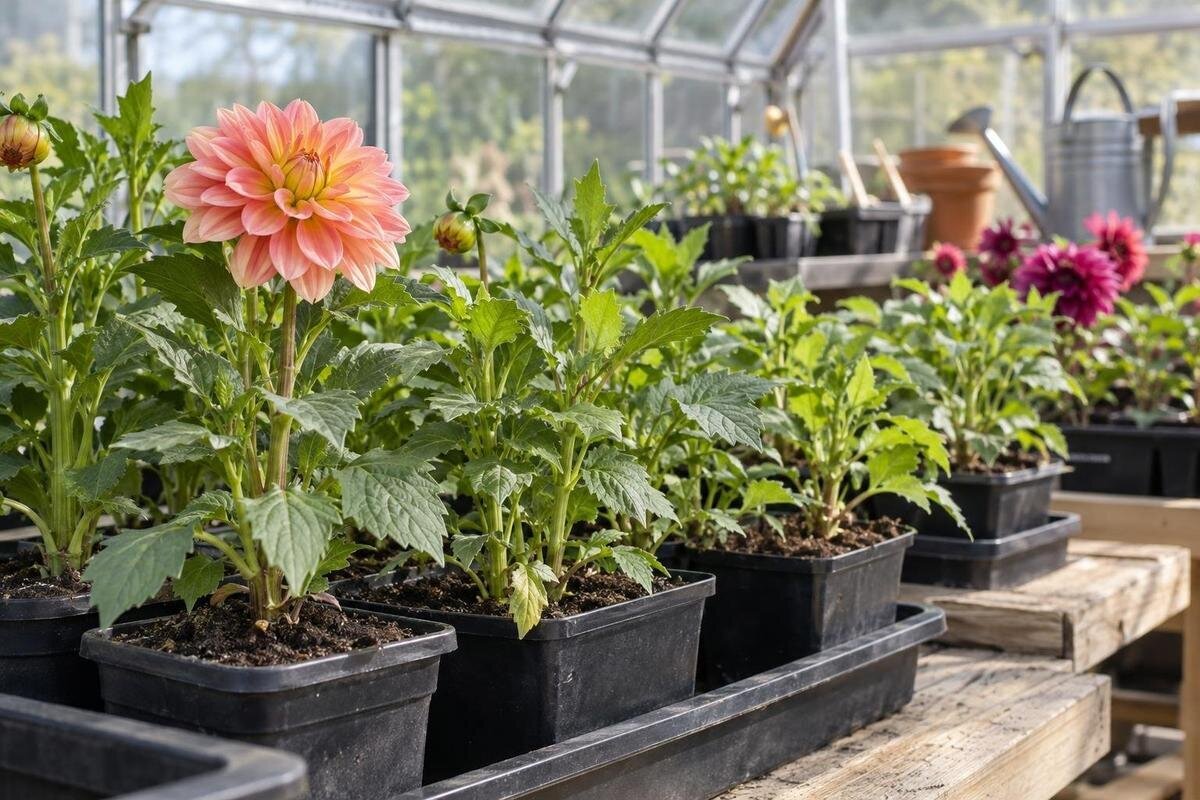
Dahlia growing guide
Starting dahlias in a greenhouse can move rooting and early shoot growth ahead of the garden season, but it cannot make a tender plant frost-proof. The useful start date depends on your local frost pattern, temperatures where the pots sit, and how much bright space you can provide. A little planning keeps tubers from rotting in cold, wet mix and prevents shoots from outgrowing their staging area before the bed is ready.

01
When to start dahlias before the last frost
Use your area's expected last frost as a planning point, not a promise. Dahlias grow from tender tubers, and a greenhouse can get shoots moving before garden soil is ready, but it does not remove the risk of a late freeze outdoors. Choose a potting date that leaves time for growth under cover without producing more leafy plants than you can accommodate. A cool greenhouse, weak light, or limited bench room can make a later start wiser. Check a local frost-date resource, then watch the forecast as planting time approaches rather than relying on a national calendar. Record your potting and transplanting dates so future batches can be timed to your own conditions.
Measure nighttime conditions where the pots will sit. An unheated greenhouse may track outdoor temperatures after dark, even if it feels warm by afternoon, while a sunny day can push the air much higher than expected. A min/max thermometer at pot height makes these swings visible. The Royal Horticultural Society's dahlia growing guide advises keeping plants indoors until temperatures are consistently above 41°F (5°C). That provides a documented cold-weather threshold, not an ideal sprouting temperature or a guarantee against a later frost. If your greenhouse cannot provide reliably protected conditions, keep the pots in another bright, frost-free place. Do not use daytime highs alone to judge whether the space is ready.
Look for a sound crown and a viable eye
Each viable dahlia division needs part of the crown with an eye, the small bud from which a shoot emerges. The swollen tuber stores energy, but a tuber detached from the crown and without an eye will not make a new plant. Before potting, look for a firm tuber connected to an intact crown; the eye may be a small raised point rather than an obvious green shoot. Keep each cultivar's label with it, because mature height and flower type help determine where it belongs in the garden.
Discard material that is mushy, badly damaged, or clearly rotting; do not seal soft tissue into damp mix and expect it to recover. If an eye is hard to see, let the tuber warm slightly and inspect the crown rather than cutting blindly. When dividing a clump, each piece needs a sound tuber and a viable section of crown with an eye. A dormant eye can take time to swell, so a lack of immediate green growth is not by itself proof of failure. Keep questionable tubers separate and labeled while you watch for growth.
02
Pot tubers in containers that drain freely
Use one container per viable division or intact tuber clump so each plant can be moved without disturbing its neighbors. Choose a pot with drainage holes that can comfortably hold the planting material and a developing root ball; an oversized pot holds more wet mix than a dormant tuber needs. Position the crown and any old stem uppermost, just below the surface of the mix. Shoots emerge from this area, not from the far end of an individual tuber. If the tubers will not fit without bending or damage, use a wider pot rather than forcing them into a small one.
Use fresh, airy potting mix intended for containers rather than dense garden soil, which can stay wet in a pot. Pre-moisten the mix until it is evenly damp, then let excess water drain; do not leave the pot in a water-filled saucer. Label it with the cultivar and potting date, placing the label where you can read it without lifting the tuber. Keep a simple list of the varieties and number of pots so you can match the greenhouse batch to the available garden space. If the batch size is also shaping a greenhouse purchase, the T-Model Greenhouse Orangery listing covers 178–323 sq ft. Use the dimensions of your actual containers to sketch a potting surface and growing area within the size you are considering. Include somewhere to set a newly filled pot while you label it, rather than using the walking aisle as temporary storage.
Plan bench space for growing dahlias
Count the tubers you plan to start, then picture each pot at its largest point before planting day. Leave room for labels, a hand to lift pots, and a path to reach the back row; small containers can multiply quickly. Keep pots in a single layer when possible, so light reaches them and water does not drip through one group onto another. If you may pot up or hold some plants longer, reserve space for that later stage instead of filling every bench with the first batch.
Separate the potting area from the main walking route, and keep the route clear enough to carry a watering can without knocking over shoots. The pyramid-type greenhouse listing gives an area range of 60–203 sq ft. Compare the dimensions of the particular size with your proposed bench arrangement; the stated floor area alone does not show how benches and aisles will fit. Ask for the relevant layout and height information before assuming a work surface can extend all the way to an outer wall. For your own capacity estimate, arrange empty pots on a table with realistic gaps, measure that group, and add access space separately. Also identify a reachable place for the last few pots if outdoor planting is delayed. A batch that fits neatly on potting day may become crowded once neighboring leaves begin to touch.

03
Give new shoots bright light without overheating them
Dahlias need a sunny garden position. For starting tubers under cover, the Royal Horticultural Society recommends good light and only slightly moist potting mix. Put emerging shoots in a bright, unobstructed growing area rather than leaving them beneath a bench or behind stored supplies. If stems lean toward one side, turn the pots periodically so growth is more even. A shaded corner may keep pots cooler, but inadequate light can produce thin, stretched shoots that are harder to manage when it is time to move them outdoors.
Strong spring sun can heat a greenhouse quickly, so judge light and warmth separately: a bright spot is useful, but the temperature still needs attention. Observe the proposed growing area at different times of day, including when nearby trees or buildings cast shade. Keep tall supplies and stacked trays away from the side that receives the most useful light. If you want a separate place for equipment, the greenhouse with built-in storage listing covers 59.4–302 sq ft. Review how the chosen configuration divides storage and growing space rather than treating the entire listed area as room for pots. Make a short inventory of the supplies you actually need nearby, such as labels, spare containers, and potting mix. This helps you judge the storage layout without sacrificing well-lit bench space simply to keep rarely used equipment under the same roof.
Ventilate before greenhouse heat stresses the plants
Greenhouse air can warm rapidly on a sunny day, even when outdoor spring weather feels cool. Check conditions at plant height and respond to the temperature inside rather than guessing from the weather outside. Use the available doors or vents to prevent excessive heat buildup, and pay attention to overnight lows as well as daytime peaks. A min/max thermometer helps reveal a pattern that a quick midday reading can miss.
Air movement also helps crowded foliage dry after watering and reduces the persistently damp conditions that can encourage plant problems. Leave gaps between leafy plants instead of packing them tightly against one another or the glazing. When choosing a structure, examine ventilation separately from floor area. The Prestige greenhouse listing ranges from 40.6 to 302 sq ft; request the opening details for the specific size and configuration you are considering. Find out where the openings are and how they operate, then check that benches and taller pots will not obstruct access to their controls. Your daily schedule matters, too: someone who is away during sunny afternoons needs to consider how ventilation will be managed during that absence. Do not infer automatic operation from the model name. Match the verified configuration to how you will actually monitor the greenhouse.
04
Water according to the mix and root activity
Before shoots appear, a tuber in wet mix is at risk of rotting and has little leaf growth to use water. Check the mix with a finger and water sparingly when it begins to dry rather than following a daily schedule. Once leafy growth is underway, the plant will use more water; moisten the root area and let the pot drain fully. The right interval changes with pot size, greenhouse temperature, and air movement, so look at the mix rather than relying on the calendar.
Make watering practical for the whole batch. Leave room to reach the back of a bench, and plan how a hose or watering can will travel without crossing a crowded row of pots. Group containers of similar size where convenient, but check individual pots rather than assuming an entire row needs water at once. A pot near an opening may dry differently from one in a sheltered corner. The large backyard greenhouse listing covers 506–753 sq ft. For a footprint of that scale, mark your intended water source and the route to each growing area on the site plan. Also consider where drainage from containers will go and whether the work surface will remain easy to clean. Reachable pots and a clear watering route make it easier to inspect the mix closely instead of giving every plant a quick, indiscriminate soak.
Check shoots for signs of growing problems
Check emerging plants regularly for firm stems, green leaves, and steady growth. Long, pale, weak stems often point to too little light or too much warmth; reassess those conditions before adding fertilizer. Check for shading from nearby pots as well as shade outside the greenhouse. Soft tissue near the tuber or a sour-smelling, saturated pot warrants closer inspection, not simply another watering. Separate a suspect pot from the batch, inspect the tuber, and discard clearly rotting material. Do not assume that letting the mix dry will restore a decayed tuber. Compare each plant with your earlier observations: different cultivars may develop at different rates, but a sudden decline in an established shoot deserves attention.
Cultivar labels matter as shoots develop: some dahlias stay compact, while others produce taller growth that is harder to carry through a crowded space. Plan clearance for the plants at the stage when you expect to move them outdoors, not necessarily for their full mature garden height. The Classic aluminum greenhouse listing covers 40.6–302.3 sq ft, but floor area does not establish vertical clearance. Compare the configuration's verified height information with your proposed bench height and the space needed above the pots. Leave room to lift a container without catching its shoots on a shelf or roof opening. If a plant becomes top-heavy while awaiting outdoor planting, provide suitable temporary support without crowding the neighboring pots. Check that stems are not rubbing against labels or other hard edges as you move containers for inspection.

05
Harden greenhouse-grown plants before outdoor exposure
Greenhouse-grown leaves have had less exposure to wind and changing outdoor light than plants that grew outside. Before planting, begin with short periods outdoors in a sheltered, bright spot, then gradually increase exposure to sun and breeze. Adjust the pace to the weather and the plants' response rather than treating a fixed number of days as proof that they are ready. Avoid starting with a full day in strong sun or a windy location. Bring pots back under cover if nights are cold or frost is forecast; hardening off is gradual adjustment, not a test of whether plants can withstand a freeze.
Think about where pots will go during this transition as well as where they will grow. The lean-to greenhouse listing covers 40–154 sq ft. When comparing a site and layout, map the actual route from the growing bench to a sheltered outdoor spot; the model name does not establish convenient access. Check the opening dimensions for the configuration you are considering against the containers or trays you intend to carry. Keep each load manageable, especially once foliage extends beyond the pot rims. Labels should remain with the plants throughout the move so varieties do not become mixed. Choose an acclimation area where you can retrieve the pots promptly if the weather changes, and where pets or routine garden traffic will not knock them over. This temporary outdoor space needs to remain available until the entire batch is ready for planting.
Plant outdoors when frost danger and soil conditions allow
Move dahlias to the garden only after frost danger has passed and conditions are consistently mild. Check the forecast and the bed itself: waterlogged soil is unsuitable even when daytime air feels warm. Choose a well-drained, sunny position, and follow the cultivar label for spacing because mature plant size varies. Plant greenhouse-grown dahlias at the same level they occupied in their containers, handling the root balls carefully to avoid damaging new shoots. Water them in, keep their labels in place, and watch how they settle into outdoor conditions.
Once planting conditions are suitable, organize the move by garden location so pots spend less time waiting beside an open planting hole. Have the cultivar labels and any supports needed for taller varieties ready before carrying plants out. If you are comparing greenhouse space for this seasonal use, the limited-edition aluminum greenhouse listing covers 40.6–302 sq ft. Judge the chosen footprint against the largest batch you realistically expect to hold, including pots delayed by unsuitable outdoor conditions. Also consider how you will use the growing area after the dahlias leave; a temporary spring crop need not occupy the same arrangement all year. Clear away empty pots and spilled mix after transplanting, and record which varieties were ready on which dates. Those observations can help you adjust next year's potting schedule to your own greenhouse and garden rather than repeating an unnecessarily early start.
Frequently asked questions
When should I pot dahlia tubers in a greenhouse?
Choose a spring start date based on your local frost pattern, greenhouse conditions, and available growing space. You need bright, frost-free conditions until outdoor planting is safe. If shoots would become crowded while you wait for suitable weather, start later rather than extending their stay under cover.
Can I leave dahlia tubers in an unheated greenhouse overnight?
Only when conditions at pot height remain reliably protected from cold. An unheated greenhouse can cool substantially overnight, even after a sunny day. The Royal Horticultural Society advises keeping dahlias indoors until temperatures are consistently above 41°F (5°C). Use a min/max thermometer and move pots to another bright, frost-free place when necessary.
How much should I water tubers before shoots appear?
Keep the potting mix lightly moist, not wet. Check the mix rather than following a fixed schedule, and let excess water drain. Once shoots have leaves, the plant uses more water; water when the mix begins to dry, without leaving the pot in standing water.
Do greenhouse-grown dahlias need to be hardened off?
Yes. Greenhouse-grown foliage has had less exposure to wind and changing outdoor light. Begin with short periods in a sheltered outdoor spot, then gradually increase exposure to sun and breeze as conditions allow. Bring pots back under cover if nights are cold or frost is forecast.
When can I plant dahlias in the garden?
Plant after frost danger has passed and conditions are consistently mild. Choose a sunny, well-drained bed rather than cold, waterlogged ground, and check the forecast before transplanting. Harden plants off first, follow the spacing guidance for your cultivar, and plant at the same level as in the container.
A good greenhouse start keeps dahlia tubers in lightly moist mix, gives new shoots bright conditions, and leaves enough room to care for each pot. Plan backward from a realistic outdoor planting window, then let frost risk and soil warmth—not the greenhouse calendar—decide when the plants move. That balance gives dahlias a head start without asking tender growth to face spring before it is ready.
