
When Should Greenhouse Polycarbonate Panels Be Replaced?
Greenhouse repair and replacement
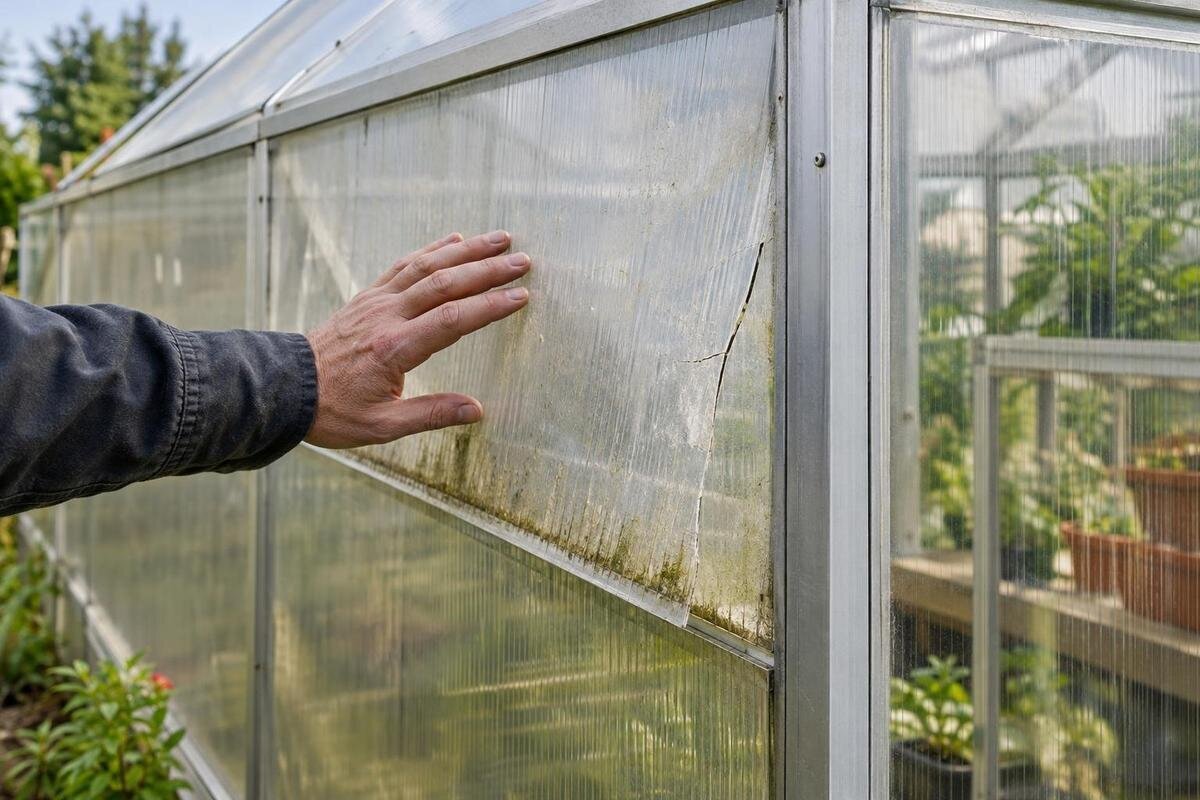
Polycarbonate greenhouse panels do not have a universal replacement age. Fading, haze, or scratches may be cosmetic, while a crack, puncture, split edge, or sheet that no longer stays seated can affect how the enclosure functions. The useful question is whether the panel is intact, retained as intended, and still meets the greenhouse maker’s guidance—not simply how old it looks. This guide separates appearance changes from damage, explains when an approved repair may suffice, and shows what to confirm before ordering a replacement.

There is no universal replacement date
Polycarbonate glazing has no universal replacement interval. The condition of a sheet depends on its specific construction, exposure to sunlight and weather, installation, cleaning history, and the greenhouse maker’s instructions. Panels on the same structure can age differently. Treat the installation date as a reason to find the manual and inspect, not as proof that the panels have failed. A change in clarity deserves attention if light through the greenhouse matters to your use, but there is no universal visual threshold. Follow guidance for the actual panel system rather than borrowing a service-life estimate or cleaning rule from another material.
Record the greenhouse maker, full model name, purchase year, and any serial, revision, or order number. These details can help a supplier trace the correct documentation, but the date itself does not decide whether a panel needs replacement. The T-Model Greenhouse Orangery listing can help you recognize a model name when searching your purchase records. Match that name against your invoice or assembly manual rather than relying on the greenhouse’s appearance. If you bought the structure secondhand, keep photos of any labels and ask the supplier what else is needed to identify it. Also distinguish the structure’s age from the panel’s age: a previous owner may have replaced some sheets. A simple record of known panel replacements gives you a more useful starting point than assuming every sheet dates from the original installation.
Damage that warrants prompt attention
Cracks, punctures, holes, missing fragments, or a split that reaches an edge are signs of physical damage, even if most of the sheet still looks clear. An opening can affect the greenhouse covering, and handling may make the damage worse. Arrange a prompt assessment and ask whether an approved replacement is needed. A mark that looks like a crack may instead be a surface scratch, but do not press, flex, or probe an installed sheet to find out. Check both sides only when they are safely accessible.
A panel that is badly bowed, has shifted from its intended channel, or no longer appears captured also needs attention. The sheet may not be the only issue: a retainer, fastener, frame alignment, or installation detail could be involved. Do not push a loose overhead panel into place or improvise extra clips or screws. Keep clear of a damaged overhead area and ask the manufacturer or a qualified greenhouse installer to determine whether the panel, its retaining parts, or both need an approved replacement.
Assess discoloration before replacing a panel
Yellowing, haze, surface scuffs, water marks, and fine scratches do not all mean the panel has failed. Dirt or deposits may come off with manufacturer-approved cleaning, while weathering and scratches may remain. Clean only in the way the panel maker permits, using an accessible area, and let it dry before judging the result. Avoid abrasive pads, strong pressure, or unapproved cleaners; a product suitable for another greenhouse material may not be suitable for polycarbonate. If the sheet remains intact and properly retained, a visual change alone may not justify replacement.
Compare the panel before and after cleaning in similar daylight rather than relying on a phone photo or a glance from an unusual angle. Consider whether the remaining haze meaningfully affects the light or visibility you need, and ask the manufacturer what criteria apply to that panel. Keep appearance and functional damage separate in your notes: describe the extent of clouding, then record any cracks or loose edges independently. That makes it easier to explain whether you want to restore the original appearance or address a damaged enclosure. If appearance is the main reason you are considering a new structure, the Pyramid-type greenhouse is one model you can include in a separate design comparison. Ask about its available glazing before comparing it with your current greenhouse; photographs alone cannot establish how clear a panel will look or how much light it will transmit.
Inspect the panel edges and retaining system
Look for damage where the sheet meets the frame. A chipped or split edge may prevent proper retention even when the middle of the panel looks sound. If your greenhouse uses multiwall polycarbonate, note whether dust or moisture appears between the walls. That can point to a panel, edge closure, or fit issue rather than dirt on the outside. Record its location and appearance instead of opening the channels or sealing them yourself; the manufacturer can identify which component is intended for that system.
A gap or loose-looking edge does not automatically mean the panel itself is the failed part. A retaining strip or another fitted component may be involved, so describe exactly where the movement or opening appears. Do not pry out a sheet to inspect hidden surfaces or force an edge back into a channel. In a parts request, distinguish the panel from the component surrounding it and include a photo showing their relationship. If your purchase records identify a greenhouse with a separate storage area, a listing such as the aluminum greenhouse with built-in storage may help you locate the relevant model family. Specify whether the affected sheet is in the growing area or another section, then ask the supplier to identify the panel and adjoining parts from your actual model documentation.

When an approved repair may be enough
If the sheet is intact, manufacturer-approved cleaning or replacement of a retaining component may resolve the problem without replacing the panel. A manufacturer’s manual may specify how to address a particular problem or identify a separately replaceable part. Follow that instruction only when it clearly applies to your greenhouse and panel system. If the cause is uncertain, ask the supplier or an installer to assess it before removing or altering anything. A repair that looks simple from inside may affect how the sheet is retained or how its edges are finished.
Do not assume that tape, glue, sealant, or a generic patch is suitable. Some cleaners, solvents, and adhesives can harm particular polycarbonate products, and an improvised patch may obstruct a flute or edge. Check the care instructions and written warranty terms before attempting a repair. When requesting approval, describe any products already used on the sheet and provide their names if available; that history may help the supplier assess the problem. Ask whether the proposed repair is a lasting remedy or only a temporary measure pending replacement. If no approved remedy is available and you are also considering a new greenhouse, the Bloomcabin Prestige Greenhouse can be included in that broader comparison. Keep the repair decision separate from choosing a new model so a cosmetic concern does not automatically become a whole-structure purchase.
Match a replacement to the original system
A replacement must match more than the visible length and width. Check the exact greenhouse model and revision, the panel part number if available, its thickness and construction, edge shape, and the way it sits in the frame. Multiwall sheets have different wall and flute arrangements from solid sheets. Color or tint, surface finish, and any marked UV-protected face may also matter. Use the manufacturer’s documentation to confirm the correct orientation and associated retaining parts; do not guess from a panel that looks similar.
Before ordering, ask the supplier to confirm in writing that the proposed part is approved for your greenhouse model and revision, not merely that it has similar dimensions. Confirm whether it includes the required edge or retaining components and which installation instructions apply. A product-family page such as the Classic aluminum greenhouse can help identify a model name; use the corresponding part documentation to establish the replacement specification. Ask whether the quotation is for a finished replacement panel or material that still requires preparation, and who will carry out any approved preparation. Make sure the quoted quantity corresponds to individual sheets rather than a set or package. These details help you compare like-for-like quotes. Do not cut, drill, change fasteners, or substitute a different glazing type unless the manufacturer and a qualified installer confirm that it is appropriate.
Decide whether one panel or several need replacing
One damaged panel may be a localized problem if nearby sheets remain intact, seated, and consistent with the manual. Before treating it as a one-panel job, check the surrounding edges and retaining parts from a safe position. If several panels show similar clouding, brittleness, cracks, or movement, ask whether there is a shared cause or whether the same approved replacement is available for each. Replacing a single sheet will not correct a problem with the frame or its fit, so recurring movement deserves an installer’s assessment.
A new panel may look different beside older ones even when it is the correct match. Ask the supplier about the expected color and finish before deciding whether to replace sheets in stages. Map the affected panels on a simple sketch so the quotation identifies each location and quantity. If several sheets need replacement, ask whether combining the work changes the installation scope compared with separate visits; do not assume either approach will cost less. Appearance alone is not a reason to discard sound neighboring panels. If the project also involves wanting more growing space, the large backyard greenhouse belongs in a separate whole-structure comparison. Distinguish the cost of restoring your current enclosure from the cost of expanding it, including the additional site and installation work in the latter quote.
Keep inspection and replacement work safe
Begin with a visual check from a safe position on the ground or inside the greenhouse. Note the panel’s location and photograph it only from a place you can reach without leaning on glazing or climbing onto the structure. Never stand or walk on a greenhouse panel. If a roof sheet is cracked, loose, or shedding fragments, do not handle it overhead; keep people clear of the area until it has been assessed. A photo is useful documentation, but it is not a substitute for checking a panel that cannot be viewed safely.
Panel removal or replacement may involve overhead access and components that must be released in a specific sequence. Use the manufacturer’s instructions and a qualified installer where the work is difficult, the sheet is damaged, or the correct handling is uncertain. Before a visit, explain whether benches, plants, stored items, or nearby structures restrict access to the affected section. Ask the installer what needs to be moved and whether the greenhouse must remain unused during the work. This helps establish a practical work area without requiring you to dismantle anything in advance. Do not remove nearby panels to get a measurement, alter the frame, or attempt an improvised support. If the repair depends on structural changes or a different glazing material, ask the manufacturer and an installer to determine what is suitable rather than modifying the greenhouse yourself.

When to compare a whole-greenhouse replacement
Replacing the whole greenhouse is a separate decision, not the automatic answer to one damaged panel. It may be worth requesting a comparison when several panels are affected, the frame also needs professional attention, approved replacement parts cannot be identified, or repeated panel problems continue after the fit has been assessed. Compare the actual scope of panel work with a whole-structure quote, including installation, access, and any work needed to suit the site. Do not base that choice on age or discoloration alone.
For a full-structure comparison, separate essential requirements from optional changes. Record the space you need for growing, the available footprint, and whether you want to keep the existing layout or choose a different type of greenhouse. The Lean-To Greenhouse listing gives an area range from 40 to 154 square feet, but floor area alone does not establish the exact dimensions or suitability for your location. Request the specifications and site requirements for the particular option you are considering. Compare those with the current structure’s footprint, access, and intended use rather than treating a similar area as an equivalent replacement. Ask the quotation provider to distinguish the greenhouse itself from removal of the old structure and any required site work. This makes a replacement quote more meaningful alongside a quote for restoring the existing panels.
What to include in a replacement-parts request
Send the greenhouse model, revision or serial number, approximate purchase date, and any part identifier from the manual or order record. Describe the panel’s location, such as a particular wall or roof section, and say whether one sheet or several are affected. Clear photos should show the whole section and a close view of the defect or edge, taken only from a safe position. Include dimensions or panel-construction details from documentation when available; do not remove an installed sheet just to obtain them.
Ask the supplier to confirm the exact approved panel, the relevant retaining or edge parts, and which installation instructions apply. If the cause is not obvious, ask whether an installer should inspect the frame or retention before a part is ordered. Check the written warranty terms before carrying out a repair or removal. Keep the supplier’s confirmation with the quote so the agreed part number and quantity remain clear when you place the order. If no suitable spare can be confirmed, ask separately about a whole-greenhouse replacement or upgrade, identifying models of interest such as the Classic Accoya / Limited Edition greenhouse. Request a distinct quote for that alternative rather than mixing replacement panels and a new structure in the same parts enquiry.
Frequently asked questions
Does yellowing mean I need to replace a polycarbonate panel?
Not by itself. Clean the panel only as its manufacturer directs, then assess what remains. Yellowing or haze can affect the amount of light coming through, but appearance alone does not establish that the panel has failed. Cracks, holes, damaged edges, poor fit, or manufacturer guidance are more useful indicators.
Can I patch a cracked greenhouse panel with tape or sealant?
Use a repair method only if the manufacturer approves it for that exact panel. A general-purpose adhesive, solvent, or sealant may damage the material or interfere with flutes and edges. If the panel is cracked or punctured, ask the manufacturer or an installer whether an approved repair exists or a matched replacement is needed.
Can I replace just one panel?
Possibly, if an approved matching panel is available and the surrounding frame and retaining parts are in suitable condition. Check compatibility with the exact greenhouse model and panel system. A replacement may look different from older panels, and overhead or difficult-to-reach work should be assessed by a qualified installer.
What does moisture inside a multiwall panel mean?
Moisture or debris between the walls can point to a panel, edge closure, or related fit issue; it is not something you can diagnose by cleaning the outside. Record where it appears and ask the manufacturer or installer to identify the correct component. Avoid opening or sealing the flutes with an improvised fix.
What information should I have before requesting a replacement panel?
Gather the greenhouse model and revision, purchase or serial details, the panel’s location, any part number, and clear photos. Include documented dimensions and panel construction if available, but do not remove an installed panel just to measure it. Ask the supplier to confirm the match for your exact greenhouse.
A sound replacement decision starts with the panel’s condition, not its age alone. Clean only as the manufacturer directs, distinguish surface wear from damage, and note whether the sheet and its edges remain properly retained. Then use the greenhouse’s own model and documentation to confirm the approved part or repair. When several panels or the frame are involved, have the wider problem assessed before choosing between panel work and a complete greenhouse replacement.
