
Aluminium or Cedar Greenhouse: What Does Ownership Involve?
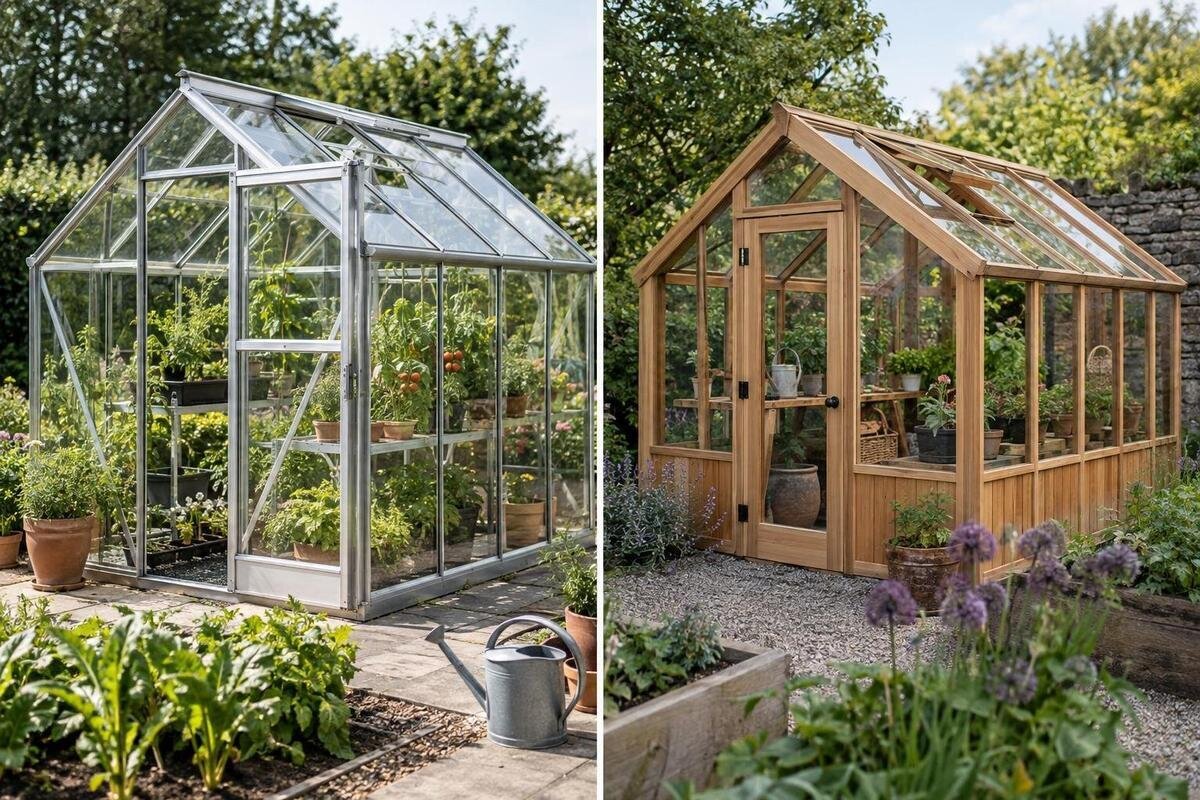
Greenhouse ownership guide
Choosing between cedar and aluminium is partly a question of how you want to spend time after the greenhouse is assembled. A timber frame may bring finish checks and renewal work, while an aluminium frame avoids wood-treatment tasks but still needs cleaning and inspection. Neither material, on its own, tells you how often work is due: the exact species or finish, construction details, glazing, size, site exposure and access all matter. Compare greenhouses of similar quality and configuration, then use the manufacturer’s written care guidance to set the workload. This guide explains which tasks are shared, which are material-specific and what to confirm before buying.

01
How frame material changes the care routine
Frame material changes the balance of work, but not the whole maintenance list. With an aluminium greenhouse, routine attention generally centres on cleaning and checking the finish, joints, seals and moving parts. A cedar greenhouse needs those shared checks as well, plus the question of what care the exact timber and supplied finish require. Cleaning glazing, clearing plant debris and keeping doors and vents operating smoothly are common tasks. The difference is not maintenance versus no maintenance, but whether the care plan adds timber-specific treatment or finish renewal. Larger structures and hard-to-reach surfaces can also add cleaning time, regardless of frame material.
Treat “cedar” and “aluminium” as starting points, not complete specifications. Ask which cedar species and grade are used, how the timber has been prepared or treated, and whether a coating is supplied. For aluminium, identify the frame finish and the manufacturer’s cleaning and repair guidance; do not assume every aluminium frame is finished the same way. Construction quality and detailing matter too: a joint that is difficult to inspect can take longer to maintain whatever the material. Compare care documents for the exact versions, and check whether each schedule covers the full greenhouse or only its frame finish.
Compare equivalent construction quality
A fair comparison starts with greenhouses of similar size, layout and intended use, then checks their construction details. Use drawings and written specifications to compare frame sections, joint design, glazing support, door and vent hardware, seals, fixings and base. Confirm the cedar species, grade, preparation and finish, and identify the aluminium system and finish. Keep glazing type and opening configuration as close as possible so you do not attribute differences in cleaning or access to the frame material. A low-maintenance claim is difficult to assess if one option has a different finish, more openings or a different base.
Make a side-by-side specification sheet and record each unanswered point. A Classic aluminium greenhouse is listed in area variants from 3.77 to 28.08 m², so use the selected size rather than a model name when estimating surfaces and access. For a cedar alternative, request an equivalent drawing and exact timber specification. Compare the same glazing, openings, base and finish scope, then ask whether each maintenance schedule covers the complete build. Mark unconfirmed details as unknown instead of assuming the two options are equivalent; this keeps construction quality separate from material preference.
02
Routine cleaning and inspection for aluminium
Begin with the manufacturer’s cleaning instructions for the frame and glazing; the approved methods may differ. For ordinary dust and plant residue, use a soft brush or cloth, then only the water or cleaner permitted for that surface. Rinse away residues if the instructions call for it, and avoid abrasives, strong solvents or pressure washing unless the supplier specifically approves them. An unsuitable product or tool can damage a coating, seal or adjacent finish. Pay attention to corners and joints where dirt collects, but avoid forcing water into connections or leaving cleaning products to dry on nearby materials.
Cleaning is also an opportunity to inspect. Note chipped or changed finish, damaged edges, movement at joints, loose-looking fixings, split or compressed seals, and doors or vents that no longer move smoothly. Record where a change appears and ask for the repair method that matches the exact finish; a touch-up product suitable for one coating may not suit another. The aluminium wall Lean-to Greenhouse is listed in size variants from 3.69 to 14.34 m². Use the selected size when estimating which surfaces you can reach and how much time shared cleaning will take.
What to watch on a cedar frame
On a cedar frame, inspect areas where water, soil, leaves or irrigation may remain against the timber, especially lower rails, joints, end grain and places screened from view. Look for damaged coating, lifting finish, open joints, persistent dampness or any change that the manufacturer’s guide identifies as needing attention. Keep the base visible by moving stored pots and trimming back plants where the design allows. Checking after a particularly wet spell can help you notice a developing issue. This is a visual check, not a diagnosis: if a part has softened, separated or stays wet, ask the supplier or a suitable timber professional for an assessment.
Do not treat every change in colour as proof that a frame has failed, and do not assume a surface can be recoated without preparation. Timber can alter in appearance with exposure; the care document should explain which changes are expected and what condition calls for repair or renewed finish. Keep dated photographs so a mark or coating change can be compared over time, rather than relying on memory. A record can also show whether an area repeatedly becomes damp or is hard to inspect, which is useful when discussing site-specific care with the supplier.

03
Request a written timber care schedule
Before choosing cedar, request written maintenance instructions for the exact greenhouse, timber species, preparation and supplied finish. The document should state which surfaces are treated, which checks are expected, what condition triggers repair or renewal, and the interval or decision rule for each treatment. If no interval is stated, ask the supplier to clarify it in writing instead of applying a rule found online. Timing can depend on the finish and actual exposure, so a generic “every few years” statement is not enough to plan ownership. Ask when the schedule begins and whether it covers hidden joints or timber ends as well as accessible faces.
Also establish which products and preparation methods are approved, whether cut ends or hidden faces need separate attention, and how to protect glazing, seals and hardware during any work. Ask what to do if a coating is scratched or peeling, and whether care differs for an untreated or factory-finished option. Keep the answers with the order documents and put the stated checks on a calendar. Apply the same document test to aluminium: the Limited Edition Aluminium Greenhouses name identifies a model family, but it does not by itself tell you the selected finish’s cleaning or repair requirements. Request instructions for the specific version quoted.
Check the base, joints and water paths
Ownership extends beyond the visible frame. Compare how the greenhouse meets its base, how each element is anchored, and what material is used for the frame, base, fixings and any contact strips. Ask how timber near ground level or the base is protected and which connections require inspection. These interfaces may need different checks from the main uprights, and a hidden edge can be easy to miss in a product photograph. A named option such as the Prestige Greenhouse with Metal Base makes the base a separate point to assess; confirm the exact base and connection specifications rather than assuming the word “metal” settles every care question.
Check the supplier’s drawings or guidance for water paths: where run-off goes, whether gutters or channels are fitted, and which areas should remain clear for inspection. Clear accessible drainage features as instructed, and avoid letting soil, leaves or stored pots hide the lower rails. Persistent dampness around a timber contact point should be handled according to its care plan; on either frame, blocked outlets and concealed joints make checks less effective. Do not improvise a base or anchoring change to solve a moisture or stability concern. Ask the supplier or an appropriate professional to assess support and proposed alterations.
04
Include glazing, doors, vents and access
An aluminium frame does not remove the work associated with glazing or moving parts, and cedar does not change the care instructions for the glass. Dust, pollen, water marks and plant residue can collect on panes, seals and frame edges, so use a cleaning method compatible with each surface. Check glazing retainers and seals as described in the product guide instead of tightening or replacing parts by guesswork. Hinges, handles, latches, vents and door tracks need to be kept clear and checked for smooth operation. If a part binds or appears damaged, consult the supplier’s guidance before adjusting it.
Access determines how realistic those jobs are. Before ordering, consider which panes, roof sections, vents and high corners can be reached safely and which may require suitable access equipment or a service visit. Never stand or lean on glazing, and do not use the frame as a step; plan a safe way to reach surfaces you cannot clean from the ground. The T-Model Orangery Greenhouse is listed in size variants from 16.52 to 30 m², so consider the selected scale and reachable surfaces when estimating shared cleaning effort. The same check applies to either frame material.
Let site exposure guide inspections
A sheltered courtyard and an exposed plot do not put the same demands on a greenhouse, regardless of frame material. Nearby trees can leave leaves or sap; irrigation and roof run-off may keep lower sections damp; dust or salt deposits can collect on surfaces in some locations. Sun, shade and prevailing weather influence what accumulates, but conditions vary from site to site, even within the same town. Walk the proposed location and note splash, debris, standing moisture and surfaces that will be hard to inspect. Use those observations to focus checks where they are most useful, rather than relying on a broad claim about conditions across South Africa.
Ask the supplier how its recommended care routine applies to your exposure, and whether the materials and finish of the selected version are intended for those conditions. A design name alone cannot answer this: if considering the Pyramid Greenhouse, confirm its frame material, finish and care guidance for the configuration being quoted. Plan access around likely cleaning points and keep debris from hiding the base. For persistent standing water or a question about support, seek advice from the supplier or a suitably qualified professional instead of making an unapproved alteration.

05
Turn care instructions into a realistic workload
Turn the supplier’s instructions into a list of tasks rather than treating maintenance as one vague annual job. Separate routine cleaning from condition checks, timber treatment or finish renewal, and care for glazing, vents, seals and drainage. Put the manufacturer’s stated intervals beside each task; if the instructions do not set one, ask rather than inventing a date. A version described as having storage, such as Limited Edition Aluminium Greenhouses with Storage, should appear as its own checklist item. Confirm the storage section’s materials and whether its cleaning or finish guidance differs from that of the growing area.
Estimate ownership effort as visits, time, access and consumables, not through an unsupported lifespan or price claim. Count the surfaces that need attention, how easily you can reach them, whether another person or a service visit may be needed, and which approved products the instructions call for. Add checks after unusual weather only where the supplier recommends them, and keep a record of dates, repairs and product names. This makes two otherwise similar options easier to compare: you can see whether you prefer a routine centred on cleaning and inspection or one that also includes scheduled timber finish work.
Choose a routine you can sustain
If reducing timber-specific upkeep is a priority, aluminium may suit you because it generally avoids a wood-treatment schedule; confirm what the exact frame finish still requires. Cleaning, finish checks and attention to shared greenhouse components remain part of ownership. Cedar may suit you if you value a timber frame and are prepared to follow its specified care plan. Neither preference replaces checking build quality or the site. Compare the written routine with the time you can realistically set aside, especially if access is awkward or a selected finish requires work that would be difficult to do yourself.
Make the final comparison using the configuration and size you would actually buy. The Spacious Greenhouse is listed in options from 47 to 70 m²; its name and area range alone do not establish its frame material or maintenance needs. Once those details are clear, consider who will clean the glazing, inspect the frame and hardware, and carry out any specified finish renewal. Distinguish tasks you can comfortably manage from work you would need help with. This turns the care schedule into a practical ownership decision, rather than another comparison based on a general “low maintenance” label.
Frequently asked questions
Which needs less maintenance: aluminium or cedar?
Aluminium generally avoids timber-specific treatment or finish-renewal work, but it still needs cleaning and checks on the frame finish, connections and shared components. Cedar may involve additional care for the timber, depending on its preparation and finish. The exact written instructions, the greenhouse’s size and its exposure are better guides than the material name alone.
How often should a cedar greenhouse be treated?
There is no single interval that suits every cedar greenhouse. Ask for a written schedule for the exact timber, preparation and supplied finish, including the condition that triggers renewal and which products are approved. If the instructions give no interval or decision rule, clarify it with the supplier rather than relying on a general rule.
Is an aluminium greenhouse maintenance-free?
No. Aluminium avoids wood-treatment tasks, but the frame still needs cleaning and inspection. Check the supplier’s guidance for the particular finish, and include seals, fixings, doors, vents and glazing in the care plan. A damaged or marked surface may need a specific repair method, so do not assume that every coating can be treated alike.
Does greenhouse size affect upkeep?
Yes. A larger structure can mean more surfaces to clean and inspect, while height or awkward access can add time and may require a safe access plan. Compare the same approximate size and layout when weighing frame materials, then use the selected dimensions to estimate the work involved.
What should a like-for-like comparison include?
Compare construction quality, size, glazing, openings, base, seals and hardware alongside the frame material. For cedar, confirm the species, preparation and finish; for aluminium, establish the frame finish and its care instructions. Then compare written maintenance guidance for the exact configurations, not broad claims about either material.
Aluminium generally avoids timber-specific treatment, but it still needs cleaning, inspection and care for shared greenhouse components. Cedar may add treatment or finish renewal, depending on the timber and its supplied finish. Compare equivalent construction quality, size and configuration, then consider how exposure and access affect the work involved. The better choice is the greenhouse whose upkeep fits both your preferences and the time and help you can realistically commit to it.
