
Is Bubble Insulation Worth Using in a Glass Greenhouse?
Greenhouse heating and winter energy
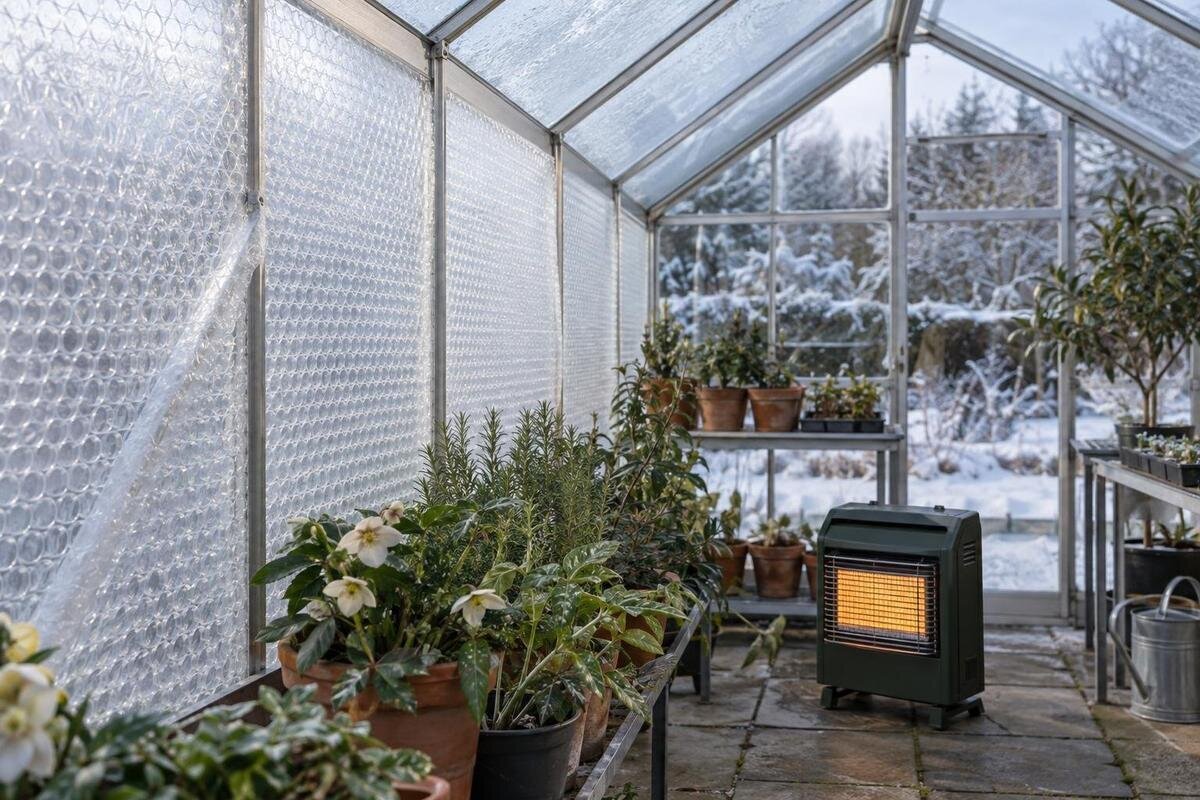
Bubble insulation can reduce heat transfer through the glass it covers, but that does not guarantee a lower energy bill or a warmer greenhouse by a particular amount. In South Africa, the result depends on your site's winter nights, exposure, heater use and electricity tariff, as well as the area of glazing covered. The film also changes the light reaching plants and may conceal condensation or interfere with openings if it is poorly planned. The useful question is not whether bubble film insulates in theory, but whether measured heating demand falls enough to outweigh its daylight, moisture, fixing and replacement costs in your greenhouse.

What bubble insulation can change
Bubble insulation is a lining, not a source of heat. The air pockets in the film add a layer between greenhouse air and the glass; where it is continuous and correctly fitted, it can slow heat transfer through the covered glazing. That is only one part of the greenhouse envelope. Heat can also escape through uncovered panes, gaps around doors and vents, joints and the base, while opening a vent deliberately exchanges indoor and outdoor air. A lining cannot correct every leak or supply warmth after sunset. If the greenhouse is not heated, it may slow cooling, but there is no heating-energy saving to record. Think of it as one measure within the structure, not a substitute for sound glazing or heating.
How much difference it makes depends on the exact film, the glass and frame arrangement, area covered, air movement around the layer, outdoor conditions and how the greenhouse is operated. A percentage advertised for a different building or test setup is not a dependable promise for your structure. Ask whether a thermal figure applies to film alone or to a specified glass-and-film assembly, how the film was fitted, and which temperatures, coverage and ventilation were assumed. If a U-value or thermal-transmittance figure is quoted, check the units and test method, and ensure it describes the complete build-up you intend to use. Ask whether the result was measured or modelled. If evidence is missing, do not assign a fixed saving before measuring.
What to record before estimating heat savings
Before estimating, describe the greenhouse and heating routine you actually have. Note the selected size, exposed glazing area if available, visible gaps or air leakage, heater model and documented electrical input, control setting and usual running schedule. Floor area is not the same as glazed area; two structures with similar usable space can present different amounts of glass to the weather. A larger difference between indoor and outdoor temperatures generally means more demand through the same glazing, while wind, venting, door use and daytime sunshine also affect the result. Note whether the heater runs only at night or also on overcast days, because the operating period changes total use. Record these conditions as assumptions rather than turning a catalogue size or heater label into a predicted bill saving.
The T-Model Orangery Greenhouse listing gives a size range of 16.52 m² to 30 m², but that figure does not describe the glazed surface or a lined assembly's heat-loss performance. For any greenhouse quote or online claim, ask which exact version and glazing were tested, how much was covered, what indoor and outdoor conditions were assumed, and whether ventilation losses were included. Find out whether a figure is an observed reduction in heater energy or a prediction based on a model. Ask whether the estimate allows for solar gains and air leakage instead of assuming all heat loss passes through glass. If comparable data for the complete setup is unavailable, base the financial decision on meter readings from your own heater.
Measure heater use before and after
For an actual comparison, meter heater energy in kWh during a baseline period and again after the lining is fitted, while keeping the heating routine and controls as consistent as practical. Compare periods with similar outdoor temperatures and weather, rather than a mild week before installation with a cold one afterwards. Keep notes on wind, daytime sunshine, vent or door openings, plant changes and any other heat source; each can change demand independently of the film. Use periods of comparable length and repeat the comparison when conditions allow. If you cannot match the weather closely, report the readings alongside the conditions instead of presenting the raw difference as a film-only result. One night can illustrate what happened, but cannot establish a reliable seasonal saving.
Record indoor temperature as context, using the same logger and location each time, and note whether the greenhouse maintained the conditions you intended; lower energy use is not a benefit if the space simply became colder. A heater's rated electrical input describes its nominal demand when operating, not the kWh it consumed over your comparison period as controls cycle. For fixed equipment, choose an appropriate metering method with a qualified electrician rather than altering wiring yourself. When comparing results for a Pyramid Greenhouse, identify the exact size and panels lined so each set of readings refers to the same setup. Keep plant numbers and positions, as well as the heating schedule, consistent where possible so the measurement answers the insulation question.
Check daylight as well as heat retention
Light is a separate cost of insulation. A film that looks clear can still absorb, reflect or scatter enough daylight to change what reaches the crop; haze, dust, bubbles, seams and the angle of installation matter. The relevant figure is for the exact film, not generic clear plastic, and a visible-light transmission percentage is not automatically the same as plant-useful light. Ask for transmission data and its test method, including photosynthetically active radiation (PAR) data where that is relevant to the crop. Diffusion can change how light is distributed as well as the total, but a softer spread does not prove the total useful light is unchanged. If reliable data is unavailable, allow for a possible trade-off rather than assuming there will be no loss.
Before lining all the glass, note readings at representative crop positions with the same suitable light meter, height and method before and after a small trial; compare similar times and sky conditions. A lux meter can show relative change when used consistently, but it is not a direct PAR measurement, so do not present it as an exact plant-light result. Check shaded and exposed benches separately: a whole-house average can hide a meaningful drop for one group of plants. If you are considering the Limited Edition greenhouse with built-in storage, mark the proposed lined panes and crop positions on the layout before choosing how much film to buy. Compare the film's declared performance with your crop's tolerance rather than judging by appearance.

Condensation still needs managing
Bubble film does not remove moisture from greenhouse air. Water vapour from growing media, plants and other wet surfaces remains present; when humid air meets a surface cool enough for condensation, droplets can form. Depending on fit and conditions, lining may change which surface is coldest, leaving water on the film or in the gap between film and glass. The hidden side may be harder to inspect, and water can obscure the view or leave a persistently damp area. Assess where moisture collects and whether ventilation remains effective, rather than treating condensation as proof that the insulation has failed or that humidity is under control. Ask the film supplier how it is intended to be used in damp conditions and follow the greenhouse maker's guidance for the glazing.
Plan inspection before fixing the lining: can you see the glass, frame joints and seals, and can you remove or lift a section if moisture accumulates? Preserve access to clean the pane using methods permitted by its manufacturer, and check for trapped water after cool, humid periods. If marks or dampness appear, locate the moisture before leaving the covering in place; changing ventilation or removing the lining may be necessary, depending on the instructions. When discussing a lining for the Bloomcabin Prestige Greenhouse, ask how you would reach concealed panes and joints for these checks. Include inspection access in the proposed layout rather than waiting until moisture becomes visible.
Choose which glazing to cover
Coverage should be mapped panel by panel, not chosen from a generic rule to cover every surface. Roof panels, side glazing, end walls and doors can differ in exposure and in how much useful light they provide to plants. The best balance depends on the site's orientation, shade, wind exposure, crop layout and the times of year you use the greenhouse; no compass-based rule suits every site. A limited trial on glazing that contributes less useful light may help assess the trade-off, but its result will not automatically predict whole-house savings. Other uncovered areas and air exchange remain part of the overall heat demand.
Measure what would actually be covered and distinguish fixed panes from opening sections; leave room for handles, latches, vents and access routes. Do not count a film roll's stated area as installed coverage: overlaps, trimming and uncovered edges change the lined area, while seams may leave sections exposed. The Spacious Greenhouse listing gives a range of 47 m² to 70 m²; that broad figure does not replace a panel plan for the exact version. Compare the proposed coverage with plant positions and the route for routine cleaning before buying film or fixings. If only some panes can be covered safely, record exactly which ones so later measurements are interpretable.
Use fixing methods approved for the frame
Attachment should be approved for both the greenhouse frame and the particular film. Common approaches include greenhouse-specific clips or a compatible channel; some systems use a support wire with clips, but profile shapes and available fixing points differ. A clip that fits one frame may not fit another, and a film supplier's general recommendation does not override the greenhouse maker's guidance. Ask which clip, channel or support arrangement is permitted for the actual profile and whether the film maker approves it. Keep the covering supported by the intended structure, not by the glass as an anchor. Do not drill panes, clamp them or apply adhesive to glazing or coatings unless the relevant manufacturer expressly confirms that method.
Check that clips cannot interfere with opening panes, doors, seals or drainage paths and that removal for cleaning will not damage the frame or film. If a supplier recommends a wire or rail arrangement, confirm how it attaches to the chosen structure and how it avoids rubbing or pulling on glass. For the Classic aluminium greenhouse, ask which profile and attachment details apply to the version you are considering. Avoid buying a universal fixing kit until its fit is confirmed. Keep product instructions for both the covering and frame together so they are available when fitting or removing the lining.
Keep ventilation and access clear
Insulating a pane is not a reason to seal the greenhouse's ventilation. Vents and doors may be needed for day-to-day temperature and moisture management, and their positions must remain usable after the lining is fitted. Do not cover hinges, handles, moving panels or controls, or let loose film obstruct an opening. Check the layout in both open and closed positions against the manufacturer's instructions. Bubble film does not replace planned ventilation, and retaining heat does not mean leaving vents shut in every condition. If the lining makes a vent awkward to use or difficult to inspect, its practical cost may outweigh a modest reduction in heat loss; clearances are part of compatibility, not an optional finish.
A lean-to layout has a junction with an adjoining wall, but a product name cannot confirm how a chosen version meets that wall or where its vents and doors sit. The Lean-to Greenhouse is listed from 3.69 m² to 14.34 m²; ask for the configuration drawing and permitted attachment points before deciding where a lining can run. Keep wall junctions and glazing edges inspectable, and do not assume bubble film repairs a draught or a gap. If air leakage is suspected, have the actual joint identified and addressed by the appropriate greenhouse supplier or a qualified professional; covering it may conceal rather than solve the problem.

Calculate savings in rand
For an electrically heated greenhouse, turn the measured energy difference into a rand estimate using the variable charge on your own bill or supplier tariff for the hours concerned. In simple terms, multiply the kWh reduction you observed by the applicable rate per kWh; if your tariff changes by time or usage band, apply the relevant rate to each part. Fixed monthly charges are not a saving caused by insulation. If you use another energy source, use its own meter and billed rate rather than converting a heater label into a cost. Keep the period and assumptions visible, including the number of comparable nights and whether indoor conditions were maintained, so warmer weather is not presented as a product saving.
Compare the estimated seasonal benefit with the actual cost of film, compatible clips or channels, installation time, cleaning, storage and possible replacement, as well as the value of any lost daylight for your plants. For a Limited Edition aluminium greenhouse, use readings from your selected greenhouse and heater when assessing that outlay. If there is no powered heating, do not describe slower cooling as an electricity-bill saving. It may still matter for plant protection or timing, but that is a different outcome to record and weigh against the lost light and work involved.
Is a trial worthwhile?
Bubble insulation is most plausible where a greenhouse is heated regularly, comparison suggests that covered glazing is a meaningful source of heat loss, the fixing method is compatible and reduced daylight is acceptable for the plants grown. It is less compelling if the space is rarely heated, daylight is already limiting growth, or installation would obstruct ventilation or inspection. These are decision points, not a universal threshold: one grower may value slower cooling for a specific crop, while another needs every available ray for active growth. Decide whether your priority is lower metered energy use, slower temperature change or another measurable outcome before choosing a roll. Do not treat those benefits as interchangeable.
A small, reversible trial can test an uncertain case only when both greenhouse and film instructions permit the fixing. Note the panels covered, heater kWh, indoor conditions, local weather, plant-level light readings and any condensation before and during the trial. Keep controls and normal ventilation consistent; compare similar periods, and be conservative about extending a result from one panel to every surface. If the film cannot be fitted without stressing glass, hiding recurring moisture or reducing required daylight, leave it out or seek a different verified system. A tidy installation is not evidence of energy saving; retain it only if the measured trade-off suits your use.
Frequently asked questions
Is bubble insulation worth fitting if I do not heat the greenhouse?
Not for an energy-bill saving: if no heat is being supplied, there is no heater energy to reduce. It may slow cooling, but cannot guarantee a particular night temperature. Decide whether that separate effect matters for your plants, and measure it separately from any cost saving.
How can I measure the energy saving?
Record heater energy in kWh before and after fitting, keeping the heating routine as consistent as possible and comparing periods with similar weather. Check that the greenhouse stayed at comparable conditions, then use the applicable rate on your own tariff to estimate the bill effect.
Will clear bubble film reduce light?
It can. The amount depends on the exact film, its condition and how much glazing it covers. Ask for transmission data for that product and compare light at crop level; clear-looking film should not be assumed to transmit all the light plants can use.
Will bubble insulation stop condensation?
No. It does not remove moisture from the air and may shift condensation to the film or the space between film and glass. Keep ventilation usable and inspect hidden surfaces, following the instructions for both the greenhouse glazing and the lining.
Can I stick bubble film directly to the glass?
Only if the greenhouse and film manufacturers specifically approve that method. Do not drill, clamp or put adhesive on glazing or coatings without confirmation. Frame clips or channels still need to suit the actual profile and be approved for the film.
In a glass greenhouse, bubble insulation is a trade-off between heat retention and the daylight available to plants, with moisture and compatible fixing methods to consider as well. A lower meter reading is meaningful only when indoor conditions stayed comparable. Keep the lining only if the measured result suits your use and the glazing remains inspectable; when light loss, trapped moisture or fixing uncertainty outweighs a demonstrated saving, leaving the glass uncovered is the more sensible choice.
