
Buying a Greenhouse for Seed Starting: Benches, Light & Temperature Control
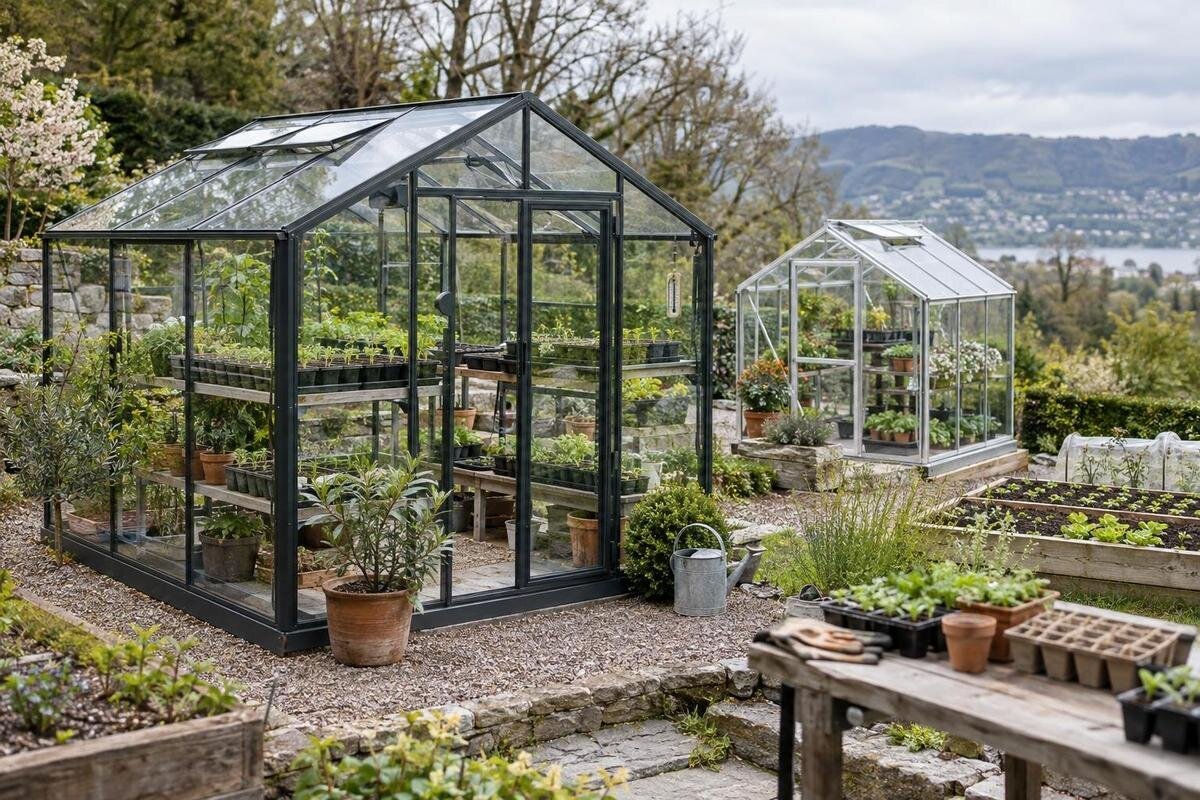
Greenhouse buying guide
Starting seeds in a greenhouse is a space-and-control decision, not simply a matter of buying the largest structure that fits. Tray numbers determine how much bench area is genuinely useful; the site determines how much natural light reaches it; and temperatures can still swing under cover. A practical choice leaves room to water and move trays, gives you a way to manage heat and airflow, and suits the rhythm of your sowing calendar. Compare documented product details with your own seed list and garden conditions, rather than relying on exterior appearance or a model name. The checks below focus on the working space and controls seedlings actually need.

Calculate bench space from your busiest sowing period
Start with the busiest point in your sowing calendar, not a greenhouse’s nominal floor area. List the batches that will be inside together, count their trays and measure each footprint. Include the overlap between freshly sown trays and seedlings waiting to be potted on; that peak, rather than a quiet week, determines working capacity. Draw a simple plan to scale, placing trays on proposed benches and leaving clear surface for labels, sorting and lifting a tray out without moving its neighbours. If sowing happens in waves, estimate the largest overlap you actually expect. Measure different tray formats separately, and include covers or domes if you use them, since the full setup needs clearance.
Compare the sketch with usable internal measurements, allowing for the frame, door opening and any area that cannot take a bench. Outside dimensions alone do not show how much continuous work surface is available. A page such as the Bloomcabin Prestige greenhouse metal base listing is a place to check for a dimensioned plan or written interior measurements; do not treat its name as proof of bench capacity, included furniture or a particular footprint. Confirm whether benches are included, optional or not specified, and ask for missing measurements before choosing. Check bench depth and uninterrupted width as well as length, and leave room to reach the rear trays.
Check how daylight reaches the proposed site
Assess daylight at the exact site before choosing a structure. Watch where shade from a house, boundary wall, tree or neighbouring building falls in the morning, around midday and later in the afternoon; repeat the check at another time of year if possible. A bright patch at midday may be shaded for much of the day, while open exposure can bring strong direct sun and heat. Note overhanging branches and nearby reflective surfaces as well. Mark which planned bench positions receive the best natural light, because one corner may be bright while another is shaded. A time-stamped note or photograph from the same spot can help you compare the shadow pattern.
Seedlings generally need adequate light after emergence, but the amount and intensity that suit a crop depend on its instructions and stage. Avoid permanently placing lower or light-sensitive trays beneath taller plants, and plan a way to adjust exposure during hot, bright spells if needed. If natural light is limited, investigate supplementary growing lights that suit the crops and space, and check how they can be safely installed. When reviewing the Bloomcabin Orangerie listing, look for written details about its covering and any stated light properties; neither the product name nor an image confirms light transmission. Compare those details with your site observations, and allow room for any separate lighting equipment you decide to use.
Match temperature control to the seeds you plan to start
A greenhouse can warm quickly in direct sun and cool again as conditions change; it moderates exposure rather than holding one seed-starting temperature automatically. Different seeds, and sometimes different stages of the same crop, have their own temperature requirements, so use the packet or supplier’s guidance for the varieties you grow. A min/max thermometer placed at tray height helps reveal daytime peaks and overnight lows over several days. Check readings where the benches will stand: a measurement in a different corner may not represent conditions around the seedlings. Record conditions before and after changing shade or ventilation. If readings do not match the crop guidance, a larger greenhouse alone will not solve the mismatch.
Decide which controls you need from the structure and which would be separate equipment. Ventilation and adjustable shade can help manage excess warmth; a propagator or suitable heater may be relevant when more warmth is needed, but warming a small tray area differs from heating the entire greenhouse. Ask whether a control applies to one propagation zone or the whole structure, and what equipment is actually included. For the Glass Greenhouse Plus 385 listing, check published information on the covering, openings and included controls before comparing it with your temperature notes. Do not infer thermal performance from a model name. Have outdoor electrical equipment and its installation assessed by a qualified electrician.
Compare ventilation and vent operation
Ventilation is a control decision, not a detail to leave until seedlings look stressed. Openings allow warm air to escape and fresh air to move through; their position and practical accessibility matter. A door gives access, but do not assume that opening it alone provides the airflow your layout needs. Consider whether you can reach and operate vents with benches in place, and whether a shelf or tall tray could obstruct an opening. Air movement also matters when trays are watered and the greenhouse stays closed. If a plan shows vent positions, consider how they relate to your benches. Ventilation helps you manage conditions but does not create cool weather or guarantee an even temperature at every bench.
Compare manual vent operation with an automatic opener only after checking how the mechanism works and whether it is included or sold separately. If you plan to operate vents by hand, consider whether you can attend the greenhouse during the warmest part of the day. If you prefer an automatic device, verify compatibility with the vents and find out whether it can be operated manually when needed. The T Model orangery greenhouse listing should be assessed using its documented vent and accessory details, not its title. Ask the seller to clarify omissions; do not assume that a control or opener is part of the structure.

Choose benches and shelves for the full seedling stage
Bench choice affects how easily you sow, water and move seedlings, not just how many trays fit. One continuous bench can keep batches together, while separate sections can leave a place for potting on or distinguish sowing dates; choose according to your routine. Check the dimensions, support information and cleaning guidance for benches you intend to use. Trays, compost and water add weight, so use only a bench whose documented capacity suits the intended load rather than guessing from its appearance. A surface that can be wiped down and kept clear is easier to reset between sowing rounds than a crowded worktop. Leave enough space to lift trays without tipping them.
Shelves can add storage but change the light and headroom available above and below. A higher tier may shade lower trays, and seedlings will need more vertical clearance as they grow. Map the full sequence from newly sown tray to plant ready to move, rather than laying out only the germination stage. Decide whether benches and shelves are included in the greenhouse order, bought separately or supplied from elsewhere, and note the dimensions of any existing units. On the pyramid greenhouse for masonry bases product page, check the stated interior measurements and accessory list; its name alone cannot tell you whether a specific bench arrangement will fit. Measure clearance above the bench with trays in place.
Measure the site, access route and working clearance
Measure the space the greenhouse will occupy, then mark its footprint on the ground before ordering. Include the route to the entrance, the opening space required by the door and room to carry trays, water and supplies without squeezing past obstacles. Check for shade from buildings or trees, runoff, areas that stay wet, wind exposure and falling branches. These conditions affect everyday access and may influence the base or anchoring arrangement, so do not decide foundation details by guesswork. If the ground is uneven or the structure requires a prepared base, ask the supplier or an appropriate installer what the product needs. Leave working clearance to inspect and clean the greenhouse as well as to assemble it.
Use external dimensions to test whether the structure fits the garden and internal dimensions to plan benches; these are different checks. Confirm the access opening, any stated base requirements and whether the selected position leaves room for assembly and later maintenance. A model name is not a substitute for a dimensioned drawing or installation information. For example, assess the aluminium classic greenhouse listing using only its published specifications and installation information, rather than assumptions based on its title or photograph. If a missing detail determines whether your site is suitable, ask for clarification before ordering. Seek qualified advice on structural base or anchoring questions.
Check the covering and what the order includes
Read the covering or glazing description instead of judging it by a photograph. Confirm the material stated by the seller, how the covering is supplied, its care guidance and any information about replacement panels or parts. If the page gives light-transmission or insulation information, compare the wording with your priorities; do not treat general marketing language as a guaranteed growing temperature or a promise of a particular light level. Cleaning access matters because you will need to attend the inside surfaces and vents. Check what upkeep is described and whether the components can be reached without disrupting the seed benches. If covering details are absent, ask rather than filling the gap with assumptions.
Separate the greenhouse structure from equipment that may appear in photographs or diagrams. Make an inclusion list for benches, shelves, vents, openers, shade, propagators, heaters and base components, marking each as included, optional or not stated. This makes comparisons fair when one page describes a bare structure and another describes accessories separately. If the aluminium wall greenhouse is on your shortlist, confirm its documented installation type and supplied components directly; the title does not establish how it is built, what is included or whether it suits your layout. Keep written seller replies with your order notes, particularly when they affect usable dimensions or temperature management.
Confirm base, assembly and delivery requirements
Before ordering, read assembly information and base requirements as carefully as dimensions. Check what the instructions say the site must provide, which components are supplied and whether preparation is expected. If a base, fixing or groundworks question affects structural suitability, follow the manufacturer’s guidance and consult an appropriately qualified installer; do not improvise from a photograph. Confirm that the position is accessible for assembly and that the route into the garden can accommodate the delivery components. This matters if a greenhouse must pass through a narrow gate, doorway or side passage. Also check whether you will arrange assembly yourself or need help with it.
Make a written checklist for the chosen listing: model, documented dimensions, covering, ventilation, accessories, assembly requirements and every unanswered question. The limited edition aluminium greenhouse can be compared by the same criteria as any other candidate; its name alone does not establish dimensions, included parts, performance or suitability for your site. Review the retailer’s current order and delivery terms for your address, including any conditions relevant to access, and resolve unclear details before purchase. Keep your bench sketch and tray measurements nearby so you can check that the ordered configuration matches the layout you planned.

Plan daily work around watering and potting on
Plan how water and routine tasks will work once the greenhouse is full. A nearby tap may reduce carrying, but think through the route so watering does not mean moving every tray or stretching over seedlings. Keep a little space for potting on, labels, a notebook and empty trays; these items compete for bench space once sowing begins. Store tools and supplies without blocking vents or occupying the brightest bench positions. Decide how you will clear plant debris and clean reusable trays between batches. A tidy, repeatable layout is easier to maintain when there is a defined place for watering, temporary staging and putting equipment away.
Decide whether you will sow and pot on inside the greenhouse or use a separate work surface nearby. A dedicated area for preparing growing media can keep the bench clearer, while a nearby place to set down a tray makes routine checks easier. If you plan to run supplementary lighting or heating, confirm that the equipment is suitable for the setting and have outdoor electrical provision assessed and installed by a qualified electrician; do not assume it is included with the greenhouse. Place the thermometer where it reflects conditions around the seedlings, and keep notes on sowing dates, germination and changes to ventilation or shade. These records can help you refine the setup for later batches.
Compare shortlisted greenhouses against one layout
Shortlist structures only after you have a plan for peak tray numbers, bench arrangement and the proposed site. Compare each candidate against the same questions: do the documented interior measurements work; what is stated about the covering; how are vents operated; which temperature-control accessories, if any, are included? Check whether you can reach the trays and openings after the benches are installed. Put the answers in a simple comparison note, alongside any details the seller has yet to confirm. Treat an unanswered point that affects fit, airflow or control as a reason to pause, not as something that will necessarily work itself out after assembly.
Separate essential requirements from conveniences. A workable footprint, accessible benches and a realistic plan for the site’s light and temperature are essentials; a particular shelf arrangement or automatic control may be a preference if you can manage without it. Add the expected cost of separate benches, shade or heating equipment to the structure’s quoted total before comparing options, and allow for any ongoing needs you have identified without assuming accessories are included. Recheck the product documents and any written clarification against your sketch before ordering. That final comparison keeps the purchase focused on seed-starting capacity and daily handling, rather than exterior appearance or a model title.
Frequently asked questions
How do I calculate the bench space I need?
Count the trays that will be in the greenhouse at the same time, measure their footprints and sketch them on the proposed benches. Include overlap between sowing and potting-on batches, space to reach and lift trays, and any covers you use. Compare the layout with stated internal and bench dimensions, not the greenhouse’s outside footprint.
Will a greenhouse keep seedlings at a steady temperature?
Not by itself. Sun can warm the structure quickly, while conditions can cool again later. Check the needs of the seeds you plan to grow and monitor temperatures where the trays will sit. Ventilation, shade or separate heating equipment may form part of your plan, but a greenhouse alone does not guarantee a fixed temperature.
Is natural light through the greenhouse covering enough?
It depends on the covering, the position of the greenhouse and the light reaching each bench. Check for shade at different times of day and compare any stated covering details with your needs. If natural light is limited, investigate suitable supplementary growing lights and confirm how they can be safely installed.
Should I choose automatic vent openers?
They may suit your routine, but check whether they are included or sold separately, whether they are compatible with the vents and how they operate. Consider whether you can still check conditions and access the vents when needed. Do not treat an automatic opener as a guarantee of even temperatures.
What should I confirm before ordering?
Check the internal and external dimensions, door access, covering, ventilation details, included accessories, assembly information and base requirements. Compare these with your tray layout and site measurements. Resolve any missing details that affect fit, access or temperature control before placing the order.
The right greenhouse for seed starting is the one that fits your busiest tray layout and the light and temperature conditions of its actual site. Work out bench needs first, then compare the documented interior, covering, ventilation and included equipment. If a detail affects access, fit or control, resolve it before ordering or plan for a separate solution. That approach makes the finished space more useful for sowing and caring for seedlings than choosing by exterior size alone.
