
Buying a Greenhouse Kit: What Assembly Skills and Tools Do You Need?
GREENHOUSE BUYING GUIDE
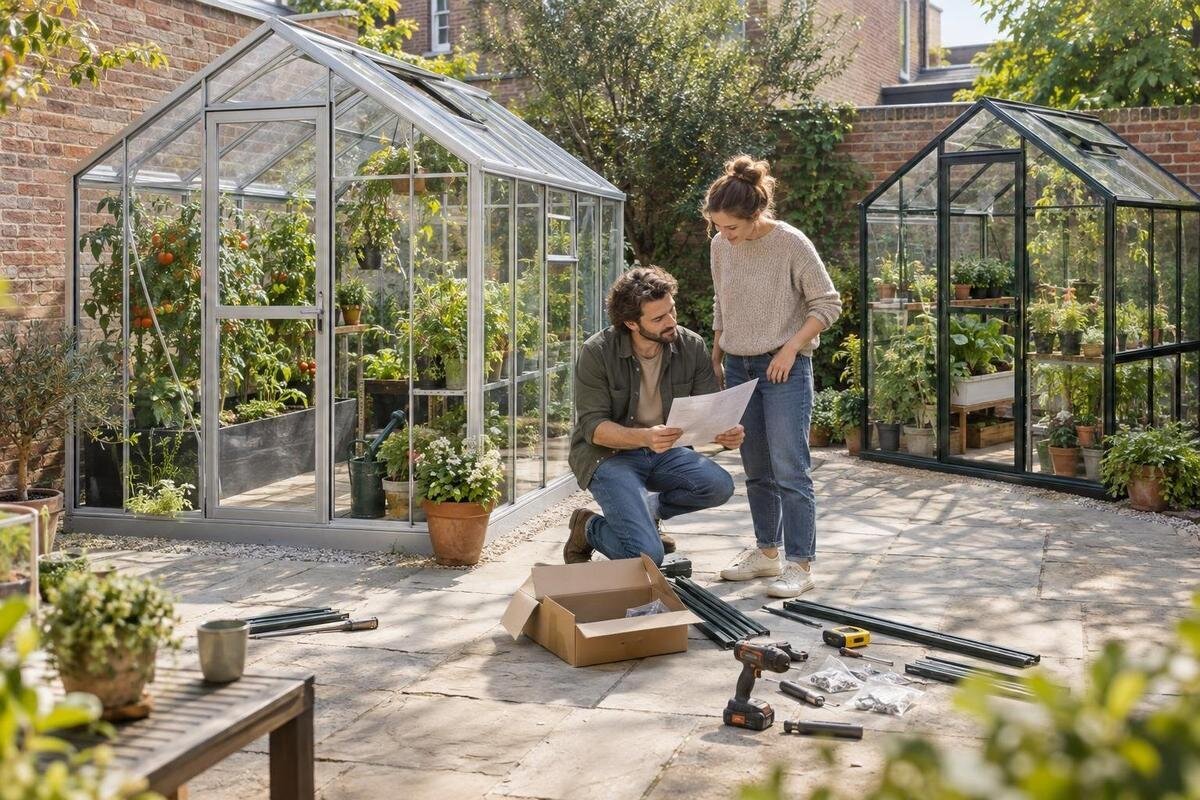
Buying a greenhouse kit means taking on more than choosing its final layout: you may need to sort components, follow an assembly sequence, use specific tools and handle panels. Those demands differ from one model to another, so a product name or photograph cannot tell you whether the build suits your experience. Before ordering, look for the exact assembly information, identify what you will need to provide, and compare the work with the time, skills and help you can arrange. That turns “Can I build it?” into a practical buying question.

Treat assembly as part of the buying decision
A kit is only one part of the work between ordering and having a greenhouse ready. Depending on the model, assembly can involve identifying components, joining frame sections, fitting panels, and installing doors or vents; the exact tasks and order come from its instructions. Preparing the surface and work area is separate from putting the kit together. If the site is not ready, or there is nowhere to organise the parts, you may need to pause even when the kit itself is complete. Include those practical demands in your buying comparison, along with the greenhouse’s footprint and planned use.
Think through who will take responsibility for the different parts of the job. You might be comfortable using hand tools but need help positioning components, or be able to assemble a frame but not prepare the site. List the tasks you can manage, those that depend on someone else, and the ones you still need to clarify. This is not a test of whether you are a “handy” person; it is a way to compare a kit’s documented demands with the time, space and practical support available to you. Treat unclear tasks as questions to resolve before ordering, not as work that will necessarily be simple. Map the order as well as the individual jobs. Site preparation may have to happen before delivery, while checking the contents and sorting parts is easier before assembly starts. Decide when helpers can be present for steps that may require them, and allow for a delay if access or weather disrupts the plan. A simple sequence makes dependencies visible and prevents the project from relying on last-minute arrangements once the boxes have arrived. Also consider where tools and unopened cartons can remain between sessions without blocking access or becoming exposed to conditions the instructions do not permit. It also helps you schedule delivery for a time when the site can be prepared and the needed help is available.
Read the exact assembly instructions before ordering
Look for an assembly guide for the precise model and configuration you intend to buy. Product photographs and a short description may help you recognise a greenhouse, but they do not explain the build sequence or identify every tool. Check whether the instructions describe the components, fasteners, tools, handling requirements and any preparation needed before assembly. For a model such as the Aluminium Wall Greenhouse, use the model-specific guide rather than treating the name as a tool list. If you cannot find instructions, ask the supplier what assembly information is available before making your decision.
Read enough of the guide to judge whether you can follow it, rather than checking only that a manual exists. Look for clear diagrams, identifiable parts and an order you can understand. Note any steps that rely on details not explained in the text, or that appear to need particular equipment or a second person. A guide you can interpret is more useful than one you have to guess your way through. If the document is unclear, ask for clarification or for the correct version for the kit you are considering; do not plan the build from a photograph or from instructions for a different model.
Match the required skills to your DIY experience
Greenhouse kit assembly can call for careful reading, sorting similar-looking components, using hand tools and following a sequence without forcing parts into place. Depending on the instructions, you may also need to measure, align components as shown and keep small fasteners organised. These are practical skills, but the amount of each one required differs between kits. The Limited Edition Aluminium Greenhouse name, for instance, does not tell you whether its assembly is suitable for a first-time builder; the relevant evidence is the guide for the exact model.
Think about tasks you have completed before, but do not assume that experience with furniture or another DIY project covers every greenhouse task. Compare your experience with the manual, then identify any gaps: using a tool correctly, interpreting a diagram or managing delicate components, for example. You may be able to address a gap by learning the skill beforehand or arranging help. If that is not realistic, look for a kit whose documented instructions better match your experience. Choosing a project on the basis of what you can actually do is more useful than relying on a broad “DIY” label.
Build a tool list from the manual
Make a checklist from the model’s instructions before you buy. Common hand tools might include a tape measure, screwdriver, spanner or socket set, but the required types and sizes are not universal. Some guides may specify a particular bit or another item; follow that list instead of assembling a generic toolbox and hoping it will cover the job. A power drill should only be used where the instructions allow it and should not be treated as a substitute for a specified tool. The Aluminium Classic Greenhouse name alone does not identify its fasteners or tool requirements, so check the actual guide.
Compare the list with the tools you own and check that they are in usable condition. A correctly fitting screwdriver or spanner is less likely to damage a fastener than an improvised substitute. Decide which items you can borrow, which you need to purchase and whether you will have them available when assembly starts. Ask whether tools are included if the product information does not say; do not assume that a tool shown in a photograph is part of the kit. Also check the manual’s requirements for protective equipment and keep the tools and small parts organised in the work area.
Plan for careful handling of panels
Some greenhouse kits include panels that need particular care during unpacking, storage and fitting. Do not infer their material, weight, packaging or handling method from a picture or product name. If you are considering the Glass Greenhouse Plus 385 listing, check the exact product documents for the panel details and handling instructions rather than guessing from the title. Read any stated requirements for protective equipment, lifting or temporary storage before deciding that you can manage the task.
Allow a suitable place to sort components and keep the assembly area clear enough to work without moving panels around unnecessarily. If the instructions call for a helper at any point, make sure that person is available before you begin. Keep the sequence in the manual: do not improvise a way to cut, alter or fit a panel if the instructions do not describe it. If a handling task is beyond your experience or the help you can arrange, ask the supplier or a suitable installer what support is appropriate before placing the order. Before opening packages, decide where each item can be laid down while you identify it, and whether that area can remain undisturbed between stages. Keep packaging and labels until the manual indicates they are no longer needed, because they can help with identification if similar pieces are separated. Do not leave panels where they could be knocked over, leaned against an unstable surface or exposed to conditions the instructions caution against. This preparation reduces unnecessary handling and makes it easier to notice a problem before a component is fitted.
Check the base and site preparation separately
The greenhouse kit and the surface it stands on are related, but they are separate purchase and preparation questions. Check what kind of base the instructions require, whether any base component is included, and what fixings or other items you must provide. A page such as the Prestige greenhouse metal base listing identifies a named product, but the name alone does not establish whether it is included with, or suitable for, the exact kit you are considering. Confirm the relationship between the products and the site requirements before deciding what work is involved.
Look at the intended location in light of the manufacturer’s guidance: what surface is required, what preparation is described and whether the ground is ready for that work. If preparing the base involves unfamiliar construction or you are unsure what is appropriate for your site, ask a suitably qualified installer or building professional for advice rather than making assumptions or calculations. Include any base preparation in your estimate of the tools, time and help required. A kit that fits your DIY skills may still be an unrealistic project if the necessary groundwork is outside what you can confidently arrange.
Allow time and arrange help realistically
Use an assembly estimate for the exact model if the manufacturer provides one, and check what the estimate covers. It may not include unpacking, site preparation, organising components or clearing the work area, so account for those tasks separately. A time shown for a different greenhouse, or a build video that does not match your kit, is not a dependable schedule for your own project. Your familiarity with the tools and instructions may also affect how quickly you work. Allow enough flexibility to follow the sequence carefully rather than planning around an optimistic guess.
Check the manual for any stated helper requirements, especially for steps involving the positioning or handling of larger components. Do not assume that every stage can be done alone, but do not assume a particular number of people is required unless the product information says so. For a model such as the Bloomcabin Orangerie, use its own assembly information to ask what tasks and assistance are involved. If the guide is silent on a point you need to plan for, ask before buying. Arrange suitable help in advance or reconsider the project if you cannot provide what the instructions call for.
Allow room to assemble the greenhouse
The space needed for assembly may be different from the area occupied by the finished greenhouse. Consider where components can be unpacked and organised, how they will reach the site, and whether there is room to work around the structure as the instructions require. Check the route from the unloading point for narrow gates, steps or obstructions, and consider whether a nearby wall or other feature could limit access during the build. Measure the available space and compare it with the manufacturer’s directions; do not rely only on the finished structure’s apparent footprint.
A model name that refers to a wall base, such as the T-Model greenhouse for a wall base, is a prompt to check the exact requirements, not a complete site plan. Confirm what the instructions say about the wall or base, working space and access needed for assembly. If the proposed location restricts the route or the space available to complete a stated task, resolve that issue before ordering. Planning for the build area is different from planning paths for daily use; here the question is whether you can safely get the parts and tools into position and follow the assembly sequence.
Confirm what the kit includes and what it leaves to you
Compare the stated kit contents with the items called for in the assembly guide. Check whether the listing identifies the frame, panels, fasteners, base components and any other items required for the build, and whether tools or accessories are mentioned separately. For example, when looking at the Pyramid Greenhouse for Masonry Bases, verify what the exact product information says about the base and the components supplied; the product name is not proof that a particular base is included. Keep the model and any selected options clear when you ask questions.
Before ordering, resolve gaps between the instructions and the product information. Ask which items you need to provide, whether a particular accessory is required for the stated assembly and how to identify the correct kit configuration. It is also sensible to ask what to do if a component is missing or damaged and where you would seek help with an assembly question. These checks are about understanding the purchase and the work involved; they do not replace the product’s actual terms or guarantee that particular support or replacement parts are available. Keep the answers with your order details so you can refer to them when planning.
Decide whether the DIY route is realistic
Before committing, put the practical requirements together: the instructions must be available and understandable; you need access to the specified tools; the site and base must meet the stated requirements; and any requested help must be arranged. Check each point against the time, space and skills you actually have, rather than against an ideal version of the project. A gap is not necessarily a reason to abandon the purchase, but it should have a realistic solution—such as borrowing a tool or getting help—before you place the order. Make the decision using a written checklist rather than memory. Beside each requirement, record the relevant page in the guide, who will handle it, what must be ready beforehand and any question still awaiting an answer. This separates confirmed requirements from assumptions based on photographs or a similar kit. It also gives you a practical handover note if a friend, contractor or installer will take on one part of the work, so responsibilities are clear before assembly begins.
If the key tasks are clear and within your experience, or you have arranged suitable support for the parts you cannot do yourself, a kit may suit your DIY plan. If the instructions remain unclear, the site work is outside your ability or you cannot provide a tool or helper the manual calls for, pause and resolve that issue first. You can then compare another model or arrange for an experienced person to handle the relevant work. Do not assume that assembly is included in a greenhouse kit or in a separate service; confirm any arrangement you intend to rely on.
Frequently asked questions
Can I assemble a greenhouse kit on my own?
It depends on the specific kit and its instructions. Check whether any steps call for another person to hold, lift or position components. If the manual does not say, ask before buying rather than assuming one person can complete every stage.
What tools do I need for greenhouse kit assembly?
Use the tool list for the exact model. It may specify items such as a tape measure, screwdrivers or spanners, but the required types and sizes vary. Check what you already own and whether any required tools are included, borrowed or need to be bought.
Are tools included with a greenhouse kit?
Do not assume they are. Compare the instructions and product information with the kit’s contents, and ask which tools, fixings, base components and other items you must provide. A tool required for assembly is not necessarily a component supplied in the box.
How long does it take to assemble a greenhouse kit?
There is no reliable time that applies to every kit. Use a manufacturer’s estimate if one is available for the exact model, and check whether it includes site preparation, unpacking and cleanup. Your experience, available help and tools can also affect the schedule.
What if I do not have the required tool or assembly skill?
Find out whether you can borrow the tool, learn the task beforehand or arrange suitable help. If an instruction remains unclear or a task is beyond your experience, ask the supplier or a suitable installer before ordering. Do not rely on improvising during assembly.
A suitable greenhouse kit is one whose documented assembly fits what you can do or arrange—not simply one that looks manageable in a photograph. Use the model-specific guide to confirm the tasks, tools, handling and site requirements before ordering. If something important remains unclear, resolve that question or plan suitable support before the build begins. That gives you a sounder basis for choosing a DIY greenhouse kit than relying on its appearance or a general “DIY” label.
