
Buying a Greenhouse for a Windy Garden: Site and Specifications
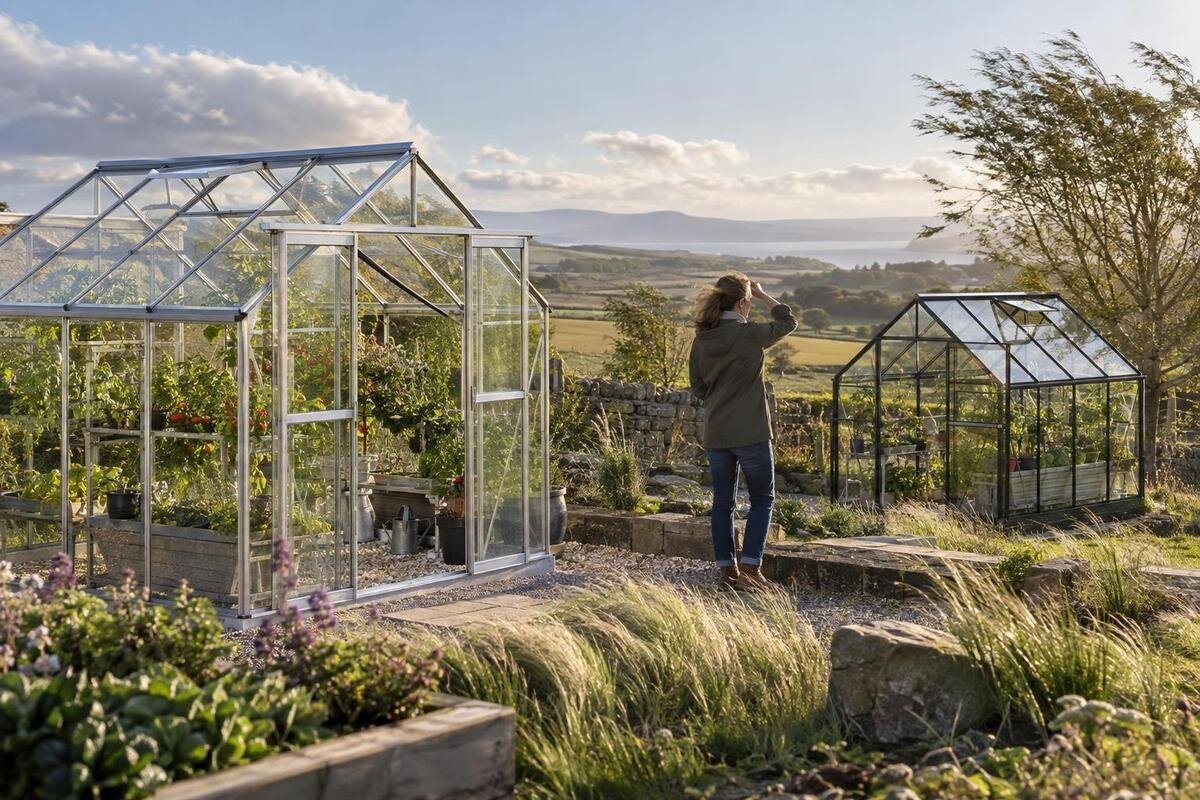
Greenhouse buying guide
Buying a greenhouse for a windy garden is a site-and-specification decision, not a search for a product title that sounds robust. Wind can be stronger or more turbulent in one corner than another, and the fixing system matters as much as the visible frame. Before ordering, map the exposure where the greenhouse will stand, confirm that the footprint and base suit the site, and ask for written information covering the exact model and configuration. This guide sets out the observations and questions that help you compare options without treating a material name or a sheltered location as proof of wind suitability.

Map the wind at the greenhouse site
A neighbourhood description such as “windy” is too broad to guide a purchase. At the proposed greenhouse position, note the direction of strong gusts, how regularly they occur, and whether the pattern shifts with the season or time of day. A calm morning does not represent an exposed afternoon, and an open section of lawn may behave differently from the space beside a building. Sketch the plot and mark the footprint you are considering. If practical, observe it on more than one day and under different weather patterns. The aim is to describe conditions at the structure itself, rather than assign one wind label to the whole garden.
Use visible clues such as the movement of branches, flags or lightweight garden items to compare one part of the plot with another; do not turn these observations into a wind speed or a safe-or-unsafe verdict. They reveal patterns, not design capacity. Ask people who know the site whether strong gusts arrive from more than one direction, and note recurring seasonal changes, but treat anecdotes as context rather than a substitute for assessment. Keep a dated record of what you observe and which candidate positions you checked. If you have site records or a local assessment, keep those with your product notes so you can ask whether a manufacturer’s evidence applies to this particular location.
Look at how shelter changes airflow
Check obstructions from every likely wind direction: house walls, boundary walls, garages, sheds, fences, hedges and mature trees. A barrier may interrupt direct flow on one side, while air travels around its ends or becomes uneven behind it. Its effect depends on its height, shape, gaps, position and the direction of the wind; there is no universal setback that makes every greenhouse safe. Do not count an ordinary fence or hedge as engineered protection. Note whether the shelter is likely to remain: a hedge changes with the seasons, trees may be pruned, and new buildings can alter airflow. Comparing photographs of possible positions can help you discuss their differences with an installer.
An adjacent wall may block one approach while leaving the roof and exposed sides open to gusts. A product page titled Aluminium wall greenhouse still needs to state what the proposed wall installation requires; the word “wall” does not establish that any wall, height or fixing is suitable. Check the manufacturer’s drawings for the intended connection, clearances and ground support, and have a qualified installer assess the actual wall if the structure relies on it. Corners, narrow passages and locations close to eaves can have different airflow from open ground, so include them in the assessment. Do not choose a position solely because it feels calm on a mild day.
Balance wind exposure with sunlight and access
Sunlight still matters, but there is no universal orientation that resolves wind exposure and growing needs for every plot. Note when direct sun reaches each possible position, how shadows move during the year, and which sides face the strongest gusts. Compare two or three locations rather than choosing by compass direction alone. A sheltered pocket might be less suitable if it leaves the greenhouse too shaded for the plants you intend to grow. Include those plants’ light requirements in your decision, and ask a knowledgeable supplier or grower if you are unsure. The best position is a practical balance, not simply the calmest-looking corner.
Consider the everyday route from the house, water supply, tool storage and garden paths, then check whether the door can open fully without blocking access. A doorway facing into a prevailing wind may be awkward to handle, but the answer depends on the actual entrance and local wind pattern. Ask which way the door opens and whether that can be changed before assuming it can be reversed. Keep a clear approach for tending plants and carrying items in and out. Also think about whether you can reach the structure for routine checks without crossing an exposed or cluttered area when the weather is gusty.
Measure the full footprint, not just the growing area
Use the external dimensions on the current product drawing, not just a headline size or model name. Ask what each measurement covers, including the base and any roof projection or external supports shown in the specification. Mark the outline on the ground and compare it with fences, walls, tree trunks, paths and access points. Allow room to inspect and maintain the exterior, especially where a side will sit close to a boundary. A greenhouse that technically fits may still be difficult to assemble or reach. Do not infer dimensions from a number or descriptive phrase in a model title; request the drawing for the exact configuration you intend to buy.
Separate the outside footprint from the usable growing area. Shelving, a central path, plant containers and the door swing all affect the room available for working, while the outer frame still determines how much space the site must provide. A name such as Orangerie greenhouse is not a dimensioned plan; use the measurements shown for that specific listing and configuration. Draw the door’s opening area and a workable route through the greenhouse, then compare them with the clearances in the product instructions. If the plan does not show the door swing or relevant external details, ask before ordering. Allowing for these features now can prevent a cramped layout or difficult access later.

Check ground conditions and base compatibility
Ground condition affects the base and fixing requirements. Note whether the footprint is on paving, a slab, compacted ground or soil, and whether it slopes, erodes or collects runoff. Look at nearby drainage paths and downpipes; water flowing across the site can make access difficult or affect poorly prepared ground. Do not decide that a surface is suitable from appearance alone. Ask which ground conditions and tolerances the manufacturer’s instructions allow, and have a competent installer assess any uneven, soft or questionable area. If proposed fixings could affect buried services, establish what lies below the footprint before installation arrangements are made.
Ask the supplier to itemise the base arrangement: what is included in the named configuration, what is optional, how the frame is intended to connect, and what anchoring method the documentation specifies. A listing titled Prestige greenhouse with a metal base gives you a product name to investigate, not confirmation that a base is included in a particular order or suits your site. For an existing paved area or masonry base, have a qualified professional confirm that the supporting surface and fixing details are appropriate for the greenhouse and its expected exposure. Do not substitute improvised fixings or a general-purpose foundation assumption for model-specific instructions.
Ask for wind-resistance evidence for the complete model
Request written wind-resistance information for the exact model, size, glazing, frame arrangement and base option being offered. The information should identify the conditions it covers, rather than rely on phrases such as “strong frame” or “built for outdoors”. Clarify whether it refers to gusts or another stated wind measure, what assumptions it makes about surrounding terrain, and whether it applies to an exposed or sheltered installation. There is no single wind-speed threshold that can be assumed suitable for every site and structure. Ask for a technical sheet, drawing or other substantiation that a qualified professional can review, and check that it relates to the configuration in your order.
Check whether the evidence covers the whole assembly rather than one component in isolation: frame, joints, bracing, glazing retention, doors, roof sections, base and anchors. Ask whether the stated performance assumes doors and vents are closed, and what the manufacturer’s instructions require in specified weather. If a test or design standard is cited, ask which configuration and scope it covers. A label, product photograph or general statement cannot answer these questions. If a sales page does not show the relevant information, request it in writing before placing an order. A listing named Pyramid greenhouse for masonry bases still needs site-specific compatibility and performance evidence; its title does not confirm that a particular masonry base or fixing arrangement is suitable.
Compare the frame, glazing and fixings together
Compare frame materials only after checking the profile, sections, spacing and connections. A material name does not explain how the complete frame performs, and a premium-sounding description is no substitute for engineering evidence. Ask for technical drawings showing how frame members meet, where bracing is placed and which fasteners hold the panels. Check whether the drawings and wind information apply to the exact size and options in your quotation; a different configuration may have different details. Compare all candidates on the same basis, including stated installation conditions and exclusions. If the technical terms or drawings are unclear, ask a qualified professional to review them rather than judging capacity from appearance.
For the glazing, ask what the panels are made of, their stated thickness and dimensions, how they are retained at the edges, and whether replacement parts are available. Do not assume that glass, plastic or an apparently substantial panel is automatically the safer choice in wind; the fixing system and supporting structure also matter. A name such as Glass Greenhouse Plus 385 does not specify panel thickness, fixings or wind resistance. Compare those details with written evidence for the complete model. Ask what the maintenance instructions say about checking panel retention and how damaged or loose panels should be handled.
Check how openings are secured in wind
Doors, roof vents and other openings change how the greenhouse is closed and operated, so their wind instructions belong in the purchase comparison. Ask which positions are permitted in windy conditions and how each opening is secured when shut. Check whether the door has a specified way to stay closed and whether the vents have stated retention details; do not assume a latch is designed for every gust. A greenhouse’s wind evidence may depend on openings being in a particular position. Confirm that the rating and instructions match the way the supplier says the structure should be used, rather than assuming any open or partly open position is covered.
Ask for the written procedure for preparing the greenhouse for severe weather, including what to do with doors and vents and which actions are not permitted. Follow the instructions for the exact model; do not add locks, braces, sealants or improvised storm fittings unless the manufacturer or a qualified professional approves them. The name T-model greenhouse orangery for a wall base does not tell you how its openings are secured, so look for those details in the technical documents and clarify any uncertainty before buying. Knowing how routine operation and storm preparation work can help you judge whether the layout is practical for your garden.

Confirm installation needs before you place an order
Work out how the greenhouse and its components will reach the site. Check gates, narrow paths, steps, turns and overhead obstructions against the delivery and assembly requirements, then confirm who is responsible for moving items from the drop-off point. A garden may have room for the finished footprint but no practical route for bringing in long or fragile components. Make space for staging and assembly without blocking an access route you need to keep clear. Ask the retailer to confirm the current delivery arrangements for your address. A product-page photograph does not show whether the route to your chosen position will work.
Clarify what the order includes and what is separate: the base, anchoring hardware, glazing, fixings, assembly service and any required ground preparation. Ask which instructions are supplied, whether the stated performance depends on a particular configuration, and who will verify the connections. The Aluminium Classic greenhouse listing, like any model page, needs to be matched to the exact package you intend to buy; the title does not establish its contents or suitability. Get answers about missing items in writing and compare quotations on the same basis, including what you must arrange yourself. Confirm responsibilities before ordering rather than assuming installation is included.
Compare the evidence before choosing a greenhouse
Build a comparison table for each candidate with the site, external dimensions, required clearances, surface and base, wind evidence, conditions covered, panel retention, openings, anchoring, maintenance instructions, delivery and assembly requirements. Mark each point as “confirmed”, “not stated” or “to ask”. An unanswered question is unknown; it is neither proof that the greenhouse fails nor a positive specification. Comparing the same details prevents an attractive photograph or polished product title from outweighing missing technical information. Keep copies of product documents and written supplier answers with your order notes so you can refer to the exact configuration and any conditions attached to it.
Set aside any option that cannot be shown to fit the available site, base or intended use, and discuss uncertain structural matters with a qualified professional before committing. Where options have comparable evidence, choose according to the practical differences that matter to you: layout, access, documented configuration, support and installation responsibilities. A title such as Limited Edition Aluminium greenhouse is no evidence of current stock, an offer or wind performance; verify availability and the exact specification with the retailer. The aim is to assess a particular greenhouse against a particular plot, not to rely on a broad promise about windy gardens.
Frequently asked questions
Does a fence or boundary wall make a greenhouse safe from wind?
Not automatically. A barrier may reduce direct wind from one direction, but airflow can change around its ends and close behind it. Assess the proposed position from likely wind directions, and do not treat a fence or wall as a substitute for written wind-resistance information for the greenhouse.
What should a greenhouse wind rating tell me?
Ask which exact model and configuration the information covers, including its frame, glazing, base and anchoring. Check the stated test or design conditions, assumptions about the site, and whether doors and vents must be closed. A qualified structural professional can help assess whether that evidence applies to your garden.
Is an aluminium or glass greenhouse automatically better in wind?
No material name alone establishes wind performance. Compare the frame design, joints, bracing, panel retention, fixings and anchoring as one system. Ask for documentation covering the complete configuration rather than trying to judge strength from a product title, photograph or material description.
Can I use an existing paved area as the base?
Only if the greenhouse instructions and a competent professional confirm that the surface, its condition and the proposed fixing method are suitable. Paving can vary in construction and support, so its appearance is not enough to establish compatibility. Check the base and anchoring requirements before ordering.
What should I do if a product page gives no wind rating?
Request written information for the exact greenhouse configuration and ask what conditions the evidence covers. Do not treat phrases such as “strong” or “weather-resistant” as a wind rating. If the documentation remains unclear, get a qualified structural professional to review it before you commit.
For a windy garden, the useful comparison is not simply which greenhouse looks most substantial. It is which documented configuration fits the measured site, the base and the way you plan to use it. Map the wind and nearby shelter, allow for the full footprint, confirm the ground and access requirements, then compare evidence for the complete structure and its anchoring. Where the site or technical information is beyond your expertise, a qualified assessment can help you decide whether the proposed option is appropriate before you order.
