
Buying a Greenhouse for a Coastal Garden: Materials and Maintenance
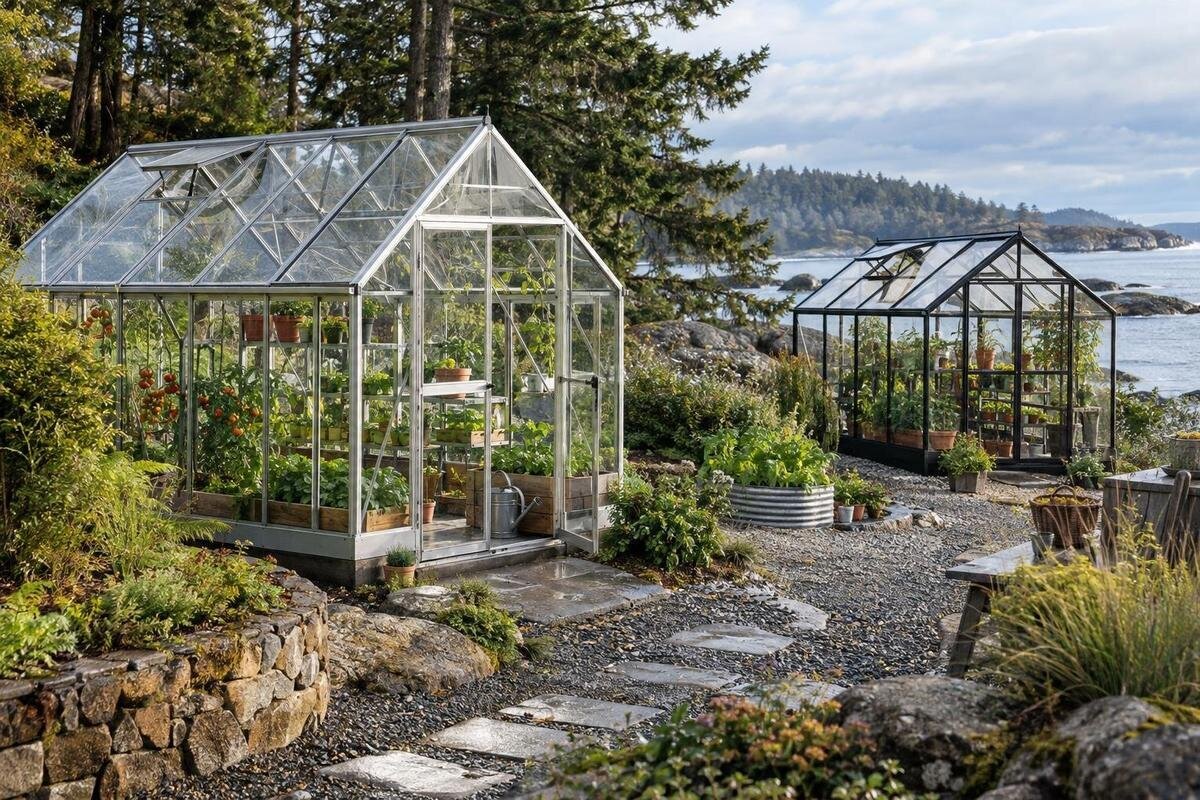
Greenhouse buying guide
Buying a greenhouse for a coastal garden means weighing more than frame colour or the initial layout. Salt carried in sea air, wind-driven grit, damp corners and water that lingers around a base can affect how a structure ages and how much attention it needs. Conditions vary from one garden to another: an enclosed site inland may face different exposure from an open plot nearer the shore. Compare the complete assembly, written care guidance and support for replacement parts, then match those details to the site and the time you can realistically set aside for upkeep.

How coastal conditions affect greenhouse upkeep
Coastal exposure is not a yes-or-no label. Salt may arrive as visible spray near the water, or as fine airborne deposits carried further by wind; buildings, trees and walls change how it reaches a particular garden. Assess the spot where the greenhouse will stand rather than relying on distance to the shore alone. Salt marks on outdoor fittings, corrosion on existing screws and damp patches that dry slowly are useful clues, but they cannot replace a supplier's guidance for the complete greenhouse. Note the direction of common winds, whether rain reaches the site and where runoff pools, because these factors affect what needs rinsing and inspecting.
Look at the proposed position during ordinary use and after unsettled weather. Where does grit collect? Which surfaces take wind-driven rain, and which remain sheltered? A hedge or solid wall may alter airflow, but it does not guarantee protection: a sheltered corner can stay damp, while exposed joints may receive salt. Make sure you can reach the frame, glazing and base for cleaning without shifting heavy planters or dismantling a bed. Room around the structure also makes it easier to notice changes in the finish and fixings. This site check gives you precise questions for the supplier instead of assuming every coastal garden has the same conditions.
Compare frame materials and finishes
Treat the frame material as one part of a complete assembly. Aluminium is often selected for its corrosion resistance, yet the result still depends on the finish, connections and fasteners; salt and moisture can remain around joints. Steel frames may rely on a protective coating, so ask how to care for it and what to do if it is scratched. Timber needs attention to its protective finish and to places where water can collect or the material meets the ground. These are not simple pass-or-fail rules. Each material can have different maintenance demands, and the way a particular greenhouse is made matters as much as the name of its frame material.
Ask for the exact frame specification, surface treatment and recommended care rather than relying on a broad label. If you are comparing the Aluminium Classic Greenhouse, use that model name to find the listing, then confirm the material details and coastal-care guidance there or with the seller. Check whether exposed edges and internal channels receive protection, and whether any finish needs periodic attention. Include future work in your comparison: how often the maker expects cleaning or inspection, what tools are appropriate, and whether a damaged surface can be repaired using an approved product. A finish that is difficult to maintain in your garden deserves more scrutiny than its label alone might suggest.
Check fasteners, connectors and frame joints
Small components deserve attention alongside the frame. Ask what screws, clips, brackets, washers and door hardware are made from, whether they are protected, and whether the maker specifies compatible replacement parts. Where different metals touch in a wet, salty environment, corrosion may be accelerated; do not substitute another screw or coating based only on appearance. Look at how joints shed water and whether narrow channels trap dirt or stay wet. These details affect routine cleaning and how easily you can spot a problem before a connector becomes difficult to remove. If the assembly instructions are available, use them to identify which parts need particular care.
A catalogue entry such as the Prestige Greenhouse with metal base identifies a model to investigate, but its name does not establish the grade of the base, frame, fixings or protective finish. Ask for a parts list or assembly guide that identifies materials at the connection points, and find out what the care instructions say about salt deposits. Check whether replacement hardware is available as a matched set, rather than expecting a generic fastener to fit. For a greenhouse exposed to sea air, resolving these details before ordering can make later inspections and repairs more straightforward.
Compare glazing and panel replacement
Compare glazing by its cleaning method, durability, visibility and the way each panel is held in its frame. Glass and plastic glazing differ in weight, impact behaviour and handling, and the exact type and thickness should be stated for the model. Salt residue can reduce clarity if it dries on any surface, while windborne grit can mark some plastics. Check whether panels have a specified outside face or protective layer, which cleaners are allowed, and how seals and clips are accessed. Do not choose on appearance alone: panel-retention details and the availability of replacements matter if a pane or sheet is damaged.
If the Glass Greenhouse Plus 385 is on your shortlist, confirm its exact glazing material, thickness, fixing method and replacement process in the product information or with the seller. Ask whether one damaged panel can be replaced without ordering a whole new wall, and whether the relevant seals or clips can also be sourced. Consider how you will rinse and dry the glazing from both sides, especially where roof sections or frames are difficult to reach. Clear cleaning and repair instructions make routine care easier and help you compare models on the same basis.
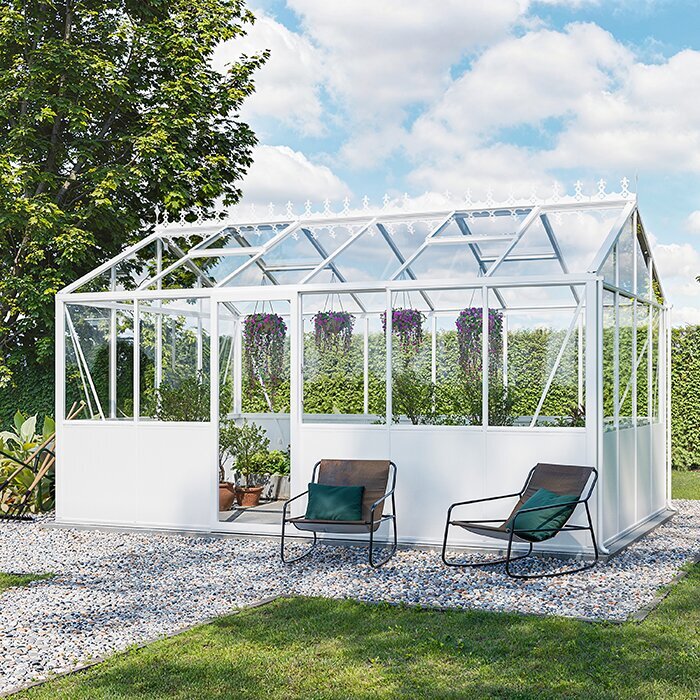
Choose a position you can reach and maintain
Measure the available area, but include the space needed to open doors, reach glazing, clean the outside and move around with tools. Note nearby boundaries, gutters, roof runoff, trees and garden paths; avoid a layout that makes routine care awkward or leaves water continually splashing against the base. Consider wind direction and whether the structure sits in an open corridor between buildings. A sheltered-looking position is not automatically better, since shade, dampness or limited access can create other upkeep problems. Also consider how you will bring cleaning equipment to the site and where rinse water will drain.
Use the Bloomcabin Orangerie listing as one model to compare with the actual site, and check its stated footprint, clearance and installation requirements rather than judging from the name or an image. Repeat that check for every shortlisted design, including the position of doors and vents where those details are provided. A greenhouse that fits only when the garden is empty may be awkward once paths, beds, taps and stored tools are in place. Mark the proposed outline on the ground, then walk the route you would use to clean and inspect it. This simple check can reveal access problems that a product photograph does not show.
Assess wall-mounted greenhouse locations
A greenhouse placed beside a wall is not automatically sheltered or easy to maintain. Wind can be channelled around corners, and salt may settle on the wall-facing side or collect where surfaces meet. Check the maker's installation method, required clearances and accepted wall types. If the wall is cracked, uneven, damp or of uncertain construction, ask a competent installer to assess it before buying; do not assume ordinary fixings will suit it. Keep drainage and access in mind as well, since the roof edge and rear of a wall-mounted structure still need inspection and cleaning.
For a model such as the T-model greenhouse for wall-base installation, check the product information for its actual support and installation requirements, then ask the seller about any missing details. Do not infer from a model name that the structure suits your wall or the exposure at your site. Find out which areas need access, how water is directed away and what clear space is required for maintenance. If you cannot reach the rear safely, a wall-adjacent layout may add cleaning difficulties even where it saves ground space. Compare those trade-offs with the manufacturer's guidance rather than assuming one format is inherently more suitable for coastal conditions.
Confirm the base and ground requirements
Salt exposure does not stop at the frame. The base and ground around it influence whether water drains away, whether dirt remains against lower rails, and whether the specified anchoring method suits the site. Ask for the exact base requirements for the greenhouse you want, including levelness, support points, attachment details and any limits on the installation surface. Do not assume that paving, a masonry plinth, soil or a timber platform is suitable simply because it is already there. Standing water and trapped debris can make inspection harder, while uneven support can complicate assembly. The instructions should state what the structure requires; an installer can assess uncertain ground or fixing conditions.
For a model such as the Pyramid greenhouse for masonry bases, check the product information and instructions for the actual base dimensions and fixing details. Do not infer from the title alone how the base must be built or how the greenhouse performs in coastal wind. Ask whether the arrangement allows water to drain and gives you access to clean lower rails and inspect fixings. If an installer proposes a different support surface from the manufacturer's stated arrangement, resolve that difference with the supplier before ordering. Agreeing on the base in advance can prevent last-minute changes and leave the lower frame accessible for regular checks.
Plan a practical cleaning and inspection routine
Plan a routine you can keep, not an ideal routine that only works on paper. Remove salt and grit in line with the greenhouse maker's cleaning instructions. Water and a soft, suitable cloth may be appropriate for some surfaces, but cleaners and tools can damage particular finishes or glazing. Do not assume pressure washing, abrasive pads, bleach or household solvents are acceptable. Ask what to use, where to rinse and whether water should be kept away from particular joints or openings. A reachable water source and clear access around the greenhouse make gentle cleaning easier, while good drainage prevents rinse water sitting around the base.
Set an inspection rhythm based on the exposure and the maker's advice rather than following a universal calendar interval. After a period of heavy spray or a strong storm, look for salt deposits, loose or corroded fixings, damaged coatings, cracked seals, blocked drainage channels and panels that have shifted. Check doors, vents and moving parts for grit or stiffness, but do not force them. Keep a simple note of what you cleaned and any changes you observed; it makes patterns easier to spot and gives the seller clearer information if you need help. If the Limited Edition Aluminium Greenhouse is under consideration, ask for its exact cleaning guidance before assuming its upkeep needs.

Check replacement parts and ordering details
Coastal maintenance also depends on what happens when something needs attention. Before ordering, ask whether the maker supplies replacement panels, seals, clips, fasteners and other parts for the exact model, and how you identify the correct item. Check whether an assembly or maintenance guide is available and whether routine repairs require specialist help. Read the written warranty carefully, including what it covers, how to report a fault and whether its terms address coastal exposure; do not assume conditions from another greenhouse apply. Ask about delivery access for long or fragile components, and make sure the chosen site can be reached for assembly and later replacement work.
While reviewing a listing such as the Aluminium Wall Greenhouse, look for product-specific documents rather than relying on a short title or photograph. Confirm the model reference and keep a copy of the parts list, instructions, care advice and any written replies from the retailer. If a replacement panel differs in size or specification from the original, fitting it may not be straightforward, so establish the maker's process before a problem occurs. Ask which components need occasional replacement and whether the retailer or manufacturer can help identify them. This paperwork is useful across greenhouse types: it makes ongoing maintenance less dependent on guesswork.
Compare your shortlist before placing an order
Compare the whole greenhouse, not only its frame name. For each option, record the frame and finish, fastener details, glazing type, base instructions, exposure guidance, cleaning method and replacement-part support. Add the measured footprint, access around it and any work needed to prepare the site. Mark every point as confirmed, unclear or unsuitable; a missing answer is a reason to ask, not an invitation to assume the best. This side-by-side view can reveal that one model has clearer maintenance guidance or fits the available space better, even if another first caught your eye. Keep the product instructions with your notes so you can check details consistently.
Before placing an order, give the seller a concise description of your site: how exposed it is to wind and salt, what the wall or ground is like, and how you intend to clean the structure. Ask for a written answer on the model's coastal suitability and any installation limits. Where anchoring or the supporting surface is uncertain, have a qualified installer review it. Compare the response with the published instructions, and pause if important details about materials, maintenance or replacement components remain unresolved. The aim is not to eliminate upkeep, but to choose a greenhouse whose documented limits and care requirements suit your garden, access and available time.
Frequently asked questions
Is aluminium automatically the best frame for a coastal greenhouse?
No. Aluminium is often chosen for corrosion resistance, but the finish, fasteners, joints and care instructions all matter. Compare the full specification and the maker's guidance for coastal exposure rather than choosing by frame material alone.
How close to the sea can a greenhouse be?
There is no single distance that establishes suitability. Wind, shelter and the way salt reaches your particular site all affect exposure. Describe the location to the supplier and ask for guidance on the exact model.
Will rain wash salt off a greenhouse?
Not necessarily. Rain may miss sheltered surfaces and may not clear salt or grit from joints. Follow the maker's cleaning instructions and check whether your layout gives you safe, practical access to rinse and inspect the whole structure.
Does a wall-mounted greenhouse need less maintenance?
Not automatically. A wall may shelter one side, but it can also make that side harder to reach or leave damp, salt-catching joints. Check the installation and cleaning requirements, as well as the exposure around the wall.
What should I ask before ordering?
Ask about the frame finish and fixings, glazing, base requirements, wind exposure guidance, cleaning method and replacement parts. Read the written warranty terms and get answers about coastal exposure and installation limits for the exact model.
Buying for a coastal garden is ultimately about matching a documented greenhouse to the place where it will stand and the work you are prepared to do. Compare information on the complete assembly, base, cleaning and replacement components with the actual wind, salt and drainage exposure at your site. If key details about installation or care remain unanswered, keep comparing rather than assuming the frame material will solve them. The strongest choice is one you can inspect, clean and maintain without making the routine a burden.
