
Buying a Greenhouse for a School or Community Garden
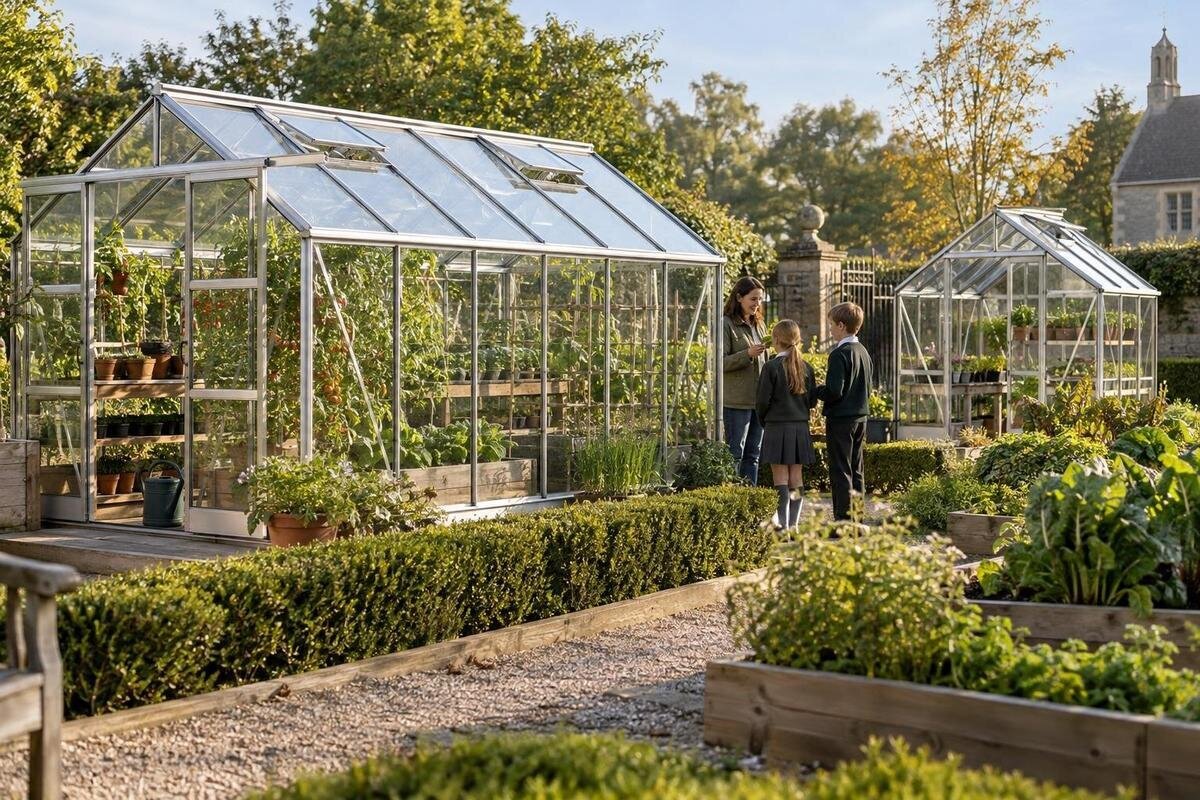
School and community gardens
A greenhouse shared by learners, teachers, volunteers or neighbours has to work for more than one person at a time. The right purchase depends on what the group will grow, how often it will use the space, the site available and who will manage it. Plan these points before comparing catalogue options: a product name does not tell you the usable area, what comes with the model or whether it fits a particular site. A clear brief makes model comparisons, quotations and ordering decisions more useful.

The greenhouse's role in the garden programme
Begin by writing down what the greenhouse is expected to add to the garden. A school may want learners to observe germination, practise sowing, raise plants for outdoor beds or explore how growing conditions change. A community garden may prioritise propagation, a wider range of crops or a sheltered place for regular growing tasks. Those aims call for different internal arrangements; the word greenhouse alone does not say which will work. Choose the two or three activities that matter most, and separate essentials from useful extras. If teaching is central, include the equipment and work space needed for demonstrations; if growing output matters, identify the crops and tasks rather than treating maximum floor area as the only measure.
Map those activities onto a calendar before comparing models. Note which groups will use the space and how often they can attend, including weekends, school holidays and breaks between volunteer sessions. A plan built around weekday supervision differs from one relying on a rotating community team. Estimate peak use as well as total membership: the whole group is unlikely to work inside at once. Record who will open and close the structure, check plants and cover routine tasks when the usual lead is away. This brief helps prevent a purchase designed around an ideal programme that the available people, time or funding cannot sustain.
Site measurements and access
Measure the area the greenhouse can occupy, not the whole garden plot. Record usable length and width, boundaries, nearby walls or trees, overhanging structures and fixed services; mark the preferred entrance position on the plan. Compare these measurements with the stated external dimensions and base information for each model, not with a photograph or an attractive name. The Prestige Greenhouse Metal Base listing can go on the comparison sheet, but its name alone does not establish its dimensions, included components or fit for your prepared site. Request the full product information and note which figures are external before treating it as a match. Keep the measured site plan beside the product information as options change.
Measure how people and materials will reach the proposed position too. Note gates, corners, narrow paths and any route shared with other garden users; confirm where a delivery vehicle can stop and how components could be brought to the site. Around the footprint, allow room to open the door, move trays and maintain the outside, using the supplier's stated clearances where available. Check the ground and any site restrictions with the property owner or responsible manager. A greenhouse may fit the marked rectangle but still be awkward to use or difficult to bring in without altering paths or the layout. Do not borrow a measurement from a similar-looking model.
Interior layout for shared work
Draw an interior plan before choosing a model. Place growing beds or containers, work surfaces, seed trays, tools and storage where they are actually needed, then sketch the route between them. A floor plan based on external measurements can overstate useful area, so obtain an internal layout or dimensions from the seller. Mark the door position, frame supports and fixed fittings shown in the documentation; they may affect where benches or planting rows can go. The aim is not to fill every corner, but to create a space where groups can carry out jobs without shifting everyone else's work each time they enter.
Think about how people work together: one person may be sowing while another collects supplies or shows a learner how to transplant. The Bloomcabin Orangerie listing is one named option to compare, not proof of a particular capacity or layout; check the actual drawings and usable interior before deciding. Ask whether proposed benches, shelves or containers are included or need to be sourced separately. If classes or public sessions are planned, rehearse the route on paper with the people who will supervise and garden. That can expose bottlenecks before purchase, rather than after beds and equipment are fixed in place.
Capacity, supervision and shared use
Count who is likely to use the greenhouse at the same time, rather than sizing it for every learner, member or volunteer on the register. Estimate a typical small-group session and the largest planned session; note whether activities involve one demonstration, several workstations or people collecting supplies. A room that seems generous when empty can feel crowded once trays, tools and people are in use. Use those tasks to judge the planned layout, and do not treat a headcount or outside footprint as a guarantee that a certain number can work comfortably. Consider different levels of gardening experience as well as the number of users.
For school use, identify which adult will supervise and how learners will be divided into manageable tasks; for a community garden, agree who coordinates bookings and what happens when the regular volunteer cannot attend. Put the responsible person's role, access arrangements, tool control and closing routine into the operating plan. These practical details affect whether the greenhouse can be used consistently, and help the group decide if it needs more than one work area or a narrower programme. A realistic rota is part of the purchase decision because a larger structure also means more space and tasks to manage.

Growing plans and interior equipment
List what you expect to grow and which jobs the greenhouse will support: sowing, potting on, holding young plants, crop care or demonstrations. The programme affects the balance between planting area and work surface. Beds occupy a different layout from moveable containers; climbing crops need room above them, while a teaching session may need a clear surface and space to set out materials. Keep the plan realistic about seasons and volunteer time. A large growing area is not automatically useful if the group cannot prepare, water and maintain it as planned. Include somewhere for frequently used supplies so they do not end up blocking work areas.
Compare internal heights and measurements only from documented specifications, then mark benches, shelves, paths and storage on a scaled drawing. The Glass Greenhouse Plus 385 listing is a model name, not evidence that its number describes a dimension or that accessories are supplied. Ask what is included in the selected configuration and whether the arrangement leaves space for doors, vents or any fittings identified in the product information. Decide which equipment the group already owns and where it will live. Keeping growing, teaching and storage functions visible on the plan helps prevent a later purchase of extras that take up the space you intended to use for plants.
Light, ventilation and site conditions
Review conditions at the proposed position at the times the garden is used. Note where shade falls from buildings or trees, whether the site is exposed to wind, and where rainwater or surface water naturally moves; make observations on site rather than guessing from a map or product photograph. Local conditions vary even within one town. Ask what light and ventilation needs apply to the crops and activities, then compare them with the manufacturer's information on glazing, ventilation openings and available accessories. Do not assume a greenhouse will manage heat or airflow for every planting plan without attention.
Plan how people will monitor the growing environment and respond during ordinary use and closures, following product guidance and the group's growing knowledge. A position near an existing building may seem convenient, but check its effect on light, access and maintenance instead of assuming it is better. The T-Model Greenhouse Orangery for Wall Base listing can be included as a named option; the title does not confirm dimensions, wall clearance, included parts or suitability for your site. Use the actual product documents and, where needed, a suitably qualified site professional to resolve fit or ground questions.
Construction, base and maintenance
Read the product information for the structure, covering, frame, fixings, doors, ventilation parts and any base. Confirm which components are included in the exact version being quoted and what has to be bought or prepared separately; images and product names do not establish the contents. Ask for installation or foundation requirements in writing. If the base condition is uncertain or the ground needs work, have the site owner or a suitably qualified professional assess it rather than guessing at a solution. This matters where a school or community group will be accountable for the finished site and its upkeep.
Consider cleaning, inspection, replacement of worn parts and seasonal preparation as recurring responsibilities, not hidden tasks for the first volunteer who arrives. Ask whether replacement parts and care instructions are available, what routine maintenance the supplier expects, and who can take responsibility over several years. The Pyramid Greenhouse for Masonry Bases listing can be entered on the same checklist; its product name is not a substitute for verified base dimensions, construction details or site compatibility. Compare the care requirements with actual volunteer capacity and the group's handover arrangements. A structure the team can look after reliably is a better long-term fit than one chosen only by appearance.
Delivery and assembly responsibilities
Work out how the greenhouse will reach its position before the purchase is final. Ask the seller for package dimensions, weight, number of packages and unloading requirements, if available, then compare those details with gates, paths, storage and site access. Do not assume a vehicle can reach the plot or that volunteers can move items through the garden. Confirm who will accept delivery, where items can be stored securely if assembly is not immediate, and whether the garden remains open to others during the work. A school may have limited access periods; a shared garden may need to keep routes clear for other users.
Agree who will assemble the greenhouse and what their role covers: the group's own team, a contractor or another arrangement. Check the product instructions, required tools and skills before assigning work to volunteers; children or casual users should not be expected to manage the build. Confirm in writing whether a quote includes groundwork, a base, assembly, waste removal or work outside the greenhouse itself. The Aluminium Classic Greenhouse listing may be compared with other options, but its name cannot tell you how it is delivered or assembled. Make the project plan reflect the supplier's actual details, not assumptions drawn from a catalogue image.

Budget and long-term ownership
Set a total project budget rather than comparing greenhouse prices alone. Include any site preparation, base, delivery, assembly, tools, interior equipment and growing materials that the product information says are extra, as well as recurring costs the group expects to carry. Request written prices for the same configuration and note whether optional benches, shelves or other items are included. Keep an allowance for items not yet confirmed, but do not fill gaps with guessed figures. A simple comparison table prevents a low headline price from appearing equivalent to a more complete quotation when their contents differ.
Agree who holds the funds, approves changes and owns the structure after installation. School projects may need a named contact and a clear handover to the next year; community gardens should settle how shared contributions and ongoing expenses will be managed. Record who pays for consumables and repairs, and where purchase documents will be kept. The Aluminium Wall Greenhouse listing can be one row in a like-for-like comparison; enter its price and included items only from confirmed listing or supplier details. A purchase that fits the budget today still needs a plan for routine upkeep and responsibility.
Comparing shortlisted greenhouses before ordering
Bring the brief, site plan, crop plan and cost sheet together and compare each candidate against the same questions: Does it fit the measured site? Does the documented interior support planned work? Can the group reach, use, clean and maintain it? Are the base, delivery and assembly requirements understood? Record confirmed details separately from unknowns, and ask the seller to clarify anything that could change the cost or fit. The Limited Edition Aluminium Greenhouse listing can be included in the comparison, but its title does not confirm availability, dimensions, contents or suitability. Avoid scoring a model highly just because its photograph resembles the garden you have in mind.
Share the comparison with the people who will use, supervise, fund and look after the greenhouse. Resolve disagreements about priorities, such as more planting space versus a work area, before making a commitment. Check the exact model and options on the written order, the quoted total, what is excluded, delivery and assembly arrangements, and the supplier's current terms. Keep the final site plan, product documents and agreed responsibility rota together so new teachers or volunteers can pick up the project. The best choice is one the group can use as intended and continue to care for, not simply the biggest or most elaborate option in the catalogue.
Frequently asked questions
How big should a greenhouse for a school or community garden be?
There is no single suitable size. Estimate how many people will use it at peak times, what they will do inside, and how much space beds, containers and work surfaces need. Then compare the product's documented external and internal dimensions with the site plan, including the entrance and surrounding access.
Does a school garden need a greenhouse designed specifically for schools?
Not necessarily. The important questions are whether the documented layout suits the planned activities, whether the site can accommodate it, and whether the adults responsible can supervise and maintain it. Confirm any requirements set by the school or site owner before choosing a model.
What should we plan for during school holidays or quiet periods?
Agree who will check the greenhouse and handle routine tasks when the usual group is away. For a community garden, make a rota that accounts for volunteer availability. Match the growing plan to the people who can attend, and keep access, keys and handover arrangements clear.
Can a greenhouse be placed beside an existing wall?
That depends on the specific model, its documented clearances and the conditions at the site. Check the product drawings and instructions, then consider light, access and maintenance space. Do not assume that a product name or photograph confirms that a particular wall-side position will work.
What should we confirm before placing an order?
Check the exact model and configuration, dimensions, included components, base requirements, delivery and assembly arrangements, total quoted cost and any exclusions. Also agree who will supervise use, keep the product documents and take responsibility for routine care. Ask the supplier to clarify any detail that could affect fit or cost.
For a school or community garden, a greenhouse is a shared working space as much as a growing structure. Set priorities around real activities and users, confirm the site and documented dimensions, and make layout, delivery, budget and maintenance responsibilities part of the same decision. Once those points are agreed, the group can compare options on evidence rather than appearance or assumptions, and choose a structure that fits its programme and its capacity to look after it.
