
Buying a Greenhouse for Winter Growing: What It Can and Can't Do
Greenhouse buying guide
Buying a greenhouse for winter growing is not simply a matter of choosing a structure that looks enclosed. A greenhouse can reduce exposure to rain and wind and create a sheltered space, but an unheated one does not hold a fixed temperature. Sunshine can warm it by day; after sunset, heat escapes through the covering and gaps, so the inside can cool sharply. Your plants, site and willingness to manage ventilation or heating matter as much as the frame. Before comparing models, decide whether you want to extend the growing season, protect hardy plants or keep more tender plants actively growing. Each goal calls for a different level of control.

Before you buy 1
What a greenhouse can and cannot do in winter
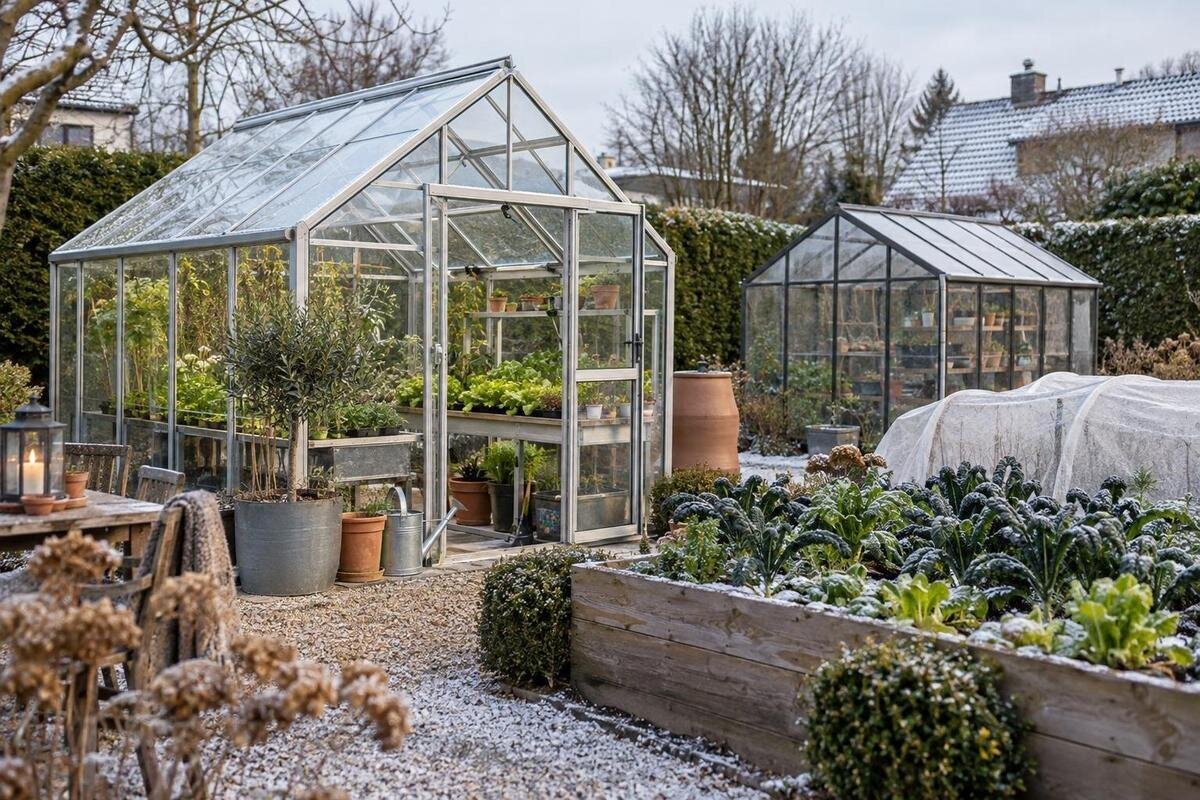
An enclosed greenhouse changes your plants’ exposure, not the weather outside. Its covering can keep off much of the rain and reduce direct wind, while sunlight warms the enclosed air during the day. That shelter can make routine growing more manageable in cold, unsettled conditions. But an unheated structure has no source of steady warmth: heat leaves through the covering, frame, ventilation openings and any gaps. After sunset, its temperature can fall quickly and may approach the outside temperature on a cold night. Think of the greenhouse as a buffer against some conditions, not a guarantee of frost-free air or a particular minimum temperature.
Winter sunshine also creates a daytime issue. Even when the air outside feels cool, a closed structure can warm rapidly, then lose heat after dark. One midday reading will not tell you what plants experienced overnight, and an average temperature can hide a damaging low. If possible, record daytime and overnight minimum readings at plant height in the area you plan to use, including several cold nights. This gives a more useful baseline than guessing from the weather report alone. Decide whether your main need is shelter from rain and wind or a dependable temperature; the second requires more than a greenhouse shell.
Set a clear winter-growing goal
Winter growing can mean keeping hardy crops productive, extending harvests into cooler months, sheltering container plants or maintaining active growth in varieties that need more warmth. Those aims are not interchangeable. A plant may survive a cold spell while dormant yet fail to grow or flower under the same conditions. Check dependable guidance for each plant and its growth stage; a mixed collection has no single useful temperature target. List the plants you most want to support, and separate those that need weather protection from those with a specific minimum night temperature. Note whether the aim is a harvest, active growth or simply keeping plants alive until spring.
Your list can then shape the purchase. Record how many plants need shelter, how much space they take and whether they can be moved indoors during particularly cold spells. Consider whether different plants can share the same conditions, or whether you would need to keep them apart. Most importantly, decide whether your plan depends on a minimum temperature throughout the night. A greenhouse chosen for hardy plants may not meet a plan based on more temperature-sensitive varieties. Being precise about the goal helps you compare structures on useful features rather than assuming that any enclosed space will suit every winter-growing purpose.
Before you buy 2
Check winter sunlight, wind and drainage at the site
The amount of winter sun reaching the proposed footprint affects how much the greenhouse warms during the day. In South Africa, the winter sun is generally to the north around midday, so a north-facing aspect often receives useful light; still, nearby trees, walls and buildings can cast long shadows. Check the actual site at different times rather than relying on its direction alone. Consider whether trees that look bare now will shade the space when they are in leaf. A sunny position is not a substitute for heating, but a shaded site may offer less daytime warmth and light than you expect.
Also observe how wind and water behave across the site. An exposed corner may be more affected by gusts, while a low area can collect surface water after rain. Avoid locations where runoff from a roof, path or slope pools, and follow the manufacturer’s requirements for the prepared surface. A nearby wall can alter both shade and airflow. If considering T Model Greenhouse Orangery for Wall Base, use its product information to confirm the intended siting and dimensions; the name alone cannot confirm that a particular wall position will suit the winter sun or keep the structure warm.
Compare glazing by its documented performance
The covering affects how much light enters and how quickly heat escapes, but a material name alone is not a reliable measure of winter performance. Panel materials and constructions can differ in light transmission, insulation, impact behaviour and maintenance needs. Compare details stated by the manufacturer, including any documented thermal information, rather than assuming that a particular material or panel thickness will be warm enough. If a listing does not provide the information you need, ask for it before deciding. Consider how the stated glazing performs alongside the frame and the way panels and joints fit together.
Read the product information for the specific structure, including what glazing is included and how it is retained or replaced. The listing called Glass Greenhouse Plus 385 is a product name to compare, not a complete thermal specification. Check its stated panel details and any available performance information instead of inferring them from the title. Ask whether replacement panels are available and what care the covering requires. A well-chosen glazing option can support your growing plan, but it cannot by itself compensate for a shaded site, poor ventilation or a need for heat that the structure does not provide.
Before you buy 3
Plan for ventilation, even in cold weather
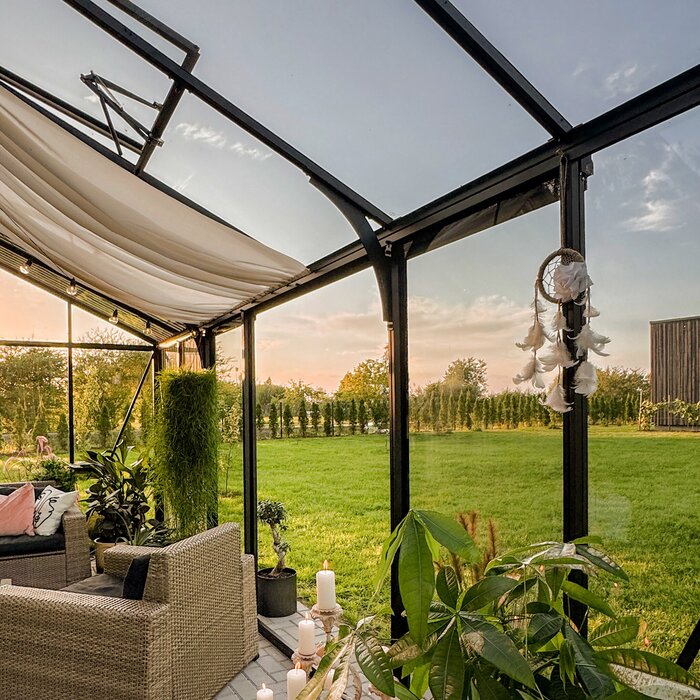
Ventilation still matters in winter. On a bright day, a closed greenhouse can warm more than expected, while moisture from plants and damp surfaces can linger in still air. Opening vents can help manage heat and humidity, but it also allows warmth to escape. That makes ventilation a control to plan for, not something to ignore in order to trap every bit of heat. Check where openings are positioned, how they operate and whether they can be reached easily. Do not assume that a model includes a particular number or type of vent unless its listing says so.
Think about the routine you can maintain: who will check conditions, open vents when needed and close them as the day cools? Follow the greenhouse manufacturer’s guidance and the growing advice for your plants rather than relying on a universal opening schedule. The listing for Aluminium Classic Greenhouse is one option to examine; check its stated ventilation arrangement and included fittings on the product page. A greenhouse title alone does not establish how it ventilates. If winter warmth is important, consider ventilation and heating together, since choosing one without accounting for the other can leave you with poor control.
Decide whether winter heating is necessary
If your plants need a dependable minimum temperature, treat heating as a separate part of the purchase decision. The heat required depends on the structure’s dimensions, covering, gaps, ventilation, local night conditions and the temperature your plants need. A heater cannot be sized responsibly from the word greenhouse alone, and there is no single setting that suits every crop. Ask the supplier or a qualified heating professional what information is needed to assess a suitable system. Do not assume that a heater is included with the structure, or that adding one will overcome every weakness in the site or covering.
Consider ongoing energy use, access to a suitable energy supply and what will happen when you are away or that supply is unavailable. Check that any proposed equipment is intended for the conditions in which it would be used, and have a qualified professional advise on suitability and safe installation. If Bloomcabin Orangerie is on your shortlist, check its stated dimensions, glazing and ventilation details before discussing whether separate heating is practical. The product name does not establish a winter temperature range. If heating is not workable, choose plants whose needs match the conditions you can maintain.
Before you buy 4
Choose between a freestanding and wall-mounted layout
A freestanding greenhouse gives you more choice about where to place it, provided the site has enough room and meets the manufacturer’s requirements. A wall-mounted layout may suit a narrower area beside a suitable wall, but it makes the wall’s orientation, height and shadow part of the growing environment. A wall can provide shelter from one direction; it does not automatically store enough heat to keep plants warm overnight. Compare the usable footprint and access as well as the position of the structure, and check that the proposed layout leaves room for doors and routine work.
Before choosing a wall-mounted design, look at the wall through the day and consider nearby eaves, pipes, gutters and surfaces that might affect light, drainage or access. Confirm the manufacturer’s mounting requirements and ask a qualified professional to assess any questions about the wall or fixing method. If comparing Aluminium Wall Greenhouse, use the product page to check its stated mounting conditions rather than assuming that every wall is suitable. A wall-based structure is a format choice, not a promise of extra warmth; its value for winter growing depends on the actual site and your plants’ needs.
Confirm the base and ground requirements
A suitable base and prepared ground matter to the way a greenhouse is assembled and supported. Before ordering, find out what surface or foundation the manufacturer specifies, whether a base frame is included and how the structure is intended to be secured. Do not rely on a photograph or a short model name to answer those questions. Check the ground at the proposed site for unevenness and drainage issues, and compare the stated dimensions with the space available. If the site is exposed or you are uncertain about the preparation or anchoring, get advice from a suitably qualified installer rather than improvising.
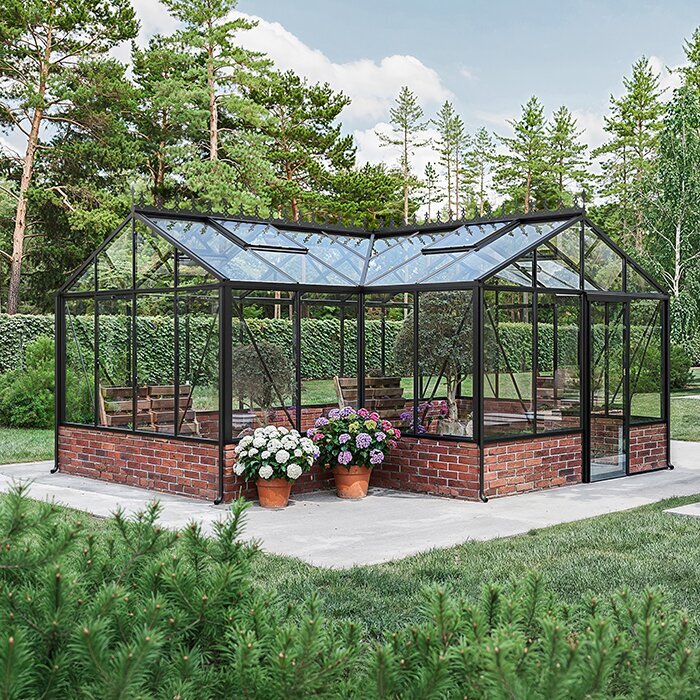
Ask for clear information about what must be ready before delivery and which fittings are supplied. The listing named Pyramid Greenhouse for Masonry Bases is a prompt to read the stated base requirements carefully; its name alone does not confirm dimensions, compatibility or what is included. Match the manufacturer’s instructions to the actual surface you plan to use, and resolve any uncertainty before placing the order. Good preparation also helps you avoid finding that the chosen location is too small, poorly drained or difficult to reach once the greenhouse arrives.
Before you buy 5
Allow for usable space and winter access
Compare the greenhouse’s stated external dimensions with the space you can actually use inside. Check the height, doorway and layout against the plants you plan to grow, not just the number of pots you hope to fit. Leave room to move between them, reach the plants for routine care and carry in supplies. Crowding makes access harder and can restrict air movement around plants. If you plan to use shelves, containers or growing beds, include them in a simple sketch of the interior before choosing a footprint.
Think about winter work as well as planting space. Can you reach the door easily when the ground is wet? Is there room for the door to open without hitting a wall, fence or stored items? Can you reach the vents and tend plants without stepping over pots? The listing for Limited Edition Aluminium Greenhouse is a product name to compare against its stated dimensions and layout; do not infer usable space or door arrangements from the title. A structure that fits the garden on paper still needs to suit the way you will use it through the season.
Check the full specification before ordering
Compare like with like by reading the complete product information for each greenhouse. Confirm the stated dimensions, frame and glazing details, ventilation, base requirements, door arrangement and any assembly requirements. Check which components are included and which may need to be purchased separately, such as a base or additional fittings. If winter temperature is central to your plan, ask what documented performance information is available; do not infer it from a model name or appearance. Keep a written comparison so a lower-level detail, such as ventilation or the prepared footprint, does not disappear behind the overall design.
Also check the delivery arrangements for your address and access route, what preparation is expected before delivery, and whether assembly is within your skills or needs help. Read any available care, parts and warranty information before ordering, without assuming that a particular term or service applies. Bloomcabin Prestige Greenhouse Metal Base is a specific listing to assess using its current product details; its name does not establish thermal capacity or the full contents of the order. Make sure the structure, site preparation and any separate heating plan work together before treating the purchase as complete.
Frequently asked questions
Will an unheated greenhouse stay warm overnight?
Not reliably. The structure may warm in sunshine, but it has no ongoing heat source and can cool after sunset. How cold it gets depends on the site, covering, gaps and weather. If overnight temperatures matter to your plants, check the product’s documented performance and monitor conditions at plant height.
Can I grow winter crops in a greenhouse without heating?
That depends on the crops and the winter conditions at your site. Plants suited to cooler weather may need shelter more than extra warmth, while others need a particular minimum temperature to grow well. Check guidance for each crop and distinguish keeping a plant alive from maintaining active growth.
Should greenhouse vents stay closed in winter?
Not necessarily. A closed greenhouse can warm on a bright day, and moisture can build up. Ventilation helps manage heat and dampness, but opening vents also lets warmth escape. Compare the vent arrangement and instructions, then balance ventilation against the conditions your plants need.
Is a wall-mounted greenhouse automatically warmer?
No. A wall can shelter a structure from some exposure, but it may also shade it. Its effect depends on the wall’s position and the site. Check winter sunlight and the manufacturer’s mounting information rather than assuming a wall will keep the greenhouse warm.
What should I check before ordering a winter greenhouse?
Compare the stated dimensions, glazing, ventilation, base requirements and assembly details. Check what is included, what may need to be bought separately, and whether the delivery and assembly arrangements suit your site. If plants need controlled warmth, plan for suitable heating separately and seek professional advice on its installation.
The right greenhouse for winter growing is the one that matches your plants’ needs and the conditions of your site. A sheltered structure may be enough for some plans, while plants that need reliable warmth require a separate, carefully considered heating solution. Check winter sunlight, stated glazing and ventilation details, base requirements and usable space before ordering. Treat the greenhouse as one part of the growing environment, not as a guarantee that every plant will stay warm.
