
A Guide to Buying a Greenhouse on Black Friday for Next Spring
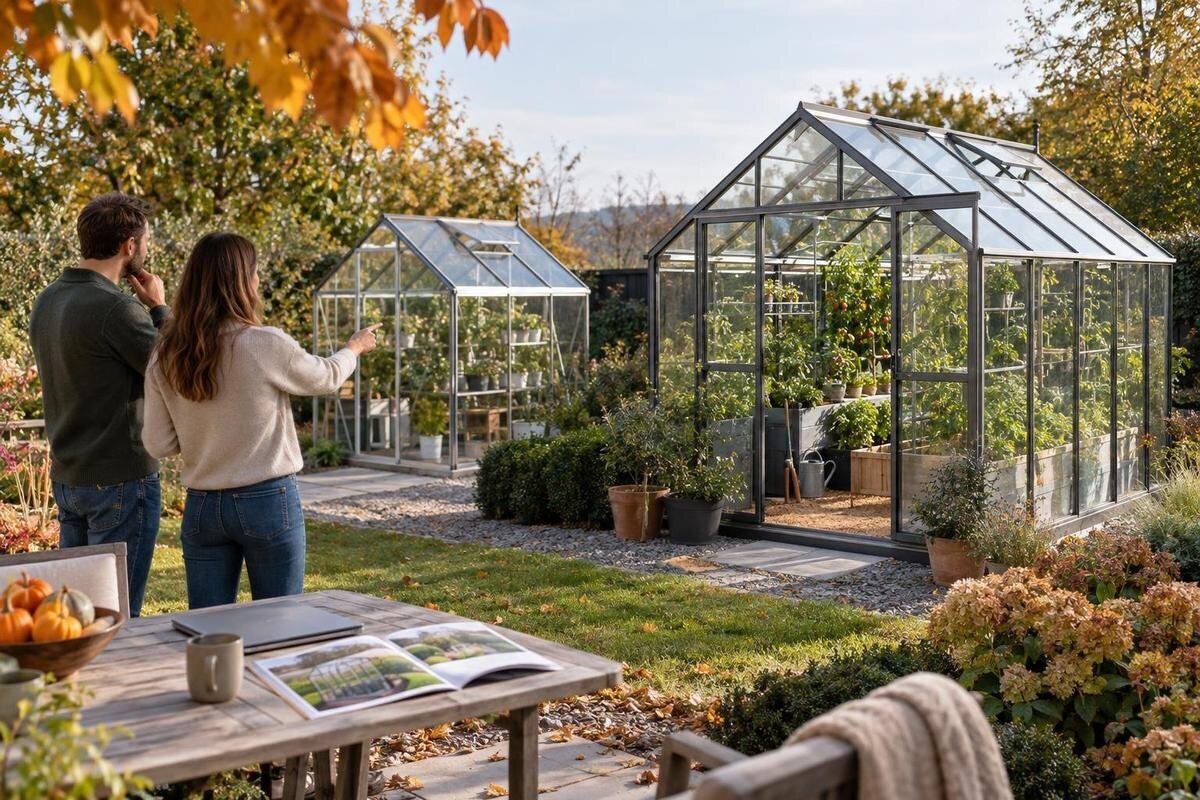
Black Friday greenhouse guide
Planning a greenhouse purchase around Black Friday works best when the event date is only one part of the decision. In South Africa, Black Friday usually falls in late November, near the end of spring, so “next spring” generally means the following year’s growing season. That gives you time to compare options, decide what you want to grow and prepare a garden site before planting begins. The useful question is not simply whether an offer appears, but whether a particular greenhouse, its site requirements and the ordering timetable fit your plans. This guide sets out the checks to make before you choose.

What “next spring” means in South Africa
In South Africa, Black Friday usually falls in late November, close to the end of spring. If you are buying then for “next spring”, record the target as September to November of the following calendar year, rather than as the season already in progress. The exact planting window depends on your location and the crops you plan to grow, so name a month or a short range that matters to you. If particular crops have sowing dates you need to meet, use those rather than relying on a broad seasonal label. This stops a promotional headline from setting a deadline that does not match your garden.
Work backwards from that planting period. Allow time to settle on a model, confirm current dimensions and included components, make site-preparation arrangements, receive the greenhouse and arrange assembly. The sequence may take longer if you need an installer or the listing states a lead time; neither should be assumed from the event date. Check current order and delivery information before setting a firm planting deadline, and leave a buffer for tasks outside your control. Note the target month, decision date and latest acceptable arrival. If preparation depends on a tradesperson or materials, include that booking time too; the plan then shows whether Black Friday offers a practical head start or merely adds pressure later.
How to assess a Black Friday offer
Before opening event pages, write down three non-negotiables: the space you can allocate, the plants or tasks the greenhouse must serve, and the latest date by which it needs to be ready. Add preferences separately, such as appearance or frame material, so you can tell essentials from nice-to-haves. That distinction lets you judge an advertised offer against its actual fit instead of letting a percentage or promotional label reshape the brief. If no suitable greenhouse has a current offer, your plan still works; Black Friday is one point at which to compare, not a reason to buy a different size, style or material that does not suit the garden. Keep the list brief enough to use while comparing pages.
Read the terms attached to the exact greenhouse and date you are considering. Confirm which model is covered, what the displayed amount applies to, whether accessories or assembly are separate, and what delivery area and timing are stated. Look for exclusions and the period during which the terms apply; do not assume every greenhouse in a catalogue participates or that a banner covers the option on your list. Keep a note of the written details you rely on, then revisit the live listing before ordering because event pages and product information may change. Record the headline and conditions together, so a saved image does not leave out the small print you need.
A clear purpose for the greenhouse
Translate the growing plan into requirements before focusing on greenhouse style. Decide whether you mainly want to raise seedlings, shelter a collection of plants, grow crops through part of the season, or use the space for several of these purposes. Note the types of plants, how many you expect to manage at busy times, their mature spread and height, and whether you will need room for trays, pots or a working surface. Those details define the growing area and daily routine; a greenhouse that looks attractive in a listing may not match the way you intend to use it. Also consider whether you will visit daily or mostly at weekends; that influences how convenient the controls and access need to be.
Separate essential needs from future possibilities. If you expect to expand, note which plants might be added and whether the garden could accommodate them, but avoid choosing on a vague wish alone. The Prestige greenhouse with a metal base listing can sit on your shortlist alongside other candidates; use its current product information to check dimensions, supplied components and any details relevant to your crop plan. Do not infer growing capacity from a name or image. A concrete capacity note, such as the number of trays or containers you expect to handle, is more useful than judging scale from a photograph. Writing down why each candidate stays on the list gives you a fair basis for comparison when event pages use different wording.
The proposed position in the garden
Spend time at the proposed position before settling on a greenhouse. Observe how direct sun and shade shift through the day, and note whether nearby trees, fences or buildings block light or cast moving shade. Consider wind exposure, where water runs or collects after rain, and whether branches could overhang the structure. One glance at midday will not show the full pattern, so check at more than one time or sketch the area across a day. Where possible, observe the position after rain too, so you can note water movement without assuming a particular remedy. The aim is to identify a workable place and the questions it raises, not to assume one orientation suits every garden or crop.
Trace how you will reach the greenhouse with plants, watering equipment and materials, and how you will move around it for routine care. Think about paths, doors, washing lines, play areas and planting beds: a greenhouse can fit a measured plot yet interfere with how you already use the garden. If nearby planting or planned garden changes may alter the shade, note that as well. If you are considering a position near a building or boundary, read the product’s stated siting requirements and ask a qualified installer about any structural or exposure concerns. Compare a page such as the Orangerie greenhouse only after recording your actual site constraints; neither a model name nor a product photograph proves that a particular position is suitable.

Footprint, usable area and access
Measure the available plot, then distinguish the greenhouse’s outside footprint from its usable growing space. A listing may present several dimensions; note what each one describes and whether it includes a base or projections. Internal dimensions are a better guide to usable growing space, while external measurements determine whether the structure fits between paths, fences and beds. Allow room for the way you will approach and maintain it, not only for the frame itself. Mark the entrance and walking route as well as the outer edges: an attractive fit can still leave too little turning space. If several arrangements could work, mark the likely footprint on the ground with a tape measure or string and walk around it before deciding.
Check exact dimensions for each candidate and make sure the units are clear. If listings use different units, convert them carefully before comparing, or ask for clarification rather than estimating. Do not treat a number in a model name as a measurement or assume a photograph is to scale. The Glass Greenhouse Plus 385 listing is one product to examine, not a shortcut to its footprint: consult its current dimension details and confirm any unclear point before ordering. Note the door opening space and the route from the garden entrance as well as the greenhouse area. This check can rule out a model that looks right on screen but makes everyday movement awkward once it is in place.
Frame and covering materials
Frame and covering choices affect the greenhouse’s appearance, the product details you need to compare and the maintenance information to check. Look for the stated frame material and covering or glazing type, then read the manufacturer’s care guidance rather than relying on broad labels such as “classic” or “premium”. Think about the balance you want between visibility, upkeep and the possibility of replacing a damaged component. Note the stated cleaning method and any restrictions on replacement parts. If you have a material preference, decide whether it is essential or simply one factor. A material name alone does not tell you how the complete greenhouse will perform in your garden; the construction and instructions matter too.
Ask what is included with the selected model and whether the product information explains the frame and covering clearly. Where a listing is described by a particular shape or style, compare its stated materials on their own merits; the T-model greenhouse orangery can be one candidate only after you have reviewed the details attached to it. Check what care is expected and whether replacement components are identified by the manufacturer. Keep questions tied to the named model, since products in one range may have different configurations. Do not assume a frame or covering suits a sunny, windy or coastal setting merely because the product is sold as a greenhouse; verify site-specific concerns with the supplier or a qualified installer. If the listing is silent on an important point, ask instead of extrapolating from another model.
Ventilation and day-to-day use
Ventilation belongs in the buying decision because a greenhouse needs to be manageable through ordinary changes in weather and plant growth. Check the product description for the openings supplied, where they are located and how they operate; do not infer ventilation from a photograph. Ask whether controls are manual or automatic only if that feature matters to your routine, and confirm which parts are included rather than assuming an accessory comes with the frame. If you cannot be on site during the day, consider whether the listed controls fit your availability without assuming automation. A greenhouse that is difficult to open or close when needed may be less practical for your schedule, so compare written operating details before choosing.
Think through a normal day: can you reach the plants you intend to tend, carry a watering can or tools inside and work without blocking the entrance? Consider how you will respond if conditions inside the greenhouse change, using the manufacturer’s care and ventilation guidance rather than relying on a generic promise. Treat the pyramid greenhouse listing like any other candidate: confirm its listed openings, operation and accessories, then compare those details with your routine. Think about how openings affect shelf placement and tall plants, and whether the entrance stays clear when pots are moved. If the description leaves something important unanswered, ask before ordering. A model name and staged image cannot show how convenient the greenhouse will be in your garden.
Base requirements and site preparation
Clarify the base and ground requirements before committing, because a model’s name or a picture of its lower frame does not establish what arrives in the package or what preparation the site needs. Look for explicit information on whether a base is included, what surface is recommended, whether the structure must be fixed to a particular type of support, and who is responsible for preparation. Do not substitute assumptions about a metal base, paving or masonry for the manufacturer’s instructions. Write down any unresolved question instead of assuming that a base shown in an image comes with the order. If the listing does not answer a site-specific question, have the supplier or a qualified installer assess it before you order.
Put each site requirement in writing beside the candidate, including any preparation, assembly help or parts that are not supplied. The Aluminium Classic greenhouse listing can be checked against the same questions; its product name alone does not establish the support system, package contents or suitability for your garden. This matters if the ground is sloping, soft, paved or close to existing structures, because the answer depends on the actual site and the manufacturer’s guidance. Ask for written clarification so your installer receives the same instructions you used when deciding. Keep the decision at the level of confirming compatibility rather than attempting a structural calculation or improvising an installation method.

Delivery and assembly timing
Order planning includes getting the greenhouse from the delivery point to the garden and deciding who will assemble it. Check current delivery terms for your address, the stated delivery window and any access requirements, then compare them with your target season. Measure narrow gates and turns along the route, and note steps or uneven surfaces that might affect moving components. Ask what the delivery service does and does not cover; do not assume it reaches the installation spot or includes assembly. If you need a professional installer, check availability before choosing an order date. Ask how much notice is required to rearrange delivery if weather or access conditions make the planned time unsuitable. A sale event cannot guarantee that the full setup will be ready by spring.
Plan where components can be kept if delivery and assembly cannot happen on the same day, following the supplier’s storage instructions. Keep the order details and note whom to contact about any missing or damaged components. A candidate such as the aluminium wall greenhouse should be assessed using its current delivery and assembly information, not only the product title. Ask in advance whether the supplier offers assembly or simply supplies the greenhouse, and whether you must arrange access, lifting or a prepared surface. If storage is needed, follow the supplier’s guidance to reduce the risk of components being damaged. Clear answers make the timeline realistic and help you avoid an arrival date that the garden or household is not ready to handle.
A comparison sheet for the final choice
Use one comparison sheet for each candidate rather than trying to remember what you read during a fast-moving event. Record the greenhouse name, external and internal dimensions, frame and covering, base requirements, ventilation, included components, installation needs, delivery timing and the written offer conditions. Mark information as confirmed, unclear or not supplied; “unclear” is a reason to ask, not an invitation to fill gaps from a photo or another model’s description. Include a column for questions awaiting answers; do not treat missing detail as a positive. You can add the current price and any stated exclusions without making price the only test. Reviewing the same fields across products exposes mismatches and makes the final choice easier.
Before ordering, reopen the live product page and check that it is the same model and the same terms you compared. Confirm the promotion period and any exclusions in the wording shown at that time; do not assume a discount, stock position or delivery promise from the event name or an old screen capture. A title such as the Limited Edition aluminium greenhouse identifies a listing, but the words “Limited Edition” do not tell you its current availability or offer conditions. If a detail central to your decision remains unresolved, wait for clarification or keep your shortlist open. If an offer expires before you can confirm an essential detail, decide whether to wait rather than letting the deadline choose for you. An offer is useful only when its product, terms and timing work for your garden and spring plan.
Frequently asked questions
Which spring should I plan for if I buy on Black Friday?
In South Africa, Black Friday usually falls in late November, near spring’s end. For a purchase aimed at next spring, plan for September to November of the following calendar year, then work back from your crop dates and the time needed for delivery, site preparation and assembly.
Should I choose a greenhouse before checking its position?
Check the garden position before committing to a model. Light, shade, wind exposure, access and ground requirements can rule out a candidate; measured site limits also make product-page dimensions easier to assess.
Can I use a model name or photograph to compare dimensions?
No. A model label and image identify a product but do not establish its footprint or usable growing area. Check the current external and internal dimensions, note what they describe, and measure the garden and access route.
Which material information should I compare?
Compare the stated frame and covering or glazing, care instructions, replacement-part information, ventilation and any site-specific requirements. Treat broad marketing terms as descriptions, not performance evidence; ask the supplier about details the listing leaves unclear.
What if there is no suitable Black Friday offer?
Do not substitute an unsuitable option just to shop on the day. Keep your shortlist and compare the terms available when you are ready; a future discount or stock level is not guaranteed.
Buying in November for spring next year can give you time to make a considered choice, provided the calendar, site and product details line up. A useful shortlist should reflect your crop plan, the space you have measured, the support and access the garden can provide, and a realistic delivery and assembly timetable. Compare any current offer only after those points are clear. If the terms or a key specification remain uncertain, pause and get an answer; the right greenhouse is one you can prepare for and use when the season arrives.
