
Buying a Small Greenhouse for a Compact Garden
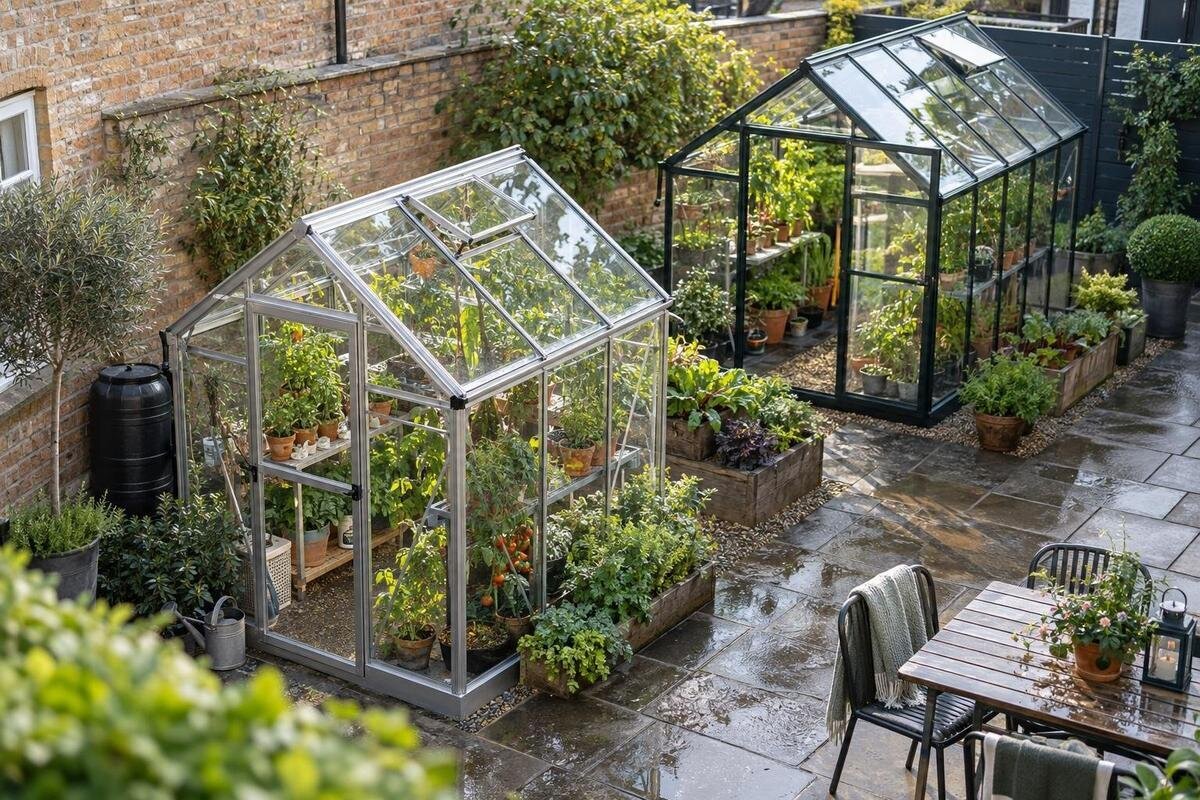
Compact-garden buying guide
Buying a small greenhouse for a compact garden is a fit-and-use decision, not simply a search for the shortest footprint. You need enough interior room for the plants you plan to grow, a position that leaves everyday access clear, and a site that meets the product’s stated requirements. Measure first, sketch the layout and then compare the published details of a shortlist. That approach helps you see which compromises are acceptable before you place an order.

What counts as small in your garden?
“Small” is relative to the garden and to the way you plan to use a greenhouse. A compact footprint may still feel awkward if the door opens into a path, the roofline meets a branch, or pots leave no route to plants at the back. A slightly wider layout can be easier to manage if it gives you access to both sides of a bench. Treat the structure as a working space, not just an outline that must fit between two boundaries. The floor area alone does not show how comfortable it will be to enter, tend plants or move around; that working room can matter more than another row of pots. Include the route for carrying trays in and out when deciding whether the fit is practical.
Before comparing models, write a short growing plan: what you expect to raise, roughly how many pots or trays you want to accommodate, and whether the greenhouse will also hold tools or potting supplies. Separate essential uses from occasional ones. A space intended for a few seed trays has different capacity needs from one expected to hold containers for longer periods. Include benches and hands-on work, not only the plants themselves. If you expect the use to change during the year, note that now and decide whether the extra capacity is a genuine requirement. If the greenhouse must serve two purposes, decide which takes priority when space is limited. This list makes it easier to reject a size that would become crowded soon after setup.
Measure the full space available
Measure the proposed site at ground level, then compare it with the greenhouse’s full outside dimensions in the product information. Mark the planned footprint with string or chalk and include any base, roof edge or other projection shown in the product drawing. Note nearby fences, walls, taps, trees, beds and doors; a fixed obstacle can make a nominal fit impractical. Also mark the path you need to keep clear for everyday garden access. Do not use stated floor area as a substitute for width and length: it cannot show whether the shape fits a narrow corner or leaves a usable route. Record your measurements from consistent reference points and note any clearance the product instructions require beyond the footprint.
When reviewing a listing such as Bloomcabin Prestige Greenhouse Metal Base, compare the published outside measurements with that outline and check whether a base or other components are specified separately. The wording in a model name is not a dimension or a complete list of contents. If a page shows a plan but does not explain whether measurements include the base, door projection or roof edge, ask for clarification before choosing a position. Keep separate notes for external and internal dimensions: the first concerns the space occupied, while the second helps establish how much growing area is available. This distinction prevents a headline figure from driving your choice.
Let your growing plan set the capacity
Use your crop list to estimate capacity from what you will actually keep inside, rather than from the number of pots that can be fitted tightly on paper. Count seed trays, mature containers and any planned bench space, and leave room to handle each group without shifting everything. Crops vary in height and spread, so a mix of low trays and taller plants needs a different arrangement from a single layer of small pots. If you intend to work inside, reserve the floor space or standing position that task needs. Consider whether your set-up changes between propagation and mature plants; the busiest stage may determine the capacity you need. This gives you a practical target to compare with each model’s published interior.
Use a product listing such as Bloomcabin Orangerie to test your list against the dimensions and layout actually stated on its page; a model name does not reveal how many trays, pots or mature plants will fit. Check whether published dimensions are internal or external and whether benches or shelving shown are included or optional. If no interior plan is supplied, avoid assuming the space is usable right up to every wall. Sketch the dimensions of your largest containers in the intended arrangement, especially if you want to keep more than one kind of plant. Your aim is not to fill the greenhouse to its maximum, but to leave enough access to tend plants and remove a tray without rearranging the whole layout.
Plan for access, not just floor area
Draw a top-down plan showing the entrance, the direction the door opens, the path to the back, and the place where you will stand to water, pot or remove a tray. A generous stated floor area can still be awkward if the door faces a wall, the entry cuts across a narrow passage, or a fixed bench leaves a dead zone. Allow room to reach containers without stepping over them, and decide whether you need access to both long sides or only one. If you will carry tools or a watering can through the garden, include that route too. Check the path stays usable with the door open as well as closed; a greenhouse should not block access to other beds.
Mark the planned dimensions in the garden itself, then stand at the proposed entrance and imagine carrying a tray through. Compare that mock-up with the plan and product drawing, not just the outside rectangle. A listing such as Glass Greenhouse Plus 385 should be assessed against its published layout and dimensions; a number or material word in a title cannot tell you where the entrance or usable interior falls. Try the route with the sort of object you expect to carry, since a clear walkway on paper may feel different at a turn. If the drawing omits a detail that matters, obtain it before deciding. The model is only a candidate until its access works in the space you have.

Choose the position by observing the site
Assess the light and conditions at the exact spot rather than assuming the sunniest part of the garden stays sunny all day. Observe how shadows move from walls, fences and trees, and remember that tree cover can change through the year. Notice whether rainwater tends to collect there, where the garden drains, and whether the position is especially exposed to wind. Revisit the spot at different times if the first view is not representative. These observations help you compare locations, but do not replace the greenhouse’s stated site requirements. Keep access to nearby gates, doors and garden areas in mind too; a clear patch may not be a useful position if it interrupts everyday movement.
Where the compact garden has few open areas, compare a freestanding position with any wall-adjacent arrangement you are considering. Check the actual drawings for the proposed model, including the space needed beside a boundary and the access needed to clean or maintain the area. A listing named T-Model Greenhouse Orangery for Wall Base is an identifier, not proof that it suits a particular wall, base or location. Confirm the documented placement requirements and consider how the neighbouring structure affects light and access before using a wall to save ground space. Measure any required gap too; a narrow remaining strip may be awkward for assembly or maintenance.
Confirm the base and preparation requirements
The surface and base are part of the purchase decision because a greenhouse’s stated requirements may affect where it can be placed and what must be prepared first. Read the product instructions for any base, anchoring or ground-preparation details, and compare them with the condition of your site. An existing paved area is not automatically suitable simply because it looks level or near the right size; its dimensions and the product’s requirements still need to match. Avoid guessing about fixing points or constructing a support. If the product information does not explain what your site needs, ask the supplier or a qualified installer before ordering. Note any preparation that could require outside help or changes to the garden.
A model name such as Pyramid Greenhouse for Masonry Bases does not establish what dimensions, masonry arrangement or fixing method your site requires. Use the product page and drawings to find the specified base interface and preparation notes, then ask a qualified professional about a new base or attachment if needed. This matters in a small garden because the finished base may affect the footprint or leave less room for circulation than the greenhouse outline suggests. Plan the doorway and path around the base as well; a suitable support can still create an awkward entrance if the structure is positioned without checking access. Resolve these points while comparing models, rather than after a structure is waiting to be assembled.
Check usable height and interior layout
Width and length are not the only dimensions that shape usability. Check the published internal height, where the roof slopes or meets the sides, and the door opening, rather than relying on the highest outside point. Taller plants may need room above their containers, while a low side can make rear pots harder to reach. Shelving or benches can use headroom and narrow movement space. Decide whether you need to stand comfortably inside or will tend plants from outside; either way, compare relevant clearance with your routine. A side-view sketch can help where the garden is tight against branches or a structure. Also check that the opening is wide enough for the trays and pots you actually plan to move.
Put height and interior dimensions on the shortlist alongside footprint. A named listing such as Aluminium Classic Greenhouse is not enough to determine headroom, bench position or usable width; use the stated measurements and drawings for the exact configuration you would order. Check whether the displayed arrangement includes shelves, doors or other items, and distinguish supplied parts from optional accessories. This avoids comparing one model’s empty interior with another model’s illustrated, fitted arrangement. Where no internal measurements are given, ask rather than estimating from a photograph, which may not be to scale. Record the answer so the same figure can be compared against other candidates.
Compare glazing and frame details
Appearance can help you picture a greenhouse in the garden, but a buying comparison needs written details for glazing, frame and ventilation. Check what glazing type is actually stated, whether the frame finish or colour is specified, and which vents, doors or fittings are included. If light transmission, heat retention, cleaning or replacement panels matter to you, look for relevant product information instead of assuming that materials with similar names perform alike. Ask how a damaged component is replaced if future maintenance is a concern; do not infer that replacement parts are included or available. These details help you decide whether the listed configuration matches your priorities. A photograph is useful for appearance, not a substitute for a specification.
If one candidate is listed as Aluminium Wall Greenhouse, compare the exact frame and glazing details on its product page with the other models, then check whether that documented configuration suits your intended position. The title is an identifier, not evidence of complete construction, included fittings or compatibility with your wall. Keep a note of the stated items and any information that is missing; like-for-like comparison is difficult if one listing shows only a model name and another gives detailed specifications. Ask for clarification where a feature matters to your choice. Use the same comparison points for each candidate so attention does not drift towards the best-looking photograph.

Include delivery and assembly in the decision
Think about getting the greenhouse to its final position as well as finding space for it. Measure the route from the delivery point through gates, side passages and turns, and note any steps or obstacles that could affect access. A sharp turn or narrow gate may be more restrictive than the straight-line width suggests. Ask what delivery includes, how items are packaged and whether you need to keep a clear assembly area; these details differ by product and should come from the current listing or retailer. Check who is expected to assemble the structure and what the instructions call for, without assuming that the package includes installation. Planning the route early reduces the risk of choosing a model that fits the garden but cannot be brought to the site conveniently.
Before placing an order, open the listing for the exact model and configuration rather than relying on a saved image or shortened title. A product named Limited Edition Aluminium Greenhouse still needs a written check of its dimensions, included parts, any required base or accessories, and the current delivery and assembly terms. Compare selected options with your plan and note which extras are necessary rather than optional. If prices or charges are shown, consider the complete configuration rather than a headline figure. Keep the exact model name and chosen option with the details you compared, so there is no ambiguity about the item in your order. Do not let a product title substitute for a clear record of what you are ordering.
Compare the shortlist against your sketch
Once you have a few candidates, compare them against the same facts: external footprint, internal dimensions, entrance and door swing, growing capacity, site preparation, included components and required clearance. Separate confirmed information from questions still outstanding; an unlisted dimension should not be treated as a favourable guess. If one model needs a base or a clear assembly route that your plan cannot provide, mark it as unsuitable for this site even if its overall shape looks promising. A simple side-by-side note sheet can make missing details visible and stop a polished image from influencing the comparison more than the measurements. Write down why each candidate remains on the list, so the choice reflects a real benefit rather than an unanswered question.
Give priority to the constraints you cannot change, such as the garden boundary, access route and site conditions, then compare features that matter to your growing plan. If two models both fit, decide whether extra interior height, a different layout or fewer preparation steps is worth choosing over the smallest footprint; only the product details can confirm these differences. If none leave practical access or meet stated site requirements, reconsider the position or growing plan rather than forcing a poor fit. Resolve any detail that could change the result, such as a base requirement or door position, before ranking otherwise similar options. The right small greenhouse is the one whose verified layout fits both the garden and its intended use, with enough room left to manage the plants comfortably.
Frequently asked questions
What dimensions should I measure for a small greenhouse?
Measure the full outside footprint stated for the model, including any base or projection shown in its drawing. Also consider the door opening, the route around it and any clearance specified in the product information. Check internal dimensions separately to judge growing capacity.
Is the smallest greenhouse always the best choice?
No. A smaller footprint may leave too little room for your planned plants, containers or access. Compare usable interior space and the route you need to work before choosing the smallest option that fits the garden.
Can I position a greenhouse beside a wall?
That depends on the model’s stated placement requirements and your site. Check the product drawings for clearance and access, and consider whether the wall affects light or maintenance. If the design needs to be fixed to a wall or base, ask a qualified installer about your site.
How do I estimate the growing capacity I need?
List the plants, pots and trays you expect to keep inside, then allow for their height, benches and the space you need to reach them. Compare that plan with the model’s published internal dimensions rather than relying on its name or outside footprint.
What should I confirm before ordering?
Confirm the exact model and configuration, external and internal dimensions, base requirements, included components and any necessary extras. Check the current delivery and assembly details too, including whether your route to the garden and the assembly area are suitable.
For a compact garden, a good purchase begins with the plot rather than the product category label. A measured outline shows whether the outside dimensions and access can coexist, while a written growing plan reveals how much interior space you need. Compare actual specifications, base requirements and ordering details for each candidate, and keep unknowns visible until they are clarified. A greenhouse that fits the site but cannot be used comfortably is not a practical fit; choose a layout that leaves room for both plants and the routines that keep them tended.
