
Buying a Wooden Greenhouse: Materials and Maintenance
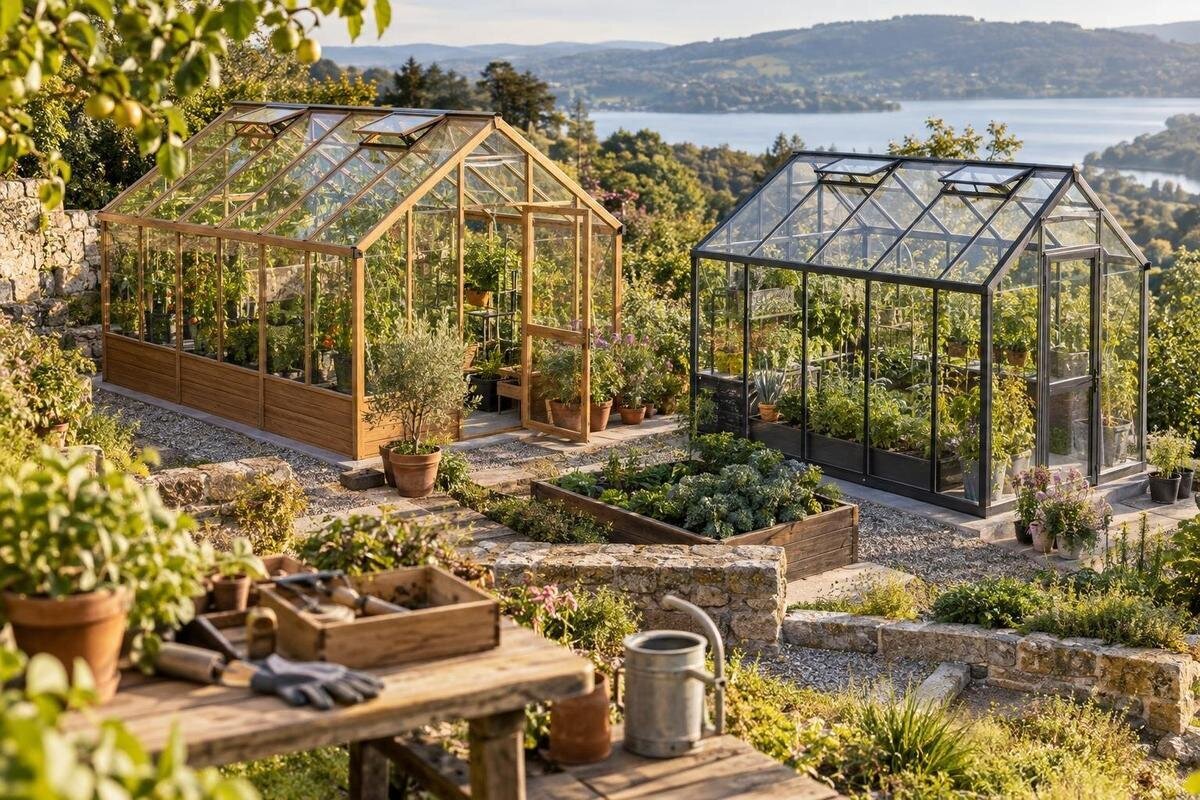
Greenhouse buying guide
Buying a wooden greenhouse involves more than choosing a frame that suits the garden. Timber species, treatment, construction, glazing, base requirements and finish all affect what you need to confirm before ordering, while the site and growing plan determine how easy the structure will be to use and maintain. A photograph or model name cannot answer all of those questions. Conditions vary from site to site: direct sun, wind, rainfall and, where relevant, coastal exposure can shape the care a timber structure needs. This guide sets out which details to compare and what to understand about upkeep before you choose.

Match the greenhouse to your growing plans and site
List what you plan to grow and how you will use the space: raising seedlings, protecting established plants, holding a collection of pots or making routine cultivation easier. Those aims affect the layout you need, including room for trays, benches, taller plants and a clear route through the greenhouse. Compare usable interior space, not just the outside footprint shown in a listing, and allow for doors opening and for standing beside plants while watering or working. Note where supplies and tools will be stored outside the structure. The best size supports your routine; a larger greenhouse is not automatically a better fit if it leaves too little garden space.
Walk over the proposed position at different times of day and note changing shade, exposure to wind and driving rain, and how close watering access is. Consider whether you can reach every outside face to inspect or maintain the timber, and whether paths remain clear when doors are open. Nearby walls, trees and fences can affect shade and access, so assess the actual spot rather than choosing from a photograph of another garden. A rough sketch showing boundaries, paths and openings can reveal space conflicts before you order. These checks connect the material choice to the upkeep you will really be able to do.
Ask what timber and treatment the model uses
Treat wooden as a broad category, not a complete material description. Before ordering, identify the timber species and, if supplied, its grade or other specification. Check whether structural pieces, doors and the base use the same timber or different materials. Ask how the timber is prepared and whether it is treated, modified or supplied with a factory finish. Terms such as natural, durable or weather-resistant do not say which components are covered, what conditions they are intended for or what care follows. Written details make it easier to compare models on the same basis. Do not try to identify a timber species from its colour or appearance in a photograph.
Look for a clear description of the treatment, where it is applied and how the finished structure should be cared for. Find out whether exposed ends or replacement pieces require a specified finish, whether a surface needs refreshing and which products the manufacturer accepts. A treatment is not, by itself, a promise of maintenance-free performance. Do not assume that a label such as treated timber describes every part in the same way. If the seller's description omits the species or treatment, leave that as an open question in your comparison rather than filling the gap with assumptions.
Compare frame construction, not just the timber label
Check a drawing or parts list for posts, roof members, rails, braces, door frames, connectors and the fixings that join them. The useful detail is not simply how much timber appears in a photograph, but how the components meet and what the manufacturer says about assembly and inspection. Timber responds to changes in moisture, so ask how joints, seals and moving parts are intended to be maintained. A product image may show the general style, but it cannot establish dimensions, connection methods or the details of an assembled frame. Look for those points in the product documentation before you compare construction.
If you are weighing timber against another frame material, place the written construction and care details side by side. The Aluminium Classic greenhouse listing is a named alternative to inspect, not proof of how that model is assembled or maintained. Use the same questions for every candidate: which components are specified, how are they joined, what fixings are used, and how do the frame and glazing meet? Differences matter when they are documented for the actual model. Avoid deciding that one frame is more robust or easier to care for based on its material label alone.
Check the base and manage moisture around the frame
A greenhouse base is part of the order decision, not a detail to solve after delivery. Find the installation document for the exact model and check the stated base material, dimensions, surface requirements, anchoring points and preparation needed. Do not assume a paved patch, existing wall or masonry edge is suitable because it looks firm; follow the product instructions, and seek advice from a qualified professional where ground preparation or support is uncertain. Compare whether the base is included or must be bought or prepared separately. That affects both the space required and the full project cost.
Water management matters around exposed timber. Consider where irrigation and roof runoff will go, and avoid a position where water persistently collects around the frame. Keep the outside accessible so you can inspect edges and finishes, rather than allowing beds or stored items to block them. A coating is not a substitute for suitable base preparation or drainage. A title such as Pyramid Greenhouse for Masonry Bases can take you to a product page, but it cannot supply the exact dimensions, anchoring details or ground preparation for a different greenhouse. Confirm the requirements for the model you intend to buy.
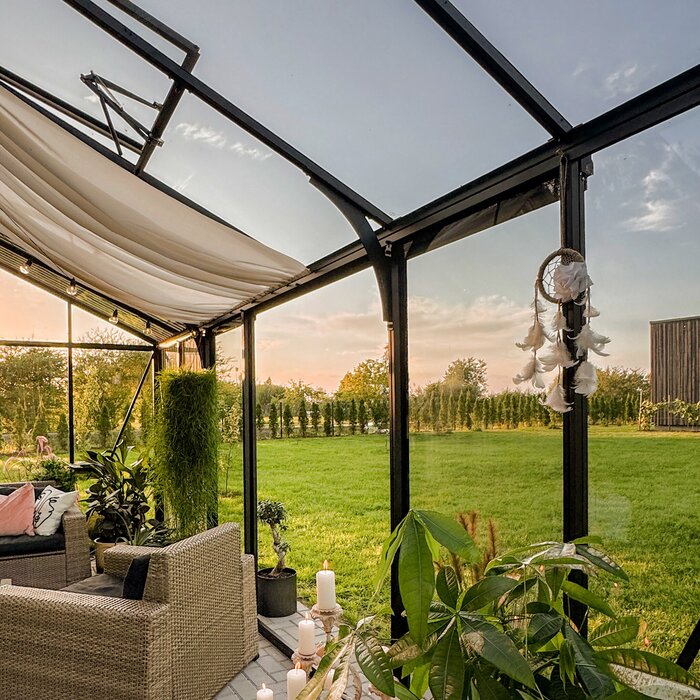
Choose glazing as part of the greenhouse
Glazing affects what you clean, repair and replace, so assess it as part of the timber greenhouse rather than as a separate shopping choice. Confirm whether the proposed model comes with glass or another glazing material, how the panels are held in place, and whether the manufacturer lists compatible replacement panels and seals. Check how vents and doors fit into the frame and what the instructions say about condensation and routine care. These details do not remove the need to maintain timber, but they help you understand which parts of the structure need different attention. Do not assume that any panel or accessory will fit a particular frame.
Use model pages to compare information they actually supply. The Glass Greenhouse Plus 385 listing is a glass-labelled product page, but its name cannot tell you what glazing is supplied with a different wooden greenhouse. For each timber option, find the glazing specification and assembly details, then check what the manufacturer recommends for cleaning the panels, seals and adjacent timber. Avoid using an unapproved cleaner or coating near a glazing joint; ask which products are compatible if the instructions do not say. This keeps maintenance decisions tied to the actual assembly rather than a general assumption.
Estimate the ongoing maintenance
Find out whether the frame arrives unfinished, factory-coated or with a treatment that has a stated renewal routine. The useful information is a product-specific care schedule: what to inspect, what cleaning is permitted, when a finish needs attention, how to prepare the surface and which products the manufacturer accepts. Do not rely on a universal rule such as recoating after a fixed number of years; the finish, exposure and instructions may differ. Ask what signs of wear should prompt maintenance, so the routine is based on observable condition as well as any stated intervals.
Maintenance is not only repainting or applying a new finish. Include ordinary cleaning, checking joints and fixings, looking for places where water may collect, and checking that doors and vents still move as intended. Consider access too: can you reach outside surfaces and inspect the roof without shifting planted beds or stored items? If you compare other frame types, the limited-edition aluminium greenhouse listing is another named model to review, but its label is not a care schedule. Compare each product's own maintenance instructions rather than transferring timber-care assumptions to a different material.
Check that coatings suit the timber and intended use
Do not choose paint, stain, preservative or sealant based only on colour or a general description such as exterior grade. Verify that a product is intended for the greenhouse timber and its exposure, and that it is compatible with the glazing, seals, fixings and existing finish. The greenhouse manufacturer should say whether a finish is required, supplied or optional, and whether the surface needs preparation before reapplication. Follow the product's directions and safety label, including any drying or curing instructions. Do not apply an unfamiliar treatment around plants simply because it is sold for outdoor timber.
A product title such as the Bloomcabin Orangerie listing identifies a page to investigate; it does not establish a timber specification, coating or aftercare routine. Apply that distinction to every item on your shortlist. If growing edible crops is part of your plan, obtain clear instructions on suitable finishes and their use around the greenhouse before applying anything. Keep a record of products used and maintenance dates, especially if the manufacturer specifies a particular finish. That record can help you keep later care consistent instead of relying on memory.
Allow space for access and inspection
Leave room to open doors, tend plants and reach outside surfaces for inspection. Use the model's actual assembled dimensions and door clearances, not a drawing's general visual impression. Mark the route from the entrance and note obstacles such as a wall, fence, hedge or path. Shade and restricted access can change how comfortable the greenhouse is to use and how easily a timber surface can be maintained. If a surface is difficult to reach, that is a practical maintenance issue, not just a finishing detail. Check the space around the structure as well as the footprint it occupies.
The aluminium wall greenhouse listing is a named wall greenhouse, but it is not evidence that a wooden greenhouse can be attached to your wall or positioned in the same way. For a timber model, establish from its instructions whether it is freestanding or designed for wall installation, what clearances it needs and what support is required. A nearby wall may alter shade, water runoff and access; do not assume it provides structural support or weather protection. If attachment or base requirements are unclear, have a suitably qualified installer assess them before ordering.
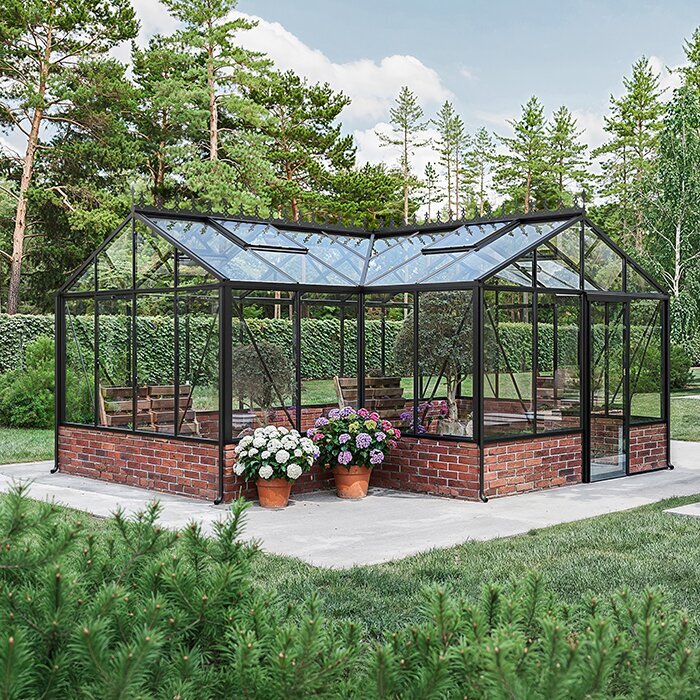
Confirm assembly, contents and replacement parts
Confirm whether the product is delivered assembled or as a kit, whether assembly is included, and which tools, fixings and components are supplied. Check specifically whether the glazing, base, shelves or treatment products are included or optional. Do not treat an illustration as a packing list. Ask how to obtain replacement timber pieces, seals, fixings or glazing if a component is damaged later, and keep the assembly and care documents. Knowing what can be replaced and how it is identified makes it easier to plan long-term upkeep without assuming that a matching part will be available.
Where a model title mentions a base or wall arrangement, such as the T-model greenhouse orangery for wall base listing, use the wording to identify questions, not to decide site compatibility. Check the installation manual and itemised contents for the greenhouse you intend to order: base supply, required fixings, assembly steps and any separate preparation. For a timber frame, also ask how to source a replacement piece and whether its finish can be matched according to the manufacturer's instructions. Confirm accessory compatibility before adding shelves or other items; an attractive addition in a photograph may not be included.
Compare the full order and ownership cost
Build a like-for-like comparison before placing an order. Add the greenhouse price to any separately listed base, glazing, finish, delivery, assembly or site-preparation costs, using the actual quotation rather than assuming an item is included. Check delivery access for the packaged product, what happens if a part is missing, and the written warranty terms, including exclusions and maintenance conditions. There is little value in comparing headline prices if one figure includes items that another excludes. An itemised list also makes it easier to see whether the purchase and the expected care both fit your budget.
Names alone can obscure what is part of a package. The Prestige greenhouse metal-base listing has base wording in its name, but the title cannot establish whether a base is included, what it is designed for or whether it suits a wooden greenhouse. Check the itemised contents and the manufacturer's compatibility instructions for the exact model you are ordering. Record unresolved points—timber species, treatment, finish, base, glazing and maintenance—before comparing final terms. A purchase is easier to assess when each answer is explicit rather than inferred from a photograph or label.
Frequently asked questions
Does every wooden greenhouse need the same maintenance?
No. Care depends on the timber, any treatment or factory finish, the construction, the conditions at the site and the manufacturer's instructions. Use the care schedule for the exact model rather than applying a general rule to all timber. If no schedule is provided, ask for one before ordering.
Does treated timber mean maintenance-free?
No. The word treated does not explain which components received treatment, what kind was used or what care is still needed. Check the product specification and maintenance instructions for inspections, cleaning and any finish requirements. Do not assume every part of the frame has the same treatment.
Can I use any outdoor stain or preservative?
No. Check that a product is compatible with the greenhouse timber, existing finish, glazing, seals and fixings, and is suitable for the intended growing use. Follow the greenhouse manufacturer's guidance and the product label. If compatibility is not clear, do not choose a product based only on its colour or outdoor-use description.
How can I check whether the base is suitable?
Use the installation instructions for the exact model. Confirm the required base, dimensions, preparation and anchoring details, and whether any base is included in the order. Do not assume that an existing paved area or wall is suitable. Where ground preparation or support is unclear, get advice from a qualified professional.
What should I compare before placing an order?
Compare the timber and treatment specification, construction, glazing, base requirements and care schedule. Confirm what the price includes, how delivery and assembly are handled, and whether replacement parts and written warranty terms are available. Use itemised details rather than assuming that components shown in a photograph are included.
Choose a wooden greenhouse by putting its documented material and care requirements beside the demands of your site and routine. A clear timber and treatment specification, sound construction details, base information, compatible glazing and a realistic finish schedule are more useful than a broad promise that timber is durable or easy to maintain. When the details are available and the work is accessible, you can judge the commitment before ordering; if key answers are missing, the comparison is not complete. The best fit is the one whose care you can sustain, not simply the frame you like in a photograph.
