
Buying Your First Greenhouse: A Step-by-Step Decision Guide
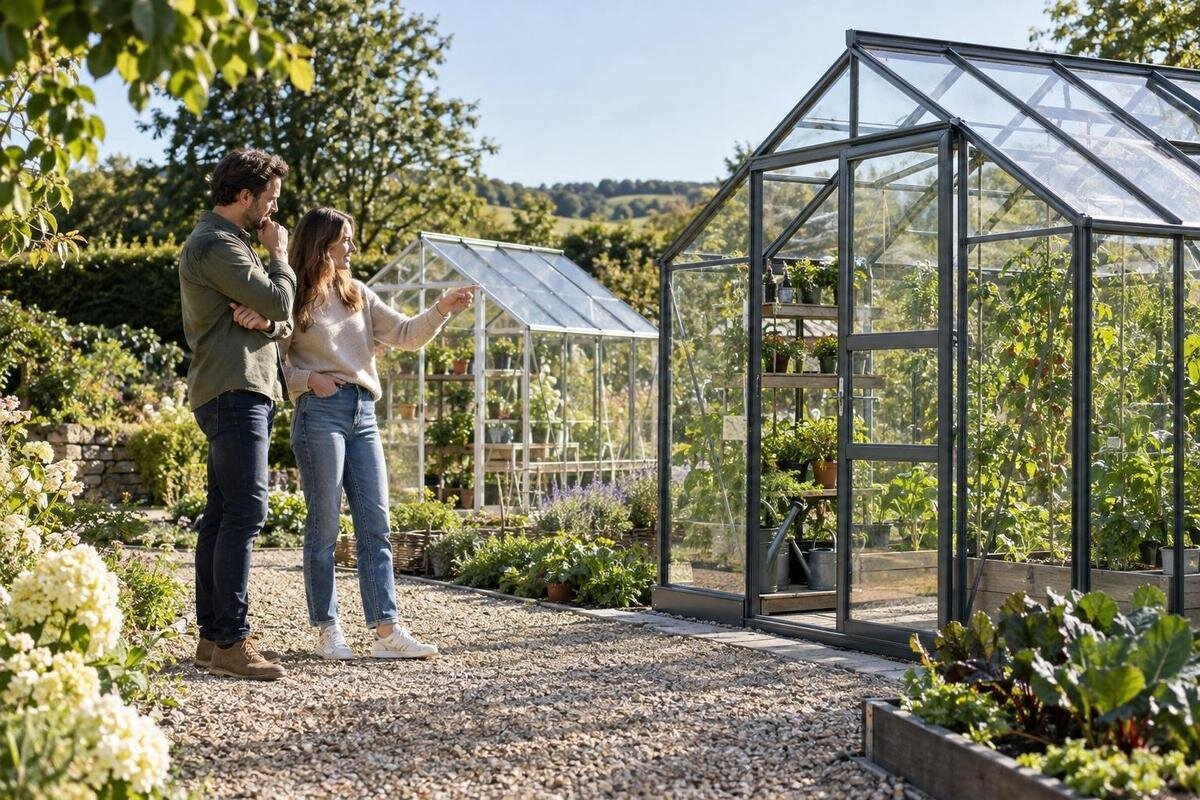
Greenhouse buying guide
A first greenhouse is easier to choose when you decide what it must do before comparing models. Start with the plants and routines you have in mind, then match usable growing space, site conditions, layout, construction details and total cost. A greenhouse that fits the garden but not your gardening habits can be disappointing; a larger structure can also demand more space and attention than you planned. This guide breaks the decision into practical steps, so you can build a shortlist around real requirements and buy with clear expectations.

Decide what you want the greenhouse to do
List what you expect to grow, rather than choosing a structure simply because it looks impressive. Seedlings that need a protected start, herbs picked regularly, plants kept through cooler periods and crops grown for a full season make different demands on room, access and attention. Write down the main activities you want to support, when you expect to use the greenhouse and which plants matter most. A space used chiefly for trays may need room for a work surface; plants that remain in the greenhouse longer need accessible growing area. This list gives you a practical brief for comparing models and prevents a feature-rich option from deciding the plan for you.
Be realistic about time as well as ambition. Opening and closing vents, checking plants, watering, cleaning and moving pots all take regular attention; the setup you choose should match that routine. Note how often you can visit, including periods when work or travel changes your schedule, and whether someone else could manage basic tasks. Separate essentials from “perhaps later” ideas. Decide whether you genuinely need room for benches, larger containers or a small potting area, rather than adding them after the footprint has been fixed. A shortlist based on current habits is easier to manage; leave a sensible option for growth, but do not pay for space you cannot use or maintain.
Size for usable growing space
Think in usable interior space, not just outside width and length. Beds, shelves, pots and a clear way through all share that area. If you want to carry trays or watering cans, allow a route that stays clear when plants are in place. Draw a simple floor plan with beds, benches and an aisle, then show where doors open. This exposes a common mismatch: a greenhouse can fit the patch of garden yet leave too little room for the way you intend to work. Treat the route and workspace as part of the growing area, not spare space to use later.
Next, consider height as well as floor area. Include the height of mature plants and containers, and the space you need to reach, prune or harvest them. Be careful about the difference between outside dimensions and the area actually available inside; check what dimensions are shown for each model. A name such as Bloomcabin Orangerie is not a measure of planting capacity, so use the stated dimensions and layout details rather than the name. If a key measurement is missing, leave it marked as unknown while comparing options instead of estimating from a photograph.
Choose a site you can reach and manage
Walk around the garden before settling on a position. Note how sunlight moves across the proposed area and where buildings, fences or trees cast shade at different times; the pattern may change with the season or when nearby plants grow. Also observe wind exposure and where water collects or flows after rain. There is no single location that suits every property: a sunny corner may be convenient, but its access and exposure still need to work for the greenhouse and your routine. Record the conditions you actually see rather than relying on a general rule.
Check the route from the entrance or storage area to the site, including gates and narrow paths that could make moving parts or equipment awkward. Think about how you will carry plants, tools and supplies once the greenhouse is in use. A nearby wall may affect shade, airflow and access; do not assume it automatically provides protection or makes a greenhouse suitable. If you are considering a listing such as Aluminium Wall Greenhouse, verify the stated installation arrangement, clearances and site requirements from the product information. For an uncertain wall or exposed site, ask a suitably qualified installer to assess it before committing.
Match the greenhouse layout to the garden
Choose a layout by matching the greenhouse outline to the garden, not by treating a style name as proof of fit. A freestanding layout may need access around several sides, while a wall-adjacent arrangement can restrict access along one side and affect the light reaching both the greenhouse and nearby areas. Check which sides need to be reached for cleaning or assembly. Compare the footprint and assembly plan with paths, gates and existing beds, leaving room to get around the structure wherever its instructions require access.
Inside, sketch the doorway and everyday route from the entrance to a bed or bench. Make sure pots or equipment will not block the route, and decide whether you want one continuous aisle or several working zones. A listing named T Model Greenhouse Orangery for Wall Base can be compared against that sketch only after its published dimensions and intended layout are clear; the title alone does not show how much usable room remains around it. Check that the entrance will not be obstructed by a fence, path or planned bench. If the outline works but access does not, reconsider the position or model.

Treat the base and ground preparation as part of the choice
Consider the base and ground preparation before settling on a greenhouse, rather than leaving them until after delivery. Requirements can differ by model: a base may be included, offered separately or require a particular prepared surface. Follow the installation instructions for the exact design, including what they say about securing it. Do not assume that a photograph or product title answers these questions. Where the ground, slope or existing paving makes the instructions hard to interpret, consult a qualified installer or builder instead of improvising.
Read what the listing says about any required base, supplied parts and installation. For Pyramid Greenhouse for Masonry Bases, confirm the exact arrangement on the product page and in the instructions; do not infer the construction, dimensions or inclusions from the name. Include the work and materials needed to prepare the site when you compare models, and establish who is responsible for that work. If a qualified professional needs to prepare or assess the base, arrange that before ordering so the greenhouse selection and site plan remain compatible.
Compare frame and glazing specifications
Compare frame and glazing details separately: a headline material does not describe the whole structure. For the frame, look for the stated material and finish, how components join, what fixings are included and what care the maker recommends. If your site has particular exposure, check whether the published specification addresses it; do not treat a general material name as proof of durability or suitability. Check whether replacement components are identified and whether assembly information is available. These details help you compare complete models using documented features rather than photographs.
Then look at the glazing details that matter to your plans, such as the stated material and thickness, light information, safety features and any insulation claims. Compare like-for-like figures and note when a listing does not give one. The name Glass Greenhouse Plus 385 identifies a candidate, but the full product information is what you need to assess its glazing. If an important specification is unclear, ask for clarification before you rank the model. Choose using the evidence relevant to your plants and site, not a material word in a title alone.
Check ventilation and everyday access
Consider ventilation and access as practical functions to compare, not extras to notice after assembly. Check the listed number and placement of vents, doors and other openings, how they are operated, and whether you can reach them once benches or tall plants are in place. The right arrangement depends on the greenhouse design and your routine; a door is not automatically a vent, and a model name does not establish which fittings are included. Read the maker’s guidance on ventilation and make sure you understand how to use the supplied openings.
Ask whether an optional opener or other fitting is offered, which model it suits and whether it is included; do not rely on a generic accessory being compatible. A page such as Aluminium Classic Greenhouse belongs on a shortlist only after you have checked its actual opening and ventilation details. Think through a normal day: can you reach the relevant vents, get to plants at the back and move a watering can or tray through the entrance? If the answer depends on a future layout change, include that space and any related cost in your plan before deciding.
Plan for care and future support
Look beyond the initial build to the work of keeping the greenhouse usable. Decide where tools, seed trays, pots and removable equipment will go, and whether there is room to clean the glazing, inspect connections and replace worn parts. Use the care instructions for each candidate: cleaning methods, routine checks and any restrictions should come from the supplier, not assumptions about similar-looking structures. If you expect to rely on replacement panels or small fittings later, check how they are identified and what information is available about support.
Support matters when a missing part could interrupt your plans. For a candidate such as Limited Edition Aluminium Greenhouse, look for clear information about care, replacement components and how to get help; its name alone says nothing about future parts or after-sales support. Compare these details consistently across shortlisted models. If the documentation leaves a practical point unresolved, note it for the seller or manufacturer and ask before making your choice. Do not treat missing information as a guarantee that a part will be available or covered.

Set a budget for the whole project
Set a total project budget rather than comparing greenhouse prices in isolation. Depending on the model and your plans, the total may also include site preparation, a base, assembly, delivery, shelving, tools, watering equipment and optional ventilation accessories. Separate items required for installation from upgrades that can wait, and record which are included, optional or not stated. A product name such as Bloomcabin Prestige Greenhouse with Metal Base does not establish package contents, so check the item list and any separate costs before comparing totals.
Decide where to spend and where to simplify. It may be more useful to allow for a suitable site or a layout that supports regular use than to select extras that do not serve your growing plan. Keep some room in the budget for small requirements you may have overlooked, but do not add costly features simply because they appear on a product page. Compare models against the same list of essentials, then review the store’s stated delivery, installation, returns and warranty terms for the exact option. This gives you a clearer view of the total commitment than a headline price alone.
Compare your shortlist before ordering
Turn your findings into a short comparison table. For each candidate, record the footprint and usable layout, site arrangement, base requirements, frame and glazing details, ventilation, included items, care information and total project cost. Mark each point as met, not met or unclear. That distinction prevents a missing specification from being mistaken for a feature, and stops appearance or model names from dominating the decision. Keep the table focused on the priorities you wrote down, rather than adding new criteria just because one listing presents them prominently.
Before ordering, resolve any unclear point that could change your choice: whether the site and base match the instructions, what the package includes, how the greenhouse is assembled, and which delivery or after-sales terms apply. If a question concerns a wall, base or installation beyond your experience, get advice from a qualified professional. Choose the model that meets your essential needs with the fewest unresolved compromises. If none does, revise the size or plan instead of forcing a poor fit; a patient comparison is better than buying on appearance alone.
Frequently asked questions
What size greenhouse should I choose for my first one?
There is no single size that suits everyone. Base your choice on what you plan to grow, the space needed for beds or benches, a clear route through the greenhouse and room to reach plants. Sketch the layout, then compare it with the dimensions provided for each model. Avoid choosing by outside footprint alone.
Where should I place a greenhouse?
Check the actual site for sunlight, shade, wind exposure and how water moves after rain. Make sure you can reach the greenhouse for assembly and everyday gardening. A nearby wall can affect light and access, and does not automatically provide protection. Follow the model’s siting guidance and get qualified advice if the site or base is uncertain.
Is glass always the best greenhouse glazing?
There is no universal best option. Compare the stated glazing material and details, such as thickness, light information and safety features, against your growing plans and site. Use published specifications rather than a model name or photograph, and ask for clarification where an important detail is missing.
Does a greenhouse come with a base?
That depends on the model and package. Check the product information and installation instructions for the required surface, any included base components and anything that must be supplied separately. If the instructions do not make the site requirements clear, ask before ordering or speak to a qualified installer.
What costs should I include in my greenhouse budget?
Consider the greenhouse and any separate base, site preparation, delivery, assembly, benches, tools and optional fittings. Include ongoing items you expect to need, such as replacement parts or growing supplies. Check what is included, optional or not stated so you can compare the full project rather than the headline price alone.
Buying your first greenhouse does not require predicting every future crop. It requires a clear growing plan, a site and layout you can manage, product details you can verify and a budget that covers the whole project. Use those requirements to narrow the choice, then pause at any gap that could affect fit or installation. A good first purchase is one you can use and look after as your garden develops.
